Irish Red Terrier

Irish Terrier

Quick Facts

🐕 Breed Group
Terrier Group
📏 Size Category
Medium
📏 Height
Males: 18 inches, Females: 18 inches
⚖️ Weight
Males: 27 lbs, Females: 25 lbs
⏱️ Life Expectancy
13-15 years
🧣 Coat Type
Dense, wiry double coat
🎨 Coat Colors
Red, golden red, red wheaten
😀 Temperament
Bold, spirited, loyal
🏃 Exercise Needs
High
🎓 Training Difficulty
Moderate to High
👶 Good with Children
Yes
🐾 Good with Other Pets
Selective, needs early socialization

Other Names & Breed Recognition

The Irish Red Terrier is a name that captures the breed's two most defining features in three words: its Irish heritage and its striking red coat. While most registries list the breed simply as the Irish Terrier, the addition of "Red" has been used throughout the breed's history to distinguish it from the other Irish terrier breeds, particularly the Kerry Blue Terrier and the Soft Coated Wheaten Terrier, both of which share the same island of origin but carry distinctly different coat colors. When someone says Irish Red Terrier, there is no ambiguity about which dog they mean.

The name gained particular currency during the breed's peak popularity in the late nineteenth and early twentieth centuries, when the Irish Terrier was among the most fashionable dogs in both Ireland and England. During this period, the breed was also called the Irish Red Devil and the Red Daredevil, nicknames that spoke to its fearless temperament and willingness to take on challenges far larger than itself. These names were earned in part through the breed's service as a messenger and sentinel dog during the First World War, where its courage under fire became legendary. The Red Daredevil designation particularly captured the public imagination and remains associated with the breed to this day.

In its native Ireland, the breed has deep roots as a farm dog and working terrier. It is considered the oldest of the Irish terrier breeds, though precise documentation of its earliest development is limited. The breed was first shown at a Dublin dog show in 1873, and the Irish Terrier Club was founded in 1879. By 1880, the breed club had passed a rule that only red-colored dogs would be eligible for competition, ending the practice of showing brindle and black-and-tan Irish Terriers that had previously been common. This decision cemented the all-red coat as the breed's signature and made the name Irish Red Terrier effectively redundant within breed circles, since there was no longer any other color of Irish Terrier to distinguish it from.

The breed enjoys recognition from all major kennel clubs. The AKC registered its first Irish Terrier in 1885, and the breed remains classified in the Terrier Group. The Kennel Club in the United Kingdom, the FCI, the UKC, and the CKC all recognize the breed with standards that describe essentially the same dog: a medium-sized, racy terrier with a dense red coat, a courageous disposition, and the athletic build of a dog bred to work.

Irish Red Terrier Organizations & Standards

The Irish Terrier Club, founded in Dublin in 1879, was one of the first breed clubs established for any terrier breed and has shaped the Irish Red Terrier's development from the beginning. The club's most consequential early decision came in 1880, when it ruled that only red-coated dogs would be eligible for show competition. This move eliminated the brindle and black-and-tan color varieties that had previously appeared in the ring and established the solid red coat as the breed's defining visual characteristic. The standard that emerged from this period describes a dog of medium size, approximately 18 inches at the shoulder and 25 to 27 pounds, with a racy, athletic build that is longer in body than it is tall.

The breed standard emphasizes a balanced, well-proportioned dog that moves with agility and purpose. The head should be long and flat, narrowing slightly toward the eyes, with a strong jaw and a clean, tight-lipped mouth. The standard calls for small, V-shaped ears that fold neatly forward toward the cheek, contributing to the breed's keen, intelligent expression. The body should show good substance without coarseness, with well-sprung ribs and a level topline that conveys both strength and speed. The wiry coat should lie close to the body and have a broken appearance with no softness or silkiness.

The Irish Terrier Club of America serves as the AKC parent club and promotes the breed through education, health awareness, and supported entries at regional and national events. The club's standard closely mirrors the original Irish document while incorporating AKC formatting requirements. The Kennel Club in the United Kingdom lists the breed in its Terrier Group and maintains a standard that has historically influenced the international description. The FCI classifies the Irish Terrier in Group 3 (Terriers), Section 1 (Large and Medium-sized Terriers), and its standard serves as the reference document for member nations across Europe, Asia, and South America.

One area where the standard carries particular practical significance is the coat. The Irish Red Terrier's dense, wiry outer coat with a softer undercoat is meant to provide weather protection while remaining tight enough to move through brush without snagging. The standard specifies that the coat should be neither soft nor silky, and proper texture can only be maintained through hand-stripping rather than clipper cutting. This distinction between stripped and clipped coats matters in the show ring, where coat texture is evaluated, but it also matters functionally for anyone who values the breed's original working ability.

Kennel Club Recognition

  • American Kennel Club (AKC): Recognized in 1885, Terrier Group
  • United Kennel Club (UKC): Recognized, Terrier
  • Canadian Kennel Club (CKC): Recognized, Terriers
  • FCI: Recognized, Group 3: Terriers
  • The Kennel Club (UK): Recognized, Terrier

Irish Red Terrier Physical Description

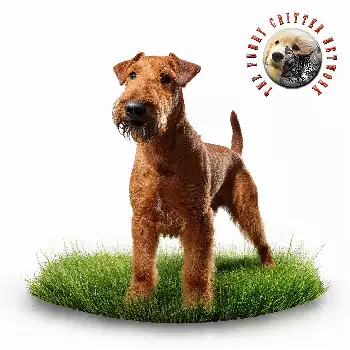
The Irish Red Terrier is a medium-sized dog built along lines that suggest speed, agility, and toughness in equal measure. Standing approximately 18 inches at the shoulder and weighing 25 to 27 pounds, this breed occupies a size range that made it versatile enough to work above and below ground, chase down vermin, and serve as a capable farm guardian. The overall impression is of a racy, well-muscled terrier with clean lines and an unmistakable air of confidence.

The head is one of the breed's most distinctive features. It is long and flat, narrowing gradually from the ears toward the eyes, with a barely perceptible stop. The skull and foreface are approximately equal in length, creating a balanced profile that avoids both the dish-faced appearance of some terrier breeds and the heavy-headed look of others. The jaws are strong and muscular with a tight, clean lip line that gives the face a clean, no-nonsense expression. The nose is black. Small, dark eyes set well apart carry an expression that is alert, intense, and full of fire. The ears are small, V-shaped, and set well on top of the head, dropping forward neatly toward the outer corner of the eye. Properly set ears are a hallmark of correct breed type.

The neck is of moderate length and gradually widens toward the shoulders, showing clean lines without throatiness. The shoulders are long and well-laid-back, providing the reach needed for the breed's ground-covering stride. The chest is deep and muscular but not wide, as excess width would interfere with front movement and reduce the agility that the breed needs for its original work. The back is strong and straight with a level topline, and the body is moderately long, giving the dog a slightly rectangular outline without being low-slung. The loin is muscular and slightly arched, providing the power for quick bursts of acceleration and the twisting agility that terrier work demands.

Front legs are perfectly straight when viewed from any angle, with clean flat bone and strong pasterns. Hindquarters are powerful and well-angulated at the stifle, with well-let-down hocks that provide efficient drive. The feet are moderately small and round with well-arched toes and thick pads built for covering rough ground. The tail is customarily docked to about three-quarters of its original length in countries where the practice is legal, carried high but not curled over the back.

The coat is the feature that gives this breed its alternate name. The outer coat is dense, wiry, and lies close to the body with a somewhat broken appearance. Beneath it sits a softer, finer undercoat that provides insulation in wet and cold conditions. Proper coat texture is maintained through hand-stripping, which preserves the harsh wire quality that repels dirt and water. Color ranges from bright red to golden red to red wheaten, with small white markings on the chest tolerated but not preferred. The overall color impression should be warm, rich, and uniform. The facial furnishings include a distinctive beard and eyebrows that frame the expression and add to the breed's alert, intelligent appearance.

In motion, the Irish Red Terrier covers ground with an easy, free-striding gait that conveys both purpose and efficiency. The front reach is clean and the rear drive is strong, with the topline remaining level throughout. At faster speeds, the dog moves with a distinctive terrier quickness that allows rapid changes of direction, reflecting the agility required for its original vermin work. The overall picture in motion is one of controlled energy, a dog that can sustain activity for long periods but can also explode into speed when the situation demands it. Standing still or on the move, the Irish Red Terrier's combination of athletic structure, fiery coat color, and keen expression creates one of the terrier world's most memorable silhouettes.

Affectionate With Family
The Irish Red Terrier forms intensely loyal bonds with its people and craves their company, often following household members from room to room.
Good With Young Children
This breed is patient and protective with children it knows, showing a gentle side that contrasts with its bold terrier temperament when interacting with the family's youngest members.
Good With Other Dogs
The Irish Red Terrier can be confrontational with unfamiliar dogs, particularly those of the same sex, and requires careful management in multi-dog settings.
Shedding Level
When properly maintained through hand-stripping, the wiry coat sheds very little, making this breed a relatively clean house companion.
Coat Grooming Frequency
The dense wiry coat needs regular brushing and periodic hand-stripping to maintain proper texture and appearance, with professional grooming recommended every few months.
Drooling Level
This breed produces virtually no excess drool, keeping its surroundings clean and dry.
Coat Type
The double coat features a dense, wiry outer layer that lies close to the body with a softer, finer undercoat providing insulation and weather protection.
Openness To Strangers
While not aggressive toward people, the Irish Red Terrier tends to evaluate strangers before warming up, showing a measured confidence rather than immediate friendliness.
Playfulness Level
A spirited and enthusiastic play partner, this breed maintains its playful energy well into adulthood and enjoys interactive games that challenge both mind and body.
Watchdog/Protective Nature
The Irish Red Terrier is naturally alert and will reliably announce visitors with a bark, backing it up with a protective confidence that belies its medium size.
Adaptability Level
This breed adapts reasonably well to different environments provided it receives enough exercise and mental stimulation, though it does best with access to a yard.
Trainability Level
Intelligent and capable of learning quickly, the Irish Red Terrier responds best to confident, consistent handlers who can maintain its respect without resorting to harsh methods.

Irish Red Terrier History & Development

The name Irish Red Terrier situates this breed within a specific color tradition that was not always a foregone conclusion. Before 1880, Irish Terriers appeared in multiple color varieties including brindle, black-and-tan, and red. The breed's early development took place on Irish farms where working ability mattered far more than coat color, and terriers of any hue that could dispatch vermin, guard the homestead, and accompany the farmer to market were valued equally. It was the rise of organized dog shows and breed clubs that changed the equation, as fanciers began to define what the ideal Irish Terrier should look like rather than simply what it could do.

The pivotal moment came at the Irish Terrier Club's founding in 1879 and the subsequent 1880 rule that restricted show eligibility to red dogs only. This was a controversial decision at the time, as brindle Irish Terriers had loyal supporters, but the red coat won out as the breed's visual signature. Within a decade, the non-red varieties had largely disappeared from breeding programs, and the Irish Red Terrier became the only Irish Terrier. The color name stuck in casual conversation even as it became technically redundant in the show ring.

The breed reached its peak popularity during the late Victorian and Edwardian periods, when it became one of the most fashionable terrier breeds in both the British Isles and North America. Its reputation for fearless courage earned it the nickname Red Daredevil, and this was not empty marketing. The breed was one of the first to be used as a military dog, serving as a messenger, sentinel, and companion in the trenches of the First World War. Its ability to navigate the chaos of battlefield conditions, deliver messages under fire, and remain calm amid explosions demonstrated a temperament that was genuinely exceptional among dog breeds. The wartime service cemented public affection for the breed and drove registrations upward for years afterward.

The breed's numbers declined through the mid-twentieth century as other terrier breeds rose in popularity, but dedicated breeders on both sides of the Atlantic maintained the line. The Irish Red Terrier has always been more popular in its homeland and in the United Kingdom than in the United States, where it remains relatively rare. Today's breed retains the essential characteristics that defined it over a century ago: the fiery red coat, the bold temperament, the loyalty to family, and the working versatility that made it indispensable on Irish farms. The name Irish Red Terrier persists because it captures something true about the breed's identity, and because that brilliant red coat remains the first thing anyone notices when this spirited terrier walks into view.

The breed's influence extended beyond its own lines. The Irish Red Terrier is believed to share common ancestry with the Kerry Blue Terrier and the Soft Coated Wheaten Terrier, both of which developed on the same island under similar working pressures. Some breed historians suggest that all three Irish terrier breeds descended from a common root stock of working farm terriers, with selective breeding gradually producing the distinct coat types and colors that differentiate them today. Whether or not that common ancestry can be proven, the Irish Red Terrier's place as the oldest documented Irish terrier breed gives it a special standing in the history of Irish dogs and in the broader story of how terrier breeds developed from working farm dogs into the distinct breeds we recognize today.

Irish Red Terrier Temperament & Personality

The Irish Red Terrier's temperament is defined by a loyalty so intense it borders on devotion and a confidence so thorough it sometimes looks like audacity. This is a breed that was historically described as being "heedless of danger," and that fundamental fearlessness has not softened through a century and a half of selective breeding. The Irish Red Terrier will stand its ground against threats many times its size, not out of recklessness, but out of a genuine conviction that protecting its people is simply what it does. Understanding this protective drive is essential to living well with the breed.

With its own family, the Irish Red Terrier is remarkably tender. The same dog that would not back down from a confrontation melts into a gentle, affectionate companion at home, seeking physical contact and following its people with a quiet devotion that belies its bold public persona. These dogs are deeply sensitive to their owner's moods and will adjust their behavior to match the emotional temperature of the household. They are not clingy in the way that some companion breeds are, but they want to be present and accounted for, and they do not handle being excluded from family activities well.

The breed's relationship with other dogs requires honest conversation. Irish Red Terriers can be dog-aggressive, particularly with dogs of the same sex. This is not a behavioral defect but a deeply ingrained terrier trait that was useful when the dog's job included defending territory and livestock against other animals. It means that introductions to unfamiliar dogs should be managed carefully, that off-leash dog parks are often not a good fit, and that multi-dog households work best when the other dog has a complementary temperament rather than a competitive one. Early socialization helps, but it does not eliminate the underlying drive, and pretending it is not there sets everyone up for trouble.

With people outside the family, the Irish Red Terrier is generally polite but reserved. It does not rush to make friends with every stranger who walks through the door, preferring to assess the situation before deciding how much warmth to extend. This measured approach, combined with the breed's natural alertness and willingness to bark at unusual activity, makes it an effective watchdog that provides genuine security without the management challenges of truly guardian-oriented breeds.

The breed's intelligence is sharp and practical. Irish Red Terriers learn quickly and remember what they have learned, but they apply that intelligence on their own terms. They will follow instructions from a handler they respect, but they have no interest in blind obedience. The cooperation approach works well here: when the dog understands why you are asking something and sees the benefit, compliance follows naturally. When it feels arbitrary, you will get a terrier stare that clearly communicates, "I do not see the point." Meeting this with humor and consistency rather than force produces the best results and preserves the partnership that this loyal breed values above all else.

Irish Red Terrier Family Life & Living Requirements

The Irish Red Terrier fits into family life with a combination of enthusiastic participation and protective watchfulness that makes it feel like both a companion and a guardian. These dogs want to be where the action is, and they integrate themselves into the household routine with a natural ease that sometimes surprises people who expect a terrier to be difficult or aloof. The key is understanding that the Irish Red Terrier gives its loyalty completely once it considers you part of its pack, and it expects a similar level of commitment in return.

Families with children will find an engaged and patient playmate. The breed's history as a farm dog means it has generations of experience coexisting with active, unpredictable young humans, and most Irish Red Terriers display genuine gentleness with children they have grown up alongside. Their medium size makes them sturdy enough to handle the rough-and-tumble play that comes with kids without being so large that they accidentally injure someone. Supervision is still important, as it is with any breed, but the Irish Red Terrier's instinct to protect the family's children adds a layer of reliability that many parents appreciate.

The breed's relationship with other household pets depends heavily on early socialization and individual temperament. As noted in the temperament section, same-sex dog aggression is a documented tendency, and adding an Irish Red Terrier to a home with an existing dog of the same sex requires careful planning and realistic expectations. Opposite-sex pairings generally work better. Cats can coexist with an Irish Red Terrier that has been raised alongside them, but the terrier's prey drive means that small animals like rabbits, guinea pigs, and birds should be kept securely separated.

Housing requirements are flexible. The Irish Red Terrier's medium size means it can adapt to apartment living provided it receives sufficient daily exercise, though a house with a securely fenced yard remains the ideal setup. The fence is important because this breed will chase anything that moves past its territory, and its speed and determination mean that a momentary lapse in containment can result in a dog that is three blocks away before you realize what happened. A six-foot fence is recommended, as the breed is athletic enough to scale shorter barriers when motivated.

The breed does not tolerate prolonged isolation. An Irish Red Terrier left alone for long stretches will express its displeasure through barking, digging, or creative destruction. These are not signs of a bad dog but of a social animal that was never designed to spend its days in an empty house. If your schedule requires extended absences, a dog walker, doggy daycare with careful breed matching, or a second pet for companionship can help bridge the gap.

Irish Red Terrier Training & Exercise Needs

Training an Irish Red Terrier is an exercise in mutual respect. These dogs are bright, capable learners who will meet you halfway if you approach the process as a partnership rather than a power struggle. The terrier intelligence is different from the eager-to-please intelligence of a retriever or a herding dog. The Irish Red Terrier understands what you want, evaluates whether it aligns with its own interests, and then decides how enthusiastically to comply. This sounds more difficult than it actually is in practice, because the breed genuinely values its relationship with its handler and will cooperate reliably once mutual trust is established.

Positive reinforcement methods are essential. The Irish Red Terrier has a long memory and a strong sense of fairness, and harsh corrections damage the relationship in ways that take significant effort to repair. Food rewards work well for initial training, but the breed responds even more strongly to play rewards and verbal praise delivered with genuine enthusiasm. Keep sessions short and varied, because repetitive drills bore this breed quickly and lead to the creative noncompliance that terrier owners learn to recognize. Five focused minutes of training followed by a play break produces better results than twenty minutes of grinding repetition.

Early socialization is the single most important investment you can make in an Irish Red Terrier puppy. The breed's natural confidence can harden into aggression toward other dogs if not shaped during the critical socialization window between three and sixteen weeks. Controlled exposure to other puppies, calm adult dogs, varied environments, and different categories of people helps the puppy develop the ability to assess situations accurately rather than defaulting to confrontation. Puppy classes with a trainer who understands terrier temperaments are particularly valuable.

Exercise needs are significant. The Irish Red Terrier was bred to work all day on an Irish farm, and that baseline endurance translates into a pet that needs at least an hour of vigorous daily activity to remain calm and well-adjusted at home. Brisk walks, jogging, hiking, and interactive play sessions all contribute, but the breed particularly benefits from activities that engage its nose and its problem-solving abilities. Nose work, barn hunt, and earthdog trials tap into the breed's natural terrier instincts and provide mental stimulation that pure physical exercise cannot match. A physically tired but mentally bored Irish Red Terrier will still find ways to entertain itself that you will not appreciate. The goal is a dog that is satisfied in both body and mind, and the breed's versatility makes that achievable through many different activity combinations.

Irish Red Terrier Health Concerns

The Irish Red Terrier is generally a hardy, long-lived breed with a typical lifespan of thirteen to fifteen years, but there are several breed-specific health conditions worth knowing about so you can catch problems early and manage them effectively. The Irish Terrier does not currently participate in the OFA CHIC program, which means there is no standardized health testing protocol mandated by the parent club, but responsible breeders still screen for the conditions known to affect the breed.

Hypothyroidism has been reported in the breed at notable frequency and presents as weight gain, lethargy, coat changes, and recurring skin infections. Routine blood work can identify low thyroid function, and daily medication manages the condition effectively. Progressive retinal atrophy and cataracts have both been documented in Irish Red Terriers, though neither occurs at epidemic rates. Annual eye examinations help detect these conditions early. Muscular dystrophy appears rarely in the breed and involves progressive muscle weakness and wasting. Hip dysplasia can occur at moderate frequency despite the breed's medium size, and screening radiographs are a reasonable precaution for breeding stock.

Common Health Issues

  • Digital hyperkeratosis - Corny feet, causes abnormal thickening and cracking of the foot pads due to defective keratin production, resulting in painful fissures and lameness that typically persists for life.
  • Cystinuria type 3 is an androgen-dependent condition affecting primarily intact males around age four to five - Causing cystine crystals and stones to form in the urinary tract with potential for life-threatening blockage.
  • Hypothyroidism occurs when the thyroid gland underproduces hormones - Leading to weight gain, lethargy, coat deterioration, and skin infections managed through daily medication.
  • Progressive retinal atrophy causes gradual degeneration of the retina leading to progressive vision loss and eventual blindness. - Progressive retinal atrophy causes gradual degeneration of the retina leading to progressive vision loss and eventual blindness.
  • Cataracts involve clouding of the eye lens that impairs vision and can progress to blindness - With surgical removal available in many cases.
  • Muscular dystrophy is a rare inherited condition in the breed causing progressive muscle weakness and wasting. - Muscular dystrophy is a rare inherited condition in the breed causing progressive muscle weakness and wasting.
  • Hip dysplasia can occur despite the breed's medium size - Causing abnormal joint development that leads to arthritis and pain.

Preventive Care & Health Monitoring

  • DNA testing for hereditary footpad hyperkeratosis identifies carriers and affected dogs before breeding - Allowing breeders to make informed decisions that reduce the condition's incidence.
  • Neutering intact males eliminates the risk of type 3 cystinuria - As the condition is androgen-dependent and surgical castration provides a complete lifetime cure.
  • Annual thyroid panels through blood work detect hypothyroidism early - Allowing prompt treatment with daily medication before clinical signs become severe.
  • Annual comprehensive eye examinations by a veterinary ophthalmologist help catch progressive retinal atrophy and cataracts at early stages when management options are most effective. - Annual comprehensive eye examinations by a veterinary ophthalmologist help catch progressive retinal atrophy and cataracts at early stages when management options are most effective.
  • Hip evaluation through OFA radiographs for breeding stock helps identify dysplasia and guides informed breeding decisions to reduce the condition in future generations. - Hip evaluation through OFA radiographs for breeding stock helps identify dysplasia and guides informed breeding decisions to reduce the condition in future generations.
  • Regular urinalysis for intact males over three years of age can detect elevated cystine levels before stone formation becomes dangerous - With the COLA test measuring specific amino acid concentrations.

Irish Red Terrier Grooming & Maintenance

The Irish Red Terrier's dense, wiry coat is one of its most practical features when properly maintained, providing weather resistance, dirt repellence, and minimal shedding that keeps your home relatively free of loose hair. The trade-off is that the coat requires specific maintenance techniques to stay in proper condition, and understanding the difference between hand-stripping and clipper cutting matters for both appearance and coat health.

Hand-stripping involves pulling dead outer coat hairs by hand or with a stripping knife, which allows new wire-textured hair to grow in its place. This process maintains the harsh, weather-resistant quality that the breed standard describes and keeps the coat lying flat and close to the body. Most Irish Red Terrier owners have their dogs professionally stripped every eight to twelve weeks, with lighter touch-up work done at home between sessions. The process is not painful when done correctly on a coat that is ready, and most dogs learn to accept it as routine. If you plan to show the dog, hand-stripping is non-negotiable because clipped coats develop a soft, dull texture that does not meet the standard.

Clipper cutting is the easier alternative for pet owners who do not show their dogs. A clipped coat is softer and may change color slightly, becoming lighter or less vibrant than a properly stripped coat. It also tends to pick up more dirt and may lose some of its water-resistant quality. Many pet owners choose a compromise approach, having the body clipped while hand-stripping the head, legs, and furnishings to maintain the breed's characteristic expression and outline. Weekly brushing with a firm bristle brush or a slicker brush keeps the coat free of debris and prevents the matting that can occur in the softer undercoat.

Beyond coat care, the Irish Red Terrier's grooming needs are straightforward. The wiry beard and facial furnishings benefit from regular wiping to remove food particles and prevent staining. Ears should be checked weekly for signs of irritation or wax buildup, though the breed's V-shaped drop ears do not trap moisture as severely as some heavier-eared breeds. Nails need trimming every two to three weeks unless naturally worn down through exercise on hard surfaces. Dental hygiene through regular brushing or appropriate chew items helps prevent the tartar accumulation that affects all breeds. The overall maintenance commitment is moderate rather than demanding, and most owners find that a consistent weekly routine of brushing and spot-checking keeps the Irish Red Terrier looking sharp without consuming an unreasonable amount of time.