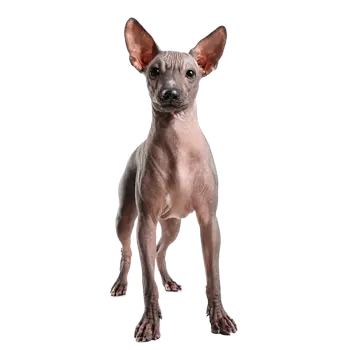

Inca Hairless Dog

Peruvian Inca Orchid

Quick Facts

🐕 Breed Group
Sighthound & Pariah Group
📏 Size Category
Small to Large
📏 Height
Males: 9.75-25.75 inches, Females: 9.75-25.75 inches
⚖️ Weight
Males: 8.5-55 pounds, Females: 8.5-55 pounds
⏱️ Life Expectancy
12-14 years
🧣 Coat Type
Hairless variety: smooth bare skin with possible sparse hair on head, feet, and tail tip; Coated variety: short to medium-length single coat
🎨 Coat Colors
Black, brown, gray, pink, tan, white, spotted, mottled combinations
😀 Temperament
Affectionate, loyal, alert, agile, sensitive, reserved with strangers
🏃 Exercise Needs
Moderate
🎓 Training Difficulty
Moderate - sensitive and intelligent but can be independent
👶 Good with Children
Good with older children who are gentle and respectful
🐾 Good with Other Pets
Can coexist with other dogs when socialized early; high prey drive with small animals

Other Names & Breed Recognition

The Inca Hairless Dog is one of several names used for this ancient breed, which is most formally recognized under the name Peruvian Inca Orchid. Other common names include Peruvian Hairless Dog, Perro sin Pelo del Peru, Al'co Calato, and Viringo. The wide variety of names reflects the breed's long history across different cultures and regions of Peru, where it has been known by various indigenous and colonial-era designations. In Spanish-speaking countries, the breed is frequently referred to simply as the Perro Peruano.

The breed has gained recognition from several major kennel clubs around the world, though its classification varies by organization. The Federation Cynologique Internationale recognizes the breed under the official name Perro sin Pelo del Peru and classifies it within the Spitz and Primitive Types group, specifically in the Primitive Type Hairless Dogs section. The American Kennel Club admitted the breed to its Foundation Stock Service in 1996 and later moved it to the Miscellaneous Class, using the name Peruvian Inca Orchid.

The United Kennel Club recognizes the breed within its Sighthound and Pariah Group, acknowledging the breed's primitive origins and its functional heritage as both a companion and a hunting dog. The Kennel Club of the United Kingdom places the breed in its Utility Group. Despite varying names and classifications, all major registries acknowledge the breed's ancient Peruvian heritage and its unique hairless characteristic as defining features.

In Peru, the breed holds a position of national cultural importance. The Peruvian government has designated the breed as a national patrimony, and Peruvian law requires that major archaeological sites and museums keep at least one pair of the dogs on their grounds. This official recognition underscores the breed's deep historical roots and its significance to Peruvian cultural identity.

Inca Hairless Dog Organizations & Standards

Several breed-specific organizations and parent clubs work to preserve and promote the Inca Hairless Dog across the globe. The breed standard maintained by the FCI serves as the primary international reference document, describing the three accepted size varieties and detailing the physical characteristics, temperament, and movement expected in the breed. National kennel clubs in countries with significant populations of the breed maintain their own standards, though most align closely with the FCI document.

In the United States, the Peruvian Inca Orchid Club of America serves as the AKC parent club for the breed, working to educate the public about the breed's unique needs and characteristics while promoting responsible breeding practices. The club organizes events, provides breed-specific health resources, and maintains a breeder referral program for prospective owners seeking well-bred puppies from health-tested parents.

Breed preservation efforts are particularly important for the Inca Hairless Dog because the global population remains relatively small compared to more popular breeds. Responsible breeders focus on maintaining genetic diversity while selecting for sound health, correct structure, and proper temperament. The inclusion of coated dogs in breeding programs is essential, as breeding two hairless dogs together can produce puppies homozygous for the hairless gene, which is a lethal combination resulting in embryonic death.

International cooperation among breed clubs has helped establish consistent health testing protocols and breeding guidelines. These collaborative efforts have been instrumental in identifying hereditary health concerns within the breed and developing strategies to reduce their prevalence through informed breeding decisions and genetic testing.

Kennel Club Recognition

  • American Kennel Club (AKC): Recognized in 2011, Miscellaneous Class
  • United Kennel Club (UKC): Recognized, Sighthound & Pariah Group
  • FCI: Recognized, Spitz and Primitive Types
  • The Kennel Club (UK): Recognized, Utility

Inca Hairless Dog Physical Description

The Inca Hairless Dog is an elegant, slim-bodied breed that comes in three distinct size varieties: small, medium, and large. The small variety stands approximately 9.75 to 15.75 inches at the shoulder and weighs between 8.5 and 17.5 pounds. The medium variety ranges from 15.75 to 19.75 inches and weighs 17.5 to 26.5 pounds. The large variety stands 19.75 to 25.75 inches and can weigh between 26.5 and 55 pounds. Regardless of size, all three varieties share the same overall proportions and breed type.

The most striking feature of the hairless variety is its smooth, supple skin, which can appear in a range of colors including black, gray, brown, pink, tan, and various spotted or mottled combinations. The skin is warm to the touch and slightly thicker than that of furred breeds, providing a modest degree of natural protection. Many hairless individuals display tufts of hair on the crown of the head, the lower portions of the legs, and the tip of the tail. The amount of body hair varies considerably between individuals, with some being nearly completely bare and others carrying more substantial wisps of hair.

The breed's head is proportionate to the body, with a broad skull that narrows slightly toward the muzzle. The ears are large, erect, and highly mobile, giving the dog an alert and attentive expression. The eyes are medium-sized and slightly almond-shaped, ranging in color from dark brown to amber, and in some lighter-skinned individuals, lighter shades are acceptable. The overall expression conveys intelligence, alertness, and a gentle sensitivity.

The body is lean and athletic, built along sighthound lines with a deep chest, well-sprung ribs, and a noticeable tuck-up at the loin. The legs are straight, strong, and well-boned in proportion to the size variety. Movement is smooth and effortless, with good reach and drive that reflects the breed's heritage as a swift and agile hunter. The tail is long, set low, and carried in a gentle curve, often tucked between the legs when the dog is at rest, a characteristic posture of the breed.

Affectionate With Family
The Inca Hairless Dog bonds deeply and intensely with its family members, often choosing one person as a primary attachment figure while remaining affectionate with the entire household. This breed craves close physical contact and warmth, frequently seeking out laps, blankets, and cozy spots beside their owners. Their hairless skin makes them especially drawn to body heat, and they are known for burrowing under covers at night. Owners consistently describe them as velcro dogs that follow their people from room to room and become visibly distressed when separated for extended periods.
Good With Young Children
The Inca Hairless Dog's exposed skin makes it vulnerable to accidental scratches, rough handling, and injury from the unpredictable movements of toddlers and very young children. While the breed is not aggressive, it is sensitive both physically and emotionally, and can become anxious or defensive if grabbed or handled too roughly. Families with young children should exercise significant caution, always supervising interactions and teaching children gentle handling from the outset. The breed does much better with older children who understand boundaries and can treat the dog with the care its delicate skin requires.
Good With Other Dogs
When properly socialized from puppyhood, the Inca Hairless Dog can get along well with other dogs in the household, particularly dogs of similar temperament and energy level. However, their sighthound heritage gives them a somewhat independent streak, and they may not always enjoy boisterous play with unfamiliar dogs. They tend to be selective about their canine companions and can be reserved or cautious during initial introductions. Same-sex aggression can occasionally occur, especially in intact males, so careful and gradual introductions are always recommended.
Shedding Level
The hairless variety of the Inca Hairless Dog sheds virtually nothing, making it one of the lowest-shedding breeds in existence. Without a full coat, there is simply no fur to leave on furniture, clothing, or floors. The coated variety sheds minimally due to its short single coat. This characteristic has made the breed popular among people who prefer a cleaner home environment, though it is important to note that no dog is truly hypoallergenic, as allergens are also found in skin dander and saliva.
Coat Grooming Frequency
While the Inca Hairless Dog does not require traditional brushing or combing, its exposed skin demands a specialized care routine that replaces conventional grooming. Regular bathing with gentle, moisturizing cleansers is necessary to prevent acne, blackheads, and dry skin. After bathing, a fragrance-free moisturizer or skin-safe lotion should be applied to keep the skin supple and prevent cracking. Sunscreen formulated for dogs is essential before outdoor exposure. The coated variety requires only basic brushing once or twice weekly, making its grooming routine more conventional.
Drooling Level
The Inca Hairless Dog is a remarkably clean breed when it comes to drooling. Its refined muzzle structure and tight lip conformation produce almost no excess drool under normal circumstances. Owners can expect a dry, clean companion that will not leave moisture on furniture, clothing, or hands. Slight drooling may occur in anticipation of food or during periods of extreme heat, but this is minimal and infrequent compared to many other breeds.
Coat Type
The Inca Hairless Dog comes in two distinct varieties: hairless and coated. The hairless variety has smooth, warm skin that may feature sparse tufts of hair on the top of the head, the lower legs, and the tail tip. The skin itself can range from fine and elastic to slightly thicker and more resilient depending on the individual. The coated variety, which can appear in the same litter, carries a short to medium-length single coat that lies flat against the body. Both varieties lack the dense undercoat found in many other breeds.
Openness To Strangers
The Inca Hairless Dog is characteristically reserved and cautious around unfamiliar people, a trait that has been present in the breed for centuries. They will typically observe newcomers from a distance before gradually warming up, and some individuals may never fully relax around strangers in their home. This natural wariness does not typically manifest as aggression but rather as aloofness or quiet avoidance. Early and consistent socialization is critical to prevent this reserve from developing into fearfulness or anxiety-driven behavior around new people.
Playfulness Level
The Inca Hairless Dog possesses a moderate playfulness that can surprise owners who expect a more sedate companion. They enjoy interactive games with their family, including fetch and chase activities that tap into their sighthound instincts. Their play style tends to be more refined and less rambunctious than many other breeds, with bursts of speed and agility followed by periods of rest and relaxation. They are not tireless play machines but rather enjoy well-timed play sessions that balance activity with their love of lounging.
Watchdog/Protective Nature
The Inca Hairless Dog is a naturally vigilant breed that takes its role as household sentinel seriously. Their alert nature and sensitivity to environmental changes make them quick to notice and announce the arrival of visitors or unusual activity around the home. They will bark to alert their family and may position themselves between their owner and perceived threats. While they are not large enough to serve as physical deterrents in all size varieties, their keen awareness and vocal alerts make them excellent watchdogs that reliably notify their owners of anything out of the ordinary.
Adaptability Level
The Inca Hairless Dog can adapt to various living situations, including apartments, provided its exercise needs are met and it has warm, comfortable spaces to retreat to. However, this breed is notably sensitive to temperature extremes. Its hairless skin offers no insulation against cold weather and is vulnerable to sunburn in hot, direct sunlight. Owners in colder climates must provide sweaters, coats, and heated bedding, while those in sunny regions must apply pet-safe sunscreen regularly. Changes in routine or household composition can also unsettle this emotionally sensitive breed.
Trainability Level
The Inca Hairless Dog is intelligent and capable of learning a wide range of commands and behaviors, but its sensitive and sometimes independent temperament requires a thoughtful training approach. Harsh corrections or raised voices will cause this breed to shut down or become anxious, severely undermining the training process. Positive reinforcement with treats, praise, and play produces the best results, and short, engaging training sessions are far more effective than lengthy drills. Patience and consistency are essential, as the breed may take longer to comply than eager-to-please breeds but will retain learned behaviors reliably once established.

Inca Hairless Dog History & Development

The Inca Hairless Dog is among the most ancient of all dog breeds, with a documented history spanning well over a thousand years on the western coast of South America. Archaeological evidence including pottery, textiles, and ceramic figurines from pre-Inca civilizations such as the Moche, Chimu, Chancay, and Vicus cultures clearly depict hairless dogs resembling the modern breed. Some of these artifacts date back as far as 750 AD, establishing the breed as a fixture of Andean civilization long before the rise of the Inca Empire.

During the height of the Inca Empire, these hairless dogs served multiple roles in society. They were valued as bed warmers due to their elevated body temperature and lack of fur, making them ideal for providing warmth during cold Andean nights. They were also used as hunting companions, particularly for small game, where their speed and agility made them effective partners. Some historical accounts suggest that the dogs were also attributed with medicinal or mystical properties, with their body heat believed to provide therapeutic benefits for ailments such as arthritis and respiratory conditions.

The arrival of Spanish conquistadors in the 16th century posed a significant threat to the breed's survival. European colonizers viewed the hairless dogs as oddities and often destroyed them or crossbred them with European breeds. The breed survived primarily in rural and isolated areas of Peru, where indigenous communities continued to keep and breed them according to traditional practices. This period of decline lasted for several centuries, during which the breed's numbers dwindled to dangerously low levels.

The breed's revival began in earnest during the 20th century, when dedicated breeders and cultural preservation advocates in Peru recognized the importance of saving this living piece of cultural heritage. In 2001, the Peruvian government declared the breed a national patrimony, granting it legal protection and promoting its preservation. International recognition followed, with the FCI granting full breed recognition and other major kennel clubs subsequently adding the breed to their registries. Today, while the breed remains relatively rare worldwide, its population is stable and growing thanks to committed breeders in Peru, the United States, Europe, and elsewhere.

Inca Hairless Dog Temperament & Personality

The Inca Hairless Dog possesses a temperament that is often described as noble, sensitive, and deeply devoted to its family. This is a breed that forms profound emotional bonds with its owners and thrives on close companionship and physical contact. Many owners report that their Inca Hairless Dogs are remarkably attuned to human emotions, responding with gentle comfort when their people are upset and sharing in their joy during happy times. This emotional sensitivity is one of the breed's most endearing and defining characteristics.

With family members, the Inca Hairless Dog is warm, affectionate, and often playful, displaying a lighthearted side that contrasts with its more reserved public demeanor. In the home, these dogs are happy to engage in games, enjoy interactive toys, and participate in family activities. They are not typically demanding or pushy in their affection but rather offer a calm, steady presence that many owners find deeply comforting. Their preference for close physical proximity to their owners means they are often found resting against or on top of their favorite people.

Around strangers, the Inca Hairless Dog is characteristically aloof and watchful. This is not a breed that runs to greet every visitor with unbridled enthusiasm. Instead, it will observe newcomers carefully, maintaining a polite distance until it has assessed the situation and determined that the stranger poses no threat. This reserved behavior is deeply ingrained in the breed and should be respected rather than forced into change. With time and positive experiences, most Inca Hairless Dogs will gradually warm to regular visitors, though they may never be effusively friendly with people outside their inner circle.

The breed's sighthound heritage contributes a notable prey drive that owners must be aware of and manage appropriately. Inca Hairless Dogs are visually oriented hunters that will instinctively give chase to small, fast-moving animals including squirrels, rabbits, and cats. This instinct is strong and not easily trained out of the breed, making secure fencing and leash walking essential safety measures. In multi-pet households, early socialization with cats and other small animals can help mitigate the prey drive, but supervision should always be maintained.

Despite their sensitivity, Inca Hairless Dogs possess a quiet confidence and a surprisingly spirited personality. They are not timid or fearful dogs when properly socialized, but rather self-assured animals that carry themselves with an air of dignity and composure. They can be mischievous and clever, finding creative ways to achieve their goals, and they possess a stubborn streak that can make them challenging for first-time dog owners who are unprepared for a breed that thinks for itself.

Inca Hairless Dog Family Life & Living Requirements

The Inca Hairless Dog can adapt well to a variety of living situations, making it suitable for apartment living as well as homes with yards, provided its specific needs are met. Its moderate exercise requirements and relatively quiet indoor demeanor make it a reasonable choice for urban environments, though access to a securely fenced outdoor area for off-leash exercise is always beneficial. The breed's sensitivity to temperature extremes is the single most important factor in its housing requirements, as owners must be prepared to provide climate-controlled environments year-round.

In cold climates, the Inca Hairless Dog requires a wardrobe of well-fitting sweaters, coats, and pajamas to maintain body warmth during walks and even inside the home during winter months. Heated dog beds, blankets, and access to warm sleeping spots are necessities, not luxuries, for this breed. Many owners find that their Inca Hairless Dogs prefer to sleep under blankets with them, a behavior that serves the practical purpose of warmth as well as the emotional need for closeness. In hot, sunny climates, sun protection in the form of pet-safe sunscreen and shaded areas is equally critical to prevent painful sunburn and long-term skin damage.

The breed's relationship with children depends heavily on the age and behavior of the children involved. Inca Hairless Dogs generally do well with older children who have been taught to handle dogs gently and respectfully, as these children understand the need to avoid rough play that could injure the dog's exposed skin. Very young children who grab, poke, or play roughly pose a genuine risk of causing skin damage, and the dog may respond by becoming fearful or defensive. Families with toddlers should carefully evaluate whether they can provide the level of supervision necessary to keep both the child and the dog safe.

The Inca Hairless Dog does not tolerate extended periods of solitude well. This is a breed that was developed to live in close contact with humans, and prolonged isolation can lead to separation anxiety manifesting as destructive behavior, excessive vocalization, and inappropriate elimination. Owners who work long hours outside the home should consider whether they can provide adequate companionship through doggy daycare, a pet sitter, or the presence of another compatible pet in the household.

Households considering an Inca Hairless Dog should be prepared for the ongoing costs and commitment associated with the breed's specialized care needs. Skin care products, sunscreen, protective clothing, dental care, and potentially more frequent veterinary visits for skin-related issues all contribute to a higher-than-average cost of ownership. Prospective owners who are willing and able to meet these needs will be rewarded with a deeply loyal, endlessly affectionate, and uniquely beautiful companion.

Inca Hairless Dog Training & Exercise Needs

Training the Inca Hairless Dog requires a gentle, patient approach that respects the breed's sensitive temperament while maintaining clear and consistent boundaries. Harsh training methods, including physical corrections, loud verbal reprimands, and intimidation-based techniques, are entirely counterproductive with this breed and will quickly erode the trust and confidence that form the foundation of a successful training relationship. Positive reinforcement using high-value food rewards, praise, and play is by far the most effective approach and will produce a willing, engaged, and cooperative training partner.

Basic obedience training should begin as soon as the puppy arrives in its new home, with short, engaging sessions that keep the dog's attention without overwhelming its developing mind. The Inca Hairless Dog is intelligent and capable of learning quickly, but it processes information at its own pace and may not respond as immediately as more eager-to-please breeds. Owners should expect a training timeline that emphasizes steady progress over rapid results, celebrating small victories and building on each success incrementally.

Socialization is arguably the most critical component of the Inca Hairless Dog's training program. Because the breed has a natural tendency toward reserve with strangers and unfamiliar situations, early and ongoing socialization is essential to develop a well-adjusted adult dog. Puppies should be exposed to a wide variety of people, animals, environments, sounds, and experiences in a carefully controlled and positive manner. Puppy socialization classes, outings to pet-friendly businesses, and regular interactions with friendly visitors in the home all contribute to building the dog's confidence and social skills.

The breed's exercise needs are moderate but should not be neglected. Daily walks of 30 to 45 minutes, combined with opportunities for free play in a securely fenced area, will satisfy most individuals. The Inca Hairless Dog's sighthound heritage means it possesses impressive speed and enjoys short bursts of sprinting, making lure coursing an excellent outlet for its natural instincts. However, owners must be mindful of weather conditions when exercising their dogs, avoiding outdoor activity during extreme heat or cold and adjusting the exercise routine seasonally to accommodate weather changes.

Mental stimulation is equally important to the Inca Hairless Dog's well-being. Puzzle toys, scent games, and interactive feeding devices provide valuable cognitive enrichment that helps prevent boredom and the destructive behaviors that can result from an under-stimulated mind. Training sessions themselves serve as excellent mental exercise, and many Inca Hairless Dogs enjoy learning tricks and participating in activities that challenge their problem-solving abilities.

Inca Hairless Dog Health Concerns

The Inca Hairless Dog is generally a healthy breed with a good life expectancy of 12 to 14 years, but it does have several breed-specific health concerns that prospective owners should understand and prepare for. The most prominent of these relate directly to the breed's hairless characteristic, which, while defining and desirable, comes with inherent health implications that require ongoing management throughout the dog's life.

Skin conditions represent the most common category of health issues in the Inca Hairless Dog. Without the protective barrier of a full coat, the skin is directly exposed to environmental irritants, ultraviolet radiation, temperature extremes, and physical abrasion. Acne, blackheads, and comedones are particularly common, especially during adolescence, and require regular cleansing and sometimes topical treatment to manage effectively. More serious dermatological conditions including contact dermatitis, allergic reactions, and bacterial or fungal skin infections can also occur and may require veterinary intervention.

Dental abnormalities are closely associated with the genetic mechanism that produces the hairless trait. The same gene that suppresses hair growth also affects tooth development, resulting in a condition known as ectodermal dysplasia. Hairless individuals frequently have incomplete dentition, with missing premolars being the most common finding. The teeth that are present may be abnormally shaped, thin-enameled, or prone to early decay. Regular veterinary dental examinations and a proactive home dental care routine are essential for maintaining oral health throughout the dog's life.

Beyond skin and dental concerns, the Inca Hairless Dog can be susceptible to epilepsy, inflammatory bowel disease, and orthopedic conditions including patellar luxation and Legg-Calve-Perthes disease, the latter two being more common in the smaller size varieties. Responsible breeders screen their breeding stock for these conditions and can provide documentation of health testing results to prospective puppy buyers.

Owners can promote their Inca Hairless Dog's long-term health by maintaining a consistent preventive care schedule that includes regular veterinary wellness examinations, age-appropriate vaccinations, parasite prevention, and routine blood work. Working with a veterinarian who has experience with hairless breeds or who is willing to learn about the breed's unique needs is highly advantageous. Early detection and intervention are key to managing many of the breed's predisposed health conditions effectively.

Common Health Issues

  • Skin Conditions - The Inca Hairless Dog's exposed skin is prone to acne, blackheads, dermatitis, and dryness. Without the protective barrier of a full coat, the skin is vulnerable to irritation from environmental allergens, sun exposure, and harsh grooming products. Regular moisturizing and careful product selection are essential for maintaining healthy skin.
  • Dental Abnormalities - Hairless varieties of this breed frequently exhibit incomplete dentition, including missing premolars, canines that point forward, and tusk-like teeth. The gene responsible for hairlessness is closely linked to dental development, meaning that most hairless individuals will have fewer teeth than coated dogs. Dental care and monitoring are important throughout the dog's life.
  • Sunburn and Skin Cancer - Without fur to shield the skin from ultraviolet radiation, the Inca Hairless Dog is at elevated risk for sunburn and, over time, skin cancer. Light-colored or pink-skinned individuals are especially vulnerable. Owners must apply pet-safe sunscreen before any outdoor exposure and limit time in direct sunlight during peak hours.
  • Epilepsy - Seizure disorders have been documented in the breed, with idiopathic epilepsy being the most common form. Seizures can range from mild focal events to more severe generalized episodes. Affected dogs typically require lifelong management with anticonvulsant medications and regular veterinary monitoring.
  • Inflammatory Bowel Disease - Some Inca Hairless Dogs develop inflammatory bowel disease, characterized by chronic vomiting, diarrhea, and weight loss. The condition involves inflammation of the gastrointestinal tract lining and may require dietary management with hypoallergenic or limited-ingredient diets along with anti-inflammatory medications.
  • Patellar Luxation - Particularly in the smaller size varieties, patellar luxation is a concern. This condition involves the kneecap slipping out of its normal groove, causing intermittent lameness and discomfort. Mild cases may be managed conservatively, while severe cases often require surgical correction.
  • Legg-Calve-Perthes Disease - This orthopedic condition, which involves degeneration of the femoral head due to insufficient blood supply, has been reported in smaller varieties of the breed. It typically presents in young dogs as progressive hind leg lameness and pain, and surgical intervention is usually required for a good outcome.

Preventive Care & Health Monitoring

  • Skin Care Routine - Establish a consistent skin care regimen including weekly baths with gentle, pH-balanced cleansers designed for sensitive skin. Apply a fragrance-free, non-comedogenic moisturizer after each bath to prevent dryness and cracking. Inspect the skin regularly for acne, blackheads, or irritation and address issues promptly.
  • Sun Protection - Apply pet-safe sunscreen with an SPF of 30 or higher to all exposed skin before outdoor activity, reapplying every two hours during prolonged exposure. Provide shaded rest areas during outdoor time and avoid walks during peak sun hours between 10 a.m. and 4 p.m. in summer months.
  • Dental Monitoring - Schedule veterinary dental examinations at least twice yearly due to the breed's predisposition for dental abnormalities. Maintain a home dental care routine with daily brushing using enzymatic toothpaste, and monitor for signs of gum disease, tooth decay, or difficulty eating.
  • Temperature Management - Provide warm clothing including sweaters and coats during cool weather and heated bedding year-round. Monitor the dog for signs of cold stress such as shivering, reluctance to go outside, or curling into a tight ball. In winter climates, limit outdoor exposure and provide indoor exercise alternatives.
  • Socialization Program - Begin socialization as early as eight weeks of age with carefully managed positive exposures to a wide range of people, animals, sounds, and environments. The breed's natural reserve with strangers makes early and ongoing socialization particularly important to prevent anxiety and fearfulness from becoming entrenched.

Inca Hairless Dog Grooming & Maintenance

Grooming the Inca Hairless Dog is a unique experience that differs fundamentally from the care required by coated breeds. While there is no coat to brush, blow-dry, or de-mat, the breed's exposed skin demands a dedicated and consistent care routine that many owners liken to a human skincare regimen. Understanding and committing to this routine is essential for any prospective owner, as neglected skin can quickly develop problems that affect the dog's comfort and health.

Bathing should be performed on a regular schedule, typically every one to two weeks, using a gentle, hypoallergenic cleanser formulated for sensitive skin. Over-bathing can strip the skin of its natural oils and lead to dryness and irritation, so finding the right frequency for each individual dog is important. After bathing, the skin should be gently patted dry and a fragrance-free, non-comedogenic moisturizer applied to keep it supple and hydrated. Some owners find that lightweight, natural oils such as coconut oil or jojoba oil work well, while others prefer commercial products specifically formulated for hairless dog breeds.

Acne and blackhead management is an ongoing component of the Inca Hairless Dog's grooming routine. Many individuals develop comedones and small pimples, particularly along the back, neck, and chest. Regular gentle exfoliation with a soft washcloth or a mild exfoliating cleanser can help prevent buildup and keep the skin clear. Stubborn or inflamed acne should be evaluated by a veterinarian, who may recommend medicated cleansers, topical treatments, or dietary adjustments to address the underlying cause.

Nail care, ear cleaning, and dental hygiene round out the Inca Hairless Dog's grooming requirements. Nails should be trimmed every two to three weeks or as needed to prevent overgrowth and splitting. The breed's large, upright ears can accumulate debris and moisture, so regular cleaning with a veterinarian-approved ear cleanser is recommended to prevent infections. Given the breed's predisposition to dental abnormalities, daily tooth brushing with an enzymatic toothpaste designed for dogs is strongly encouraged, along with the provision of dental chews and regular professional dental cleanings.

For owners of the coated variety, the grooming routine is considerably more straightforward. The short single coat requires only weekly brushing with a soft bristle brush or grooming mitt to remove loose hair and distribute natural skin oils. Bathing can be performed less frequently, approximately once monthly or as needed, and the skin care routine is less intensive since the coat provides a natural protective barrier. Regardless of variety, all Inca Hairless Dogs benefit from regular nail trimming, ear cleaning, and dental care as part of their comprehensive grooming program.