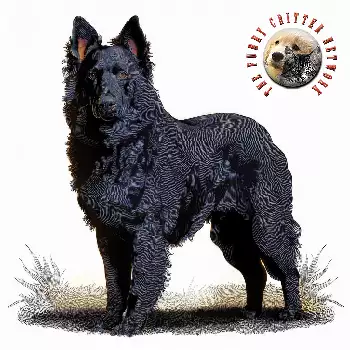
The Hrvatski Ovcar is an ancient breed with documented history extending back several centuries in the Croatian regions. References to black, curly-coated herding dogs appear in historical documents from the 14th century, describing dogs matching the modern breed's characteristics. These early mentions establish the breed's long presence in the area and its importance to rural life. The breed developed in relative isolation within Croatia, maintaining distinctive characteristics through selective breeding by working shepherds.
Historical records from 1374 reference black, medium-sized herding dogs with curly coats in the Dakovo region of Croatia. A veterinary document from 1374 by Bishop Petar Horvat describes dogs matching the Hrvatski Ovcar type working with flocks in the area. These early descriptions provide evidence of the breed's antiquity and its established role in Croatian pastoral agriculture. The breed's characteristics have remained remarkably consistent over the centuries, suggesting dedicated selection for functional traits.
The breed developed in the continental regions of Croatia, particularly in the Slavonia area in the eastern part of the country. The terrain and climate of this region influenced the breed's development, requiring dogs capable of working in varied weather conditions and across different types of landscape. The moderately long, weather-resistant coat evolved to protect the dogs during their work, while their size and agility made them effective with different types of livestock.
Traditional Croatian shepherds valued the Hrvatski Ovcar for versatility in handling various livestock types including sheep, cattle, and pigs. The breed's intelligence and trainability allowed them to learn complex herding patterns and respond to subtle handler cues. Their moderate size provided advantages in maneuverability while maintaining sufficient presence to command livestock respect. The dogs worked closely with their shepherds, developing the intense handler focus that characterizes the modern breed.
Isolation within Croatia helped preserve the breed's characteristics, as limited contact with other herding breeds prevented extensive crossbreeding. Working shepherds selected breeding stock based primarily on working ability, temperament, and stamina. The distinctive black coloration may have been deliberately maintained, as dark dogs were believed to be less likely to frighten sheep and were more visible to shepherds working in misty or low-light conditions.
The 20th century brought challenges to traditional pastoral agriculture throughout Europe, including Croatia. Mechanization, changes in farming practices, and urbanization reduced the need for working herding dogs. The Hrvatski Ovcar population declined as fewer shepherds maintained working flocks requiring dogs. By the mid-20th century, the breed faced an uncertain future with decreasing numbers and limited geographic distribution.
Efforts to preserve the breed began in the 1930s when Croatian veterinarian Dr. Stjepan Romic recognized the Hrvatski Ovcar's historical and cultural significance. Dr. Romic documented the breed's characteristics, located remaining working specimens, and promoted breeding programs to maintain the population. His work laid the foundation for modern breed preservation efforts and raised awareness of the breed's importance to Croatian heritage.
Formal breed recognition came in 1969 when the Fédération Cynologique Internationale officially recognized the Croatian Sheepdog. This recognition required documentation of the breed's history, establishment of a written standard, and demonstration of breeding consistency across multiple generations. Recognition provided official status that supported preservation efforts and facilitated the breed's participation in international dog activities.
The first written breed standard was established in 1951 by the Croatian Canine Association, providing detailed descriptions of ideal breed characteristics. This standard drew upon the traditional type maintained by working shepherds while adapting to modern kennel club requirements. Subsequent revisions refined specific details while maintaining the essential characteristics that define the breed. The modern FCI standard closely follows the Croatian original with minimal changes.
Breed clubs formed in Croatia to coordinate preservation efforts, maintain breeding records, and promote responsible breeding practices. These clubs organize herding trials, conformation shows, and educational programs about the breed. Working ability tests ensure that breeding stock maintains the instincts and trainability essential to the breed's heritage. Club activities help connect breeders, preserve working lines, and educate the public about the Hrvatski Ovcar.
International expansion of the breed began in the latter half of the 20th century as interest in rare and traditional breeds grew. Croatian emigrants sometimes brought Hrvatski Ovcar dogs to their new countries, introducing the breed to wider audiences. Herding dog enthusiasts in various countries discovered the breed and began importing dogs to establish breeding programs. However, the breed remains relatively rare outside Croatia and neighboring regions.
The United Kennel Club in North America recognized the breed in the Herding Dog Group, supporting development of the breed in the United States and Canada. This recognition allows Hrvatski Ovcar dogs to compete in UKC events and provides a registry for breeders maintaining the breed outside Croatia. However, the North American population remains small, with most dogs descended from relatively recent imports.
Modern Hrvatski Ovcar dogs continue to work with livestock in some areas, though most now serve as companions and participate in dog sports. Herding trials allow breed enthusiasts to test and maintain working instincts even when daily livestock work is unavailable. The breed excels in competitive herding, obedience, and agility, demonstrating their intelligence and trainability. These activities provide mental and physical stimulation while preserving the breed's working heritage.
Conservation efforts focus on maintaining genetic diversity within the relatively small breeding population. International cooperation among breeders helps prevent excessive inbreeding and maintains breed health. Croatian breeders occasionally export dogs to established foreign breeding programs, supporting genetic diversity and breed development worldwide. However, maintaining working ability remains a priority, with breeding dogs expected to demonstrate herding instinct and trainability.
The breed's future depends on continued dedication from breeders who value working ability alongside physical soundness. As pastoral agriculture continues to decline, maintaining the Hrvatski Ovcar's essential characteristics requires deliberate effort. Herding trials, instinct tests, and emphasis on trainability help preserve the breed's fundamental nature. The Hrvatski Ovcar represents living cultural heritage, connecting modern Croatia to its pastoral past while remaining a versatile, capable working dog suitable for contemporary life.