Gray Ghost

Weimaraner

Quick Facts

🐕 Breed Group
Sporting Group
📏 Size Category
Large
📏 Height
Males: 25 - 27 inches, Females: 23 - 25 inches
⚖️ Weight
Males: 70 - 90 lbs, Females: 55 - 75 lbs
⏱️ Life Expectancy
10 - 13 years
🧣 Coat Type
Short, smooth, sleek (also long-haired variety)
🎨 Coat Colors
Silver-gray, mouse-gray, blue-gray
😀 Temperament
Energetic, intelligent, loyal, affectionate, stubborn
🏃 Exercise Needs
Very High
🎓 Training Difficulty
Moderate
👶 Good with Children
Yes
🐾 Good with Other Pets
Caution with small animals

Other Names & Breed Recognition

Gray Ghost is one of those breed nicknames that stuck because it captures something essential about the dog it describes. The Weimaraner earned this name through the combination of its distinctive silver-gray coat and its eerily quiet, fluid hunting style. Watching a Weimaraner work a field, moving through cover with that silent, focused intensity, the ghost comparison makes immediate sense. The dog appears and disappears in the landscape like a specter, all silver shimmer and deliberate movement. The nickname has been in use among hunters and breed enthusiasts for decades and has become so widely recognized that many people encounter the name Gray Ghost before they learn the word Weimaraner.

The breed's formal name comes from the city of Weimar in central Germany, where the Grand Duke Karl August of Saxe-Weimar-Eisenach is closely associated with the breed's early development in the early nineteenth century. The German name Weimaraner Vorstehhund, meaning Weimar pointing dog, appears in some historical references. In German hunting circles, the breed was prized for its versatility and reserved for the aristocracy for decades before becoming available to the broader public.

The Weimaraner holds recognition from every major kennel club worldwide. The American Kennel Club admitted the breed to the Sporting Group in 1943, making it one of the earlier European sporting breeds to gain AKC status. The Federation Cynologique Internationale classifies it in Group 7 (Pointing Dogs), Section 1.1 (Continental Pointing Dogs, Braque type). The Kennel Club in the United Kingdom places it in the Gundog Group, the United Kennel Club recognizes it in the Gun Dog Group, and the Canadian Kennel Club includes it among Sporting Dogs.

The Weimaraner Club of America serves as the AKC parent club and maintains breed standards, health testing protocols, and educational resources for the breed community in the United States. The breed also goes by the abbreviated nickname Weim among owners and fanciers, and the descriptive name Grey Ghost appears with the British spelling in UK contexts. Regardless of which name you use, everyone is talking about the same striking silver dog with the amber or blue-gray eyes and the relentless need to be close to its people.

Gray Ghost Organizations & Standards

The Weimaraner Club of America, founded in 1943, serves as the primary breed organization in the United States and functions as the AKC parent club responsible for maintaining the breed standard and overseeing health initiatives. The WCA has been instrumental in establishing the breed's CHIC health testing requirements in partnership with the Orthopedic Foundation for Animals. The 2021 CHIC profile for the Weimaraner requires hip dysplasia evaluation through OFA or PennHIP, eye examination by a board-certified ACVO ophthalmologist registered with OFA, and autoimmune thyroiditis evaluation from an OFA-approved laboratory. Optional tests include DNA screening for hyperuricosuria, hypomyelination, and spinal dysraphism through the UC-Davis Veterinary Genetics Laboratory.

The AKC breed standard describes the Gray Ghost as a medium to large gray dog with fine aristocratic features that presents a picture of grace, speed, stamina, alertness, and balance. Males stand 25 to 27 inches at the withers, with females measuring 23 to 25 inches. The standard specifies a solid-colored coat in shades of mouse-gray to silver-gray, with a small white marking on the chest permissible. The head should be moderately long and aristocratic, with long lobular ears set high and folded. Eyes are light amber, gray, or blue-gray. The overall impression should convey athletic capability and elegant proportion.

The Federation Cynologique Internationale maintains the breed under Group 7 (Pointing Dogs), Section 1.1 (Continental Pointing Dogs, Braque type), acknowledging the Weimaraner's German origin and its primary function as an all-purpose pointing and retrieving dog. The FCI standard recognizes both the short-haired and long-haired varieties, though the long-haired version is considerably less common and not separately recognized by the AKC. The German Weimaraner Club, which has maintained the breed standard in its country of origin since the late nineteenth century, historically imposed strict breeding controls that included requiring membership in the club before purchasing a puppy.

The Kennel Club of the United Kingdom places the breed in the Gundog Group and maintains its own breed standard that aligns with the overall international description while reflecting British judging priorities. Breed clubs exist across Europe, Australia, and South Africa, all working to preserve the Gray Ghost's athletic structure, versatile hunting ability, and distinctive silver coat. The emphasis across all organizations remains consistent: this is a working sporting dog first, and its appearance should reflect functional capability rather than exaggerated conformation.

Kennel Club Recognition

  • American Kennel Club (AKC): Recognized in 1943, Sporting Group
  • United Kennel Club (UKC): Recognized, Gun Dog Group
  • Canadian Kennel Club (CKC): Recognized, Sporting Dogs
  • FCI: Recognized, Group 7 (Pointing Dogs)
  • The Kennel Club (UK): Recognized, Gundog

Gray Ghost Physical Description

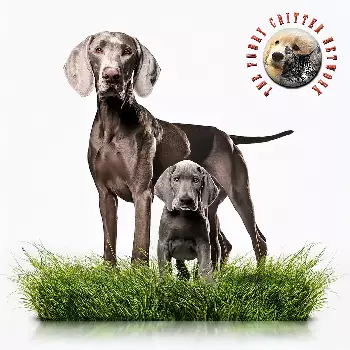
The Gray Ghost earned its nickname through appearance alone before anyone ever watched one hunt, because there is simply nothing else in the dog world that looks quite like a Weimaraner. The coat is the defining feature, a distinctive silver-gray that ranges from mouse-gray to a lighter, almost blue-silver shade depending on the individual and the lighting. In direct sunlight, the coat takes on a luminous quality that makes the dog appear to glow. In dim light or fog, the silver coat blends into the environment in a way that truly does suggest something ghostly. It is a striking, unmistakable color that identifies the breed from across a field.

The body underneath that silver coat is built for serious athletic work. This is a medium to large dog with the proportions of a distance runner rather than a sprinter. Males stand 25 to 27 inches at the withers and weigh between 70 and 90 pounds, with females slightly smaller at 23 to 25 inches and 55 to 75 pounds. The chest is deep and well-developed, providing ample lung capacity for a dog that was bred to work all day in the field. The back is moderate in length and strong, and the tuck-up at the loin creates a streamlined profile. The legs are long, straight, and well-muscled, built for ground-covering movement over varied terrain.

The head is one of the breed's most refined features. It is moderately long with clean lines, a slight median furrow down the forehead, and a moderate stop. The muzzle is long and straight, giving the head an aristocratic appearance that sets the Weimaraner apart from blockier sporting breeds. The ears are long, lobular, set high on the skull, and hang close to the head, reaching approximately to the corner of the mouth when drawn forward. The eyes are arguably the most captivating element of the Gray Ghost's appearance. They are light amber, gray, or blue-gray, and they carry an expression of intelligence and alertness that people often describe as almost human in their depth.

The standard coat is short, smooth, and sleek, lying close to the body with minimal undercoat. It is easy to maintain and feels like velvet to the touch. A long-haired variety also exists, featuring a soft coat of one to two inches with feathering on the ears, legs, and tail, though this variety is much less common and not recognized by the AKC as separate from the standard Weimaraner. Coat color must be solid gray without distinct markings, though a small white spot on the chest is permitted. The tail is traditionally docked in countries where the practice remains legal, carried with confidence and energy.

Movement in the Gray Ghost is smooth, effortless, and ground-covering. The gait shows good reach in front and strong drive from behind, with the topline remaining level during motion. There is an elegance to the way a well-built Weimaraner moves that reinforces the aristocratic impression the breed conveys at rest. These dogs were built to cover miles of terrain while hunting, and their movement reflects that endurance-oriented design. At a walk, the Gray Ghost moves with a relaxed, confident stride. At a trot, the gait opens up into a flowing, efficient action that covers impressive ground without apparent effort. The overall physical package is one of the most aesthetically balanced in the sporting group, combining power, grace, and that unmistakable silver coloring into a dog that turns heads anywhere it goes. The breed's physical beauty is not incidental to its function. Every element of the Gray Ghost's build serves the demands of a versatile hunting companion that needed to work all day across varied terrain, and that purposeful design is what gives the breed its striking appearance.

Affectionate With Family
The Gray Ghost bonds with its family at an intensity level that borders on obsession. These dogs want constant physical contact and emotional connection with their people.
Good With Young Children
Generally excellent with children in their own family, though the breed's size and energy can overwhelm very small kids. Supervision during play is wise until the dog learns to moderate its enthusiasm.
Good With Other Dogs
Most Gray Ghosts get along with other dogs, though some individuals display dominance tendencies. Proper socialization from puppyhood improves multi-dog household compatibility.
Shedding Level
The short coat sheds moderately year-round. You will find silver-gray hairs on your clothes and furniture, but the volume is manageable with regular brushing.
Coat Grooming Frequency
The sleek, short coat is one of the easiest to maintain in the sporting group. A weekly rubdown with a soft brush or hound mitt is all most Gray Ghosts need.
Drooling Level
The Gray Ghost is not a heavy drooler, though some individuals produce noticeable saliva around feeding time or after vigorous exercise.
Coat Type
The standard coat is short, smooth, and sleek with a distinctive silver-gray color that catches light beautifully. A longer-haired variety exists but is less common.
Openness To Strangers
Gray Ghosts are moderately friendly with new people. They tend to be reserved initially but warm up once they sense their owner is comfortable with the visitor.
Playfulness Level
This breed maintains puppy-level playfulness well into adulthood. Gray Ghosts are always ready for a game and bring boundless enthusiasm to every activity.
Watchdog/Protective Nature
The Gray Ghost is attentive to its environment and will alert to unusual activity. The breed has a protective instinct toward family, particularly with children.
Adaptability Level
This breed does not adapt well to apartment living, limited exercise, or being left alone for extended periods. The Gray Ghost needs space, activity, and human companionship to thrive.
Trainability Level
Highly intelligent and eager to work with their owner, Gray Ghosts learn quickly when motivated. Their independent streak requires consistent, patient guidance rather than rigid repetition.

Gray Ghost History & Development

The nickname Gray Ghost emerged naturally among American hunters and breed enthusiasts during the mid-twentieth century as the Weimaraner established itself in the United States. The name was never formally bestowed by a kennel club or breed organization. It simply described what people saw when they watched this silver-gray dog work in the field: a silent, almost ethereal presence that moved through cover with fluid efficiency. The name resonated so strongly that it became the breed's most recognizable informal identity, appearing in books, articles, and casual conversation with equal frequency.

The breed itself traces back to the early nineteenth century and the court of Grand Duke Karl August of Saxe-Weimar-Eisenach in central Germany. The nobles of Weimar developed the breed as an all-purpose hunting dog capable of handling large game including boar, deer, and bear, as well as upland birds and waterfowl. The exact breeding program that produced the Weimaraner is not fully documented, but the breed likely descends from various German and French hunting dogs including the Bloodhound and early German pointing breeds. The aristocratic connections meant the breed was tightly controlled, with ownership restricted to members of the German Weimaraner Club for decades.

The breed arrived in the United States through Howard Knight, an American sportsman who gained membership in the German Weimaraner Club and imported two dogs in 1929. The German club initially sent him sterilized dogs, reluctant to allow breeding stock outside of Germany. Knight persisted, and eventually obtained intact dogs that formed the foundation of the American breeding program. The AKC recognized the Weimaraner in 1943, and the breed gained rapid popularity in the postwar years, partly fueled by President Dwight Eisenhower's ownership of a Weimaraner named Heidi who lived in the White House.

The Gray Ghost nickname gained cultural traction during this period of American popularity. The breed's distinctive appearance made it instantly recognizable, and the ghostly descriptor captured something about the Weimaraner that the German name alone did not convey to English-speaking audiences. Hunters who worked with the breed appreciated not just the color but the hunting style that the nickname suggested. The Weimaraner hunts with a quiet intensity, covering ground with smooth, deliberate movement rather than the crashing exuberance of some sporting breeds. Watching one work through morning mist in a field, the ghost comparison writes itself.

In more recent decades, the Gray Ghost gained additional cultural visibility through the work of photographer William Wegman, whose elaborately posed Weimaraner portraits became internationally famous. While Wegman's work had nothing to do with hunting, it cemented the breed's visual identity in popular culture and introduced the Gray Ghost to millions of people who might never encounter one in a sporting context. Today the Weimaraner remains a versatile sporting dog used for pointing, retrieving, and tracking, while also serving as a devoted family companion for active households.

Gray Ghost Temperament & Personality

The Gray Ghost's temperament is defined by one overriding characteristic: this dog wants to be with you. Not near you. Not in the same house as you. With you, physically touching you if possible, at all times. The Weimaraner's attachment to its owner goes beyond what most people expect from a sporting breed. These dogs follow you from room to room, lean against your legs while you stand, rest their head on your lap while you sit, and would crawl inside your skin if the physics worked out. The intensity of this bond is both the breed's greatest appeal and its most significant management challenge.

The intelligence behind those striking amber eyes is genuine and considerable. Gray Ghosts are problem solvers who figure out how to open doors, defeat childproof latches, and access food you thought was safely stored. They read human body language with unsettling accuracy and will pick up on your mood shifts before you are fully aware of them yourself. This intelligence makes them capable of impressive obedience work and field performance when properly motivated, but it also means they get bored quickly and are creative about entertaining themselves when you do not provide adequate stimulation.

Separation anxiety is the single most discussed behavioral issue in the breed, and it deserves honest conversation. A Gray Ghost left alone for extended periods does not simply get bored. It panics. Destructive behavior, excessive vocalization, self-harm, and house training regression are all documented responses to isolation in this breed. Some Weimaraners can learn to tolerate reasonable periods alone through gradual conditioning and crate training, but this is a breed that fundamentally needs human companionship to function well. Households where someone is home for most of the day provide the best environment.

The hunting drive in the Gray Ghost is strong and multifaceted. These dogs were developed as all-purpose hunting companions, and that versatility means the prey drive covers a wide range of triggers. Small animals, birds, and even cats may activate the chase instinct. The breed points, retrieves, and tracks with natural ability, and many Gray Ghosts display these behaviors instinctively even without formal training. Managing the prey drive requires secure fencing, leash discipline, and realistic expectations about off-leash reliability around wildlife.

With their own family, Gray Ghosts are affectionate, protective, and surprisingly gentle despite their size and energy. They form particularly strong bonds with one person but extend genuine warmth to the entire household. Their protective instinct is moderate, enough to alert and position themselves between family and perceived threats, but they are not aggressive guard dogs by nature. The combination of loyalty, intelligence, and physical beauty makes the Gray Ghost a deeply rewarding companion for the right owner, one who understands that this partnership demands significant investment of time, attention, and presence.

Gray Ghost Family Life & Living Requirements

The Gray Ghost fits into family life beautifully when the household understands what it is signing up for, which is essentially a large, athletic, emotionally needy dog that wants to participate in everything the family does. This is not a breed you bring home and set up in the yard. The Weimaraner considers itself a full member of the household and expects to be treated accordingly. It wants to go where you go, sleep where you sleep, and be involved in whatever activity is happening at any given moment.

Families with children often find the Gray Ghost to be an outstanding companion. The breed's natural protectiveness extends strongly to younger family members, and many Weimaraners develop a particularly close bond with the children in their household. The size and energy of the breed are worth considering, though. A 70-pound dog playing enthusiastically can knock a toddler over without meaning any harm, so supervision during interaction with very young children is important until both the dog and the children learn appropriate boundaries.

Housing requirements lean heavily toward homes with substantial outdoor space. A securely fenced yard is close to essential because the Gray Ghost needs room to run and the opportunity to burn energy between structured exercise sessions. Apartment living is strongly discouraged for this breed. The combination of size, energy level, and separation anxiety makes confined living spaces a recipe for misery for both dog and owner. Even in a house, the Weimaraner will want indoor access to wherever the family gathers rather than being isolated in a separate area.

Other pets in the household require careful management. Another dog, particularly one of similar size and energy, often works well and can actually reduce separation anxiety by providing companionship when the humans are away. Cats are a more uncertain proposition. Some Gray Ghosts learn to coexist with household cats, especially if raised together from puppyhood, but the prey drive is genuine and the risk is real. Small pocket pets like rabbits, guinea pigs, or hamsters should be kept completely separated from a Weimaraner.

The time commitment for a Gray Ghost household is substantial and non-negotiable. These dogs need vigorous daily exercise, mental stimulation, training engagement, and extensive human interaction. A family that hikes, runs, hunts, or participates in dog sports will find the Weimaraner to be an enthusiastic and tireless partner. A family that works long hours and expects the dog to entertain itself will find a frustrated, anxious animal that expresses its unhappiness through destructive and vocal means.

Gray Ghost Training & Exercise Needs

Training a Gray Ghost works best when you approach it as a collaboration with an intelligent partner rather than a command-and-compliance exercise. Weimaraners are smart enough to understand exactly what you want and capable enough to execute it, but they bring their own opinions to the process and expect those opinions to be considered. Heavy-handed, repetitive training methods produce resistance and resentment in this breed. Positive reinforcement, variety, and genuine enthusiasm from the handler produce a willing, engaged working partner.

Early socialization is important for the Gray Ghost because the breed can develop wariness toward strangers and unfamiliar situations without adequate exposure during the critical developmental period. Introduce the puppy to as many people, environments, sounds, and experiences as possible during the first several months of life. A well-socialized Weimaraner is confident and approachable. A poorly socialized one can become nervous and reactive, which is problematic in a dog this size and this attached to its owner.

Exercise requirements are among the highest of any sporting breed. The Gray Ghost was built for all-day hunting across varied terrain, and that stamina does not diminish just because the dog lives in a suburban home. Plan on a minimum of one to two hours of vigorous exercise daily. Running, swimming, hiking, and field work all suit the breed's athletic capabilities. Dog sports including agility, rally, tracking, and dock diving provide structured outlets that engage both body and mind. A tired Gray Ghost is a well-behaved Gray Ghost, and the reverse is painfully true as well.

Mental stimulation matters as much as physical exercise for this breed. Puzzle feeders, scent games, hide-and-seek, and ongoing trick training keep the Weimaraner's active mind occupied and prevent the boredom that leads to destructive behavior. These dogs enjoy learning throughout their lives and respond well to new challenges. Stagnation is the enemy. Keep introducing novel tasks and activities to maintain engagement.

Crate training deserves mention because it serves as one of the most effective tools for managing separation anxiety in the Gray Ghost. Introduced properly during puppyhood, the crate becomes a secure den space where the dog can settle during short absences. The key is making the crate association entirely positive and never using it as punishment. A crate-trained Weimaraner handles alone time significantly better than one that has free run of the house during owner absences, though even crate-trained dogs should not be left for extended periods.

Gray Ghost Health Concerns

The Gray Ghost is a generally healthy sporting breed with a life expectancy of 10 to 13 years, reasonable for a large dog. The Weimaraner Club of America has been proactive about health testing, establishing CHIC requirements that include hip evaluation, eye examination, and thyroid testing, with optional DNA screening for three breed-specific genetic conditions. This commitment to health monitoring reflects the breed community's awareness that maintaining the Gray Ghost's athletic functionality requires ongoing attention to hereditary concerns.

Hypothyroidism appears in the breed with enough frequency to warrant the CHIC-required thyroid evaluation. Symptoms develop gradually and include weight gain, lethargy, coat thinning, and general dullness. The condition is manageable with lifelong thyroid hormone supplementation once diagnosed. Eye conditions have also been documented, which is why the CHIC protocol includes regular ophthalmologic examination. Overall, the Gray Ghost benefits from an owner who commits to regular veterinary care, appropriate preventive screening, and awareness of the breed-specific conditions that responsible breeders work to minimize through tested breeding decisions.

Common Health Issues

  • Hip dysplasia - Developmental malformation of the hip joint causing improper articulation between the ball and socket, leading to pain, reduced mobility, and progressive arthritis that limits the athletic lifestyle this breed requires.
  • Gastric dilatation-volvulus (bloat) - A life-threatening emergency where the stomach fills with gas and potentially rotates, cutting off blood supply and requiring immediate surgical intervention to prevent death.
  • Hypothyroidism - Autoimmune destruction of the thyroid gland leading to insufficient hormone production, causing gradual weight gain, lethargy, coat deterioration, and metabolic disruption manageable with lifelong supplementation.
  • Hyperuricosuria - A genetic condition causing elevated uric acid levels in the urine that predisposes affected dogs to bladder and kidney stone formation, identified through DNA testing at UC-Davis VGL.
  • Hypomyelination (shaking puppy syndrome) - A genetic condition causing tremors in puppies due to insufficient myelin insulation around nerve fibers, identified through DNA testing and inherited as a simple recessive trait.
  • Elbow dysplasia - Developmental abnormalities of the elbow joint including ununited anconeal process and fragmented coronoid process, causing lameness and progressive arthritis in the forelimb.

Preventive Care & Health Monitoring

  • OFA or PennHIP hip evaluation for all breeding stock to screen for hip dysplasia - With results publicly available through the OFA database as required by the Weimaraner CHIC health testing protocol.
  • Annual eye examination by a board-certified ACVO ophthalmologist registered with OFA to monitor for ocular conditions documented in the breed. - Annual eye examination by a board-certified ACVO ophthalmologist registered with OFA to monitor for ocular conditions documented in the breed.
  • Autoimmune thyroiditis evaluation from an OFA-approved laboratory - Required by CHIC protocol, to detect thyroid dysfunction before clinical symptoms develop.
  • DNA testing through UC-Davis Veterinary Genetics Laboratory for hyperuricosuria - Hypomyelination, and spinal dysraphism to identify carriers and prevent production of affected puppies in breeding programs.
  • Bloat prevention strategies including feeding multiple smaller meals daily - Avoiding vigorous exercise within an hour of eating, and learning to recognize early symptoms of gastric distress for prompt emergency response.
  • Elbow evaluation through OFA screening recommended for breeding stock and advisable for all dogs to detect developmental abnormalities that may affect long-term soundness. - Elbow evaluation through OFA screening recommended for breeding stock and advisable for all dogs to detect developmental abnormalities that may affect long-term soundness.

Gray Ghost Grooming & Maintenance

Grooming the Gray Ghost is about as straightforward as it gets in the sporting dog world. The short, smooth coat is one of the breed's most practical features, requiring minimal maintenance to look its best. A weekly session with a soft bristle brush, rubber curry comb, or hound mitt removes loose hair, distributes natural skin oils, and keeps the coat looking sleek and healthy. The process takes maybe ten minutes, and most Weimaraners enjoy the attention.

Shedding is moderate and year-round rather than seasonal. You will find silver-gray hairs on your furniture and clothing, but the volume is manageable compared to double-coated breeds. The silver color can make shed hair surprisingly visible on dark clothing and upholstery, so keep a lint roller handy if appearances matter. Regular brushing helps reduce the amount of loose hair deposited around the house.

Bathing is needed only occasionally, roughly once a month or when the dog has gotten into something particularly messy. The short coat does not hold odor the way longer or denser coats do, and the Weimaraner generally stays cleaner than you might expect from a dog that spends a lot of time outdoors. When bathing is needed, use a mild dog-specific shampoo and rinse thoroughly. The coat dries quickly, which is a pleasant change from bathing longer-coated breeds.

Ear care is important for the Gray Ghost because the long, pendulous ears create a warm, enclosed environment where moisture and debris can accumulate. Check the ears weekly and clean with a veterinary-approved solution if you notice wax buildup, redness, or an off smell. Dogs that swim regularly need more frequent ear attention because water trapped in the ear canal accelerates bacterial and yeast growth. Keeping the ears clean and dry prevents the chronic infections that can become a recurring problem in drop-eared breeds.

Nail trimming follows the standard schedule of every two to three weeks, though active dogs that regularly exercise on hard surfaces may need less frequent trimming as the nails wear naturally. Dental care should include regular tooth brushing several times per week and periodic professional cleanings as recommended by your veterinarian. The Gray Ghost's overall low grooming demands are one of the breed's genuine practical advantages, leaving more time and energy for the exercise and companionship that this dog truly requires.