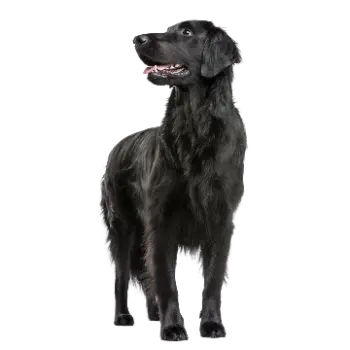
The Flatcoated Retriever is a large, elegant sporting dog built along leaner, more streamlined lines than the stocky Labrador or plush Golden Retriever. Where those more popular cousins tend toward solid substance, the Flatcoated Retriever presents a racier silhouette that combines power with athletic grace - a dog designed for speed and endurance in the field rather than raw strength. Males stand 23 to 24.5 inches at the shoulder and weigh 60 to 70 pounds; females are slightly smaller at 22 to 23.5 inches and 55 to 65 pounds. The body is slightly longer than tall, with a deep chest, well-sprung ribs, and a level topline that flows smoothly from neck to tail.
The head is the breed's most distinctive structural feature - a long, clean, one-piece design with minimal stop, creating a smooth profile from skull to muzzle tip. This head type is unique among the retriever breeds and is considered essential to breed type. The skull and muzzle are approximately equal in length, with the muzzle deep enough to carry game gently and the jaws long enough to provide the leverage needed for retrieving across distances. The eyes are almond-shaped, set wide apart, and dark brown or hazel, expressing the intelligent, eager, and friendly temperament that defines the breed. The ears are set relatively close to the head, lying close to the sides.
The coat gives the breed its name - medium-length, dense, and flat-lying rather than wavy or curly, providing practical protection for a working retriever without the heavy, plush quality of a Golden Retriever's coat. The coat is of good substance and lies as flat as possible. Moderate feathering on the legs, chest, belly, tail, and ears adds elegance without excess. Only two solid colors are accepted: black and liver. Both colors should be rich and lustrous, with the black a true jet black and the liver a warm, deep brown. No white markings are acceptable beyond a few stray white hairs.
The breed moves with a ground-covering, effortless trot that reflects its heritage as a working gun dog capable of sustained field work over varied terrain. Good reach in front and strong drive from behind produce fluid, balanced movement with the head carried forward at a natural, moderate angle. The tail is carried as a smooth extension of the topline, never curled over the back - a level or slightly upward-moving tail with moderate feathering that completes the breed's elegant silhouette.
Affectionate With Family
★★★★★
The Flatcoated Retriever is one of the most devotedly affectionate breeds in the sporting group, forming deep emotional connections with every member of its household. The breed's signature optimism and joy are expressed through constant companionship, physical closeness, and an exuberant enthusiasm for family interaction that persists well into old age. This is a dog that will lean against you, rest its head in your lap, and follow you through the house with a wagging tail and an expression of genuine delight at your mere existence.
Good With Young Children
★★★★☆
The Flatcoated Retriever's patient, tolerant, and playful nature makes it an excellent companion for children of all ages. The breed genuinely enjoys the energy and unpredictability of young children, participating enthusiastically in games and outdoor adventures. The primary concern is the breed's size and exuberance - a sixty-pound dog greeting a toddler with its characteristic full-body enthusiasm can accidentally knock a small child over. Supervision with very young children ensures safety without dampening the natural bond.
Good With Other Dogs
★★★★☆
The Flatcoated Retriever is one of the more socially amenable sporting breeds, typically approaching other dogs with friendly curiosity and a desire to play. The breed lacks the same-sex aggression common in some breeds and generally integrates well into multi-dog households. Some individuals may display resource guarding over toys or food, but outright dog aggression is uncommon in well-socialized individuals. The breed's play style can be physical and exuberant, which may overwhelm calmer or smaller dogs.
Shedding Level
★★★☆☆
The Flatcoated Retriever sheds moderately throughout the year with heavier seasonal shedding in spring and fall. The medium-length, flat-lying coat releases a manageable volume of hair that regular brushing keeps under control. The feathering on the legs, chest, ears, and tail can accumulate loose undercoat that forms mats if not brushed regularly. Overall shedding is less than that of the heavily double-coated Golden Retriever but more noticeable than in short-coated breeds.
Coat Grooming Frequency
★★★☆☆
The Flatcoated Retriever requires regular but not excessive grooming to maintain its natural, unscissored coat. Brushing two to three times weekly prevents mats in the feathering and removes loose hair. The breed standard calls for a natural, untrimmed presentation, with only tidying of feet and ear edges permitted. Professional grooming is not necessary. The coat's flat-lying texture and moderate length make it more manageable than the heavily feathered coats of setters or spaniels.
Drooling Level
★★☆☆☆
The Flatcoated Retriever is a relatively tidy breed with minimal drooling under normal circumstances. Some individuals may drool lightly when anticipating food or after drinking water, but the breed does not produce the persistent, heavy drool associated with loose-lipped breeds. The soft mouth that was developed for gentle game retrieval does not contribute to excessive salivation.
Coat Type
★★★☆☆
The Flatcoated Retriever possesses a medium-length coat of moderate density that lies flat against the body, giving the breed its name. The coat provides weather protection for field work without the heavy, plush quality of a Golden Retriever's double coat. Feathering adorns the legs, chest, belly, tail, and ears, adding elegance to the breed's streamlined silhouette. Only two solid colors are permitted: black and liver, both producing a lustrous, glossy sheen when the coat is healthy.
Openness To Strangers
★★★★★
The Flatcoated Retriever greets strangers with an enthusiasm that borders on delight. The breed genuinely enjoys meeting new people and will approach visitors with a wagging tail, an engaging expression, and an assumption that every person is a potential friend. This openness makes the breed a poor choice for anyone seeking a guard dog but an excellent companion for families that entertain frequently or participate in public activities. The breed's friendliness is one of its most defining and endearing characteristics.
Playfulness Level
★★★★★
The Flatcoated Retriever is famously known as the Peter Pan of the dog world because of its puppy-like enthusiasm for play that persists throughout its entire life. The breed approaches games, toys, and outdoor adventures with infectious joy that makes it one of the most entertaining companions in the sporting group. This lifelong playfulness is one of the breed's most beloved traits, though it can also mean the breed takes longer to develop the settled, calm indoor demeanor that some owners expect from a mature dog.
Watchdog/Protective Nature
★★☆☆☆
The Flatcoated Retriever will bark to announce visitors but is far more likely to greet an intruder with enthusiastic tail wagging than with any form of defensive aggression. The breed possesses virtually no guarding instinct and views most strangers as welcome additions to the social gathering. Its size may provide some visual deterrence, but anyone seeking a dog with genuine protective behavior should look elsewhere.
Adaptability Level
★★★☆☆
The Flatcoated Retriever adapts well to various living situations provided its substantial exercise needs and companionship requirements are consistently met. The breed does best in homes with yard access and active owners but can manage in larger apartments with dedicated daily exercise. The breed does not adapt well to extended isolation, kennel living, or sedentary lifestyles. Its need for human interaction and physical activity are non-negotiable requirements that must be met regardless of the living environment.
Trainability Level
★★★★☆
The Flatcoated Retriever is intelligent, eager to please, and genuinely enjoys the cooperative process of training. The breed learns quickly and responds enthusiastically to positive reinforcement, food rewards, and interactive training methods. The primary training challenge is the breed's slow maturity and persistent playfulness, which can make focused attention during sessions challenging, particularly in young dogs. The breed's exuberance during training is not disobedience but enthusiasm, and patient, reward-based methods channel this energy productively.