Entlebuch Mountain Dog

Entlebucher Mountain Dog

Quick Facts

🐕 Breed Group
Herding Group
📏 Size Category
Medium
📏 Height
Males: 17-21 inches, Females: 16-20 inches
⚖️ Weight
Males: 45-65 pounds, Females: 40-55 pounds
⏱️ Life Expectancy
11-13 years
🧣 Coat Type
Short, close-fitting, harsh double coat with dense undercoat
🎨 Coat Colors
Tricolor - black with tan (fawn to mahogany) and white markings in the Sennenhund pattern
😀 Temperament
Spirited, self-confident, loyal, intelligent, determined, energetic
🏃 Exercise Needs
High
🎓 Training Difficulty
Moderate - intelligent but independent and requires firm, consistent leadership
👶 Good with Children
Yes - with proper socialization; can be exuberant with small children
🐾 Good with Other Pets
Conditional - generally good with household pets when raised together; may herd smaller animals

Other Names & Breed Recognition

Entlebuch Mountain Dog is a common spelling variant of the breed's official AKC registered name, Entlebucher Mountain Dog. The difference is the omission of the final -er from the valley name - Entlebuch refers to the valley itself in the canton of Lucerne, Switzerland, while Entlebucher is the adjectival form meaning of or from the Entlebuch. Both spellings refer to the same compact, tricolored Swiss cattle dog, and the variation appears frequently enough in casual usage, online searches, and breed discussions that it functions as a practical alternate name even though it is technically an informal simplification.

The breed carries several other names that reflect its Swiss German origins and its place within the family of four Swiss mountain dog breeds. Entlebucher Sennenhund is the breed's FCI designation, with Sennenhund meaning herdsman's dog or dairy farmer's dog in Swiss German. The shortened form Entlebucher is widely used among breed enthusiasts as a standalone identifier. In older Swiss regional texts, the breed was sometimes called simply the cattle dog of the Entlebuch or the Entleboger. The casual abbreviation Entle is popular among owners and breeders in North America and appears frequently in breed forums and social media.

The breed is the smallest of the four Sennenhund breeds, which also include the Appenzeller Sennenhund, the Bernese Mountain Dog, and the Greater Swiss Mountain Dog. All four share the characteristic tricolor coat pattern - black body with tan and white markings - and a common heritage as Swiss alpine working dogs, but they differ significantly in size, coat length, and specific working function. The Entlebucher's compact size and short coat distinguish it from its larger and, in the case of the Bernese, longer-coated relatives.

The AKC recognized the Entlebucher Mountain Dog in 2011 and placed it in the Herding Group, making it one of the more recent additions to the AKC registry. The FCI recognized the breed much earlier under standard number 47 in Group 2 (Pinscher and Schnauzer, Molossoid and Swiss Mountain and Cattle Dogs), Section 3 (Swiss Mountain and Cattle Dogs). The Kennel Club in the United Kingdom classifies it in the Working Group. The UKC places it in the Guardian Dog Group. The National Entlebucher Mountain Dog Association (NEMDA) serves as the AKC parent club in the United States.

Entlebuch Mountain Dog Organizations & Standards

The National Entlebucher Mountain Dog Association (NEMDA) serves as the AKC parent club for the breed in the United States. NEMDA maintains the breed standard, coordinates health testing programs, supports responsible breeding through its Breeder Code of Ethics, and provides educational resources for prospective and current owners. The club operates a comprehensive pedigree and health database on its website that allows breeders and buyers to research the health histories and pedigrees of individual dogs - a resource that is particularly valuable for a rare breed where the breeding population is small and genetic decisions carry amplified consequences.

The CHIC health testing protocol for the Entlebuch Mountain Dog requires four tests: OFA hip evaluation at twenty-four months or older, PRA DNA test, OFA patellar luxation evaluation, and an annual CAER eye examination by a board-certified veterinary ophthalmologist. NEMDA additionally requires that all breeding dogs have DNA samples collected, analyzed, and registered with the AKC - a requirement that supports pedigree verification and contributes to ongoing genetic research. The combination of these four screening tests and the DNA registration creates one of the more comprehensive breeding requirements among AKC herding breeds.

The AKC breed standard describes the Entlebuch Mountain Dog as a compact, strongly muscled, elongated cattle dog with an appearance that combines agility and sturdiness. The standard calls for a body that is distinctly longer than tall, with an approximate height-to-length ratio of 8:10. Males should stand 17 to 21 inches at the shoulder; females 16 to 20 inches. The characteristic tricolor pattern is required: black with tan markings ranging from fawn to mahogany and white markings in the traditional Sennenhund distribution - white blaze, chest, feet, and tail tip. The breed may present with either a full-length tail or a natural bobtail, both of which are accepted by the standard.

In Switzerland, the breed falls under the governance of the Schweizerische Kynologische Gesellschaft in coordination with the FCI. The Swiss Club for Entlebucher Mountain Dogs maintains breeding regulations that include temperament assessments and working evaluations alongside health testing, reflecting the breed's functional heritage as a cattle-driving and farm guardian dog. This international coordination between Swiss and American breed organizations ensures that breeding decisions on both continents benefit from shared health data and pedigree information - particularly important for a breed with a relatively small global population.

Kennel Club Recognition

  • American Kennel Club (AKC): Recognized in 2011, Herding Group
  • United Kennel Club (UKC): Recognized, Guardian Dog Group
  • Canadian Kennel Club (CKC): Recognized, Working Dogs
  • FCI: Recognized, Group 2 - Pinscher and Schnauzer
  • The Kennel Club (UK): Recognized, Working

Entlebuch Mountain Dog Physical Description

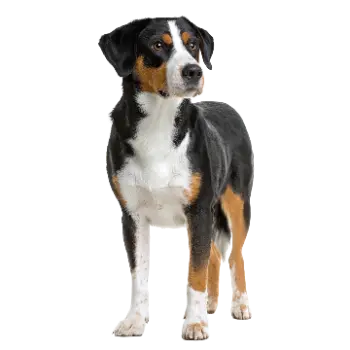
The Entlebuch Mountain Dog is a compact, strongly muscled, medium-sized herding dog whose physical proportions reflect centuries of selection for the demanding work of driving cattle on steep Swiss alpine pastures. The body is distinctly elongated - longer than tall in an approximate 8:10 ratio - creating a low-slung rectangular outline that provided stability and agility when working around the heels of cattle on mountainous terrain. Males stand 17 to 21 inches at the shoulder and weigh 45 to 65 pounds; females are proportionally smaller at 16 to 20 inches and 40 to 55 pounds. Despite the moderate size, the breed is surprisingly heavy and muscular for its height, reflecting the substantial bone and powerful musculature needed for physical work.

The head is well-proportioned and clean, with a flat skull, moderate stop, and a strong muzzle that is slightly shorter than the skull. The eyes are relatively small, round to slightly oval, and range from dark brown to hazel, expressing the alert, intelligent, and slightly mischievous demeanor that owners find so engaging. The ears are set high, triangular with rounded tips, and hang close to the cheeks when the dog is at rest, lifting slightly at the base when the dog is alert. The jaw is strong with a complete scissor bite.

The coat is the breed's most immediately recognizable feature - a short, close-fitting, harsh double coat in the striking tricolor pattern shared by all four Swiss Sennenhund breeds. The ground color is black, with symmetric tan markings (ranging from fawn to rich mahogany) over the eyes, on the cheeks, chest, and legs, and white markings on the blaze, muzzle, chest, feet, and tail tip. The white chest marking ideally forms an inverted cross or Swiss cross pattern, which breed enthusiasts consider a hallmark of correct type. The coat lies flat and has a glossy appearance, with a dense undercoat that provides insulation in alpine conditions.

The breed's movement is noteworthy - a ground-covering, efficient trot that reflects the sustained working gait needed for all-day cattle driving. Good reach in front and strong drive from behind produce fluid, balanced movement with a level topline. The tail, which may be a full-length tail carried level or slightly above the topline in motion, or a natural bobtail (a genetic variation accepted by all standards), adds to the breed's distinctive silhouette. The natural bobtail occurs in approximately half of all Entlebuchers and is neither favored nor penalized in the show ring.

Affectionate With Family
The Entlebuch Mountain Dog bonds intensely with its family and demands to be included in every aspect of household life. This is not a dog that tolerates being left in a yard or kennel - it wants to be at its owner's side throughout the day. The breed's affection is physical and demonstrative, often expressed through leaning, following, and enthusiastic greetings that can border on overwhelming. Breed enthusiasts frequently call it the laughing dog because of its characteristic open-mouthed, joyful expression when interacting with family members.
Good With Young Children
The Entlebuch Mountain Dog can be a spirited companion for children, but its cattle-driving heritage introduces behaviors that require management in family settings. The breed's instinct to herd through nipping at heels can be startling or painful for young children, and its physical exuberance during play can accidentally knock over toddlers. Older children who can participate in training and outdoor activities often develop outstanding partnerships with this breed. Early training to redirect herding impulses away from children is essential.
Good With Other Dogs
The Entlebuch Mountain Dog is generally sociable with other dogs when properly socialized, though some individuals display assertiveness or territorial behavior that requires management. The breed can coexist well with dogs it has been raised alongside. Multi-dog households benefit from structured introductions and clear establishment of household rules. The breed's confident, assertive personality means it will not back down from confrontation, making early socialization particularly important.
Shedding Level
The Entlebuch Mountain Dog sheds moderately throughout the year with heavier seasonal blowouts in spring and fall when the dense undercoat releases in significant quantities. During these periods, daily brushing is necessary to manage the volume of loose hair. Outside shedding season, the short, harsh outer coat releases hair at a manageable level that weekly brushing keeps under control. The hair is short enough to be less conspicuous on furniture than that of longer-coated breeds.
Coat Grooming Frequency
The Entlebuch Mountain Dog's short, close-fitting coat requires minimal grooming effort. Weekly brushing with a bristle brush or rubber grooming mitt removes loose hair and maintains the coat's natural sheen. During heavy shedding periods, daily brushing sessions help manage the increased hair loss. The coat does not mat, does not require trimming or professional grooming, and dries quickly after bathing or rain. This low-maintenance coat is one of the breed's practical advantages.
Drooling Level
The Entlebuch Mountain Dog is a clean, dry-mouthed breed with virtually no drooling tendency. The tight lips and well-proportioned muzzle prevent saliva accumulation. This tidiness makes the breed a pleasant indoor companion and contrasts favorably with some of the larger, heavier-jowled breeds in the working and herding groups.
Coat Type
The Entlebuch Mountain Dog possesses a short, close-fitting, harsh double coat with a dense undercoat that provides weather protection for outdoor work in alpine conditions. The outer coat lies flat against the body and has a firm, glossy texture. The characteristic tricolor pattern - black body with symmetric tan and white markings in the traditional Sennenhund distribution - gives the breed its striking appearance. This practical working coat requires no trimming or shaping.
Openness To Strangers
The Entlebuch Mountain Dog is typically reserved with strangers, assessing newcomers with watchful caution before deciding whether to engage. This wariness reflects the breed's guardian heritage - these dogs were expected to alert their farmers to unfamiliar people approaching the property. A well-socialized individual will accept strangers introduced by its owner without hostility, but the breed will rarely offer the immediate warmth of a retriever or spaniel. Insufficient socialization can produce a dog that is defensive or fearful around unfamiliar people.
Playfulness Level
The Entlebuch Mountain Dog is a genuinely playful breed that retains an energetic, sometimes clownish enthusiasm for games and interaction well into adulthood. The breed approaches play with the same intensity it brings to work - full speed, full commitment, and infectious joy. Fetch, tug, agility obstacles, and interactive chase games are all welcomed enthusiastically. This playfulness makes the breed an engaging companion for active owners but can become problematic if the dog has no productive outlets for its energy.
Watchdog/Protective Nature
The Entlebuch Mountain Dog is a naturally vigilant breed that takes its alerting duties seriously, barking to announce visitors, unusual sounds, and changes in the environment. The breed's voice is powerful and carries well - a characteristic developed through centuries of working on Swiss mountain farms where audible communication with the farmer was essential. This vocal alertness makes the breed an effective watchdog, but the barking tendency requires management in residential settings where neighbors may not appreciate the breed's enthusiasm for announcing every passing pedestrian.
Adaptability Level
The Entlebuch Mountain Dog can adapt to various living situations if its exercise and companionship needs are reliably met, but it is not an easy breed for apartment living or sedentary households. The breed's energy level, barking tendency, and need for outdoor activity make it best suited to homes with yard access and active owners. The breed adjusts to schedule changes and new environments with moderate flexibility, provided its core needs for physical activity, mental stimulation, and human companionship remain fulfilled.
Trainability Level
The Entlebuch Mountain Dog is an intelligent, problem-solving breed that learns quickly and responds well to positive, structured training. The breed's cattle-driving heritage produced a dog that needed to make independent decisions while still cooperating with its handler - a balance that creates a trainable but not blindly obedient companion. The breed excels in obedience, agility, herding, and rally when training is consistent, fair, and engaging. Harsh corrections produce a dog that becomes stubborn or shuts down. Firm, patient leadership with clear expectations produces the best results.

Entlebuch Mountain Dog History & Development

The Entlebuch Mountain Dog's history is rooted in the agricultural traditions of the Entlebuch valley, a rural region in the canton of Lucerne in central Switzerland, where small, agile cattle dogs served as essential working partners on mountain farms for centuries. The breed belongs to the family of four Swiss Sennenhund breeds, all of which descend from the large mastiff-type dogs believed to have been brought to the Swiss Alps by Roman legions over two thousand years ago. These ancient dogs interbred with local Swiss dogs over many generations, producing the foundation stock that eventually diverged into the four recognized Sennenhund types, differentiated by size, coat, and regional adaptation.

The Entlebucher occupied the smallest niche in this family, developed specifically for cattle driving rather than the draft and guardian work performed by its larger relatives. On the steep alpine pastures of central Switzerland, a smaller, more agile dog was needed to move cattle between seasonal grazing areas and to bring them in from distant pastures. The breed's elongated body, low center of gravity, and quick reflexes made it ideal for dodging kicks while nipping at the heels of stubborn cattle - a job that required both physical agility and the temperamental determination to persist in the face of resistance from animals many times its size.

The breed's formal recognition came later than that of its Swiss relatives. Professor Albert Heim, the Swiss geologist and canine researcher who championed the cause of the Swiss mountain dogs in the early twentieth century, identified the Entlebucher as a distinct type and advocated for its separate classification. The first breed standard was established in 1927, and the Swiss Kennel Club recognized the breed as distinct from the Appenzeller, which it most closely resembles in size. However, the breed's numbers were critically small by this time, and a dedicated breeding program was needed to prevent extinction.

The breed remained rare throughout the twentieth century, known primarily within Switzerland and neighboring German-speaking countries. Its introduction to North America began in the 1990s, and the National Entlebucher Mountain Dog Association was established to coordinate breeding, health testing, and education in the United States. AKC recognition in 2011 brought the breed to broader attention, though it remains among the rarest AKC breeds, with annual registrations numbering in the low hundreds. This rarity is both a challenge and a potential advantage: the small population demands exceptional care in breeding decisions to maintain genetic diversity, but it has also prevented the breed from experiencing the popularity-driven health and temperament deterioration that has affected more widely bred breeds.

Entlebuch Mountain Dog Temperament & Personality

The Entlebuch Mountain Dog possesses one of the most spirited, engaging, and demanding temperaments in the herding group - a combination of intense loyalty, high energy, quick intelligence, and a self-confident boldness that makes the breed simultaneously captivating and challenging. The FCI standard describes the temperament as lively, high-spirited, self-assured, and reliable, and these adjectives are accurate but understated. This is a breed that approaches life at full intensity, bringing the same drive and determination to family interactions that its ancestors brought to moving cattle on alpine slopes.

The breed's attachment to its family is profound and demonstrative. Entlebuchers are sometimes called the laughing dog because of the characteristic open-mouthed, joyful expression they display during enthusiastic greetings and play. The breed wants to be involved in every family activity - not merely present in the same room but actively participating in whatever is happening. Extended separation from its people produces genuine distress that can manifest as destructive behavior, excessive vocalization, or anxiety. This is not a dog for owners who work long hours away from home without providing companionship.

The breed's intelligence and problem-solving ability are genuine assets when channeled through training and structured activities, and genuine liabilities when the dog is bored and unsupervised. Entlebuchers figure out latches, gates, puzzle feeders, and escape routes with a speed and persistence that surprise owners accustomed to less cognitively engaged breeds. This intelligence requires consistent mental stimulation through training, interactive games, and structured activities. A bored Entlebucher does not simply lie quietly and wait - it finds something to do, and its choices rarely align with its owner's preferences.

The breed's herding instinct remains strong and manifests in domestic settings through behaviors that can be either charming or problematic depending on context. Entlebuchers may attempt to herd children, cats, other dogs, and even adult family members through nipping, circling, and body-blocking. These behaviors are not aggressive but reflect the breed's deeply ingrained drive to control movement. Early and consistent training to redirect herding impulses into acceptable outlets is essential for harmonious family life.

Entlebuch Mountain Dog Family Life & Living Requirements

The Entlebuch Mountain Dog thrives in active households that can provide consistent exercise, mental stimulation, and human companionship throughout the day. The breed's energy level, vocal nature, and need for engagement make it best suited to homes with yard access and owners who enjoy outdoor activities. Apartment living is technically possible but challenging due to the breed's barking tendency and need for physical activity - neighbors in close proximity may not appreciate the breed's powerful voice and its enthusiasm for announcing every change in the environment.

The breed's compatibility with children depends on management of its herding instincts and physical exuberance. A well-trained Entlebucher can be a wonderful companion for children old enough to participate in the dog's activities, but the breed's tendency to nip at heels and its sometimes overwhelming enthusiasm during play require supervision around young children. Teaching the dog appropriate play behavior and teaching children how to interact respectfully with the dog creates the foundation for a positive relationship.

The breed does best with an owner who understands working dog temperaments and is willing to provide the leadership, structure, and activity that the breed requires. First-time dog owners are not typically the best match unless they are prepared to invest significantly in education, training classes, and breed-specific mentorship. The breed's intelligence, energy, and self-confidence create a dog that needs clear boundaries and consistent expectations from an owner it respects. Without this leadership, the Entlebucher will cheerfully assume the decision-making role in the household.

The breed's Swiss heritage makes it well-suited to cooler climates, where its dense double coat provides comfortable insulation during outdoor activities. In warm climates, exercise should be scheduled during cooler hours, and the dog should have access to shade and fresh water at all times. The breed does not tolerate heat well, and its energy level during hot weather should be monitored to prevent overheating.

Entlebuch Mountain Dog Training & Exercise Needs

Training the Entlebuch Mountain Dog requires a handler who can balance firmness with fairness, providing the clear leadership the breed needs while respecting its intelligence and sensitivity. The breed is genuinely trainable - quick to learn, capable of complex task execution, and responsive to positive reinforcement - but it is not a dog that performs with the eager, unquestioning compliance of a Border Collie or Golden Retriever. The Entlebucher evaluates instructions, tests boundaries, and makes independent decisions about compliance based on its assessment of the situation. This is not defiance but the cognitive independence of a breed developed to make autonomous decisions while working cattle.

Positive reinforcement methods produce the best results with this breed. Food rewards, toy play, and interactive training that feels like partnership rather than dictation engage the Entlebucher's cooperative instincts. Harsh corrections, physical punishment, and dominance-based methods produce a dog that becomes either more stubbornly resistant or anxiously submissive - neither outcome is acceptable. The breed responds to consistent, fair leadership with genuine willingness and enthusiasm. Training sessions should be short, varied, and structured to end on success.

Exercise requirements are substantial and non-negotiable. The Entlebuch Mountain Dog needs a minimum of sixty to ninety minutes of vigorous daily activity, which should include a combination of structured exercise, interactive play, and mentally stimulating challenges. The breed excels in agility, herding trials, obedience competition, rally, dock diving, and scent work - activities that engage both body and mind. Running alongside a jogging or cycling partner, hiking on varied terrain, and swimming are all excellent physical outlets. The breed's endurance is impressive, and activities that would tire many breeds barely scratch the surface of what a fit Entlebucher can handle.

Mental stimulation is equally important and should complement physical exercise rather than substitute for it. The breed's active, problem-solving mind needs engagement through training sessions, puzzle feeders, scent games, and structured tasks. An Entlebucher that receives adequate physical exercise but no mental stimulation remains restless and destructive. The combination of vigorous daily exercise and regular cognitive challenges produces a calm, content, and manageable household companion.

Entlebuch Mountain Dog Health Concerns

The Entlebuch Mountain Dog is a generally healthy breed with an average lifespan of eleven to thirteen years, but its small global population and the genetic bottleneck that has shaped the modern breed concentrate several hereditary conditions that require informed management. The breed's health testing program, coordinated through NEMDA and the CHIC protocol, addresses the most significant concerns through mandatory screening that every responsible breeder should complete before producing a litter.

Progressive retinal atrophy has historically been the breed's most well-known hereditary eye condition. The development of a breed-specific DNA test in 2004 was a landmark achievement that allowed breeders to identify carriers and affected dogs before breeding, dramatically reducing the condition's prevalence in the modern population. The PRA test exemplifies how genetic testing can transform a breed's health landscape when used responsibly: carriers can be bred to clear dogs without producing affected puppies, maintaining genetic diversity while eliminating the disease phenotype. All breeding stock should be PRA-tested, and prospective buyers should request documentation.

Entlebucher Urinary Syndrome is a breed-specific complex of urinary abnormalities that represents one of the breed's more challenging health concerns. The syndrome may include ectopic ureters - a congenital condition in which the ureters connect to the bladder in abnormal locations, causing incontinence - along with kidney malformations and other urinary tract structural defects. The condition appears to have a hereditary component, though the specific genetic mechanism is not yet fully understood. Puppies from lines with a history of EUS should be evaluated early, and breeders should maintain transparent records about urinary conditions in their breeding lines.

Hip dysplasia and patellar luxation are the breed's primary orthopedic concerns, addressed through the CHIC protocol's mandatory hip and patella evaluations. The breed's compact, muscular build places mechanical stress on these joints, and maintaining appropriate body weight and providing regular exercise on varied terrain help preserve joint health throughout the dog's life. Immune-mediated hemolytic anemia has been documented in the breed, though it is not considered a major population-wide problem. Regular veterinary wellness examinations, including routine bloodwork, provide early detection opportunities for this and other emerging conditions.

The breed's rare status creates a specific health management challenge: the small breeding population means that every breeding decision carries amplified genetic consequences. Breeders must balance the need to reduce disease prevalence against the equally important need to maintain genetic diversity. Over-reliance on a few popular sires or aggressive culling of carriers can create new problems by narrowing the gene pool further. NEMDA's pedigree database and international cooperation with Swiss breed organizations help breeders navigate these competing priorities.

Common Health Issues

  • Hip Dysplasia - Abnormal development of the hip joint that leads to progressive arthritis, pain, and mobility impairment. OFA hip evaluation is a required CHIC screening test for the breed. Both parents should have documented hip evaluations before breeding, with radiographs taken at twenty-four months or older.
  • Progressive Retinal Atrophy (PRA) - An inherited degenerative eye disease causing progressive vision loss, beginning with night blindness and advancing to complete blindness. A breed-specific DNA test has been available since 2004, allowing breeders to identify clear, carrier, and affected dogs. PRA DNA testing is a required CHIC screening test, and responsible use of the test has significantly reduced the condition's prevalence.
  • Patellar Luxation - Displacement of the kneecap from its normal groove in the femur, causing intermittent to chronic lameness. An OFA patellar evaluation is a required CHIC screening test. Severity ranges from grade 1 (manual displacement with spontaneous return) to grade 4 (permanent displacement requiring surgical correction).
  • Ectopic Ureter - A congenital condition in which one or both ureters connect to the bladder in an abnormal location, causing urinary incontinence. The condition has been documented in the breed at higher rates than in many other breeds. Diagnosis typically requires advanced imaging, and surgical correction is the primary treatment.
  • Entlebucher Urinary Syndrome (EUS) - A breed-specific complex of urinary abnormalities that may include ectopic ureters, urinary incontinence, and kidney malformations. The condition appears to have a hereditary component and is a significant concern within the breed. Awareness and screening within breeding programs is essential for reducing its prevalence.
  • Hemolytic Anemia (Immune-Mediated) - An autoimmune condition in which the immune system destroys the body's own red blood cells, causing anemia, weakness, and potentially life-threatening complications. The condition has been documented in the breed, though it is not considered a major breed-wide problem. Early detection through routine bloodwork and prompt veterinary treatment improve outcomes.

Preventive Care & Health Monitoring

  • OFA hip evaluation at twenty-four months or older - Required CHIC test. Radiographic evaluation with results registered with OFA. A preliminary report can be issued at eighteen months, but final certification requires evaluation at twenty-four months. Both parents should have documented hip evaluations before breeding.
  • PRA DNA test - Required CHIC test. The breed-specific DNA test identifies clear, carrier, and affected dogs. All breeding stock should be tested, and matings should be planned to ensure no affected puppies are produced. At minimum, one parent should be clear.
  • OFA patellar luxation evaluation - Required CHIC test. Veterinary physical examination of the knees with results registered with OFA. The evaluation should be performed after twelve months of age.
  • Annual CAER eye examination by a board-certified veterinary ophthalmologist - Required CHIC test. Annual eye examination screens for PRA, cataracts, glaucoma, and other hereditary ocular conditions. Results are registered with OFA. The eye examination is the only CHIC test that must be repeated annually for breeding dogs.
  • Urinary system evaluation and monitoring - Given the breed's documented susceptibility to ectopic ureters and Entlebucher Urinary Syndrome, owners should monitor for signs of urinary incontinence, frequent urination, or urinary tract infections. Puppies from lines with a history of EUS should be evaluated by a veterinarian experienced with the condition.
  • DNA sample registration with AKC - NEMDA requires that all breeding Entlebuchers have DNA samples collected, analyzed, and registered with the AKC. This supports pedigree verification and contributes to breed-wide genetic research efforts.

Entlebuch Mountain Dog Grooming & Maintenance

The Entlebuch Mountain Dog's short, harsh double coat is one of the most practical and low-maintenance coats in the herding group. The breed requires no professional grooming, no trimming or shaping, and no elaborate coat care routine. Weekly brushing with a bristle brush or rubber grooming mitt removes loose hair, distributes natural skin oils, and maintains the coat's characteristic glossy appearance. During the biannual shedding seasons in spring and fall, when the dense undercoat releases in significant quantities, daily brushing sessions of ten to fifteen minutes manage the increased hair volume.

Bathing should be done as needed rather than on a fixed schedule. The short, harsh outer coat sheds dirt naturally and does not accumulate odor quickly. Most Entlebuchers need bathing every six to eight weeks under normal conditions, with more frequent bathing appropriate for dogs that work or play in muddy or dirty environments. A mild dog-specific shampoo followed by thorough rinsing and drying is sufficient. The coat dries quickly due to its short length, and no blow-drying or special drying procedures are necessary.

Ear care requires weekly inspection of the hanging ears for redness, odor, or discharge. The pendant ear type restricts airflow to the ear canal, creating conditions that can promote bacterial and yeast infections. Cleaning with a veterinary-approved ear solution after water exposure and during weekly grooming sessions helps prevent problems. Dental care through regular brushing with canine toothpaste reduces periodontal disease risk - a concern in all breeds but particularly important in a breed that may already face veterinary expenses related to its other health conditions.

Nail trimming should occur every two to three weeks unless the dog's activity on hard surfaces maintains nail length naturally. Active Entlebuchers that run regularly on pavement or hard-packed trails may need less frequent trimming. The dewclaws, if present, should be included in the trimming routine. Grooming sessions serve double duty as health monitoring opportunities for this breed: the regular handling involved in brushing, ear cleaning, and nail trimming normalizes physical contact that will make veterinary examinations easier, and it provides an opportunity to check for lumps, skin changes, parasites, or areas of sensitivity that might indicate developing health issues.