Dobe

Doberman Pinscher

Quick Facts

🐕 Breed Group
Working Group
📏 Size Category
Large
📏 Height
Males: 26-28 inches, Females: 24-26 inches
⚖️ Weight
Males: 75-100 pounds, Females: 60-90 pounds
⏱️ Life Expectancy
10-12 years
🧣 Coat Type
Short, smooth, close-lying
🎨 Coat Colors
Black and rust, red and rust, blue and rust, fawn (Isabella) and rust
😀 Temperament
Loyal, alert, intelligent, energetic, protective
🏃 Exercise Needs
High
🎓 Training Difficulty
Easy - highly trainable but needs consistent guidance
👶 Good with Children
Good with family children, supervision with young children recommended
🐾 Good with Other Pets
Generally manageable with socialization, may be dominant with other dogs

Other Names & Breed Recognition

Dobe is what Doberman Pinscher owners call their dogs. Not at the dog park when you are explaining the breed to someone who has never seen one - in those conversations you probably use the full name. But at home, talking to the dog itself, or texting a friend about what your dog just did, Dobe is the natural shorthand. It is an affectionate contraction that communicates both familiarity with the breed and a certain pride of ownership. If someone calls their dog a Dobe, you already know they live with one.

The full registered name is Doberman Pinscher in the United States - named after Louis Dobermann, the German tax collector and dog pound manager who developed the breed in the 1880s, and Pinscher, the German word for terrier or biting dog. In much of Europe and in FCI-member countries, the breed is known as the Dobermann without the Pinscher suffix. That spelling difference reflects a genuine divergence in how the breed has developed in American and European lines over the past century. American Dobes and European Dobermanns are the same breed on paper but have been selectively bred toward somewhat different priorities - American lines toward a leaner, more elegant type; European lines toward a heavier, more working-functional build.

Other nicknames include Dobie, functionally interchangeable with Dobe - both are affectionate contractions in wide use among owners. Dobermann with double n is the alternate spelling used internationally and by FCI registries. Some older references used Doberman Pinscher Terrier as an early descriptor of the breed's mixed ancestry, but this usage is long obsolete.

The AKC has recognized the Doberman Pinscher since 1908 and places it in the Working Group. The breed is also recognized by the United Kennel Club, the Canadian Kennel Club, the Kennel Club in the United Kingdom, and the FCI under Standard No. 143. The Doberman Pinscher Club of America serves as the AKC parent club and maintains the breed standard, health testing protocols, and breeder resources. For anyone who knows this breed as a Dobe, the DPCA breeder referral network is the right starting point for finding a well-bred puppy from health-tested parents.

Dobe Organizations & Standards

The Doberman Pinscher Club of America is the AKC parent club and the primary resource for breed standards, health testing requirements, and breeder referrals in the United States. The DPCA has been active in health research and has worked closely with Doberman Health, Inc. on cardiac research initiatives - a reflection of the breed community's awareness that dilated cardiomyopathy is the dominant health challenge facing the Dobe. Buyers looking for responsible breeders should start with the DPCA's referral network.

The AKC breed standard describes the Doberman Pinscher as a medium-large dog with a compactly built, muscular, and powerful body. The standard emphasizes elegance of outline - this is not a blocky, heavy-boned breed but one that conveys both strength and speed. Males measure 26 to 28 inches at the shoulder; females 24 to 26 inches. The overall impression should be alertness and energy balanced with substance and confidence. The standard penalizes both excessive coarseness and excessive refinement - the ideal is the athletic middle.

The Canine Health Information Center (CHIC) program through OFA establishes the required health testing protocol for the breed. For Dobes, this includes cardiac evaluation by a board-certified cardiologist using echocardiography - not a basic stethoscope listen but a full echo study capable of detecting early DCM before clinical signs appear. Von Willebrand's Disease Type I DNA testing is also required. Additional recommended testing includes OFA hip evaluation, thyroid panel through an approved laboratory, and CAER eye examination.

In Europe and FCI countries, the Dobermann club structure operates within each national kennel club. The International Dobermann Club holds an annual world championship that attracts competitors from across Europe and emphasizes working ability alongside conformation. European lines are generally bred to a working standard that requires demonstrated working aptitude, not just conformation results.

Buyers choosing between American and European Dobe lines should research what those differences mean in practice. European Dobermanns bred to IGP working standards tend to carry higher drive and more pronounced protective instincts; American show-line Dobes may be somewhat softer in temperament. Neither is better in an absolute sense - the right fit depends on the owner's experience level and intended use. Talking to breeders who are transparent about their breeding priorities is more informative than relying on generalizations about line type.

The CHIC database is a practical tool buyers should use before purchasing any Dobe puppy. Searching both parents' registered names in the OFA database confirms whether required tests have been completed and passed. A breeder who has not health-tested breeding stock is telling you something important about their program. The extra step of verifying health clearances independently - rather than accepting verbal assurances - is the single most impactful thing a buyer can do to reduce health risk in their puppy.

Kennel Club Recognition

  • American Kennel Club (AKC): Recognized in 1908, Working Group
  • United Kennel Club (UKC): Recognized, Guardian Dog Group
  • Canadian Kennel Club (CKC): Recognized, Working Group
  • FCI: Recognized, Group 2 - Pinscher and Schnauzer
  • The Kennel Club (UK): Recognized, Working Group

Dobe Physical Description

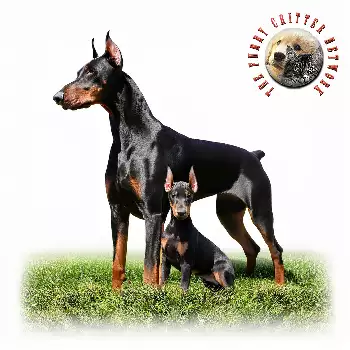
The first thing people notice about a well-bred Dobe is the silhouette - that clean, angular, almost architectural outline. This is a dog that looks like it was designed rather than evolved, every proportion considered, every angle purposeful. Standing alert with ears up and tail carried, the Dobe has a presence that is genuinely striking. Even people who are not particularly interested in dogs tend to take a second look.

The head is long and dry - meaning the skin lies flat without looseness or wrinkling - with a flat, wedge-shaped skull and a strong, well-defined muzzle that is nearly equal in length to the skull. The stop is slight. Eyes are almond-shaped, medium-sized, and carry an alert, vigorous expression capable of communicating both warmth toward family members and sharp evaluation of the unfamiliar. Ears are set high and, when cropped, stand erect and frame the angular head. Natural uncropped ears fold down and lie close to the head, giving a somewhat softer appearance. Both are accepted under the AKC standard.

The neck is long, dry, and well-arched, rising cleanly from the shoulders and contributing significantly to the breed's elegant profile. The body is square to slightly square, with a broad, deep chest, level topline, and a short, firm loin. The ribcage is well-developed and the chest deep but not exaggerated. The underline shows a slight tuck-up that contributes to the athletic impression. The tail is docked short in countries where docking is permitted; in countries where it is prohibited, the natural tail is long and tapered.

Legs are straight and clean-boned with compact, cat-like feet. The hindquarters are well-angulated with strong, muscular thighs. The overall musculature is visible but not exaggerated - this dog should look capable, not overdeveloped. At a trot the Dobe moves with a driving, ground-covering stride that reflects good structure and correct angulation. Movement should be free and effortless, with head and tail carriage adding to the impression of a dog that is alert even in routine locomotion.

The coat is short, smooth, hard, and thick, lying so close to the body that it highlights the musculature and clean lines underneath. Color options are black and rust, red and rust, blue and rust, and fawn (Isabella) and rust. The rust markings appear above each eye, on the muzzle, throat, chest, legs, feet, and below the tail. White markings are a disqualification, reflecting that white or cream Dobes carry genetic concerns associated with partial albinism. The blue and fawn color variants can carry a predisposition to color dilution alopecia - a skin condition worth discussing with breeders who produce these colors.

Size variation within the standard is worth noting. A male at 26 inches and 75 pounds and one at 28 inches and 100 pounds are both within standard but meaningfully different dogs to manage. Buyers should clarify with breeders where their program tends to fall within the size range, particularly if managing a large dog is a physical consideration.

The Dobe's movement at a full run is equally impressive - this breed can cover ground at speed that surprises people unfamiliar with it. The combination of good rear angulation, strong drive, and a supple back produces a stride that is both efficient and visually striking. At work or at play, the Dobe in motion looks like a dog doing exactly what it was built to do. That athleticism is not just aesthetic; it is what makes the breed competitive in protection sports, agility, and any other physically demanding activity owners bring it into.

One physical trait worth noting for buyers is ear set and crop style. The traditional show crop leaves ears moderately long and erect; working crops tend to be shorter. Natural uncropped ears have become increasingly common as more countries restrict cosmetic procedures and as owner preferences shift. The dog functions identically either way - the cropped ear is tradition and breed standard show compliance, not a functional requirement.

Affectionate With Family
The Dobe lives for its people - this breed bonds intensely and wants to be wherever you are. Velcro dog is an understatement; they follow you from room to room and are genuinely unhappy when separated from their family.
Good With Young Children
Dobes raised with children are typically patient and protective companions. Their size and energy level call for supervision around very young kids, but the breed's intelligence makes them responsive to clear household rules.
Good With Other Dogs
A well-socialized Dobe coexists fine with other dogs, though same-sex dominance issues can surface. Early and consistent socialization matters more for this breed than for many others.
Shedding Level
The short coat sheds consistently but not dramatically. Regular wiping down with a grooming mitt keeps shedding manageable - you will find Dobe hairs on dark clothing, but it is not the seasonal avalanche some breeds produce.
Coat Grooming Frequency
Low maintenance is one of the Dobe's many practical virtues. A quick wipe-down weekly and a bath every month or two is genuinely all the coat work this breed requires.
Drooling Level
Not a drooler. The Dobe's tight-lipped structure and general cleanliness make it one of the tidier large breed options for people who care about that sort of thing.
Coat Type
Short, tight, and low-maintenance - the Dobe's coat lies close to the body and highlights the breed's athletic build. No trimming, no stripping, no special products needed.
Openness To Strangers
The Dobe evaluates strangers rather than greeting them with immediate enthusiasm. A well-socialized Dobe is not aggressive toward visitors, but it is watchful, and it notices everything.
Playfulness Level
Dobes are genuinely playful and retain a puppyish energy well into adulthood. They enjoy interactive games, chase, and mental challenges that engage their considerable intelligence.
Watchdog/Protective Nature
The Dobe was created specifically to be a protection dog, and that instinct is still very much present. Alert, fast-reacting, and deeply bonded to its family, this breed takes the job seriously without requiring encouragement.
Adaptability Level
The Dobe adapts reasonably well to different living situations as long as its exercise and mental stimulation needs are met. An apartment Dobe that gets two serious daily exercise sessions can manage; a suburban Dobe left alone all day cannot.
Trainability Level
Few breeds match the Dobe for trainability. They pick up commands quickly, remember them, and want to work with their person. The challenge is not getting them to learn - it is giving them enough to do.

Dobe History & Development

The Dobe has one of the best-documented breed origin stories in dog history because the person who created the breed is known by name. Louis Dobermann was a tax collector in Apolda, Germany in the 1880s who also managed the local dog pound. His job put him in situations where having a physically capable, intimidating, and intelligent dog alongside him was a practical advantage - and he had access to the regional dog population to work with. He set out deliberately to create a breed combining loyalty, alertness, physical capability, and genuine protective instinct.

The specific crosses that produced the Dobermann are debated because Dobermann kept no formal records. The most supported theory involves the German Pinscher, Rottweiler, Weimaraner, German Shepherd Dog, and possibly the Black and Tan Terrier. What Dobermann produced in a short time was a remarkably successful working type that quickly attracted attention beyond Germany. After Dobermann's death in 1894, fanciers continued refining the breed, with Otto Goeller generally credited with formalizing breed type.

The informal name Dobe developed organically as the breed spread into English-speaking countries, appearing in owner correspondence from the early 20th century onward. It was a natural shortening of a name that was a mouthful in English. By mid-century, when the breed was well-established in the United States as both a working dog and companion, Dobe was firmly the name owners used among themselves. It carried an affection and insider familiarity that the formal name did not.

The breed's reputation went through significant swings during the 20th century. In the 1970s and 1980s, Dobes were portrayed in popular media as inherently dangerous - a reputation built more on appearance than actual behavioral record. This period produced demand from owners who wanted aggression, which incentivized breeding decisions that prioritized size and sharpness over the stable, trainable temperament the standard calls for. Responsible breeders and breed clubs worked through that period to maintain sound temperament as a non-negotiable priority.

Modern Dobes have demonstrated their capabilities across police and military work, search and rescue, therapy dog service, competitive obedience and protection sports, and service dog work for individuals with disabilities. The name Dobe reflects how people who actually live with these dogs experience them - not as the media caricature, but as devoted, intelligent partners that happen to be formidable when the situation calls for it.

The informal name Dobe also carries a specific cultural meaning within the breed community. It signals that the person using it is not talking about the media caricature or the guard-dog-for-hire stereotype - they are talking about the actual animal that Doberman Pinscher owners know and live with. Using the nickname implies a familiarity and an affection that the formal name, with its associated baggage, sometimes does not. It is the name used by people who know firsthand that this dog is a devoted family member first and a formidable protector second.

Today the Dobe occupies a secure position in American and European dog culture - respected by working dog communities, valued by active families, and appreciated by anyone who has taken the time to know the breed beyond its reputation. The name Dobe persists because it accurately describes the experience of owning one: familiar, capable, loyal, and entirely worth the investment.

Dobe Temperament & Personality

The Dobe is often described as Velcro because that captures something real about how the breed bonds. This is not a dog that is fine in a different room from you - it is a dog that needs to be where you are, that tracks your movements through the house, that settles when you settle and is ready when you are ready. That intensity of connection is one of the breed's most appealing traits to people who love it, and it is the core of what makes the Dobe such an effective personal protection dog. You cannot fake that kind of loyalty on command - the Dobe brings it naturally.

Intelligence in the Dobe is not just about learning commands quickly, though they do that easily. It is about situational awareness - the ability to read a room, evaluate people and dynamics, and make judgments. Owners frequently describe the experience of feeling like the dog is thinking, not just reacting. This cognitive engagement is part of what makes Dobes so rewarding to train, and it is also why under-stimulated Dobes become destructive. A bored Dobe with nothing to think about will find things to think about, and you will not always approve of the curriculum it designs for itself.

The protective instinct in the Dobe is genuine and does not require training to activate. What training does is give the dog the judgment to distinguish between situations that warrant a response and situations that do not. A well-trained, well-socialized Dobe is stable in public, accepts visitors appropriately, and reserves its protective response for situations that actually call for it. An under-socialized Dobe may express its protective instinct in ways that are difficult to manage - reactive on leash, overalert with visitors, or inappropriate in public settings where a calm, measured response is what is needed.

Separation anxiety is a documented behavioral pattern in the breed. The same intensity of bonding that makes Dobes such devoted companions can make extended alone time genuinely distressing for the dog. This is not a breed for households where the dog will be home alone eight to ten hours a day without structured outlets. Dobes do best in households with frequent human presence or where exercise and mental needs are met before alone time begins.

One trait that surprises new Dobe owners is the breed's sensitivity. Despite the imposing exterior, these dogs are emotionally attuned and respond strongly to the emotional climate of the household. They pick up on a raised voice or a change in routine and respond with visible concern. This sensitivity is part of what makes them such effective protection dogs - they are reading their environment constantly - but it also means they need a stable home environment to thrive. Chaotic or high-conflict households produce anxious, reactive Dobes. A dog that gets two meaningful exercise sessions a day and regular training engagement is a very different animal to live with than one that gets a walk around the block and is left to its own devices.

Dobe Family Life & Living Requirements

Dobes work well in family households when the match is right. The breed's intelligence and loyalty make it a responsive, protective companion, and Dobes that grow up with children typically develop strong bonds with the kids in the household. The size and energy level call for supervision around very young children simply because an excited Dobe can knock a toddler over without meaning to. The protective instinct is generally directed appropriately with proper socialization, but any dog of this size and drive requires that adults stay involved in how it interacts with children it does not know well.

The Dobe's exercise needs are non-negotiable. This is a high-energy breed that needs significant daily physical output - two solid exercise sessions a day is a reasonable baseline, and dogs involved in sports or active outdoor activities with their owners are generally the most settled and easiest to live with. A yard is helpful but not a substitute for exercise with the owner; a Dobe will not exercise itself purposefully in a yard alone.

Housing flexibility is reasonable as long as the exercise piece is handled. Dobes have adapted to urban apartment living in households where owners were genuinely committed to meeting their needs. What they do not adapt to is neglect of their physical and mental requirements regardless of setting. A large house with an untended Dobe is worse than a small apartment with an actively engaged one.

The Dobe's short coat makes it sensitive to cold weather. This is not a breed for outdoor kennels in cold climates, and cold-weather exercise needs to account for the dog's actual comfort. A dog coat for winter walks is a practical accommodation to the breed's minimal insulation.

The Dobe's lifespan of 10 to 12 years is shorter than some large breeds. The cardiac health issues documented in the breed mean that some Dobes leave earlier than their owners are ready for. Building a relationship with a veterinary cardiologist who does regular monitoring - not just waiting for symptoms to appear - is part of responsible Dobe ownership and the best tool available for managing the breed's primary health vulnerability throughout its life.

People who have owned other breeds and then acquired a Dobe frequently comment on the difference in presence. A Dobe does not exist in the background of your home - it is engaged in what you are doing, aware of who is there, invested in the household's activity. This constant awareness is part of the breed's charm for owners who want a dog that is genuinely connected to them, and it is also why this breed is not a good fit for owners who want an independent dog that can entertain itself.

Dobe Training & Exercise Needs

Training a Dobe is one of the more rewarding experiences in dog ownership if you approach it correctly. These dogs are genuinely eager to engage with their people and pick up new material fast. The challenge is not the learning curve - it is making sure you are providing enough challenge. A Dobe that masters basic obedience quickly is not done training; it is ready for the next level. Obedience sports, protection sports, scent work, tracking, agility - these dogs have the drive and the intelligence for serious competitive training if you want to take it there.

Positive reinforcement methods work well with Dobes. They are sensitive dogs beneath the confident exterior - harsh corrections produce resentment and avoidance, not compliance. The breed is self-aware enough to disengage from a training relationship that feels punitive, and a Dobe that has decided the training is not worth engaging with is a harder problem than a training plateau. Keep sessions positive, end on success, and be consistent in expectations.

Socialization during puppyhood is the single most important investment you can make in a Dobe's future. The breed's natural wariness toward strangers and its protective instincts need to be calibrated during the developmental window between 8 and 16 weeks. Puppy classes, exposure to different environments, and controlled positive interactions with many different people shape an adult dog that is stable in public rather than reactive and unpredictable. Missing this window is recoverable but expensive in time and effort.

Exercise should be vigorous and varied. Long runs, structured fetch sessions, swimming, hiking - the Dobe is a willing and capable athlete that appreciates a real workout rather than a leisure stroll. Mental exercise matters equally; brain fatigue from a solid training session produces a more settled dog than physical exercise alone. Dog sports are a natural fit and a genuine solution for owners who want a constructive outlet for the breed's drive. AKC obedience and rally, IGP protection sports, nose work, dock diving - Dobes compete successfully across a wide range of venues and develop deep partnerships with owners who take sport seriously. Even owners not interested in formal competition find that training toward a goal gives both the owner and dog something meaningful to work on together.

One training area that pays particular dividends with Dobes is impulse control work. Teaching a Dobe to wait, to leave it, and to defer to the handler in high-stimulation situations builds the kind of self-regulation that makes the breed's protective instincts manageable in daily life. A Dobe that has learned to check in with its handler before reacting is dramatically easier to manage in public than one that has been allowed to self-direct its responses. This is the practical application of the cooperative relationship the breed needs.

Dobe Health Concerns

Dilated Cardiomyopathy (DCM) is the most serious and well-documented health concern in the Dobe, and any honest conversation about the breed has to start here. DCM is a condition where the heart muscle weakens and enlarges, reducing its ability to pump blood effectively. In Dobes, DCM can progress from a preclinical phase - where the heart is affected but the dog shows no outward symptoms - to sudden cardiac death without significant warning. Research has identified genetic markers associated with DCM risk in the breed, and annual cardiac monitoring by echocardiography is strongly recommended starting at age two. The DPCA and Doberman Health, Inc. have been actively involved in funding cardiac research and encouraging owners to participate in screening programs.

Prospective Dobe owners should build a relationship with a cardiologist before health problems arise, not after. Identifying a practice that performs regular Dobe cardiac screening and establishing a baseline echocardiogram for your dog at age two gives you the comparative data needed to track changes over time. This proactive approach is the standard of care the breed community has developed in response to DCM, and it is the practical step that gives affected dogs the best chance of receiving early intervention.

Common Health Issues

  • Dilated Cardiomyopathy - DCM, : The most significant documented health concern in the Dobe, involving progressive weakening and enlargement of the heart muscle. Can reach sudden cardiac death without obvious prior symptoms; annual echocardiographic monitoring is strongly recommended starting at age two.
  • Von Willebrand's Disease Type I - VWD, : A genetic clotting disorder that causes abnormal bleeding from minor wounds or surgical procedures. A DNA test identifies clear, carrier, and affected status; responsible breeders test breeding stock.
  • Wobbler Syndrome - Cervical Vertebral Instability, : A spinal condition causing compression of the cervical spinal cord, resulting in a characteristic wobbly hindquarter gait. The Dobe's anatomy places it at elevated risk for this condition.
  • Hypothyroidism: Documented in the breed with typical middle-age onset, causing weight gain, lethargy, and coat changes. Manageable with daily thyroid medication once diagnosed - OFA thyroid testing is recommended for breeding stock.
  • Color Dilution Alopecia: A skin condition associated with the blue and fawn color variants - Causing hair thinning and skin sensitivity. Buyers of these color variants should discuss the risk with their breeder.

Preventive Care & Health Monitoring

  • Annual Cardiac Monitoring by Echocardiography: Given the Dobe's documented DCM risk, annual echo screening by a cardiologist starting at age two is strongly recommended - A full echocardiographic study, not just a stethoscope listen.
  • Von Willebrand's Disease DNA Test: Request vWD DNA results for both parents when purchasing a puppy - Clear and carrier status are both acceptable from a safety standpoint when breeding is managed responsibly.
  • OFA Hip Evaluation: Part of the CHIC required protocol for the breed - Verify OFA ratings on both sire and dam.
  • OFA Thyroid Panel: Thyroid testing through an OFA-approved laboratory is required for CHIC certification - Ask breeders for documentation.
  • CAER Eye Examination: Annual ophthalmologic evaluation is part of the recommended health protocol - Breeders completing all CHIC requirements will have CHIC numbers verifiable through the OFA database.

Dobe Grooming & Maintenance

The Dobe's short, close coat is one of its genuine lifestyle advantages. Weekly grooming is a five-minute job with a grooming mitt or rubber curry brush - just enough to lift dead hair and distribute skin oils. Shedding is consistent but moderate; you will find Dobe hairs on dark clothing and upholstered furniture, but the volume is nothing like a heavy-coated breed. Keeping a lint roller handy is the practical solution for owners who care about their furniture.

Bathing frequency depends on how much outdoor time the dog gets and whether it has managed to find anything interesting to roll in. A monthly bath is a reasonable baseline. The short coat dries quickly and does not require special drying technique. A gentle shampoo formulated for dogs with sensitive skin works well for Dobes, particularly the blue and fawn color variants that can be prone to skin sensitivity.

Nail trimming is the maintenance task most Dobe owners need to stay consistent about. Active dogs that cover concrete on daily walks will wear nails down naturally, but dogs in softer-surface environments may need trimming every two to three weeks. Overgrown nails affect gait and can cause posture issues over time. Ears cropped and carried erect require regular cleaning to remove debris from the ear canal. Uncropped natural ears need regular checking for moisture and debris. Teeth benefit from a regular brushing routine or dental chews.

One underappreciated aspect of Dobe grooming is how much the weekly handling routine builds a dog that is calm and cooperative at veterinary visits. For a breed with documented health vulnerabilities that may require regular cardiac exams, a dog accustomed to being thoroughly handled from puppyhood is a genuine asset. Five minutes a week during the puppy stage pays off every single time the dog needs hands-on examination by a veterinarian.

The Dobe's overall cleanliness and low-maintenance coat make it one of the more practical large breed choices for people who want a dog without a significant grooming burden. The time investment in weekly maintenance is genuinely minimal. What matters is consistency - doing a little every week rather than neglecting it and facing a larger task. Five minutes with a mitt and a brush, a quick check of ears and nails, and you are done. For a dog with this much personality and capability, the grooming overhead is remarkably low.