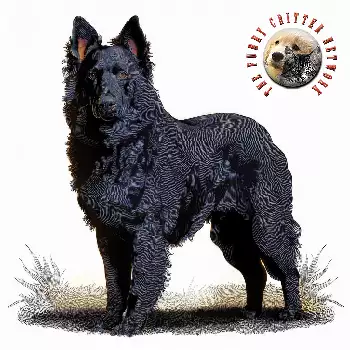
Croatian Sheepdog

Croatian Sheepdog
Gallery coming soon

Furry Critter Network Etsy Shop

Quick Facts

🐕 Breed Group
Herding
📏 Size Category
Medium
📏 Height
16-21 inches
⚖️ Weight
29-45 pounds
⏱️ Life Expectancy
12-14 years
🧥 Coat Type
Medium-length, wavy to curly double coat
🎨 Coat Colors
Black, Black with small white markings
😀 Temperament
Alert, Agile, Intelligent, Loyal
🏃 Exercise Needs
High
🎓 Training Difficulty
High
👶 Good with Children
Yes, with socialization
🐾 Good with Other Pets
Yes, with socialization

Other Names & Breed Recognition

The Croatian Sheepdog stands as one of the most historically significant native breeds of the Balkan region, carrying a heritage that extends back through centuries of documented history in the fertile plains of Croatia. This agile herding dog is known by several names that reflect its deep roots in Croatian culture and agricultural tradition, with each designation providing insight into the breed's character and origins.

The most widely used name in the breed's homeland is Hrvatski Ovčar, which translates directly to Croatian Sheepdog in the Croatian language. This designation emphasizes the breed's national identity and its primary function as a guardian and herder of livestock. The name has remained consistent throughout centuries of written records, appearing in historical documents dating back to the fourteenth century when church records first described these distinctive black dogs working alongside Croatian shepherds.

In historical Latin documents, the breed was recorded as Canis Pastoralis Croaticus, meaning Croatian Shepherd Dog. This scholarly designation appears in the earliest written records of the breed, including a notable account from 1374 by Petar, Bishop of Đakovo, who described the breed's appearance and working abilities in detail. The Latin name has been preserved in academic and historical discussions of the breed, providing a link to its documented medieval heritage.

The breed is sometimes referred to simply as the Croatian Shepherd, particularly in English-language contexts where the terms sheepdog and shepherd dog are often used interchangeably. This variation acknowledges the breed's versatility in working with various livestock, not limited solely to sheep. Historical accounts document Croatian Sheepdogs successfully herding cattle, pigs, and poultry in addition to their work with sheep.

Regional variations of the name exist within Croatia, reflecting the breed's primary association with specific geographic areas. The plains of Slavonia, particularly the area around Đakovo in eastern Croatia near the Hungarian border, are considered the breed's historic homeland. Dogs from this region were specifically selected by Dr. Stjepan Romić when he began his systematic breeding program in 1935, ensuring the preservation of authentic bloodlines.

The Croatian Sheepdog's recognition by international kennel clubs reflects its growing appreciation beyond its native land. The Fédération Cynologique Internationale officially recognized the breed in 1969, classifying it within Group 1 as a sheepdog and cattle dog. This international recognition validated decades of preservation efforts and established the breed standard that guides breeders worldwide. The United Kennel Club recognized the Croatian Sheepdog in 2006, placing it in the Herding Dog Group.

The American Kennel Club includes the Croatian Sheepdog in its Foundation Stock Service, a program designed to maintain records for rare breeds working toward full recognition. This inclusion indicates the breed's growing presence in North America and the increasing interest among American fanciers. The Foundation Stock Service represents an important step toward eventual full AKC recognition as the breed's numbers and visibility continue to grow.

Croatia itself recognizes the Croatian Sheepdog as one of seven official dog breeds indigenous to the nation, reflecting the breed's cultural and historical significance. This national recognition places the Croatian Sheepdog alongside other Croatian breeds as a living heritage of the country's agricultural traditions. The breed is considered a national treasure, representing centuries of selective breeding by Croatian farmers who valued working ability above all other characteristics.

Breed clubs dedicated to the Croatian Sheepdog operate in several countries, working to preserve the breed's characteristics while promoting responsible breeding practices. These organizations maintain breed standards, organize events, and educate prospective owners about the breed's specific needs and temperament. The Croatian Kennel Club serves as the primary authority in the breed's homeland, maintaining records and overseeing breeding programs that preserve authentic Croatian Sheepdog bloodlines.

Croatian Sheepdog Organizations & Standards

The Croatian Sheepdog benefits from recognition by several major international kennel organizations, each maintaining standards that preserve the distinctive characteristics developed through centuries of selective breeding in the Croatian plains. These standards ensure consistency in type while acknowledging the breed's functional heritage as a working herding dog capable of demanding farm duties.

The Fédération Cynologique Internationale holds the primary international standard for the Croatian Sheepdog, having officially recognized the breed in 1969 after decades of preservation efforts. The FCI classifies the breed in Group 1, Section 1, as a sheepdog and cattle dog, acknowledging its traditional dual-purpose role on Croatian farms. The FCI standard describes an alert, agile dog of medium size with a characteristic curly black coat that has remained essentially unchanged since medieval documentation of the breed.

The FCI standard specifies height between forty and fifty centimeters at the withers, with an ideal height of forty-five centimeters, and emphasizes that the body should be slightly longer than tall. The standard calls for a weight proportionate to height, typically between thirteen and twenty kilograms. These specifications reflect the practical size required for a herding dog that must be agile enough to work livestock while substantial enough to withstand long hours of demanding physical activity.

The standard describes the head as relatively light, wedge-shaped, and well-proportioned to the body. The skull should be slightly rounded with a moderate stop, and the muzzle should taper slightly without appearing pointed. The expression should convey intelligence and alertness, characteristics essential for a working herding dog. The standard specifies dark brown eyes that are medium-sized and almond to oval-shaped, conveying the attentive, lively expression characteristic of the breed.

Ears receive particular attention in the breed standard, specified as triangular in shape, set high on the skull, and carried erect or semi-erect. The ear carriage contributes significantly to the breed's characteristic alert expression. The standard permits both fully pricked and semi-pricked ear positions, reflecting natural variation within the breed that does not affect working ability.

The United Kennel Club recognized the Croatian Sheepdog in 2006, placing the breed within its Herding Dog Group alongside other livestock-working breeds. The UKC standard aligns closely with FCI specifications while emphasizing the breed's working temperament and sound structure. The UKC describes the ideal Croatian Sheepdog as an alert, agile, keen, and intelligent dog with enormous energy and a strong need for human leadership.

The UKC standard provides detailed coat specifications, describing a double coat with a soft, dense undercoat and a profuse, wavy to curly outer coat. Hair length varies across the body, shorter on the face and front of legs while longer on the back, ribs, and especially at the culottes near the tail root. The standard specifies black as the only acceptable color, with small white markings permitted only on the throat, chest, or toes.

The American Kennel Club includes the Croatian Sheepdog in its Foundation Stock Service, maintaining registration records for the breed as it works toward eventual full recognition. The FSS designation allows Croatian Sheepdogs to compete in AKC companion events and provides the documentation necessary for tracking the breed's development in North America. This status represents an important milestone in the breed's growing international presence.

Breed standards across organizations share common elements that define essential Croatian Sheepdog type. All standards emphasize the distinctive curly black coat, athletic build, and alert expression that distinguish this breed. The standards describe movement as light and agile, with good reach and drive reflecting the breed's working heritage. The characteristic trot should be effortless and ground-covering, demonstrating the stamina required for all-day herding work.

The tail specification varies between standards regarding docking practices. Traditionally, Croatian Sheepdogs had their tails docked short for working purposes, and some standards still permit this practice. However, many countries now prohibit docking, and standards have been updated to accept natural tails. Undocked tails are described as set moderately high and carried curled over the back when the dog is alert.

Temperament receives significant emphasis in all breed standards, describing the ideal Croatian Sheepdog as alert, agile, keen, and intelligent with enormous energy. The standards note the breed's tendency to bond strongly with one person while remaining somewhat reserved with strangers. This temperament reflects centuries of development as a shepherd's devoted companion who worked independently while maintaining close connection with their handler.

Breed organizations worldwide continue to work toward preserving the Croatian Sheepdog's authentic characteristics while promoting responsible breeding practices. These efforts ensure that future generations of Croatian Sheepdogs maintain the working ability, temperament, and type that have made them valued partners to Croatian farmers for centuries.

Kennel Club Recognition

Croatian Sheepdog Physical Description

The Croatian Sheepdog presents a striking picture of athletic functionality, combining a medium-sized frame with a distinctive curly black coat that has remained essentially unchanged since medieval documentation of the breed. Every aspect of this herding dog's physical structure reflects centuries of practical selection for working ability, creating a harmonious balance of agility, endurance, and weather resistance perfectly suited to the demands of livestock management.

The overall impression of the Croatian Sheepdog is one of a well-proportioned, medium-sized dog with a body slightly longer than tall. Males typically stand between seventeen and twenty-one inches at the shoulder, with females slightly smaller at sixteen to nineteen inches. Weight ranges from approximately twenty-nine to forty-five pounds, proportionate to height and frame. This size provides the ideal combination of agility for quick movements around livestock and substance for the stamina required during long working days.

The head of the Croatian Sheepdog is relatively light and wedge-shaped, well-proportioned to the body without appearing either coarse or overly refined. The skull is slightly rounded between the ears with a moderate stop that creates a gentle transition to the muzzle. The muzzle tapers slightly from the stop to the nose without appearing pointed or snipey. The nose is always black, regardless of any white markings elsewhere on the body. The overall head carriage conveys alertness and intelligence characteristic of the breed.

The eyes of the Croatian Sheepdog are medium-sized, almond to oval-shaped, and set slightly obliquely in the skull. Eye color ranges from dark brown to chestnut brown, always providing a lively, inquisitive expression that reflects the breed's keen intelligence. The eye rims are fully pigmented black, framing the eyes and enhancing the alert expression. The eyes convey warmth toward family while maintaining the watchful awareness of a natural guardian.

The ears are distinctive features that contribute significantly to the breed's characteristic expression. Set high on the skull and triangular in shape, the ears may be carried either erect or semi-erect, with both positions equally acceptable. The ear leather is of medium thickness, capable of maintaining position without appearing heavy or pendulous. When alert, the ears prick forward attentively, capturing the interested, engaged expression that typifies the breed.

The neck is of medium length, muscular, and slightly arched, flowing smoothly into well-laid-back shoulders. The neck carriage is proud and alert, contributing to the breed's characteristic bearing. The neck should be clean without excessive throatiness or dewlap, maintaining the refined appearance appropriate for an agile working dog.

The body structure demonstrates the practical proportions of a working herding dog. The back is firm and level, neither roached nor swayed, maintaining a straight topline from withers to croup. The chest is deep, reaching approximately to the elbow, with well-sprung ribs providing adequate heart and lung capacity for sustained physical activity. The loin is short and muscular, providing the strength needed for quick direction changes during herding work.

The forequarters display moderate bone with straight legs when viewed from the front. The shoulders are well laid back, allowing for efficient forward reach during movement. The elbows are set close to the body, turning neither in nor out. The pasterns are strong and slightly sloping, providing shock absorption during movement while maintaining structural stability. The overall impression of the forequarters is one of strength without coarseness.

The hindquarters provide the powerful drive essential for the breed's characteristic movement. The thighs are muscular and well-developed, with good bend of stifle that allows for strong propulsion. The hocks are well let down and straight when viewed from behind. The rear angulation balances the front, creating the efficient movement necessary for all-day herding work. The hindquarters should convey power without excessive bulk.

The feet are oval-shaped and compact, with well-arched toes and thick, resilient pads capable of withstanding varied terrain. The feet should turn neither in nor out, pointing straight ahead in both standing and moving positions. The nails are strong and typically dark in color, requiring regular trimming to maintain proper length.

The tail of the Croatian Sheepdog is set moderately high and covered with bushy hair. When naturally carried, the tail curves in a sickle or hook shape, often carried over the back when the dog is alert. Historically, working dogs often had their tails docked to very short length, though this practice has declined in many regions. Some puppies are born with naturally short tails, and undocked tails are increasingly common and accepted.

The coat represents perhaps the most distinctive feature of the Croatian Sheepdog. The double coat consists of a soft, dense undercoat for insulation and a profuse outer coat of wavy to curly hair that provides weather protection. The outer coat may reach lengths of up to five and a half inches on some areas of the body. Hair length varies across the body, with shorter hair on the face, muzzle, ears, and front of the legs, and longer hair on the back, ribs, and backs of the legs. The culottes near the tail root display the longest hair. Males typically have longer, more profuse coats than females.

Color in the Croatian Sheepdog is exclusively black, though small white markings are permitted on the throat, chest, and toes. A few almost invisible white hairs scattered across the body are also acceptable. Any extensive white markings or colors other than black are considered serious faults. The uniform black color, combined with the distinctive curly texture, creates the breed's characteristic appearance that has remained consistent for centuries.

Affection Level
The Croatian Sheepdog forms remarkably deep bonds with their chosen person, often becoming a devoted shadow that follows their owner everywhere. They demonstrate their affection through constant companionship and attentive presence throughout the day.
Good With Children
Croatian Sheepdogs can be excellent companions for children when properly socialized, showing patience and gentle playfulness. Their herding instincts may prompt them to gently herd running children, requiring supervision and training.
Good With Other Dogs
With proper socialization from puppyhood, Croatian Sheepdogs can coexist well with other dogs in the household. They may display reserved behavior with unfamiliar dogs but rarely show aggression when properly introduced.
Shedding Level
Croatian Sheepdogs shed moderately throughout the year with heavier seasonal shedding in spring and fall. Regular brushing helps manage loose hair and keeps their distinctive curly coat healthy and attractive.
Grooming Needs
The curly coat requires regular brushing once or twice weekly to prevent matting and remove debris. Despite its distinctive appearance, the coat is relatively low-maintenance compared to other long-coated breeds.
Drooling Level
Croatian Sheepdogs are exceptionally clean dogs that produce virtually no drool under normal circumstances. Their neat eating habits and facial structure mean owners rarely encounter slobber issues.
Coat Length
The distinctive coat is medium-length on the body, shorter on the face and front of legs, with longer feathering on the backs of legs and culottes near the tail. The wavy to curly texture provides excellent weather protection.
Openness To Strangers
Croatian Sheepdogs tend to be reserved and somewhat wary around strangers, reflecting their heritage as devoted one-person dogs. They warm up gradually to new people once they determine no threat exists.
Playfulness
These energetic dogs maintain an enthusiastic love of play throughout their lives, always ready for games of fetch, chase, or interactive activities. Their playful nature makes them engaging companions for active families.
Protective Nature
Croatian Sheepdogs take their watchdog duties seriously, alertly monitoring their territory and announcing visitors with confident barking. Their protective instincts extend to guarding their family members vigilantly.
Trainability
Highly intelligent and eager to please, Croatian Sheepdogs excel at learning new commands and tasks with remarkable speed. They respond enthusiastically to positive reinforcement training and enjoy the mental challenge.
Energy Level
Bred for demanding herding work, Croatian Sheepdogs possess boundless energy that requires substantial daily outlets through exercise and activity. Without adequate stimulation, they may develop destructive behaviors.

Croatian Sheepdog History & Development

The Croatian Sheepdog boasts one of the most thoroughly documented histories of any European herding breed, with written records spanning more than six centuries that trace the breed's development from ancient shepherd's companion to recognized purebred dog. This remarkable continuity of documentation provides rare insight into a working breed that has remained essentially unchanged in appearance and function since medieval times.

The origins of the Croatian Sheepdog extend deep into Croatian history, with many experts believing the breed descended from dogs brought to the region by the original Croat settlers in the seventh century. These early Croatians established themselves in what is now Croatia, bringing their livestock and the dogs that helped manage them. The plains of Slavonia, with their fertile grazing lands and established pastoral traditions, became the primary homeland for these early herding dogs.

The first written documentation of the Croatian Sheepdog dates to 1374, discovered in the archives of the Diocese of Đakovo by Dr. Stjepan Romić, often called the father of the breed. In this document, Bishop Petar of Đakovo described the Canis Pastoralis Croaticus in remarkable detail, noting its appearance as approximately eighteen inches high with medium-long black curly coat and short hair on the head. The bishop also documented the breed's excellent working abilities with all types of farm animals.

This fourteenth-century description matches modern Croatian Sheepdogs with striking accuracy, demonstrating the breed's remarkable consistency over more than six hundred years. The stability of type resulted from practical selection by Croatian farmers who bred for working ability rather than aesthetic considerations. Dogs that herded effectively, remained healthy, and bonded strongly with their handlers were selected for breeding, naturally maintaining the characteristics that made them valuable farm partners.

Additional historical documentation appears throughout subsequent centuries, with records from the eighteenth century in the Đakovo diocese archives continuing to describe dogs matching the original accounts. In 1719, Bishop Peter Bakić observed Croatian Sheepdogs and noted their unchanged form and remarkable agility in protecting flocks. This continuity of description across centuries provides exceptional evidence of the breed's genetic stability.

The Croatian Sheepdog developed its distinctive characteristics in response to the specific demands of livestock management in the Croatian plains. Unlike the mountainous regions where larger, more powerful guardian dogs were needed, the flat agricultural lands of Slavonia required agile herding dogs capable of quick movements and sustained activity. The breed evolved to excel at driving cattle, sheep, pigs, and poultry, demonstrating remarkable versatility in farm work.

The modern era of the Croatian Sheepdog began in 1935 when Dr. Stjepan Romić, a Yugoslav professor of veterinary medicine specializing in animal husbandry, initiated a systematic breeding program. Working in the Đakovo region where the breed had been documented for centuries, Dr. Romić selected specimens that best represented the historical descriptions and began careful selective breeding to establish consistent type.

Dr. Romić's research led him to discover the historical documents that confirmed the breed's ancient heritage. His scientific approach combined historical knowledge with practical breeding principles, ensuring that the modern Croatian Sheepdog remained true to its documented ancestors. His work laid the foundation for formal breed recognition and preservation efforts that continue today.

The breed standard was first established in 1951, codifying the characteristics that define the Croatian Sheepdog. This standard drew upon centuries of documented descriptions and the established type achieved through Dr. Romić's breeding program. The standard preserved the working characteristics that had made the breed valuable to Croatian farmers while establishing guidelines for consistent reproduction.

International recognition came in 1969 when the Fédération Cynologique Internationale officially accepted the Croatian Sheepdog, validating decades of preservation efforts. This recognition placed the breed on the international stage, allowing it to be shown and bred according to consistent standards worldwide. The FCI classification in Group 1 acknowledged the breed's primary function as a working sheepdog and cattle dog.

The United Kennel Club recognized the Croatian Sheepdog in 2006, expanding the breed's recognition in English-speaking countries. The American Kennel Club subsequently added the breed to its Foundation Stock Service, maintaining records and allowing participation in companion events as the breed works toward full recognition in North America.

Throughout the twentieth and twenty-first centuries, the Croatian Sheepdog has gradually transitioned from primarily working dog to increasingly popular companion, though many specimens still work livestock in their native Croatia. The breed's intelligence, devotion, and manageable size have attracted fanciers beyond its homeland, though it remains relatively rare outside of Croatia and neighboring countries.

Croatia continues to recognize the Croatian Sheepdog as one of its national treasures, one of seven official indigenous breeds that represent the country's canine heritage. This recognition reflects the breed's cultural significance beyond its practical value, representing centuries of Croatian agricultural tradition and the enduring partnership between Croatian farmers and their devoted herding dogs.

The breed's remarkable documented history, combined with its unchanged appearance and working ability, makes the Croatian Sheepdog a living link to medieval European agricultural practices. Few breeds can claim such consistent documentation over such an extended period, making the Croatian Sheepdog not only a valued working dog and companion but also a piece of living history.

Croatian Sheepdog Temperament & Personality

The Croatian Sheepdog possesses a temperament perfectly suited to its centuries-old role as a devoted shepherd's companion, combining keen intelligence with unwavering loyalty and boundless energy that demands active engagement from owners. Understanding the breed's distinctive personality helps prospective owners appreciate both the rewards and responsibilities of living with these remarkable herding dogs.

Intelligence stands as perhaps the most defining characteristic of the Croatian Sheepdog's temperament. These quick-minded dogs learn new commands rapidly, often grasping concepts in just a few repetitions. Their problem-solving abilities, developed through centuries of making independent decisions while herding livestock, mean they readily figure out how to achieve their goals, whether that involves opening gates, manipulating toys, or finding creative ways to get their owner's attention.

The breed's legendary devotion to their chosen person creates bonds of remarkable intensity. Croatian Sheepdogs typically select one family member as their primary attachment figure, following that person devotedly throughout the day and showing obvious distress when separated. This tendency reflects their heritage as one-shepherd dogs who worked closely with a single handler, developing the trust and communication essential for effective livestock management.

While deeply devoted to their chosen person, Croatian Sheepdogs often display reserved behavior toward strangers. This wariness reflects their natural guardian instincts, developed over centuries of protecting flocks from threats. They assess new people carefully before accepting them, a trait that makes them excellent watchdogs but requires proper socialization to prevent excessive suspicion or shyness.

The alertness characteristic of the Croatian Sheepdog keeps them constantly aware of their surroundings. They notice everything happening in their environment and will readily announce unusual occurrences with their surprisingly strong bark. This vigilance served them well as farm guardians and translates in modern settings to exceptional watchdog abilities that owners should be prepared to manage through training.

Energy levels in Croatian Sheepdogs run remarkably high, reflecting their breeding for demanding all-day herding work. These are not dogs content to lounge about the house; they require substantial daily exercise and mental stimulation to remain happy and well-behaved. Without adequate outlets for their energy, Croatian Sheepdogs may develop problematic behaviors including excessive barking, destructiveness, and restlessness.

The breed's working heritage manifests in a strong desire to have a job. Croatian Sheepdogs thrive when given tasks to perform, whether herding livestock, competing in dog sports, or simply engaging in interactive training sessions with their owners. This need for purpose means they perform best in homes where their intelligence and energy can be channeled into productive activities.

Herding instincts remain strong in Croatian Sheepdogs, even in those never exposed to livestock. These instincts may manifest as attempts to herd family members, other pets, or even moving objects like bicycles or cars. While this behavior reflects the breed's heritage rather than aggression, it requires management and training to ensure appropriate expression.

Playfulness characterizes the Croatian Sheepdog's approach to life, with most individuals maintaining enthusiastic enjoyment of games and activities well into maturity. They excel at interactive play, particularly games that engage both their physical abilities and their sharp minds. This playful nature makes them entertaining companions for active families who can match their energy.

Socially, Croatian Sheepdogs can be wonderful family dogs when properly raised and socialized. They generally get along well with children, though their herding instincts may prompt gentle attempts to control running youngsters through nipping at heels. Early training establishes appropriate behavior around children, while supervision ensures safe interactions for both dog and child.

Relationships with other pets require careful management, particularly during initial introductions. Croatian Sheepdogs can coexist well with other dogs and cats when raised together or properly introduced, though their herding instincts may cause them to attempt to control the movements of other animals. Early socialization and consistent training help establish harmonious multi-pet households.

The independent thinking that served Croatian Sheepdogs well in their herding work can occasionally challenge owners during training. While highly intelligent and eager to please, these dogs sometimes prefer their own ideas to their handler's direction. Successful training requires establishing clear leadership through consistent, positive methods that convince the dog that cooperation brings rewards.

Despite occasional independence, Croatian Sheepdogs are fundamentally people-oriented dogs who want nothing more than to be with their families and have meaningful work to do. Their combination of intelligence, devotion, and energy creates a companion of remarkable depth for owners prepared to meet their needs through training, exercise, and engagement.

Croatian Sheepdog Family Life & Living Requirements

The Croatian Sheepdog adapts to various living situations when their substantial exercise and mental stimulation needs are met, though their high energy levels and strong bonding tendencies make them best suited for particular household types. Understanding the breed's requirements helps prospective owners determine whether this devoted herding dog will thrive in their specific living situation.

Active households represent the ideal environment for Croatian Sheepdogs, whose boundless energy requires daily outlets through exercise and engagement. Families who enjoy outdoor activities, whether hiking, running, or simply spending time in the yard, provide the active lifestyle these dogs crave. Sedentary households or owners with limited time for exercise should consider breeds with lower energy requirements.

Houses with securely fenced yards offer advantages for Croatian Sheepdog ownership, providing safe spaces for exercise and play without constant supervision. The fence must be substantial, as these athletic dogs are excellent jumpers capable of clearing surprising heights when motivated. A yard also provides opportunity for appropriate expression of natural behaviors like running and exploring.

Apartment living can work for Croatian Sheepdogs only when owners commit to providing extensive daily exercise outside the home. The breed's vocal tendencies may create challenges in multi-unit buildings, as they readily bark to announce visitors, unusual sounds, or simply to express themselves. Extensive exercise and training to manage barking become essential for successful apartment living.

Families with children can find wonderful companions in Croatian Sheepdogs, particularly when dogs are raised with children from puppyhood. The breed's playful nature and energy level match well with active youngsters who enjoy outdoor play. However, supervision remains important, as herding instincts may prompt gentle heel-nipping toward running children that requires correction.

Older children and teenagers often develop particularly strong bonds with Croatian Sheepdogs, appreciating the breed's intelligence and enthusiasm for activity. Young people interested in dog sports find willing partners in these athletic herders, who excel in agility, obedience, and other competitive activities. The mutual exercise benefits both dog and child.

Single adults and couples may find Croatian Sheepdogs to be devoted companions, particularly if they lead active lifestyles that include their dog. The breed's tendency to bond strongly with one person suits single-person households well, though the dog's need for companionship means extended periods alone should be avoided.

Seniors considering Croatian Sheepdogs should honestly assess their ability to meet the breed's substantial exercise requirements. While the breed's devotion and moderate size might seem appealing, their high energy levels may overwhelm less active owners. Active seniors who maintain outdoor lifestyles may succeed with the breed if they can provide adequate physical and mental stimulation.

Multi-pet households can include Croatian Sheepdogs successfully with proper introduction and management. Dogs raised with cats and other pets from puppyhood typically coexist well, though herding instincts may prompt attempts to control other animals' movements. Supervision during interactions helps ensure harmonious relationships between pets.

The Croatian Sheepdog's need for human companionship makes them poorly suited for households where they would be left alone for extended periods. These dogs bond deeply with their families and may develop separation anxiety or destructive behaviors when isolated. Ideal living situations include homes where someone is present most of the time or where the dog can accompany their owner to work.

Rural properties and farms provide natural environments where Croatian Sheepdogs can express their working heritage. Even without livestock to herd, the open space and stimulation of rural living suit the breed's active nature. These settings also typically allow for the barking that may prove problematic in more densely populated areas.

Climate considerations for Croatian Sheepdogs include their double coat's natural adaptation to varied weather conditions. The coat provides excellent protection against cold and wet weather, reflecting the breed's development in the continental climate of the Croatian plains. Hot weather requires more careful management, with access to shade and cool water essential during warm months.

First-time dog owners may find Croatian Sheepdogs challenging due to their high exercise requirements, strong bonding tendencies, and occasional independence. The breed performs best with experienced owners who understand herding dog temperament and can provide firm, consistent leadership while meeting the dog's substantial needs for activity and engagement.

The financial commitment of Croatian Sheepdog ownership includes costs for high-quality food appropriate for an active breed, regular veterinary care, grooming supplies, and potentially training classes or dog sports participation. The breed's relative rarity may make finding and purchasing a puppy more expensive than more common breeds.

Croatian Sheepdog Training & Exercise Needs

Training a Croatian Sheepdog capitalizes on the breed's exceptional intelligence and eagerness to work, creating opportunities for remarkable achievements when approached with patience, consistency, and an understanding of herding dog psychology. These quick learners thrive with positive methods that engage their active minds while establishing clear expectations for behavior.

Positive reinforcement methods produce the best results with Croatian Sheepdogs, who respond enthusiastically to praise, treats, and play rewards. Their eager-to-please nature makes them receptive to training when they understand what is expected and receive clear feedback on their performance. Harsh corrections or punishment-based methods typically backfire, potentially damaging the trust essential to this sensitive breed.

Puppy training should begin immediately upon bringing a Croatian Sheepdog home, establishing expectations and routines that will guide behavior throughout life. Early training takes advantage of the puppy's natural curiosity and desire to bond with their new family. Short, engaging sessions of five to ten minutes several times daily maintain the puppy's attention while building foundational skills.

Socialization represents a critical component of Croatian Sheepdog development that must begin in puppyhood and continue throughout life. Exposing young dogs to varied people, animals, environments, and experiences during the critical socialization period between eight and sixteen weeks builds confidence and prevents the excessive wariness that can develop in under-socialized dogs. Puppy classes provide structured socialization opportunities alongside basic training.

Basic obedience commands including sit, down, stay, come, and heel provide essential communication tools between dog and owner while promoting safety and good behavior. Croatian Sheepdogs typically master these basics quickly, often learning new cues in just a few repetitions. The challenge lies in achieving reliability across different situations and distractions.

Managing the breed's alert nature and tendency to bark requires specific training attention. Teaching a reliable quiet command helps owners control vocalization when needed. Understanding the various triggers for barking, whether alerting to visitors, expressing excitement, or demanding attention, allows targeted training approaches for each situation.

Herding instinct management through training helps Croatian Sheepdogs learn appropriate expression of natural drives. Teaching reliable recall and leave it commands provides tools for interrupting inappropriate herding behavior. Providing acceptable outlets through herding balls, organized activities, or actual livestock work satisfies these instincts constructively.

Advanced training opportunities abound for Croatian Sheepdogs who have mastered basic obedience. The breed excels in competitive dog sports including agility, where their speed and athleticism shine; obedience trials, where their intelligence and trainability earn high scores; and herding trials, where they can demonstrate the instincts developed over centuries. Rally obedience, dock diving, and flyball offer additional competitive venues.

Mental stimulation through training provides essential enrichment for these intelligent dogs. Puzzle toys, interactive feeders, and ongoing training challenges engage the Croatian Sheepdog's sharp mind and prevent boredom that can lead to behavioral problems. Teaching new tricks, practicing obedience commands in varied settings, and introducing novel activities maintain mental sharpness.

Exercise requirements for Croatian Sheepdogs are substantial, reflecting their breeding for demanding all-day herding work. Most individuals require minimum sixty to ninety minutes of physical activity daily, distributed across multiple sessions. This exercise should combine aerobic activities like running, hiking, or active play with mental challenges that tire the mind as well as the body.

Without adequate exercise, Croatian Sheepdogs commonly develop behavioral problems including excessive barking, destructive chewing, digging, and general restlessness. These behaviors reflect frustrated energy rather than disobedience, making increased exercise the primary solution. A tired Croatian Sheepdog is typically a well-behaved Croatian Sheepdog.

Structured activities provide excellent exercise while building the bond between dog and owner. Long walks, runs alongside bicycles, swimming, and active games of fetch satisfy physical needs while providing mental engagement. Dog sports training sessions combine physical activity with mental challenges in particularly satisfying ways.

Consistency in training matters tremendously with Croatian Sheepdogs, who quickly learn to exploit inconsistency. All family members must enforce the same rules using the same commands and expectations. Mixed messages confuse these intelligent dogs and may lead to testing behaviors as they attempt to determine actual boundaries.

The independent thinking characteristic of herding dogs occasionally challenges Croatian Sheepdog trainers. When these dogs decide their ideas are better than their handler's, patient persistence rather than force produces better results. Establishing clear leadership through consistent handling convinces most Croatian Sheepdogs that cooperation brings rewards.

Croatian Sheepdog Health Concerns

The Croatian Sheepdog generally enjoys robust health and impressive longevity, typically living twelve to fourteen years with proper care.

Common Health Issues

  • This hardy constitution reflects centuries of practical selection by Croatian farmers who valued healthy, resilient working dogs capable of demanding farm duties throughout long working lives.
  • Hip dysplasia affects some Croatian Sheepdogs, causing abnormal development of the hip joint that can lead to arthritis and mobility problems.
  • Responsible breeders screen their breeding stock through radiographic evaluation to reduce the incidence of hip dysplasia in the breed.
  • Progressive retinal atrophy represents a concern in the breed, causing gradual deterioration of the retina that eventually leads to blindness.
  • Patellar luxation occasionally affects Croatian Sheepdogs, involving the kneecap slipping out of its normal position.
  • Bloat, or gastric dilatation-volvulus, poses a risk for Croatian Sheepdogs as it does for many deep-chested breeds.

Preventive Care & Health Monitoring

  • Genetic testing can identify carriers and affected dogs, enabling informed breeding decisions.
  • Dental disease can affect Croatian Sheepdogs without proper oral care, leading to tooth decay, gum disease, and potential systemic health effects from bacteria entering the bloodstream.
  • Regular dental care including daily brushing and professional cleanings helps prevent dental problems throughout life.
  • Regular veterinary check-ups at least annually, with twice-yearly visits for senior dogs, allow early detection of developing health problems before they become serious.

With proper preventive care, regular veterinary attention, and the robust constitution characteristic of the breed, Croatian Sheepdogs can enjoy long, active lives as devoted companions. Their hardiness reflects centuries of practical selection that favored healthy, resilient dogs capable of demanding work throughout extended lifespans.

Croatian Sheepdog Grooming & Maintenance

The Croatian Sheepdog's distinctive curly black coat requires regular attention to maintain its health and characteristic appearance, though grooming needs are more manageable than many people expect for a dog with such abundant fur. Understanding proper coat care techniques and establishing consistent maintenance routines keeps these attractive herding dogs looking their best while promoting skin and coat health.

The double coat structure consists of a soft, dense undercoat for insulation and a profuse outer coat of wavy to curly hair that provides weather protection. This combination developed to protect working dogs in the variable continental climate of the Croatian plains, providing warmth in winter and some protection from summer heat. The coat naturally repels dirt to some extent, reflecting its practical origins.

Brushing should occur at minimum once or twice weekly, with more frequent sessions during seasonal shedding periods. A slicker brush or pin brush works well for working through the curly outer coat, while an undercoat rake helps remove loose undercoat during heavy shedding times. Working systematically through all areas of the coat prevents tangles and mats from developing.

Particular attention should be paid to areas prone to matting, including behind the ears, under the legs, and around the culottes where hair is longest. The curly texture can trap debris and tangle if neglected, requiring careful detangling to prevent mats that may need to be cut out. Regular brushing prevents most matting problems before they develop.

Bathing Croatian Sheepdogs should occur as needed, typically every four to eight weeks depending on activity level and exposure to dirt. The weather-resistant coat naturally repels light dirt, reducing bathing frequency compared to some breeds. Using a quality dog shampoo maintains coat texture while removing accumulated debris. Thorough rinsing prevents residue that could irritate skin.

Drying after bathing requires attention to ensure the dense undercoat dries completely. Incomplete drying can lead to skin problems or musty odors developing beneath the surface coat. Towel drying followed by blow drying on low heat ensures thorough moisture removal. The curly coat texture returns as the coat dries, requiring no special styling.

Seasonal shedding occurs most heavily in spring and fall as the coat adjusts to changing temperatures. During these periods, daily brushing helps manage the substantial amount of loose undercoat released. More frequent vacuuming becomes necessary during heavy shedding periods. Despite the abundance of loose fur, the curly texture helps contain shed hair better than straight-coated breeds.

Nail trimming should occur every two to three weeks, keeping nails short enough that they do not click on hard floors when the dog walks. Active dogs working on rough surfaces may wear nails naturally, requiring less frequent trimming. Most Croatian Sheepdogs require conditioning to accept nail trimming, which should begin in puppyhood.

Ear care involves regular inspection and cleaning to prevent infections in the triangular ears. Checking ears weekly for signs of redness, odor, or discharge allows early detection of problems. Cleaning with veterinarian-approved ear solution removes accumulated debris and maintains ear health. The erect or semi-erect ear position provides good air circulation, reducing but not eliminating infection risk.

Dental care deserves consistent attention throughout the Croatian Sheepdog's life. Daily tooth brushing with dog-safe toothpaste removes plaque before it hardens into tartar. Dental chews and toys provide supplementary cleaning between brushings. Professional dental cleanings by a veterinarian may be necessary periodically, particularly as dogs age.

Eye care involves wiping away any discharge that accumulates around the eyes. The breed does not typically produce excessive eye discharge, but regular checking ensures early detection of any developing problems. Excessive tearing, redness, or discharge warrants veterinary examination.

The Croatian Sheepdog's coat should not be trimmed or clipped extensively, as this alters the natural texture and may affect the coat's protective properties. Minor tidying around feet and sanitary areas is acceptable, but the characteristic curly coat should be maintained in its natural state. Professional grooming is not required for this breed.

Grooming sessions provide valuable opportunities for overall health monitoring. Running hands over the body during brushing allows detection of lumps, skin changes, or sensitive areas that might indicate problems. Familiarity with normal appearance makes identifying changes easier, potentially catching health issues early when treatment is most effective.