Cirneco Dell Etna

Cirneco Dell Etna

Quick Facts

🐕 Breed Group
Hound Group
📏 Size Category
Medium
📏 Height
Males: 18-20 inches, Females: 17-19 inches
⚖️ Weight
Males: 22-26 pounds, Females: 17-22 pounds
⏱️ Life Expectancy
12-14 years
🧣 Coat Type
Short, close-lying coat ranging from fine to slightly coarse; no feathering
🎨 Coat Colors
Light to dark tan (fawn), Isabella, with or without small white markings on chest, toes, tail tip, or head
😀 Temperament
Affectionate, independent, alert, gentle, lively, strong-willed
🏃 Exercise Needs
Moderate to high
🎓 Training Difficulty
Moderate - independent but willing with positive methods
👶 Good with Children
Yes - gentle and playful with respectful children
🐾 Good with Other Pets
Conditional - strong prey drive toward small animals; generally good with dogs

Other Names & Breed Recognition

The Cirneco dell'Etna (pronounced cheer-NAY-ko dell ET-na, plural Cirnechi, pronounced cheer-NAY-kee) is known by several names that reflect its geographic and cultural identity. In Sicily and throughout Italy, the breed is simply called the Cirneco, a name whose etymology has been debated for decades. The most widely accepted theory traces the word to the Greek kyrenaikos, meaning "dog from Cyrene" - Cyrene being an ancient Greek colony in what is now Libya - which would reference the breed's ancestral connection to North African hunting dogs. An alternative derivation from the Latin cernere, meaning "to discern" or "to see," may reference the breed's sighthound qualities. The geographic suffix "dell'Etna" was added in the mid-20th century during the breed's formal standardization to honor Mount Etna, the massive active volcano in eastern Sicily around whose slopes the breed has hunted for millennia.

The breed is sometimes called the Sicilian Greyhound in English, a casual designation that captures the breed's geographic origin and general appearance but is technically inaccurate - the Cirneco is not a greyhound and hunts by scent and hearing as much as by sight, distinguishing it from true sighthounds that rely primarily on vision. To the uninitiated, the Cirneco may appear to be a miniaturized Pharaoh Hound, and indeed the two breeds were not considered distinct until the mid-20th century. However, they differ in several important structural ways: the Cirneco is square in proportion while the Pharaoh Hound is slightly longer than tall, the Cirneco's ears are set higher and held more rigidly parallel when alert, and the Cirneco allows white markings anywhere on its body while the Pharaoh Hound disqualifies white on the back, shoulders, or sides.

The breed achieved formal recognition from the Italian Kennel Club (ENCI) in 1939, when the first breed standard was approved. The Federation Cynologique Internationale granted definitive recognition in 1956, classifying the breed in Group 5 (Spitz and Primitive Types) under Section 7 (Primitive Type Hunting Dogs). This FCI classification reflects the breed's ancient, relatively unmodified character rather than its hunting style. The UKC recognized the breed in 2006 under the Sighthound and Pariah Group. The AKC admitted the Cirneco dell'Etna to full recognition in the Hound Group in 2015, making it one of the newer additions to the AKC roster despite being among the oldest breeds in existence.

The Cirneco dell'Etna Club of America, founded in 1997 by M. Lucia Prieto, serves as the AKC parent club and has been the driving force behind the breed's development in the United States. The club shepherded the breed through the AKC's Foundation Stock Service, Miscellaneous Class (2012), and ultimately full recognition. In Italy, the Societa Amatori del Cirneco dell'Etna, founded in 1951 in Catania with the involvement of Baroness Agata Paterno Castello, continues to promote breeding and preservation under ENCI authority. The Kennel Club in the United Kingdom recognizes the breed in the Hound Group, with the first Cirneco arriving in Britain in 2001.

Cirneco Dell Etna Organizations & Standards

The Cirneco dell'Etna Club of America is the AKC parent club and the primary breed organization in the United States. Founded in 1997 by M. Lucia Prieto, an AKC Silver Breeder of Merit who has imported close to 50 Cirnechi from Italy and bred 35 litters, the club mentored the breed through the entire AKC recognition process. The CDECA maintains the breed standard, coordinates health initiatives, promotes responsible breeding through its code of ethics, and supports education and mentorship for new owners and breeders. In Italy, the Societa Amatori del Cirneco dell'Etna, the original breed club founded in 1951 in Catania, operates under ENCI authority and maintains the Italian studbook. To earn the title of full champion in Italy, a Cirneco must pass a hunt test, a requirement that preserves the breed's working heritage and ensures that conformation success alone does not define breeding worth.

The AKC breed standard, most recently revised in 2020, describes the Cirneco dell'Etna as a medium-sized, elegant, slender dog of a primitive type, lightly constructed and square in shape. The standard specifies height for dogs at 18 to 20 inches and for bitches at 17 to 19 inches, with height outside these limits constituting a disqualification. The 2020 revision simplified a previously complex height evaluation that had included a standard range, a tolerance band, and a disqualification threshold derived from the FCI standard - a layered system that caused considerable confusion among American judges. The current standard establishes clean, binary height limits with no tolerance zones.

The standard calls for an alert expression, relatively small oval eyes set somewhat obliquely and colored amber or ochre to blend with the coat, and ears set very high and close together, carried erect, rigid, and parallel or almost parallel when alert. The ear shape is triangular with a narrow tip, and the ear opening faces forward. Bat ears or hanging ears are disqualifications. The muzzle is pointed, the nose is large with well-opened nostrils and colored in harmony with the coat (flesh to light brown), and the lips are thin and tight. A blue-black tongue, unlike some other primitive breeds, is not characteristic of the Cirneco. The standard requires a scissors bite, with both overshot and undershot bites constituting disqualifications.

The body is square, with the length from point of shoulder to point of buttock approximately equal to the height at the withers. The chest is narrow, reaching approximately to the elbow, and the croup slopes steeply downward to the root of the tail. The tail itself is low set, fairly thick at the base, reaching to the point of the hock, and of equal thickness for most of its length - a notable departure from the tapering whip tails of many sighthound breeds. Coat must be short, close-lying, and ranging from fine and glass-smooth on the head and ears to slightly coarser on the body and tail. Acceptable colors are self-colored tan ranging from light to dark, Isabella (a pale blue-grey fawn), or sable, with or without white markings. Total depigmentation, brown or liver coloring, brown patches, brindle coat, or any presence of black are disqualifications. The 2020 revision also added acceptance of honorable scars - marks acquired during legitimate hunting work - in recognition of the breed's functional purpose.

Kennel Club Recognition

  • American Kennel Club (AKC): Recognized in 2015, Hound Group
  • United Kennel Club (UKC): Recognized in 2006, Sighthound and Pariah Group
  • FCI: Recognized in 1956, Group 5 - Spitz and Primitive Types
  • The Kennel Club (UK): Recognized, Hound

Cirneco Dell Etna Physical Description

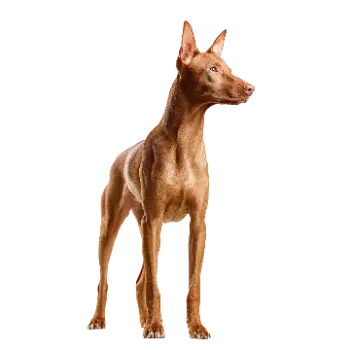
The Cirneco dell'Etna is a study in elegant economy - every aspect of its physical structure serves a functional purpose refined by centuries of hunting in one of the most demanding environments in the Mediterranean. Standing 17 to 20 inches at the shoulder and weighing 17 to 26 pounds, this is a medium-sized dog with a build that emphasizes speed, agility, and endurance over bulk or substance. Males are appreciably larger than females, with most mature dogs falling in the 22 to 26 pound range while females typically weigh 17 to 22 pounds. The overall impression is of a lean, athletic animal that appears capable of sustained effort in difficult terrain - which is exactly what centuries of working the volcanic slopes of Mount Etna have produced.

The body is square in proportion, with the length from the point of the shoulder to the point of the buttock approximately equal to the height at the withers. The chest is narrow and moderately deep, reaching to the elbow, providing lung capacity without adding frontal bulk that would impede movement through dense brush or between volcanic rocks. The topline is straight and firm, with a slight rise over the short, well-muscled loin. The croup slopes steeply downward to the root of the tail, giving the breed a distinctive silhouette that differs from the gently sloping croup of most other hound breeds. The limbs are long, straight, and lightly boned but solid, with the length of the foreleg approximately half the height at the withers. The feet are oval, tight, and well arched - functional pads designed for volcanic rock rather than soft ground.

The head is refined and expressive, contributing to the breed's alert, intelligent appearance. The skull is oval when viewed from above, with a nearly flat profile and a slight stop. The muzzle is pointed and slightly shorter than the skull, and the nose is large with well-opened nostrils, colored to harmonize with the coat in shades of flesh to light brown. The eyes are relatively small, oval, and set somewhat obliquely, ranging in color from amber to ochre to blend with the coat. The expression is keen, alert, and engaged - a dog paying attention to its environment. The ears are among the breed's most distinctive features: set very high and close together on the skull, triangular with narrow tips, carried rigidly erect and parallel or nearly parallel when alert. The ear opening faces forward, giving the dog the appearance of actively listening, which in fact it is - the Cirneco hunts by hearing as well as sight and scent.

The tail is another breed hallmark. Low set, fairly thick at the base, and reaching to the point of the hock, it maintains roughly equal thickness for most of its length before tapering slightly at the tip. At rest, the tail hangs naturally in a gentle curve. In motion or during excitement, it is carried higher, sometimes approaching horizontal but rarely curling over the back. This tail structure differs significantly from the fine, tapering whip tails of many sighthound breeds and contributes to the Cirneco's distinctive silhouette.

The coat is short, close-lying, and varies in texture across the body - fine and glass-smooth on the head, ears, and legs, slightly coarser and more textured on the body and tail. There is no undercoat, no feathering, and no furnishings of any kind. The coat lies close enough to the body that the underlying musculature is visible, particularly in fit, active specimens. Color is self-colored tan ranging from a very pale light fawn through rich, warm shades to dark tan, or Isabella - a distinctive pale fawn with bluish or grey undertones. White markings are permitted on the chest, feet, tail tip, and head, and a white blaze or collar is acceptable. The natural gait is a gallop with intermittent trotting phases, reflecting the breed's hunting style of short, explosive sprints punctuated by periods of trotting, scenting, and listening.

Affectionate With Family
The Cirneco dell'Etna bonds deeply and demonstratively with its family, seeking physical closeness throughout the day. This is a breed that follows its people from room to room, curls into laps despite being a medium-sized dog, and thrives on affectionate contact. The Cirneco tends to attach most intensely to one primary person while remaining warm and engaged with the entire household. Its affection is genuine and expressive rather than demanding.
Good With Young Children
The Cirneco dell'Etna is generally gentle, patient, and playful with children, making it a good family companion in homes where children understand basic respectful interaction with dogs. Its moderate size reduces the risk of accidental knockdowns common with larger breeds, and its naturally gentle temperament means it tolerates the unpredictability of younger children better than many sighthounds. Supervision is still advisable, as the breed's slender build makes it vulnerable to rough handling.
Good With Other Dogs
The Cirneco dell'Etna generally coexists well with other dogs, lacking the territorial aggression and same-sex hostility that characterize some other hunting breeds. The breed's pack-hunting heritage translates into a natural sociability with canine companions, and multi-dog households are common among Cirneco owners. Individual temperament varies, and proper introductions remain important, but dog aggression is not a breed characteristic.
Shedding Level
The Cirneco dell'Etna sheds minimally throughout the year thanks to its short, close-lying coat and lack of a dense undercoat. Seasonal shedding increases are modest compared to double-coated breeds, and loose hair is easily managed with weekly brushing. The short, fine hairs do not cling to furniture and clothing the way longer or coarser coat types do, making the breed a practical choice for owners who value a clean household.
Coat Grooming Frequency
The Cirneco dell'Etna requires minimal coat grooming - a weekly once-over with a soft brush or grooming mitt is sufficient to remove dead hair and keep the coat smooth. Bathing is needed only occasionally, as the short coat does not trap dirt or develop odor readily. The breed has no feathering, furnishings, or specialized coat features that require trimming, clipping, or professional grooming, making it one of the lowest-maintenance breeds in terms of coat care.
Drooling Level
The Cirneco dell'Etna is an exceptionally clean, dry-mouthed breed with virtually no drooling tendency. The breed's tight, well-fitting lips and refined muzzle structure produce none of the slobber associated with heavy-jowled breeds. Owners will not find wet spots on furniture, clothing, or floors. This tidy quality extends to the breed's general demeanor - the Cirneco is fastidious by nature and keeps itself notably clean.
Coat Type
The Cirneco dell'Etna carries a short, sleek coat that lies close to the body and ranges from fine and glass-smooth on the head and ears to slightly coarser on the body and tail. There is no undercoat, no feathering, and no furnishings. The coat texture evolved as a practical adaptation to the hot, arid conditions around Mount Etna, where a heavy coat would be a liability during extended hunts over volcanic rock in intense Mediterranean heat.
Openness To Strangers
The Cirneco dell'Etna occupies a middle ground between eager friendliness and aloof suspicion when encountering strangers. The breed is naturally curious and observant, and while it does not rush to greet every newcomer with unbridled enthusiasm, neither does it typically display the deep wariness or defensive posturing seen in guardian breeds. Most Cirnechi will assess a stranger briefly, accept a calm introduction, and warm up within a few minutes if the person is welcomed by the family.
Playfulness Level
The Cirneco dell'Etna has a genuine, spirited playfulness that persists well beyond puppyhood and into mature adulthood. The breed enjoys chase games, interactive toys, and romping with family members or other dogs. Its athletic build and natural agility make it particularly engaging during active play sessions, and many Cirnechi display a joyful, bouncy energy during games that contrasts with their composed demeanor at rest. Play is an important bonding activity for this breed and should be part of daily interaction.
Watchdog/Protective Nature
The Cirneco dell'Etna is alert and will vocalize to announce the arrival of visitors or unusual activity around the home, making it a reasonable watchdog. However, this is not a breed with strong protective or guarding instincts - it was developed to hunt, not to defend, and its response to perceived threats tends toward alerting rather than confronting. The breed lacks the size, temperament, and territorial drive to serve as a protection dog, but its keen senses and willingness to bark make it an effective household alarm.
Adaptability Level
The Cirneco dell'Etna adapts well to a variety of living situations, including apartments, provided its exercise needs are met. The breed is naturally calm and quiet indoors, conserving energy for bursts of activity during walks and play sessions. Its moderate size, low barking tendency, and clean habits make it a practical choice for urban living. The breed does not tolerate cold weather well due to its thin coat and low body fat, and owners in cold climates should provide protective clothing during winter walks.
Trainability Level
The Cirneco dell'Etna is intelligent, quick to learn, and more amenable to training than many sighthound breeds, but it retains a genuine independent streak that surfaces during repetitive or uninspiring training sessions. The breed responds best to positive reinforcement methods with short, varied, engaging exercises. It can excel in agility, lure coursing, rally, and tracking, where its natural athleticism and drive are channeled productively. Harsh corrections will shut this breed down rather than producing compliance.

Cirneco Dell Etna History & Development

The Cirneco dell'Etna traces its origins to the ancient Mediterranean world, where prick-eared hunting dogs traveled the trade routes with Phoenician merchants between North Africa and the coastal regions of southern Europe. The most widely accepted theory holds that ancestors of the Cirneco arrived in Sicily as early as 800 to 1000 BC, brought by Phoenician traders who spread similar hunting dogs to islands throughout the Mediterranean - the same dispersal that produced the Pharaoh Hound in Malta, the Ibizan Hound in the Balearic Islands, and the Podenco Canario in the Canaries. These dogs shared a common ancestor in the prick-eared hunting dogs depicted in ancient Egyptian art and artifacts dating to approximately 4000 BC. More recent genetic research has suggested that the Cirneco may have actually originated in Sicily itself rather than being imported, making it a genuinely indigenous breed shaped by the unique environment of the island.

The most compelling physical evidence of the Cirneco's ancient Sicilian presence comes from coinage. Over 150 variations of the breed appear on silver coins and more than 100 on bronze coins minted in various Sicilian cities between the 5th and 3rd centuries BC. These coins depict dogs with the unmistakable prick-eared, lean-bodied, curving-tailed profile of the Cirneco, often shown alongside representations of the god Adranos, a deity associated with Mount Etna. According to legend, a temple dedicated to Adranos near Etna was guarded by a thousand Cirnechi who possessed the ability to recognize and attack thieves and disbelievers while accompanying and guiding pilgrims. Whether or not the legend contains literal truth, it establishes the Cirneco's sacred and cultural significance in ancient Sicilian society.

For most of recorded history, the Cirneco was a working dog of Sicilian peasants and rural hunters rather than an aristocratic companion. Farmers and hunters relied on the breed to pursue wild rabbits across the hostile volcanic terrain surrounding Mount Etna - fields of hardened lava, loose volcanic scree, sparse vegetation, and intense Mediterranean heat. The breed's compact size, low body fat, minimal water requirements, and ability to hunt for extended periods without food or water were not ornamental qualities but survival necessities shaped by the demanding environment. The Cirneco hunts silently, using scent, sight, and hearing in combination rather than relying primarily on vision like true sighthounds, which allows it to locate rabbits in dense brush and underground burrows where visual tracking is impossible.

The breed was rarely seen outside Sicily until 1932, when an article in the Italian hunting journal Il Cacciatore Italiano by veterinarian Maurizio Migneco raised the alarm about the breed's declining numbers and approaching obsolescence. The article caught the attention of Baroness Agata Paterno Castello, a Sicilian aristocrat from the ducal family of Carcaci, who dedicated the next 26 years of her life to documenting, selecting, and breeding the Cirneco. Donna Agata traveled to rural areas of Sicily, identified the best specimens among peasant-owned hunting dogs, and established a systematic breeding program that preserved the breed's working qualities while refining its type for formal recognition. She commissioned the first breed standard, which was approved by ENCI in 1939. The Societa Amatori del Cirneco dell'Etna was founded in 1951 in Catania with the Baroness's involvement, and the FCI granted definitive recognition in 1956.

The Cirneco did not reach the United States until the 1990s, when the first imports arrived and the Cirneco dell'Etna Club of America was founded in 1997. The AKC enrolled the breed in its Foundation Stock Service, admitted it to the Miscellaneous Class in 2012, and granted full Hound Group recognition in 2015. The breed remains genuinely rare in the United States, with a small but dedicated community of breeders and enthusiasts. In Italy, the breed retains its working status, and conformation champions must pass a hunt test to earn their full title - a requirement that keeps the breed honest to its functional origins.

Cirneco Dell Etna Temperament & Personality

The Cirneco dell'Etna's temperament blends the independence of a primitive hunting breed with a warmth and sociability that surprise many people who expect sighthound aloofness. The AKC standard describes the breed as strong-willed, alert, and an excellent hunter - an accurate summary that understates the breed's considerable charm as a companion. Within its family, the Cirneco is affectionate, playful, and genuinely engaged with the daily lives of its people. This is not a breed that retreats to a corner and monitors the household from a distance; it follows its family from room to room, seeks out physical contact, and expresses its pleasure through a range of vocalizations, body language, and enthusiastic greetings that border on theatrical.

The breed tends to form an especially strong bond with one primary person while remaining warm and accessible to the entire household. This attachment is deep and genuine rather than clingy or anxious - the Cirneco wants to be near its person because it values the relationship, not because it cannot function independently. When separated from its family, the breed can become unhappy and may express its displeasure through vocalization or mild destructive behavior, but severe separation anxiety is less common than in some other highly bonded breeds. The key is providing the Cirneco with adequate exercise and mental stimulation before periods of solitude so that it has an outlet for its energy and a reason to rest while the family is away.

With strangers, the Cirneco occupies a comfortable middle ground between the suspicion of guardian breeds and the indiscriminate friendliness of retriever types. The breed is naturally curious and will investigate newcomers with interest, typically accepting them once the family has signaled that the visitor is welcome. Some individual Cirnechi are more reserved than others, but outright hostility or fear toward strangers is not characteristic of the breed and usually indicates inadequate socialization. The breed's alert nature means it will vocalize to announce arrivals, making it a capable watchdog, but it lacks the size and protective drive to serve as a guard dog.

The Cirneco's prey drive is strong and must be respected. This is a breed developed to hunt small game for millennia, and that instinct has not diminished through a few decades of companion status. Squirrels, rabbits, cats, and other small animals that move quickly will trigger pursuit behavior that can override training in many individuals. Off-leash exercise in unfenced areas is generally inadvisable, as even the most obedient Cirneco may break from a recall when prey is in sight. Secure fencing is essential, and it must be tall - the Cirneco is a capable jumper that can clear surprisingly high barriers when motivated.

The breed's intelligence and independent thinking are qualities that delight some owners and frustrate others, depending on their expectations. The Cirneco was not developed to follow human direction blindly; it was developed to make autonomous hunting decisions in challenging terrain, assessing situations, choosing strategies, and acting on its own judgment. That independence is still very much present in the companion dog. The Cirneco understands commands quickly and will comply when it sees a reason to do so, but it reserves the right to evaluate the instruction and may choose an alternative course of action if the original request seems unreasonable, boring, or insufficiently rewarding. This trait is best managed through positive methods, engaging training approaches, and a handler who appreciates the breed's intelligence rather than interpreting it as defiance.

Cirneco Dell Etna Family Life & Living Requirements

The Cirneco dell'Etna adapts surprisingly well to a range of living situations, from apartments to homes with large yards, thanks to its moderate size, naturally calm indoor demeanor, and relatively quiet habits. The breed is among the most genuinely versatile of the hound breeds in this regard - a Cirneco that receives adequate daily exercise and mental stimulation will settle comfortably into apartment life without the restlessness, destructive behavior, or noise problems that make many hunting breeds impractical for urban living. The key is meeting the breed's exercise needs outside the home so that indoor time becomes a period of relaxation rather than frustration.

The Cirneco's relationship with children is generally positive. The breed's gentle, playful nature and moderate size make it a good match for families with children who have been taught respectful interaction with dogs. The Cirneco tolerates the unpredictability of younger children better than many sighthound breeds, engaging in play with patience and enthusiasm. However, the breed's slender build means it can be injured by overly rough handling, and very young children should always be supervised during interaction. The Cirneco is not a breed that will simply tolerate abuse - if handled roughly, it may remove itself from the situation or express its displeasure vocally, but it is unlikely to respond with aggression.

Multi-dog households are common and generally successful with Cirnechi. The breed's pack-hunting heritage translates into a natural sociability with other dogs, and same-sex aggression is not a breed characteristic. Introductions should still be handled carefully, especially with dogs of very different sizes or energy levels, but the Cirneco typically integrates well into existing canine households. The more significant concern is the breed's interaction with cats and small animals. The Cirneco's strong prey drive means that cats, rabbits, guinea pigs, and other small household pets may be at risk, particularly if the dog was not raised with them from puppyhood. Even Cirnechi that coexist peacefully with a household cat may still chase unfamiliar cats outdoors.

Fencing is a nonnegotiable requirement for any home with a Cirneco dell'Etna. The breed is an agile, athletic jumper capable of clearing barriers that would contain most medium-sized dogs. Five to six feet is a minimum fence height, and some Cirnechi may require additional deterrents such as coyote rollers or inward-angled extensions. The breed's prey drive means that an unfenced yard is simply not safe - a squirrel or rabbit in the yard will be pursued with single-minded intensity, and the Cirneco's speed makes recapture difficult once the chase begins.

Cold weather is a practical consideration that affects daily management. The Cirneco's short coat, minimal body fat, and Mediterranean heritage make it poorly suited to cold climates without supplemental protection. A well-fitted coat or sweater is essential for walks in temperatures below 45 degrees Fahrenheit, and outdoor time should be limited in cold, wet, or windy conditions. The breed should always sleep indoors in a warm, draft-free area - outdoor kenneling is inappropriate for this breed in any climate. Conversely, the Cirneco tolerates heat well, which is consistent with its evolutionary adaptation to the intense sun and volcanic warmth of its native Sicilian environment.

Cirneco Dell Etna Training & Exercise Needs

Training the Cirneco dell'Etna is a rewarding experience for handlers who appreciate the breed's intelligence, sensitivity, and independent thinking. The breed has a reputation for being more trainable than many sighthound breeds, and this reputation is generally earned - the Cirneco is willing to cooperate with a skilled handler in ways that some of its more aloof Mediterranean relatives are not. However, trainability in this breed means responsiveness to positive, engaging methods rather than compliance with repetitive, drill-based approaches. The Cirneco learns new commands quickly, often within a few repetitions, and then expects the handler to move on to something more interesting rather than repeating the exercise another dozen times.

Positive reinforcement is the foundation of effective Cirneco training. The breed responds enthusiastically to food rewards, interactive play, and verbal praise, and it learns best in short, varied sessions that maintain its interest and engagement. Harsh corrections, raised voices, and physical punishment are not only ineffective but actively counterproductive - the Cirneco will shut down, become avoidant, and lose trust in a handler who uses aversive methods. This is a sensitive breed that reads human body language and emotional cues with remarkable accuracy, and it can distinguish between a handler who is frustrated and one who is genuinely engaged. The most successful Cirneco trainers are patient, creative, and willing to work with the breed's natural instincts rather than against them.

The Cirneco excels in several competitive activities that channel its natural athleticism and drive. Lure coursing is perhaps the most natural fit, allowing the breed to do what it was designed for - pursue fast-moving quarry at speed. Agility is another excellent outlet, as the breed's speed, coordination, and jumping ability translate directly to success over the obstacle course. Rally and obedience are achievable with patient, positive training, and the breed's keen nose makes it a natural for tracking and nosework. In Italy, the Cirneco must pass a formal hunt test to earn a full conformation championship, reflecting the breed community's commitment to preserving working ability alongside physical beauty.

Exercise requirements for the Cirneco dell'Etna are moderate to high by companion dog standards but manageable for active households. The breed benefits from 45 to 90 minutes of daily exercise that includes both structured walks and opportunities for off-leash running in secure, fenced areas. Free running is important for this breed - the Cirneco's natural gait is a gallop, and it needs regular opportunities to stretch out and run at speed to maintain physical fitness and mental wellbeing. Dogs that receive only leashed walks without opportunities to run may develop restlessness, destructive behavior, or excessive vocalization.

Mental stimulation is as important as physical exercise for the Cirneco. The breed's intelligence and problem-solving ability demand engagement, and a physically tired but mentally unstimulated Cirneco will find its own entertainment in ways that may not align with household harmony. Puzzle feeders, scent games, hide-and-seek with toys, and short training sessions that teach new skills all help satisfy the breed's cognitive needs. The combination of physical exercise and mental stimulation produces a calm, relaxed companion indoors - the famous ability of the Cirneco to switch from energetic hunter to couch companion is contingent on both needs being adequately met.

Cirneco Dell Etna Health Concerns

The Cirneco dell'Etna is one of the healthiest purebred dogs in existence, a distinction attributable to its ancient lineage, centuries of natural selection in a demanding environment, and a breeding history that prioritized functional working ability over exaggerated physical features. The breed has no widely recognized breed-specific hereditary diseases, and breed enthusiasts and health organizations alike consistently describe it as robust, hardy, and long-lived. The typical lifespan of 12 to 14 years, with some individuals living to 15 or 16, reflects the breed's overall genetic soundness and the absence of the severe health burdens that shorten the lives of many other purebred dogs.

The rarity of the breed in the United States means that comprehensive health data specific to the American Cirneco population is limited. There are simply too few dogs in the country to generate the kind of large-scale epidemiological studies that exist for more popular breeds. This is both a limitation and, paradoxically, a positive sign - the small breeding population has been managed by a relatively small number of knowledgeable breeders who have generally prioritized health and working ability. As the breed grows in popularity, continued health monitoring and data collection will be important to identify and address any emerging concerns before they become established problems.

Anesthesia sensitivity is the single most important health-related consideration for any Cirneco dell'Etna owner to understand. Like other sighthound-type breeds, the Cirneco has very low body fat and a lean physique that affects the metabolism and distribution of anesthetic agents. Standard dosages calculated by body weight alone, without accounting for body composition, can produce dangerously deep sedation, prolonged recovery, and adverse reactions including cardiac complications. Any veterinarian treating a Cirneco must be informed of the breed's sighthound heritage and should use sighthound-specific anesthesia protocols. Owners should discuss this with their veterinarian in advance of any surgical or diagnostic procedure requiring sedation, rather than assuming the veterinary team is familiar with the breed's specific needs.

Eye conditions represent the most documented health concern within the breed, though even these occur at relatively low rates. Research on prevalent Cirneco health issues has identified cataracts, iris atrophy and hypoplasia, and vitreous degeneration as conditions that merit screening. Annual ophthalmologic examination by a board-certified veterinary ophthalmologist is recommended for all Cirnechi, particularly those intended for breeding. Progressive retinal atrophy, a genetic condition causing gradual vision loss, has been documented in the breed but does not appear to be highly prevalent. Hip dysplasia can occur but is uncommon in a breed of this size and build, and OFA or PennHIP evaluation is recommended for breeding stock.

Muscle and soft tissue injuries are a practical concern for any Cirneco that lives an active lifestyle. The breed's athletic hunting heritage means it is built for speed and agility, and the same physical activities that keep it fit - running, jumping, chasing - can also produce muscle strains, sprains, and toe injuries. These are generally minor, self-limiting conditions rather than hereditary problems, but owners should monitor for lameness, swelling, or reluctance to bear weight after vigorous activity. Cold sensitivity is another management consideration rather than a health condition per se - the breed's short coat and low body fat provide minimal insulation, and prolonged exposure to cold temperatures can lead to discomfort, shivering, and in extreme cases hypothermia. Appropriate protective clothing during winter walks and warm indoor sleeping areas are simple preventive measures.

Common Health Issues

  • Anesthesia sensitivity - Like other sighthounds, the Cirneco dell'Etna has very low body fat and a lean physique that affects the metabolism and distribution of anesthetic agents. Standard dosages calculated by weight alone can produce dangerously deep sedation or adverse reactions. Veterinarians must be informed of the breed's sighthound heritage before any procedure requiring anesthesia.
  • Muscle and soft tissue injuries - The breed's athletic lifestyle and hunting heritage predispose it to occasional muscle strains, sprains, and toe injuries from running at speed over uneven terrain. These are generally not hereditary conditions but rather consequences of the breed's active nature. Proper warm-up before intense exercise and monitoring for lameness or swelling help manage this risk.
  • Hip dysplasia - Though uncommon in the breed due to its lean build and moderate size, hip dysplasia can occur. The condition involves abnormal development of the hip joint leading to instability, pain, and arthritis. OFA or PennHIP evaluation is recommended for breeding stock.
  • Progressive retinal atrophy - A genetic condition affecting the retina that causes gradual vision deterioration progressing to blindness. While not highly prevalent in the breed, it has been documented and annual ophthalmologic examination is recommended for early detection.
  • Eye conditions (cataracts, iris atrophy, vitreous degeneration) - Research on prevalent Cirneco health issues has identified several ocular conditions including cataracts, iris atrophy and hypoplasia, and vitreous degeneration. Regular ophthalmologic screening helps detect these conditions before they significantly impact vision.
  • Cold sensitivity - The Cirneco's short coat, minimal body fat, and Mediterranean origin make it poorly equipped for cold temperatures. The breed can become uncomfortable, shivery, and reluctant to exercise in cold or wet weather, and prolonged exposure to low temperatures poses a risk of hypothermia. This is a management consideration rather than a disease.

Preventive Care & Health Monitoring

  • Annual ophthalmologic examination - Recommended screening by a board-certified veterinary ophthalmologist to detect progressive retinal atrophy, cataracts, iris atrophy, and vitreous degeneration. Particularly important for breeding stock.
  • OFA or PennHIP hip evaluation for breeding stock - Radiographic evaluation of hip joint conformation recommended for any Cirneco intended for breeding, despite the breed's generally low incidence of hip dysplasia.
  • Sighthound-aware veterinary care - Ensure your veterinarian is aware of sighthound-specific anesthesia protocols and understands that normal blood values for the breed may differ from standard canine reference ranges, including lower body fat and potentially different thyroid and complete blood count baselines.
  • Cold weather protection - Provide a well-fitted coat or sweater for walks in temperatures below 45 degrees Fahrenheit and limit outdoor exposure in cold, wet, or windy conditions. Ensure warm, draft-free sleeping areas indoors.
  • Regular dental care - Brush teeth two to three times weekly with dog-specific toothpaste. The breed can be susceptible to periodontal disease, which is preventable with consistent dental hygiene and regular veterinary dental examinations.
  • Ear inspection and cleaning - The Cirneco's large, erect ears are well ventilated and less prone to infection than pendant-eared breeds, but weekly inspection for debris, wax accumulation, or irritation is still recommended. Clean as needed with a veterinary-approved ear solution.

Cirneco Dell Etna Grooming & Maintenance

The Cirneco dell'Etna is among the lowest-maintenance breeds in terms of grooming, a characteristic that directly reflects its working heritage on the volcanic slopes of Mount Etna, where elaborate coats requiring regular attention would have been a practical liability. The short, close-lying coat requires no trimming, clipping, or professional grooming of any kind. A weekly brushing with a soft bristle brush, rubber curry, or grooming mitt removes dead hair, distributes natural skin oils, and provides an opportunity to inspect the skin for any irritation, parasites, or injuries. During the modest seasonal shedding increase that occurs in spring and fall, brushing two to three times per week will manage loose hair effectively.

Bathing is needed only occasionally - every four to six weeks or as needed after particularly muddy or dirty outings. The short coat does not trap dirt or develop odor the way longer, denser coats do, and many Cirneco owners find that a thorough wipe-down with a damp cloth between baths is sufficient for routine cleaning. When bathing is necessary, a mild, pH-balanced dog shampoo is appropriate. The breed's thin coat and relatively delicate skin benefit from gentle products that do not strip natural oils. Thorough rinsing is important to prevent residue that could cause irritation.

The Cirneco's large, erect ears are well-ventilated and significantly less prone to infection than the heavy, pendant ears of many hound breeds. Weekly inspection for debris, wax accumulation, or redness is still advisable, and occasional cleaning with a veterinary-approved ear solution keeps the ear canals healthy. The breed does not typically require the intensive ear management protocols that are essential for breeds with folded or heavily haired ears. If the dog swims or has its ears exposed to water during bathing, drying the ear canals afterward helps prevent moisture-related issues.

Dental care deserves consistent attention because the breed can be susceptible to periodontal disease if dental hygiene is neglected. Brushing teeth two to three times weekly with a dog-specific toothpaste is the most effective preventive measure, supplemented by dental chews and regular veterinary dental examinations. Starting dental care routines during puppyhood establishes tolerance and makes the process easier throughout the dog's life. Nail trimming should be performed every two to three weeks or whenever the nails begin to click on hard flooring. The Cirneco's active lifestyle may provide natural nail wear on hard surfaces, but regular checks and trimming ensure that overgrown nails do not affect gait or comfort.

Skin care is generally straightforward, as the Cirneco's smooth, short coat does not create the wrinkle or fold environments that predispose some breeds to dermatitis. However, the breed's thin skin and minimal coat covering make it more vulnerable to sunburn in areas with sparse hair coverage, particularly the nose, ear tips, and belly. In sunny climates or during extended outdoor activity, pet-safe sunscreen on exposed skin can prevent sun damage. Overall, the Cirneco dell'Etna demands far less grooming time than most breeds - a total investment of perhaps 15 to 20 minutes per week covers all routine maintenance needs, leaving more time for the activities this breed truly values: running, playing, and spending time with its family.