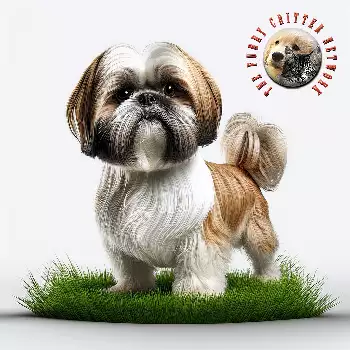
The Chinese Lion Dog is a small, compact, and surprisingly sturdy toy breed whose physical appearance reflects centuries of deliberate selection to resemble the stylized guardian lions of Chinese and Tibetan Buddhist art. Standing between nine and ten and a half inches at the shoulder and weighing nine to sixteen pounds, this breed presents a body that is slightly longer than it is tall, creating a rectangular silhouette when viewed from the side. The overall impression is one of substance without coarseness - a dog that feels noticeably heavy when lifted, with good bone structure and well-developed musculature hidden beneath its abundant coat. The breed carries itself with a proud, almost arrogant bearing, with the head held high and the heavily plumed tail curved gracefully over the back.
The head is the breed's most distinctive structural feature and the primary vehicle for the lion-like appearance that gives the dog its name. It is broad and round, with a wide space between the eyes and a short, square muzzle that is set no lower than the bottom eye rim. The stop is definite and well-defined. The nose is broad with well-open nostrils, and the muzzle should be flat, broad, and unwrinkled, though some degree of brachycephalic compression is inherent in the breed type. The eyes are large, round, and dark, set wide apart and looking directly forward with a warm, friendly expression. The ears are large and heavily coated, hanging down and blending into the coat of the neck so seamlessly that they can be difficult to distinguish from the surrounding hair.
The crowning glory of the Chinese Lion Dog is its luxurious double coat - a dense, soft undercoat supporting a long, flowing outer coat of silky texture that grows continuously and can reach floor length when properly maintained. The hair on the top of the head is typically tied up in a topknot for both practical and aesthetic purposes, and the facial hair grows outward from the nose in the distinctive chrysanthemum pattern that inspired one of the breed's nicknames. All colors and markings are permitted by the breed standard, including solid colors, parti-colors, and every combination in between. Black, white, gold, red, silver, brindle, blue, liver, and their various combinations all appear in the breed, making the Chinese Lion Dog one of the most chromatically diverse breeds in existence.
The body beneath the coat is well-proportioned and functional despite the breed's ornamental appearance. The chest is broad and deep with good spring of rib, providing ample room for the heart and lungs. The topline is level from withers to tail set, and the legs are short, well-boned, and muscular with large, round, firm feet. The breed moves with a smooth, flowing gait that emphasizes reach and drive while maintaining a level topline - the impression should be of a dog gliding effortlessly rather than bouncing or mincing. The tail is set high and carried in a curve over the back, creating the characteristic silhouette that distinguishes the breed in profile.
Affectionate With Family
★★★★★
The Chinese Lion Dog was bred across centuries for one purpose above all others: companionship. This breed thrives on close physical contact with its family, seeking laps to sit on, beds to share, and any available opportunity to be near its people. The depth of attachment is genuine and consistent - this is not a dog that runs hot and cold with its affection but one that offers steady, reliable warmth to everyone in the household. Owners who spend significant time at home will find the Chinese Lion Dog an almost constant shadow, following from room to room with quiet contentment.
Good With Young Children
★★★★☆
The Chinese Lion Dog's gentle, patient temperament makes it a good match for families with children, though its small size requires some caution with very young toddlers who have not yet learned to handle a dog carefully. The breed rarely shows aggression when accidentally jostled or grabbed and generally responds to rough handling by simply walking away rather than snapping. Supervision during interactions with small children is sensible practice, not because the dog is likely to bite but because an accidental fall or squeeze could injure a dog that weighs under sixteen pounds.
Good With Other Dogs
★★★★☆
Centuries of palace life alongside other small dogs have given the Chinese Lion Dog a generally sociable disposition toward canine companions. The breed lacks the territorial edge common in many toy breeds and typically greets unfamiliar dogs with curiosity rather than hostility. Multi-dog households suit this breed well, and many owners find that a second dog provides valuable companionship during the hours when humans are unavailable. Occasional resource guarding over a favorite person or sleeping spot can occur but rarely escalates beyond mild posturing.
Shedding Level
★★☆☆☆
Despite the impressive volume of its coat, the Chinese Lion Dog sheds less than many breeds. The long double coat loses hair continuously at a low rate rather than in dramatic seasonal blowouts, and the shed hair tends to become trapped within the coat itself rather than falling freely onto furniture and clothing. Regular brushing removes this trapped hair before it forms mats, which is one of several reasons daily grooming is essential. Owners who keep the coat in a shorter trim will notice even less loose hair around the home.
Coat Grooming Frequency
★★★★★
The Chinese Lion Dog's magnificent coat is both its crowning glory and its most demanding feature. A full-length show coat requires daily brushing to prevent the mats and tangles that form rapidly in the silky double coat, particularly behind the ears, under the legs, and around the hindquarters. Most pet owners opt for a practical shorter trim that reduces grooming time to several sessions per week, but even a clipped coat needs regular attention to stay clean and comfortable. Professional grooming every four to six weeks is standard for this breed regardless of coat length.
Drooling Level
★☆☆☆☆
The Chinese Lion Dog is a tidy breed with virtually no drooling tendency. The breed's short muzzle and compact jaw structure do not produce the loose flews or pendulous lips that cause excessive salivation in other breeds. Owners will not find wet spots on furniture, clothing, or floors from drool. The breed's cleanliness in this regard makes it a good choice for people who value a neat indoor environment.
Coat Type
★★★★★
The Chinese Lion Dog possesses one of the most luxurious coats in the entire dog world - a long, dense, flowing double coat consisting of a soft undercoat and a silky outer coat that can reach floor length when maintained in full show condition. The hair grows continuously much like human hair, which means it does not shed in the typical canine pattern but does require regular trimming and shaping. The coat texture ranges from slightly wavy to perfectly straight, with a gentle wave being common and acceptable. This coat is beautiful but demands genuine commitment from its owner.
Openness To Strangers
★★★★☆
The Chinese Lion Dog generally welcomes new people with friendly curiosity rather than the suspicion or alarm common in many toy breeds. This openness reflects the breed's palace heritage, where dogs were expected to charm visiting dignitaries and foreign ambassadors as readily as they comforted the emperor. Some individuals may show brief initial reserve before warming up, but outright shyness or fearfulness toward strangers is considered atypical for the breed and often indicates inadequate socialization during puppyhood.
Playfulness Level
★★★★☆
The Chinese Lion Dog retains a charming playfulness well into adulthood, engaging in short bursts of energetic play interspersed with longer periods of relaxed companionship. The breed enjoys games with toys, gentle roughhousing with family members, and the occasional spontaneous sprint through the house that owners affectionately call the zoomies. This playfulness never becomes demanding or exhausting - the breed is happy to play when invited and equally happy to curl up on a cushion when the game ends.
Watchdog/Protective Nature
★★★☆☆
The Chinese Lion Dog will alert its household to unusual sounds or the arrival of visitors with a sharp bark, fulfilling the basic watchdog function that its ancestors performed in Chinese palaces. However, the breed lacks genuine protective instinct and is far more likely to greet an intruder with a wagging tail than with any defensive behavior. The alerting tendency can become excessive if not managed, as the breed may develop a habit of barking at every passing sound if owners do not establish clear boundaries early.
Adaptability Level
★★★★★
Few breeds adapt as readily to different living situations as the Chinese Lion Dog. Its small size and moderate exercise needs make it equally comfortable in a studio apartment or a large house with a yard. The breed travels well, adjusts to schedule changes with minimal stress, and settles into new environments with impressive composure. This adaptability is one of the primary reasons the breed has maintained its popularity across centuries and continents - it fits into virtually any household willing to provide companionship and basic care.
Trainability Level
★★★☆☆
The Chinese Lion Dog is intelligent enough to learn a wide range of commands and tricks but possesses an independent streak that can make training sessions feel more like negotiations than instruction. The breed responds well to positive reinforcement and will work enthusiastically for food rewards, praise, and attention, but it has a low tolerance for repetitive drills and may simply disengage if a session becomes boring. Housetraining can take longer than with some breeds, requiring patience and consistency. Short, varied training sessions that feel like play produce the best results.