Central Asian Shepherd Dog

Central Asian Shepherd Dog

Quick Facts

🐕 Breed Group
Working Group
📏 Size Category
Giant
📏 Height
Males: 26-32 inches, Females: 24-28 inches
⚖️ Weight
Males: 121-176 pounds, Females: 88-143 pounds
⏱️ Life Expectancy
12-15 years
🧣 Coat Type
Double coat, short or medium length
🎨 Coat Colors
White, black, gray, fawn, brindle, piebald, and combinations
😀 Temperament
Independent, Confident, Territorial, Loyal, Fearless, Calm
🏃 Exercise Needs
Moderate
🎓 Training Difficulty
Very High
👶 Good with Children
Protective of family children; not recommended with unfamiliar children
🐾 Good with Other Pets
Requires intensive management; strong territorial instinct

Other Names & Breed Recognition

The Central Asian Shepherd Dog is known by many names across the vast geographic range where it developed, and understanding those names gives you a useful map of the breed's spread and cultural significance. In Russian, the breed is called Sredneaziatskaya Ovcharka, commonly abbreviated as SAO. In Kazakhstan, it is the Tobet. In Turkmenistan, where the breed has particular cultural significance and is considered a national symbol, it is called the Alabai, a name derived from the Turkmen word for piebald, referring to the broken-color coat patterns common in that region's population. In Afghanistan, similar dogs are called Kuchi dogs or Afghan shepherd dogs, though the relationship between the Kuchi population and the registered Central Asian Shepherd is debated among breed historians.

The FCI recognizes the breed under the name Central Asian Shepherd Dog, and this is the official designation used in international conformation and breed documentation. The AKC uses the same name, having granted full recognition in 2018 and placed the breed in the Working Group. The UKC, which recognized the breed earlier, places it in the Guardian Dog Group, which is a more descriptive classification for what is fundamentally a livestock protection specialist.

Turkmenistan has been particularly assertive about claiming the Alabai as a national heritage breed, and the Turkmen government has been involved in formal efforts to preserve and promote the breed both domestically and internationally. The Alabai appears on Turkmenistan currency and postage stamps and has been given as a diplomatic gift to foreign leaders, which speaks to the degree of national cultural attachment to this dog in its home region.

The breadth of the geographic range across which this breed type developed creates genuine complexity about whether the "Central Asian Shepherd Dog" is a single breed or a family of related regional types that share common characteristics. The FCI takes a unified view and recognizes a single breed with accepted variation. Breed historians and geneticists continue to work through the population genetics of Central Asian livestock guardian dogs, and the picture is more complex than a single registry entry implies.

In North America and Western Europe, the breed is rare and primarily found in households that specifically sought out large livestock guardian breeds. It is not a breed that entered the mainstream companion dog market the way many working breeds have. The breed community in the West is small and serious, and buyers outside of Central Asia typically need to import dogs or find one of the small number of dedicated breeders in their country.

Central Asian Shepherd Dog Organizations & Standards

The FCI breed standard for the Central Asian Shepherd Dog is held by Russia, reflecting both the country's historical role in formalizing and promoting the breed internationally and the significant Central Asian Shepherd population within Russia itself. The standard describes a large, powerful, well-muscled dog of harmonious construction, with substantial bone and a confident, calm bearing. The FCI places the breed in Group 2 (Pinscher and Schnauzer type, Molossoid type, Swiss Mountain Dogs and Cattledogs), Section 2 (Molossoid type), alongside other large guardian breeds.

The standard describes males at a minimum of 26 inches at the shoulder and females at a minimum of 24 inches, with larger specimens fully acceptable and common. Weight ranges from approximately 121 to 176 pounds for males and 88 to 143 pounds for females, though the upper end of that range is regularly exceeded by well-developed males from larger lines. The standard emphasizes overall balance and functional construction over extreme size, but the breed is genuinely massive by any standard measure.

Two coat length varieties are accepted in the FCI standard: a short coat of 1.5 to 3 inches, and a longer coat of 3 to 4 inches. Both have the same dense double coat construction with a coarse outer coat and a thick, soft undercoat. The longer coat develops some feathering on the tail, ears, and back of the legs, but the breed overall is much lower-maintenance in coat terms than the Caucasian Shepherd or the long-coated Central Asian lines sometimes seen in the show ring.

In the United States, the parent club for the AKC is the Central Asian Shepherd Dog Club of America. The club was established in coordination with the AKC recognition process and works to maintain breed standards, promote health testing, and educate the public about the requirements of owning a large livestock guardian breed responsibly. Given the breed's challenges in the wrong hands, responsible breeder education and buyer vetting are among the most important activities the club undertakes.

Health testing recommendations from responsible breeders include OFA hip and elbow evaluations on all breeding animals. Given the breed's size, hip and elbow dysplasia are the most commonly documented structural health concerns, and both parents should have documented clearances before a buyer considers a puppy. Some breeders also complete cardiac evaluations, particularly for dogs from lines where cardiac issues have been documented.

The breed in its native regions has historically been evaluated not by conformation show results but by working trials that tested the dog's actual guardian function against simulated predator scenarios. These working evaluations remain part of breed culture in Russia and Central Asia and provide a counterbalance to the conformation-only selection that dominates Western breed registration. Buyers who want a dog that maintains genuine working ability alongside correct conformation should look for breeders who value and participate in working evaluations alongside the show ring.

Kennel Club Recognition

  • American Kennel Club (AKC): Recognized in 2018, Working Group
  • United Kennel Club (UKC): Recognized, Guardian Dog Group
  • FCI: Recognized, Group 2

Central Asian Shepherd Dog Physical Description

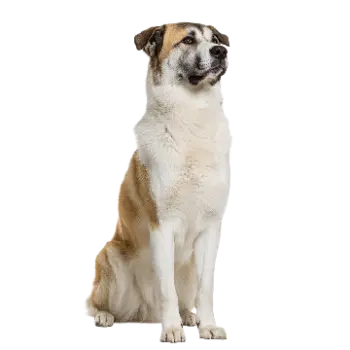
The Central Asian Shepherd Dog presents as a massive, powerful, and distinctly self-possessed animal. The first impression is of controlled power and watchful calm - this is not a dog that fidgets, bounces, or displays nervous energy. The overall silhouette is large, slightly rectangular, and well-muscled without any single feature being overdone or extreme. The breed reads as purposeful and capable rather than flashy.

The head is large, broad, and moderately heavy, with a broad, flat skull that tapers only slightly toward the muzzle. The forehead is wide and flat, with no pronounced furrow. The stop is moderate. The muzzle is broad, deep, and approximately equal in length to the skull - a measurement that distinguishes this breed from the shorter-muzzled Caucasian Shepherd. The nose is large and black (or self-colored to match the coat in dilute individuals). The lips are dry and close-fitting in the better-structured specimens, though some individuals carry heavier, looser lips. The jaws are powerful and the bite is scissors.

The eyes are medium-sized, set wide apart, and slightly oval, carrying a color from dark brown to hazel. The expression is calm, confident, and self-contained - a direct, assessing gaze that reflects the dog's habitual evaluation of its environment. There is no nervousness or softness in the correct expression; this is a dog that is constantly and quietly monitoring its territory.

The ears are set high on the skull and are medium in size, triangular, and traditionally cropped close to the head in countries where the practice continues. In natural-eared specimens, the ears hang flat to the cheeks in a v-shape. The traditional crop was functional - reducing the purchase available to an attacking wolf - and is still common in the breed's home countries.

The neck is powerful, moderately long, and low-set, which gives the dog the leverage it needs for the physical confrontations its ancestors engaged in. The shoulders are well-laid-back and strongly muscled. The chest is broad and deep, well-developed in both width and depth, providing the lung and heart capacity for sustained effort. The back is straight and powerful. The loin is short and well-muscled. The croup is broad and slightly sloped.

The tail is thick at the base and tapers toward the tip, carried in a sickle or loose ring over the back when the dog is alert, and lower when relaxed. Like the ears, the tail was traditionally docked in working dogs from the breed's native range. In countries where docking is prohibited, the natural tail is accepted and shown.

The coat comes in the two varieties described in the standard. The short coat, ranging from roughly 1.5 to 3 inches, lies close to the body with a thick, dense construction that provides excellent weather protection despite its apparently moderate length. The medium coat is 3 to 4 inches, with slight feathering on the tail, back of legs, and ears. Both coat types share the same dense, coarse outer layer over a thick, soft undercoat that insulates against the extreme temperature ranges of Central Asian climate - from below-zero winters to intense summer heat.

Colors across the breed are highly variable, reflecting the vast geographic range over which selection occurred without centralized color standards. White is common and historic, as light-colored dogs can be more easily distinguished from dark predators at night by shepherds trying to identify what is happening at the flock. Black, gray, fawn in various shades, brindle, and piebald patterns all occur. Parti-colored dogs are common and accepted. The Alabai population from Turkmenistan tends to show more piebald patterning than some other regional types.

Movement is powerful and elastic, with good drive from the hindquarters and solid reach in front. Despite the massive size, a well-constructed Central Asian Shepherd moves with surprising fluidity at the trot. Correct movement requires proper structural foundation - good angulation front and rear, a strong back, and the bone quality to support the dog's weight without restriction.

Sexual dimorphism is pronounced and evident at a glance. Males are substantially heavier, broader in skull and chest, and carry a considerably more imposing presence than females. The difference in mass between sexes can be 30 to 40 pounds in the same bloodline. This dimorphism is consistent with the breed's natural history - larger males provided more effective deterrence and physical capability against large predators, and selection maintained that difference over generations. Females, while lighter and more refined, are still large by any standard and should not be underestimated as guardians in their own right.

The feet are large, rounded, and well-padded, with strong toenails built for varied terrain. The thick, tough pads are adapted to the rocky, uneven surfaces of mountainous terrain and the abrasive stony ground of steppes. The overall bone quality throughout the limbs is substantial - heavy without being coarse - providing both the structural support for the dog's weight and the physical capability its guardian role requires.

Affectionate With Family
Loyal and protective of its immediate family but not demonstratively affectionate. The Central Asian Shepherd expresses its attachment through presence and protection rather than through seeking contact or attention.
Good With Young Children
Generally protective of family children it has been raised with, but the massive size creates risk with young children through accidental impact alone. Unfamiliar children require careful management.
Good With Other Dogs
Territorial and often assertive with other dogs, particularly those of the same sex or those it perceives as intruding on its territory. Multi-dog households require very careful management and slow introductions.
Shedding Level
Moderate to heavy shedding during seasonal coat changes. The shorter coat variety sheds less conspicuously than the medium-length variety, but both shed meaningfully during the biannual coat change.
Coat Grooming Frequency
The shorter coat requires less maintenance than long-coated guardian breeds. Weekly brushing manages the shedding, with more frequent attention during coat changes.
Drooling Level
Some drooling occurs around food, water, and exertion. The lips are not as loose as in the Caucasian Shepherd, but owners of giant breeds should expect occasional drool.
Coat Type
The short to medium double coat is lower maintenance than long-coated guardian breeds and does not require professional grooming. It is functional and weather-resistant rather than decorative.
Openness To Strangers
Deeply suspicious of strangers as a baseline behavioral trait. This is a breed developed to regard anything unfamiliar on its territory as a potential threat, and it does not warm up to new people quickly or easily.
Playfulness Level
Serious and calm rather than playful. Puppies show normal puppy energy, but the adult Central Asian Shepherd is a watchful, purposeful guardian rather than an enthusiastic play partner.
Watchdog/Protective Nature
An elite natural guardian that requires no protection training and no encouragement to take its territorial role seriously. This breed has been confronting large predators for millennia and brings that capability to every territory it is given.
Adaptability Level
Needs defined territory, space, and an owner with genuine experience in livestock guardian breeds. Urban environments and high-visitor households create serious management challenges that require more than most owners are prepared to handle.
Trainability Level
Highly intelligent but fundamentally independent. The Central Asian Shepherd makes its own decisions about threats and responses, and training works within that framework rather than replacing it. Experienced owners who understand this breed can work with it effectively; inexperienced owners find it genuinely unmanageable.

Central Asian Shepherd Dog History & Development

The Central Asian Shepherd Dog's history is measured not in decades or centuries but in millennia. Genetic studies of dog populations in Central Asia indicate that livestock guardian breeds of this general type have existed in the region for at least 5,000 years, with some estimates suggesting an even longer presence. This makes the Central Asian Shepherd one of the most ancient domesticated dog types on earth, predating many modern breeds by thousands of years and representing a direct link to the earliest functional relationship between humans and dogs for livestock protection.

The breed developed not through intentional breeding programs but through the ruthless selection of working conditions across one of the world's most demanding environments. The steppes, deserts, and mountain ranges stretching from the Caspian Sea to the borders of China imposed consistent selection pressure: dogs that were too small, too timid, too slow, or too physically fragile to confront wolves, snow leopards, and bears did not survive or reproduce. Over thousands of generations, the dogs that persisted were the massive, fearless, independently capable animals that the modern breed represents.

The nomadic pastoralist cultures of Central Asia - Kazakhs, Turkmens, Uzbeks, Tajiks, Kyrgyz, and others - depended on their livestock for survival and valued their guardian dogs accordingly. The relationship was practical rather than sentimental; a dog that did not perform its function was not fed or bred. The natural selection of the working environment was reinforced by the deliberate, functional selection of experienced shepherds who understood what qualities they needed. The result is a breed whose working character has been shaped by selection over an incomprehensible span of time.

The Soviet Union formalized the breed under the name Sredneaziatskaya Ovcharka in the twentieth century, creating a registry and breed standard for what had previously been an informal working type. Soviet authorities collected dogs from across the Central Asian republics for use in military and border patrol functions, and this centralization helped establish documented bloodlines and standardize some aspects of breed type. Soviet-era selection emphasized working ability and physical soundness alongside size and coat, which is consistent with the breed's functional heritage.

After the Soviet Union's collapse, Central Asian Shepherd Dogs became accessible to Western buyers for the first time in significant numbers. Imported dogs from Russia and the former Soviet republics began appearing in European and North American households, and breed clubs were established to manage registration and promote responsible ownership. AKC recognition came in 2018, placing the breed in the Working Group and bringing it to the attention of American dog owners who may never have encountered it previously.

Today the breed maintains its working role in Central Asia while also appearing in show rings and family homes in Russia, Europe, and increasingly in North America. The breed remains most numerous in its native range, where it continues to guard livestock against the same predator pressures it has faced for millennia. The gap between the breed's ancient working heritage and its modern appearances in suburban American households is something that buyers should reflect on honestly before committing to ownership.

The genetic diversity within the breed is actually broader than in most modern breeds due to the vast geographic range and the large number of founding individuals. This stands in contrast to breeds that were developed from a small number of foundation animals, and it is one reason the breed maintains good constitutional health and the exceptional longevity that surprises people who expect giant breeds to live shorter lives. The variation in type across different regional populations - size, coat, color, and subtle proportional differences - is a reflection of that geographic breadth rather than inconsistent breeding.

Central Asian Shepherd Dog Temperament & Personality

If the Caucasian Shepherd Dog is described as an independent guardian that challenges inexperienced owners, the Central Asian Shepherd Dog is a degree beyond that. This breed was shaped over thousands of years specifically to operate without human direction - to make its own threat assessments, act on those assessments, and guard its territory and flock around the clock without waiting for someone to tell it what to do. That fundamental independence is the defining characteristic of the breed's temperament, and everything else about what it is like to live with this dog flows from it.

With the immediate family, the Central Asian Shepherd typically forms a genuine attachment, but it is not the warm, expressive affection of a companion breed or even of many working breeds. These dogs often express loyalty through proximity and watchfulness rather than through seeking physical contact or attention. They know who their people are, they protect their people, and they monitor their people's environment with constant attention. What they do not typically do is seek out petting, climb onto laps, or require emotional reassurance from their owners. They are independent in affect as well as in action.

With strangers, the default is not just reserve but active suspicion and often overt challenge. The Central Asian Shepherd evaluates every unfamiliar person who enters its territory as a potential threat, and it will communicate that evaluation clearly through posture, movement, and voice before committing to any response. This is the behavior of a dog developed to guard against actual predators and raiders, and it is appropriate for that function. In a modern household context, it requires very specific management: controlled, supervised introduction protocols for every person who visits, careful management of the dog's access to areas where strangers might be present, and a social life for the owner that accommodates those requirements.

Territoriality in this breed extends beyond the household. These dogs map their territory and take their guardianship of it seriously. Fence-line behaviors, night patrolling, and vocal warning are natural expressions of the territorial instinct. In appropriate rural settings with secure containment, these behaviors are manageable and serve a function. In suburban neighborhoods with shared fence lines, regular visitors, and noise-sensitive neighbors, they create real management challenges.

What happens when the breed's needs are not understood and addressed is not subtle. An under-managed Central Asian Shepherd will make its own decisions about threats, and those decisions may result in confrontations with visitors, delivery people, or neighbors that have serious consequences. This is a breed that will physically intervene against what it perceives as a threat, and at 150-plus pounds with the physical capability these dogs carry, the consequences of an unmanaged confrontation are significant. The owners who live successfully with Central Asian Shepherds are not people who accept that risk casually - they are people who have made structural and lifestyle commitments that remove that risk through management.

The breed is notably calm and unhurried compared to high-drive working breeds when its basic needs are met and its environment is structured appropriately. A Central Asian Shepherd that has adequate territory, clear expectations, and sufficient daily activity is not an anxious, restless, or difficult dog in the home - it is a settled, dignified presence that watches over its household with quiet confidence. That quality - the calm self-possession of a dog that knows its role and is doing it - is one of the most genuinely impressive things about this breed when you encounter it in a well-managed situation.

Central Asian Shepherd Dog Family Life & Living Requirements

The Central Asian Shepherd Dog is genuinely best suited to rural or semi-rural environments with significant land, secure perimeter fencing, and a household whose lifestyle does not involve frequent unfamiliar visitors. This is not a breed that belongs in an urban or suburban setting unless the owner has made extraordinary management commitments, and even then, the fit is not ideal. These dogs were bred for vast open spaces and the freedom to patrol them, and confining one to a small yard in a dense neighborhood creates both management challenges and welfare concerns.

Fencing requirements are serious. Perimeter fencing needs to be a minimum of six feet tall, structurally sound, and free of gaps or weaknesses. The Central Asian Shepherd is not a breed that will be contained by inadequate barriers when it has identified something on the other side that requires attention. Dig guards are advisable along the fence base for individuals that have shown digging behavior. The fence is not optional containment - it is essential safety infrastructure for a dog of this capability.

Exercise requirements are moderate in comparison to the breed's size and energy potential. The natural working pattern of a livestock guardian is vigilant patrolling rather than sustained athletic exertion, and the Central Asian Shepherd in a home with adequate space to patrol gets meaningful physical activity through its natural behavior. Daily walks on leash provide enrichment and maintain leash manners, but owners do not need to plan for the sustained athletic exercise required of herding or sporting breeds. What matters more than raw exercise is purposeful activity with defined territory to monitor.

With family children, the dynamic is protective rather than playful. These dogs guard the children in their household with the same serious attention they give to the rest of the property. The physical risk from accidental impact is real with a dog this size around small children, and close supervision is appropriate regardless of the dog's temperament. Visiting children present a different scenario - unfamiliar children in the territory are a management situation, not an easy social occasion.

Multiple dogs in the household require very careful management. The Central Asian Shepherd's territorial instinct means that introducing a second dog of either sex involves careful, slow introduction protocols and ongoing management of resource guarding, space competition, and dominance interactions. Two intact males or two dominant females together is particularly risky. Experienced livestock guardian dog owners who understand how to manage these dynamics can make multi-dog households work, but it is not something to approach casually.

This breed is not for first-time dog owners, not for owners of primarily companion breeds without livestock guardian experience, and not for households without the space and infrastructure to manage a dog of this capability safely. The commitment required is real and extensive. In the right environment with experienced owners, the Central Asian Shepherd is a magnificent guardian with a loyal, dignified presence that is unlike any other breed.

Central Asian Shepherd Dog Training & Exercise Needs

Training the Central Asian Shepherd Dog requires abandoning most of what you know about training companion breeds or even high-drive working breeds. This is not a dog that operates from a desire to please its handler. It is a dog that operates from a clear understanding of its own role and judgment, and training means establishing a working relationship within that framework rather than overriding the dog's independent nature.

The foundation of working with this breed is respect and consistency rather than dominance and force. A Central Asian Shepherd that is handled with harsh physical corrections learns to manage those corrections and becomes less responsive rather than more compliant. An owner who attempts to physically dominate this breed risks creating a dog that views the owner as an adversarial presence rather than a leader to be respected. The approach that works is clear, consistent expectations, firm boundaries, and the credibility of an owner whose behavior the dog can predict and trust.

Early socialization is non-negotiable and extensive. The critical developmental window between eight and sixteen weeks is the most important investment you will make with this dog. Broad exposure to different people, environments, vehicles, sounds, and controlled encounters with other animals shapes a dog that can distinguish between genuine threats and normal daily life. An under-socialized Central Asian Shepherd treats the entire world beyond its known territory as a threat landscape, which is exhausting and dangerous. Socialization does not reduce the protective instinct - it calibrates it.

Basic obedience needs to be established as foundation behavior from the beginning. Sit, down, stay, come, and leash manners are the non-negotiable basics. The recall is the most important command for any dog that may encounter situations where it could engage with a perceived threat, and a reliable recall needs to be established and maintained with consistent practice throughout the dog's life. Leash manners require serious early work - an untrained adult Central Asian Shepherd on a leash is a physical management problem for most handlers.

Professional guidance from someone experienced specifically with large livestock guardian breeds is strongly recommended for first-time Central Asian Shepherd owners. The nuances of handling this type of dog are different enough from companion and herding breed handling that inexperienced owners benefit enormously from mentorship. Breed clubs sometimes offer access to experienced owners willing to provide guidance, and that resource is worth pursuing.

Exercise needs are met through a combination of daily leash walks, adequate territory to patrol, and age-appropriate activity. Giant breed puppies should not be forced through high-impact exercise during the growth period - the skeletal development of a breed that will reach 150 or more pounds takes time, and excessive joint stress during growth increases the risk of developmental orthopedic problems. Activity should be controlled and appropriate for the dog's age, with full athletic work reserved for the dog after skeletal maturity, typically around two years of age.

Central Asian Shepherd Dog Health Concerns

The Central Asian Shepherd Dog is notably long-lived for a giant breed, with a median lifespan of 12 to 15 years. This exceptional longevity relative to other dogs of comparable size is likely a result of the breed's history of natural and functional selection over thousands of years, which eliminates extremes of conformation and favors constitutional robustness. Dogs bred primarily for working ability rather than show ring appearance tend to maintain better structural health overall, and this breed's foundation in genuine functional selection has preserved qualities that contribute to a longer healthy life.

Weight management through the dog's life is important to joint health and lifespan. A Central Asian Shepherd maintained at lean body condition will have substantially less joint stress than one that carries even moderate excess weight. The breed's relatively low exercise requirement means that owners must actively manage caloric intake rather than relying on exercise to maintain condition. Feeding measured amounts twice daily rather than free-feeding is a practical baseline, and regular body condition assessment at veterinary visits helps catch creeping weight gain early.

Common Health Issues

  • Hip Dysplasia: The most significant documented structural health issue in the breed - Caused by abnormal hip socket development leading to joint laxity, chronic pain, and progressive arthritis. OFA or equivalent hip evaluations on both parents are essential before purchasing a puppy.
  • Elbow Dysplasia: Documented alongside hip dysplasia - This group of developmental elbow joint conditions causes front-limb lameness and progressive joint changes. Should be evaluated in all breeding animals alongside hip screening.
  • Gastric Dilatation-Volvulus - Bloat/GDV, : A life-threatening emergency in which the deep-chested giant breed stomach fills with gas and may twist on its axis. Owners must recognize warning signs and respond immediately; prophylactic gastropexy is worth discussing with a veterinarian.
  • Obesity: The breed's moderate exercise requirement combined with a substantial appetite and large feeding volumes creates real weight management demands - Excess weight accelerates joint disease progression significantly in a dog already carrying giant breed mass.

Preventive Care & Health Monitoring

  • OFA hip and elbow evaluations on both parents before purchase - Documented certificates should be available from the breeder without needing to ask twice.
  • Large-breed puppy feeding protocol during the growth phase - Controlled caloric intake and calcium/phosphorus ratios appropriate for giant breeds reduces developmental orthopedic disease risk.
  • Prophylactic gastropexy discussion with your veterinarian - Particularly if the dog eats rapidly or is from lines where GDV has occurred. The procedure is far less risky than emergency GDV surgery.
  • Regular body condition scoring at every veterinary visit to catch weight gain before it becomes established - Feeding measured amounts twice daily rather than free-feeding is standard practice for a breed this size.
  • Grooming handling conditioning from puppyhood - A giant breed dog that tolerates nail trimming, ear cleaning, and veterinary examination is a manageable dog; one that resists is a genuine safety concern.

Central Asian Shepherd Dog Grooming & Maintenance

The Central Asian Shepherd's coat is considerably lower-maintenance than the Caucasian Shepherd or other long-coated guardian breeds, which is a practical advantage in a dog of this size. The short to medium double coat lies close to the body, does not mat readily, and does not require professional grooming. What it does require is consistent brushing to manage the shedding that is substantial during the biannual coat change and moderate throughout the rest of the year.

Weekly brushing with a slicker brush and metal comb during non-shedding periods removes loose hair, distributes coat oils, and gives you the opportunity to check the skin and coat condition while your hands are on the dog. During the seasonal coat change, daily brushing is more realistic if you want to manage the volume of shed hair. The undercoat releases in significant quantity during these periods, and a deshedding tool like a rubber curry brush or an undercoat rake speeds the process considerably. Getting ahead of the shed coat through brushing reduces what ends up on your floors and furniture.

Bathing can be done every six to eight weeks under normal circumstances or more frequently after particularly muddy outdoor activity. Use a shampoo appropriate for double coats, work it thoroughly through the dense undercoat rather than just lathering the surface, and rinse with genuine thoroughness to ensure no residue remains in the thick coat. Drying a dog of this size completely after bathing requires a high-velocity dryer or significant towel and air-dry time. A damp undercoat that stays wet for hours can cause skin irritation and hot spots in warm weather.

Ears should be inspected weekly and cleaned as needed with a veterinarian-approved solution. In naturally-eared dogs, the hanging ear carriage limits airflow and creates conditions favorable to yeast accumulation. Dogs that swim or spend time in wet conditions need ear checks after every exposure. Nail trimming every three to four weeks is important - overgrown nails on a dog this heavy affect the whole musculoskeletal system and create abnormal loading through the feet, pasterns, and joints. Dental care through regular brushing from puppyhood is the most effective preventive measure for periodontal disease, which is the most common preventable health issue across all dog breeds. Establishing grooming handling tolerance from puppyhood is the most important grooming investment you can make - a Central Asian Shepherd that does not accept handling for grooming, veterinary examination, and nail trimming is an unmanageable problem in a dog of this size and capability.