Cardigan

Cardigan Welsh Corgi

Quick Facts

🐕 Breed Group
Herding Group
📏 Size Category
Medium (low-profile)
📏 Height
Males: 10.5-12.5 inches, Females: 10.5-12.5 inches
⚖️ Weight
Males: 30-38 lbs, Females: 25-34 lbs
⏱️ Life Expectancy
12-15 years
🧣 Coat Type
Double coat, medium length, dense
🎨 Coat Colors
Red, sable, brindle, blue merle, black and tan, black and white with brindle or tan points
😀 Temperament
Loyal, alert, intelligent, independent-minded
🏃 Exercise Needs
Moderate to high
🎓 Training Difficulty
Moderate - thinks independently
👶 Good with Children
Yes, with early socialization
🐾 Good with Other Pets
Generally good

Other Names & Breed Recognition

Cardigan is the practical shorthand used when the full name Cardigan Welsh Corgi is more than the conversation needs. Among breeders, handlers, and serious enthusiasts, this one-word version serves as both a name and a signal - if you say Cardigan and mean the dog rather than the sweater, you probably already know enough about the breed to be worth talking to. The full registered name is Cardigan Welsh Corgi, with the first word referencing the historic Welsh county of Ceredigion, once known as Cardiganshire, in the southwestern corner of Wales where this breed developed and worked for centuries.

The distinction between Cardigan and Pembroke is the first thing worth addressing for anyone new to the Corgi world. These are two separate breeds, not two sizes or coat types of the same dog. The Cardigan has a long tail, large rounded ears, and a slightly heavier, more substantial bone structure than the Pembroke. The Pembroke has a naturally short or bobbed tail, pointed ears, and a somewhat lighter build. Both are herding dogs with deep Welsh roots, but they diverged enough historically and genetically that The Kennel Club separated them into distinct breeds in 1934. Before that year, they were sometimes shown together, sometimes as varieties of the same breed, which created considerable confusion in pedigree records.

In Welsh, the Cardigan Welsh Corgi has been called Ci Llathaid, meaning yard dog in Welsh, referencing an old unit of measurement. This name appears in historical and linguistic contexts but is not in common modern use. Some historical texts also use simply Corgi or Welsh Corgi without distinguishing between the two modern breed types, which creates interpretation challenges when reading older documents about the breed.

Major registries use the full name. The AKC recognized the Cardigan Welsh Corgi in 1935 and placed it in the Herding Group. The FCI classifies the Cardigan in Group 1 alongside other herding and cattle dogs. In the UK, The Kennel Club places it in the Pastoral Group. The Cardigan Welsh Corgi Club of America serves as the AKC parent club in the United States. Whether written in full or shortened to Cardigan, this is the same ancient Welsh cattle dog - a breed that has been working the hillsides of Wales far longer than any kennel club has existed to document it.

Cardigan Organizations & Standards

The Cardigan Welsh Corgi Club of America is the breed's AKC parent club and the central organizational hub for breeders, owners, and enthusiasts in the United States. The CWCCA coordinates health research through its health foundation, maintains a breeder referral list, and provides guidance on the CHIC health testing protocol. The club's approach to health is thorough - the CWCCA has tracked degenerative myelopathy and progressive retinal atrophy within the breed population for decades and makes health information accessible to the public through its website and publications.

In the United Kingdom, The Kennel Club places the Cardigan in the Pastoral Group and classifies it as a native vulnerable breed. Annual UK registrations have been low enough in recent years to raise concerns among breed conservationists. Fewer than 300 Cardigan puppies have been registered in some years, which limits the genetic diversity available to breeders and underscores why health testing and thoughtful breeding decisions matter even more in a breed with these population pressures. The Kennel Club's Assured Breeder scheme and health testing requirements apply to Cardigan breeders within that system.

The FCI recognizes the Cardigan Welsh Corgi in Group 1, Section 1, with The Kennel Club maintaining the reference breed standard that FCI member countries follow. The FCI framework means that Cardigan breeders across Europe, Australia, and other FCI member regions are working from the same structural requirements, facilitating international breeding programs that help maintain genetic health in a numerically limited breed.

For CHIC certification in the United States, the Cardigan Welsh Corgi Club of America requires: OFA or PennHIP hip evaluation, ACVO eye examination by a board-certified ophthalmologist, DNA test for rcd3-PRA (the Cardigan-specific progressive retinal atrophy mutation), and DNA test for degenerative myelopathy. Breeders working toward CHIC certification register all results with OFA and make them publicly available, allowing prospective buyers to verify testing independently through the OFA website. Reputable Cardigan breeders will not hesitate to share their dogs' OFA records and pedigree health history with serious inquirers.

The Cardigan Welsh Corgi Club of America publishes a comprehensive health guide for the breed and maintains an online directory of CHIC-certified dogs searchable by the general public. Prospective buyers who use this tool can independently verify whether a breeder's claimed health testing has actually been registered with OFA. This kind of transparency is the standard that the CWCCA promotes and that responsible breeders embrace. A breeder who claims tests have been done but cannot point you to the OFA records should be approached with caution. The club also maintains a breed rescue program for Cardigans that need rehoming, which is a resource for prospective owners open to adopting an adult dog rather than purchasing a puppy.

Kennel Club Recognition

  • American Kennel Club (AKC): Recognized in 1935, Herding Group
  • United Kennel Club (UKC): Recognized, Herding Dog Group
  • Canadian Kennel Club (CKC): Recognized, Herding Group
  • FCI: Recognized, Group 1 - Sheepdogs and Cattledogs
  • The Kennel Club (UK): Recognized, Pastoral Group

Cardigan Physical Description

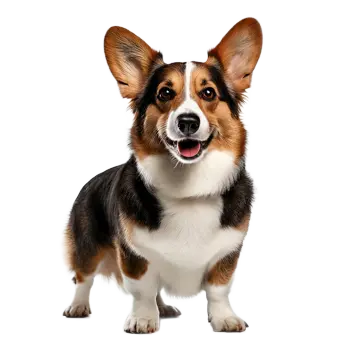
The Cardigan is a low, long dog built for work rather than decoration. Its overall impression is one of substance and solidity - this is not a fragile dog despite its modest height. The breed should look capable, and the best examples of the Cardigan do exactly that: compact, well-muscled, and ready to move.

The body is moderately long relative to its height, with a deep chest that reaches to the elbows and provides adequate room for heart and lungs. The topline is level and firm from shoulders to croup. The loin is broad and muscular. The Cardigan should not appear narrow or slab-sided - there should be breadth to the ribcage when viewed from the front. The underline shows a moderate tuck-up without exaggeration.

The head is a defining feature. Broad and flat between the ears, with a foxlike quality to its overall proportions - refined but not dainty. The stop is well-defined but not abrupt. The muzzle tapers slightly toward the nose but maintains enough substance to avoid a snipey appearance. The nose is black in all colors except in blue merles, where a butterfly nose is permitted. Eyes are medium to large in size, set obliquely, and dark brown in most color patterns. Blue merles may have one or both eyes blue or partially blue - this is a recognized characteristic specific to the merle pattern.

The ears are large, prominent, and distinctly rounded at the tip. They stand erect in the adult dog and are set wide apart on the head. This ear shape is one of the most immediately visible differences from the Pembroke Welsh Corgi, whose ears are pointed. In Cardigan puppies, ears may be held semi-erect or even tipped for a period before fully standing, which can alarm new owners who are not expecting this developmental stage.

The neck is moderately long, muscular, and well-arched, connecting the head to well-laid-back shoulders. Forelegs are short and strong, set slightly under the body, with feet that turn slightly outward - a consequence of the chondrodysplastic conformation that gives the breed its low-slung silhouette. Hindquarters are well-angulated and powerfully muscled, providing the driving force for movement that is unexpectedly ground-covering given the dog's height. The Cardigan moves with purpose and efficiency.

The tail is long and set relatively low, carried low at rest and sometimes raised when the dog is alert. This is the most immediately recognizable physical distinction from the Pembroke Welsh Corgi. The tail should not curl over the back. The Cardigan's full tail is a breed characteristic and should be present in all dogs registered as Cardigans - any dog presented as a Cardigan without a natural full tail should prompt serious questions about its identity or pedigree.

The double coat is medium in length with a dense, weather-resistant outer layer that lies flat against the body and a soft, thick undercoat. The coat is not silky or wavy. Acceptable colors include red, sable, brindle, blue merle, black and tan, and black and white with brindle or tan points. White markings commonly appear on the muzzle, neck, chest, and legs. Height ranges from 10.5 to 12.5 inches at the withers for both sexes, with males typically carrying more weight within the standard range.

The Cardigan's feet deserve specific mention - they are notably large for the dog's overall size, with well-arched toes and thick, durable pads that reflect the breed's origins as a dog that worked over rough Welsh terrain. The front feet may be positioned with a slight outward turn, which is correct conformation rather than a fault. This foot structure contributes to the planted, stable quality the Cardigan has when standing - it does not look like it would be easily knocked over, and it is not.

Affectionate With Family
The Cardigan is deeply loyal to its household and makes clear it expects to be included in whatever is happening. Distance is not in this breed's nature.
Good With Young Children
Good with children when socialized early. The herding instinct can produce heel-nipping behavior around running children - training addresses this directly.
Good With Other Dogs
Generally compatible with other dogs with proper introduction. Individual Cardigans vary in their enthusiasm for canine company.
Shedding Level
The Cardigan's double coat sheds year-round and more heavily during seasonal blows. Regular brushing is the practical approach to keeping up with it.
Coat Grooming Frequency
Two to three brushing sessions per week manages the coat effectively between baths. The Cardigan does not need professional clipping.
Drooling Level
Clean-faced and tidy. Drooling is not a characteristic of this breed.
Coat Type
A dense, weather-resistant double coat with a firm outer layer and soft, insulating undercoat - functional and suited to outdoor conditions.
Openness To Strangers
Observant and initially reserved with people it does not know. Not aggressive, but the Cardigan takes a moment to decide whether a stranger is worth its attention.
Playfulness Level
Enthusiastic about games and activity, particularly anything that engages its working instincts - fetch, chase, and handler-directed play are all welcomed.
Watchdog/Protective Nature
Takes its alert responsibilities seriously and will announce arrivals and unusual activity reliably. The Cardigan's bark is genuine rather than reflexive.
Adaptability Level
Adapts to different living situations when mental and physical needs are met. Exercise and engagement matter more than the size of the living space.
Trainability Level
Smart enough to learn quickly and independent enough to question why. Positive methods and clear communication get the best results from this breed.

Cardigan History & Development

The word Cardigan in this breed's name refers to Cardiganshire - the historical Welsh county now called Ceredigion along the southwestern coast of Wales - and that geographic anchor points to where this dog spent the working centuries of its existence before kennel clubs began recording pedigrees. The Cardigan's history in Wales is longer than documentation can reliably confirm. Breed historians generally accept that small heeling cattle dogs were present in Wales for well over a thousand years, with some accounts suggesting Celtic tribes brought ancestral dogs with them during migrations from continental Europe thousands of years ago.

The working role that shaped the Cardigan was specific and demanding. These dogs heeled cattle - nipped at their hooves to move them along lanes and to common grazing land, then dropped flat when the cow kicked back. The low body profile was functional engineering for exactly this task. Beyond herding, the dogs were general farm workers: they controlled vermin, sounded alarms, and lived as close companions to farming families who could not afford a dog that did not earn its keep.

For much of Welsh history, the Cardigan and what would become the Pembroke Welsh Corgi were not formally distinguished. Both types existed and worked throughout Wales, and the differences between them - bone structure, tail, ear shape - were known to people who worked with the dogs but were not recorded with the precision that modern breed differentiation requires. Historical accounts from Wales describe both long-tailed and short-tailed working dogs without always indicating they represented separate lineages.

The formal separation came in 1934, when The Kennel Club divided the Cardigan and Pembroke into distinct breeds. This decision was driven by breed enthusiasts who recognized the different origins and characteristics of the two types and who wanted separate standards and separate show classes. The AKC followed with formal recognition of the Cardigan in 1935. The separation gave both breeds their own identity, though it also created some tension in the early years as breeders sorted out which dogs belonged to which registry.

The name Cardigan as a standalone shorthand emerged gradually as the breed built a community of dedicated fanciers in the decades following official recognition. It is a natural contraction that follows the same logic as Lab for Labrador Retriever or Berner for Bernese Mountain Dog - a familiar shorthand among people who know the breed well enough to need only one word. The Cardigan has never been as numerically popular as the Pembroke, which benefited from high-profile royal association during the reign of Queen Elizabeth II. That relative obscurity has kept the breed primarily in the hands of serious fanciers rather than casual buyers, which has generally served the breed's health and temperament well.

Today the name Cardigan is used by owners, breeders, and enthusiasts who appreciate its precision - it distinguishes this breed clearly from the Pembroke in casual conversation without requiring the full registered name. As a shorthand it carries the same weight as any other well-established breed nickname: it signals that the speaker knows the difference and cares about it. For a breed that spent most of its existence doing honest work in the hills of Wales with very little wider recognition, having a community of enthusiasts who care enough to use the right name is, in its own small way, a form of honor.

Cardigan Temperament & Personality

The Cardigan is a herding dog, and it behaves like one even if its current job is keeping you company on the couch. The breed's intelligence is practical rather than purely academic - these are dogs that were bred to make decisions independently in the field, to read the movement of cattle, and to respond appropriately without constant direction. That self-directed quality shows up in daily life as a dog with opinions, preferences, and a working relationship with its people that is more collaborative than submissive.

Loyal is the word most Cardigan owners reach for first, and it is accurate. The bond between a Cardigan and its household is genuine and deep. The dog notices who is present, who is absent, and what each person's habits are. It adapts to the rhythm of the household and embeds itself in that rhythm in ways that make it feel like a family member rather than a pet. Some Cardigans develop particularly strong attachments to one person and need deliberate management to ensure those bonds do not become exclusive or create anxiety when that person is away.

Alert is the second defining characteristic. The Cardigan misses very little of what happens in and around its environment. Sounds, movements, visitors, changes in routine - all register. This alertness is backed by a genuine willingness to sound an alarm, which makes the Cardigan an effective watchdog but also a potentially vocal one. The barking that comes with this alertness is purposeful rather than reflexive - the Cardigan tends to bark because something actually happened, not simply because it can. But the cumulative effect of a highly alert dog in a busy household can be significant.

The herding instinct produces specific behavioral patterns that prospective owners should understand before acquiring the breed. Children running in a yard, visitors moving quickly, cyclists, and other fast-moving targets can trigger the Cardigan's chase and heel instincts. This behavior is manageable with training but does not disappear entirely. It is part of the breed's behavioral DNA, expressed with more or less intensity depending on the individual dog and the quality of its training.

Around strangers, the Cardigan is characteristically reserved at first contact. Not shy in the sense of being frightened, but watchful and deliberate. Once the dog has assessed the situation and decided a new person is acceptable, it warms up noticeably. Well-socialized Cardigans become comfortable with new people more quickly, which is an argument for broad early socialization. A Cardigan that has been exposed to many different people, places, and situations as a young dog develops the confidence to navigate new ones as an adult.

The Cardigan is also an emotionally responsive dog. It reads its owner's moods with the attentiveness of a breed that has worked closely with humans for thousands of years and developed a fine-grained sensitivity to human emotional signals as a result. Owners going through stressful periods often notice the Cardigan becoming more watchful and closer-staying. This sensitivity is part of what makes the breed such a satisfying companion for people who want a dog that is genuinely engaged with them, and it is also why harsh or erratic training methods produce an anxious, shutdown Cardigan rather than a cooperative one.

Cardigan Family Life & Living Requirements

The Cardigan is at its best in a household that takes it seriously as a dog with genuine needs rather than treating it as a small, decorative, low-maintenance companion. It is not a difficult breed to live with, but it is a breed that requires real engagement. Daily exercise, consistent training, and genuine human interaction are not optional extras - they are the baseline from which a well-behaved, settled Cardigan is built.

Families with children typically find the Cardigan an excellent fit when the dog has been socialized to children from an early age and when children have been taught how to interact respectfully with a dog. The herding instinct can manifest as heel-nipping at running children, which should be addressed in training before it becomes a pattern. Children old enough to participate in the dog's training and exercise often become the Cardigan's favorite people in the household - the breed has particular appreciation for humans who engage with it purposefully.

The breed adapts reasonably well to different housing situations when exercise needs are met. A house with a yard is preferable, but urban and apartment living is manageable for owners who commit to daily exercise routines. The Cardigan's exercise requirement is moderate but real - a 45-minute daily walk or equivalent activity is a practical baseline. Less than that and the breed's intelligence and energy find expression in ways that owners typically find unwelcome.

The Cardigan's chondrodysplastic build - long back, short legs - means spinal health is an ongoing consideration throughout the dog's life. Ramps or steps for furniture reduce the daily impact stress of jumping. Weight management is important: even moderate excess weight increases the load on spinal discs that are already at elevated structural risk. Owners who keep their Cardigans lean and manage high-impact activities thoughtfully tend to see better long-term spinal health outcomes. This is not overcaution - it is practical breed-specific management.

The Cardigan does not do well in social isolation. A dog this cognitively active and socially oriented needs human company, mental stimulation, and a sense of purpose. Owners who work long hours without arrangements for the dog's midday needs or mental engagement will encounter the anxious, destructive, vocal Cardigan that is a perfectly predictable outcome of unmet social and cognitive needs.

Multiple-dog households generally work well with a Cardigan when introductions are managed thoughtfully and the dogs have adequate space and resources. Some Cardigans are selective about their canine company, preferring known dogs to strangers. Dog-to-dog introductions on neutral ground, with careful monitoring of initial interactions, produce better outcomes than simply placing a new dog in the house and expecting everyone to sort it out.

Cardigan Training & Exercise Needs

The Cardigan's intelligence makes it a pleasure to train when the method is right - and a frustrating partner when the method is wrong. Positive reinforcement, clear communication, and consistency produce a Cardigan that is engaged, responsive, and genuinely enthusiastic about training sessions. Compulsion-based approaches tend to produce a Cardigan that becomes cautious, evasive, or shuts down, which wastes the breed's considerable learning capacity.

Clicker training and structured reward-based methods work particularly well with this breed because the precision of marking the exact moment of correct behavior matches the Cardigan's ability to distinguish cause from effect. The breed learns quickly and retains what it learns. The challenge is that it also notices inconsistency just as quickly. A rule that is enforced sometimes but not others is not a rule to a Cardigan - it is a negotiable suggestion. This means household training standards need to be consistent across all the people the dog interacts with.

Herding instincts can be productively directed into formal activities. Treibball - a sport that simulates herding behavior using large exercise balls - engages the breed's instincts in a controlled and rewarding way. Agility, rally, and competitive obedience are all sports where the Cardigan competes successfully and enjoys the handler engagement they provide. Scent work is another excellent outlet - the breed's intelligence and nose make it a natural.

The daily exercise requirement is genuine and should be taken seriously. A solid 30 to 45 minutes of real activity - walking, off-leash running in a secure area, or structured play - is the practical baseline for an adult Cardigan. Puppies should receive shorter, lower-impact sessions to protect developing joints and growth plates, with activity increasing gradually as the dog matures. Mental exercise matters as much as physical exercise for a breed this cognitively active: training sessions, puzzle feeders, and novel experiences all count. A Cardigan that has had its brain worked is a noticeably calmer, more relaxed housemate than one that has only had physical exercise.

Early socialization is as important as formal training for the Cardigan. A puppy exposed to varied people, environments, sounds, and experiences during the first few months of life develops into an adult with broader comfort and more reliable behavior across different situations. Socialization and training are most effective when started early, but the Cardigan remains teachable throughout its life - adult dogs acquired as rescues or rehomes can be trained successfully with patience and consistent positive methods.

Cardigan Health Concerns

The Cardigan is a generally healthy breed with a lifespan of 12 to 15 years, but several specific conditions are documented and worth understanding before acquiring one.

Eye examinations by a board-certified ACVO ophthalmologist should be conducted annually for breeding dogs, as some eye conditions can develop progressively and a single clearance does not cover the dog's entire reproductive life. Prospective buyers should confirm that the ACVO eye exam for both parents was conducted within the year prior to the litter being born, not years before.

Common Health Issues

  • Progressive retinal atrophy - Rcd3-PRA, : The Cardigan-specific mutation causes rod-cone degeneration leading to progressive vision loss. DNA testing identifies clear, carrier, and affected dogs. Two carrier parents can produce affected offspring without either showing symptoms.
  • Degenerative myelopathy: A progressive neurodegenerative disease causing spinal cord deterioration, hind-limb weakness, and eventual paralysis. Typically affects older dogs. DNA test available - At-risk dogs do not all develop clinical disease.
  • Intervertebral disc disease - IVDD, : The breed's chondrodysplastic build concentrates mechanical stress on spinal discs, creating elevated risk of disc protrusion or extrusion. Severity ranges from pain and reduced mobility to emergency paralysis requiring surgery.
  • Hip dysplasia: Documented in Cardigans and included in CHIC health testing requirements - Abnormal hip joint development causes chronic pain and progressive arthritis.
  • Hypothyroidism: Documented in the breed - Causes weight gain, lethargy, coat changes, and cold intolerance. Managed with daily thyroid hormone replacement.
  • Double merle blindness and deafness: Breeding two merle Cardigans produces offspring at high risk for congenital blindness and deafness - Entirely preventable by not pairing two merle-colored dogs.

Preventive Care & Health Monitoring

  • CHIC testing for Cardigan Welsh Corgis requires: OFA or PennHIP hip evaluation - ACVO eye examination by a board-certified ophthalmologist, DNA test for rcd3-PRA, and DNA test for degenerative myelopathy. Verify all four tests for both parents through the OFA public database.
  • Never breed two merle Cardigans - Confirm the color genetics of both parents when purchasing a blue merle puppy to ensure double merle risk was not created.
  • Maintain the Cardigan at a healthy lean weight throughout its life - Excess weight increases spinal disc stress in a breed already predisposed to intervertebral disc disease.
  • Use ramps or steps to help the Cardigan on and off furniture and beds - Reducing cumulative daily impact on the spine over the dog's lifetime.

Cardigan Grooming & Maintenance

The Cardigan's double coat is practical and relatively low-maintenance compared to breeds requiring professional clipping, but it does shed and requires regular attention to stay in good condition. Brushing two to three times per week with a slicker brush and a comb keeps the coat free of tangles, removes loose hair before it deposits on surfaces, and gives you a regular opportunity to check the skin for irritation, ticks, or anything else worth catching early.

Seasonal coat blows - typically in spring and fall - produce a noticeably higher volume of shed hair than the steady year-round background shedding. During these periods, daily brushing is the practical approach. An undercoat rake or deshedding tool speeds up the process of clearing dead undercoat, which otherwise takes weeks to work its way out naturally. Owners who manage the coat blows actively will have significantly less hair distributed through the house than those who let the coat blow resolve itself.

Bathing every four to six weeks or when the dog is genuinely dirty is appropriate. The dense double coat dries slowly, and a thorough blow-dry after bathing is worthwhile to prevent the undercoat from remaining damp against the skin for extended periods, which can encourage skin irritation. The Cardigan does not need clipping or elaborate trimming - the coat may be lightly tidied around the feet and ears by owners who prefer a neater appearance, but full professional grooming appointments are not a recurring requirement the way they are for single-coated breeds.

Ears are upright and well-ventilated, which reduces the risk of moisture-related ear infections. Check and clean the ears periodically, more frequently if the dog swims or spends time in wet conditions. Nails should be trimmed every three to four weeks. Dental hygiene through regular brushing and annual veterinary dental checks supports long-term health. The coat around the face and ears should be checked after field excursions for burrs and debris.

Owners who take their Cardigan hiking, hunting, or into field conditions should check the coat thoroughly after each outing. Foxtails, burrs, and other plant material can work their way into the coat and against the skin, causing irritation or infection if not removed promptly. The dense undercoat around the legs and belly is particularly effective at collecting debris. A quick brush-out after field activity is faster than addressing the consequences of embedded material later.