Cane del Quirinale

Volpino Italiano

Quick Facts

🐕 Breed Group
Toy Group
📏 Size Category
Small
📏 Height
Males: 11-12 inches, Females: 10-11 inches
⚖️ Weight
Males: 9.9-12 pounds, Females: 9-9.9 pounds
⏱️ Life Expectancy
14-16 years
🧣 Coat Type
Double coat, long and dense with a thick undercoat
🎨 Coat Colors
White, red, champagne
😀 Temperament
Alert, lively, devoted, spirited
🏃 Exercise Needs
Moderate
🎓 Training Difficulty
Moderate
👶 Good with Children
Yes, with older considerate children
🐾 Good with Other Pets
Generally good when properly socialized

Other Names & Breed Recognition

The name Cane del Quirinale translates from Italian as "Dog of the Quirinal," a reference to the Quirinal Hill in Rome - the highest of the city's seven hills and the site of the Quirinal Palace, which has served across the centuries as the residence of popes, Savoy kings, and now the President of the Italian Republic. Calling this small white dog by the name of Italy's most prestigious address was not accidental. It reflected genuine proximity to power. The Volpino Italiano spent generations as a household companion of Italian nobility and clergy, and the Quirinal connection made plain what circles this dog moved in.

The more widely used name today is Volpino Italiano, which translates simply as "little Italian fox" - a reference to the breed's sharp, pointed muzzle and bright, alert expression. The Cane del Quirinale name appears in older Italian documents and historical accounts of the breed's presence at court and in aristocratic households. It was a name that carried social weight, placing the dog in a specific cultural and architectural context rather than simply describing its fox-like features.

Queen Victoria contributed another alternate name to this breed's history following her 1888 visit to Florence. She encountered the breed there and brought several home to England, where the dog was sometimes called the Florentine Spitz for a period in the late nineteenth century. That name reflected the city of Florence rather than Rome, underscoring that the breed had a broad presence across the Italian peninsula's aristocratic centers, not just the capital. The Florentine Spitz name did not endure in common use, but it documents the breed's reach into British royal circles.

In working-class Italian communities, smaller versions of the breed kept by ordinary households rather than nobility were sometimes called Picoli Guardiani, meaning "little guardians" - a name that captured the dog's practical role as a household alarm rather than its aristocratic associations. This alternate usage underscores how a single breed can carry entirely different names depending on the social context of the people keeping it.

For registration purposes, the dog is known as the Volpino Italiano. The FCI recognized the breed under Standard No. 195, placing it in Group 5 (Spitz and Primitive Types), Section 4 (European Spitz). The UKC recognized the breed in its Northern Breeds group in 2006. The AKC added the Volpino Italiano to its Foundation Stock Service in 2021, meaning the breed is tracked and recorded but does not yet compete in AKC events. The Cane del Quirinale name belongs to history rather than to any current registry, but it survives in breed literature and historical writing about Italy's oldest companion dogs.

Cane del Quirinale Organizations & Standards

The primary international authority for the Volpino Italiano, known historically as the Cane del Quirinale, is the Federazione Cynologica Internazionale, which established the breed's official standard under FCI Standard No. 195. Italy's national kennel club, the Ente Nazionale della Cinofilia Italiana (ENCI), holds custodianship over the breed in its country of origin and has been deeply involved in the conservation efforts that prevented the Volpino Italiano from disappearing entirely in the twentieth century. The breed nearly went extinct in Italy during a period of decline in the mid-1900s, and it was ENCI's recognition of the crisis combined with dedicated Italian breeders that brought population numbers back to a sustainable level.

In the United States, the United Kennel Club recognized the Volpino Italiano in 2006, placing it in the Northern Breeds group alongside other Spitz-type dogs. The AKC added the breed to its Foundation Stock Service in 2021, a designation for rare breeds with documented histories that are actively being developed toward full recognition. FSS status allows breeders to register their dogs officially and build the population records needed for future full recognition, but it does not yet grant eligibility for AKC conformation shows.

The Volpino Italiano Club of America serves as the national parent club in the United States, promoting the breed, supporting health research, and providing guidance to breeders and owners. Anyone considering this breed should make contact with the parent club early in their research. Reputable breeders within the club network will be familiar with the health testing requirements relevant to this breed and will have documentation of the tests completed on their breeding dogs.

The FCI standard describes a compact, square-bodied Spitz with a long, dense double coat, a pointed muzzle, small triangular erect ears, and a tail carried curled over the back. The breed's ideal height is 11 to 12 inches for males and 10 to 11 inches for females. Weight ranges from approximately 9.9 to 12 pounds for males and 9 to 9.9 pounds for females. The standard permits white, red, and champagne coat colors, with white being the color most closely associated with the breed's historical presence in Italian aristocratic households.

Breeding standards emphasize that this is not simply a small decorative dog. The Volpino Italiano has a documented working role as an alert companion and household watchdog, and the standard reflects a dog built for sound structure, good health, and longevity rather than extreme appearance. Prospective buyers should expect reputable breeders to ask questions about their living situation and to provide full documentation of health testing on the breeding pair.

Kennel Club Recognition

  • United Kennel Club (UKC): Recognized, Northern Breeds
  • FCI: Recognized, Group 5 - Spitz and Primitive Types

Cane del Quirinale Physical Description

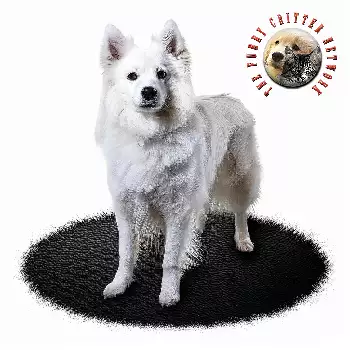
The Cane del Quirinale is a compact, square-built Spitz that carries itself with a confidence entirely out of proportion to its size. Everything about its physical construction communicates alertness - the small erect ears are perpetually forward, the dark round eyes are bright and intent, and the body is taut rather than soft. This is a dog built for watchfulness, and its structure reflects that purpose even in stillness.

The head is a defining feature of the breed. The skull is not overly broad. The muzzle is pointed and moderately long, giving the face the sharp, fox-like profile that inspired the name Volpino. The stop is moderate rather than pronounced. The nose is small and typically black, though self-colored noses occur in red or champagne dogs. The teeth meet in a proper scissors bite, and the dental structure in such a small jaw makes dental hygiene a lifelong maintenance concern.

The ears are small, triangular, and carried fully erect. They move expressively in response to sounds, contributing to the dog's characteristic look of perpetual interest in its surroundings. The eyes are dark, round, and set forward in the skull, giving a direct gaze that early observers found foxy and quick.

The neck flows into the shoulders without the abrupt transition that sometimes afflicts small companion breeds. The topline is level. The chest is moderately broad and has enough depth to allow sound cardiovascular capacity. The body is compact and square when measured from point of shoulder to point of buttock against the height at the withers. Excessive length of back is a fault in the standard. The tail is carried tightly curled over the back in the characteristic Spitz manner and is well covered with long hair that blends visually into the coat.

Legs are straight, with good bone for the breed's size - not delicate or fine-boned as seen in some Toy breeds. The feet are small and tight, catlike in construction, with well-arched toes. Movement is brisk and light, with a trotting gait that covers ground efficiently. The breed should not paddle, roll, or move with any suggestion of unsoundness.

The coat is the breed's most visually striking feature. It is long, dense, and stands away from the body due to the texture and volume of the undercoat beneath it. The outer coat has a harsh, dry texture rather than silky softness, which causes it to stand off rather than lay flat. The undercoat is thick and wool-like. Together they create the characteristic puffed silhouette that makes this dog appear larger than its actual frame. The coat is longest around the neck and chest, forming a pronounced ruff that frames the face, and it feathers heavily on the tail and the backs of the legs.

Coat color in the historically most prized form is pure white, which was the color most consistently associated with the breed's noble households. Red and champagne are also accepted by the FCI standard, with the champagne color sometimes appearing as a warm cream tone. Markings or patches of contrasting color are not correct for the breed. The white coat in particular requires regular attention to keep it clean and free of staining around the face and paws.

Despite its aristocratic associations and undeniably ornamental appearance, the Cane del Quirinale is a structurally sound dog with no exaggerated features that compromise its health or movement. There are no shortened airways, no skin folds, no structural compromises bred in for appearance. The breed's physical construction supports the longevity it is known for. A well-built example should move freely and efficiently, and any stiffness, paddling, or suggestion of unsoundness in movement warrants veterinary attention regardless of the dog's age.

Affectionate With Family
The Cane del Quirinale bonds with total devotion to its people and thrives on being at the center of household life. Centuries of companion-dog breeding have produced a dog that genuinely needs human closeness.
Good With Young Children
This little dog does best with children who understand gentle handling. Its small frame makes it vulnerable to rough play, and it will not tolerate being mishandled without protest.
Good With Other Dogs
With proper early socialization the Cane del Quirinale generally coexists well with other dogs, though its confident personality means it does not automatically defer to larger breeds.
Shedding Level
The dense double coat sheds at a moderate rate year-round with heavier seasonal blowing. Regular brushing keeps the coat healthy and reduces the hair left around the home.
Coat Grooming Frequency
The long, stand-off coat needs brushing several times a week to prevent matting and maintain its characteristic puffed appearance. Professional trimming is rarely needed.
Drooling Level
Drooling is not a characteristic of this breed. The Cane del Quirinale has a tight, dry mouth typical of Spitz-type dogs.
Coat Type
The coat is long, abundant, and stands off the body due to a very dense undercoat. The texture is harsh on the outer layer, creating the breed's signature cloud-like silhouette.
Openness To Strangers
Reserved and watchful with people it does not know, the Cane del Quirinale takes its role as an alert companion seriously. Socialization from puppyhood helps prevent this caution from becoming chronic shyness.
Playfulness Level
This is an energetic and playful dog that remains lively well into adulthood. It enjoys interactive games and has a mischievous spirit that makes it entertaining company.
Watchdog/Protective Nature
Alert and vocal, the Cane del Quirinale has historically served as a household alarm dog and takes that responsibility seriously. It will announce visitors and anything unusual without hesitation.
Adaptability Level
Its compact size makes this breed well-suited to apartment living provided it gets adequate daily activity and mental engagement. It adapts to varied living situations more readily than many working breeds.
Trainability Level
Intelligent and quick to learn, the Cane del Quirinale responds well to reward-based training but has an independent streak. Consistency matters more than force with this breed.

Cane del Quirinale History & Development

The name Cane del Quirinale places this breed at the center of Italian history in a way that the more common Volpino Italiano name does not. The Quirinal Hill in Rome - the highest of the city's seven hills - was home to the Quirinal Palace, a building that has served since the sixteenth century as the residence of some of Italy's most powerful occupants: popes of the Roman Catholic Church, then the kings of unified Italy after 1870, and now the President of the Italian Republic. A dog associated with this address had been at the heart of Italian life across centuries of political and religious transformation.

The Volpino Italiano itself is one of the oldest dog types on the Italian peninsula. Spitz-type dogs with the breed's characteristic pointed muzzle, erect ears, and dense stand-off coat appear in Italian artifacts and records dating back thousands of years. These are not modern reconstructions but documented historical presences. The breed as it is recognized today represents the continuation of a type that Italian households - from the grandest palaces to the smallest farmsteads - have kept for generations.

The aristocratic connection that gave rise to the Cane del Quirinale name was genuine. Italian nobility maintained small companion dogs in their households throughout the Renaissance period and beyond, and the white Volpino was among the breeds favored in those settings. Cardinal households, papal apartments, and the residences of noble families across Florence, Rome, and other Italian centers were documented homes for these dogs. The Quirinal connection elevated the breed's status by placing it in the most politically significant address in Italy.

The breed also attracted international attention from royalty beyond Italy. Queen Victoria's 1888 visit to Florence brought her into contact with the Volpino Italiano, and she reportedly took several dogs home to England. During this period the breed was sometimes called the Florentine Spitz in British contexts, linking the name to the city of Florence rather than to Rome's Quirinal Hill but retaining the aristocratic and geographic flavor of the Italian original. This British royal interest contributed to the breed's reputation during a period when royal patronage of a dog breed carried considerable weight in determining its fashionability.

Despite this distinguished history, the Volpino Italiano suffered a severe population collapse in the twentieth century. Changes in fashion, the disruptions of two world wars, and competition from other small companion breeds drove numbers down dramatically. By the 1960s and 1970s the breed was genuinely endangered in Italy itself. Recovery came through the dedicated efforts of Italian breeders working with ENCI to locate surviving dogs and rebuild the population from a very small gene pool. The current breed population worldwide remains modest, making it a rare find in most countries.

Today the Cane del Quirinale name lives primarily in historical references and breed literature. Active registrations use Volpino Italiano as the standard designation. But the older name serves a valuable function: it reminds anyone reading it that this small dog has a history as rich and specific as any breed ten times its size, connected not to the countryside but to the grandest addresses in Italian civilization.

Cane del Quirinale Temperament & Personality

The Cane del Quirinale is a small dog with an outsized sense of its own importance, and that quality is not a flaw - it is a defining feature of the breed's character. This dog has been a companion and watchdog for centuries rather than a working field dog or a herding breed, and its behavioral profile reflects that history precisely. It is devoted to its household with an intensity that can shade into velcro-dog tendencies, alert to its environment with a sensitivity that makes it an effective natural alarm, and opinionated enough about its preferences to let you know when something has not met its approval.

Within the family, the Cane del Quirinale is affectionate and engaged. It wants to be where the people are. This is not a breed that will contentedly occupy a dog bed in another room while the household goes about its business. It inserts itself into whatever is happening - sitting near you when you read, following you from room to room, positioning itself where it can observe the household's comings and goings. That closeness is something most owners of this breed come to appreciate deeply, though it does mean the dog does not handle isolation well. Extended periods alone without adequate human contact tend to produce anxious or vocal behavior.

With strangers the Cane del Quirinale is reserved and takes its time. It is not an aggressive dog with people, but it is watchful and cautious with those it does not recognize. This natural reserve served the breed's historical role as a household alarm dog - a dog that sounds a vocal alert at anything unfamiliar is only useful if it actually discriminates between known and unknown. Inadequate socialization in puppyhood can push that natural caution past watchfulness into chronic shyness, so early exposure to varied people, places, and sounds is genuinely important for this breed's long-term temperament.

The breed's vocal nature is real and worth understanding clearly before committing to one. The Cane del Quirinale barks. It barks at unfamiliar sounds, at people approaching the door, at changes in the environment it considers worthy of comment. In a house where some level of watchdog alertness is welcome, this is a valued trait. In an apartment building with noise-sensitive neighbors, it requires consistent management from early puppyhood. Training the dog to quiet on command is achievable, but the instinct to announce is bred in and will not disappear entirely regardless of training effort.

Energy level is moderate. This is not a high-drive working breed that requires extensive daily exercise to remain functional. But it is not a low-energy lap dog either. The Cane del Quirinale has a lively, playful quality and needs daily activity - walks, indoor play sessions, interactive games - to maintain its mental equilibrium. A dog that gets adequate engagement is calm and pleasant company. A dog that is under-stimulated will find ways to express its frustration, typically through increased barking or restlessness.

The breed's intelligence is genuine but comes packaged with independence. It is quick to understand what is being asked and quite capable of learning a wide range of behaviors. It is also capable of evaluating whether compliance serves its interests and occasionally concluding that it does not. Positive reinforcement training works consistently with this breed. Harsh correction tends to produce either shutdown or defiance depending on the individual dog's temperament, neither of which moves training forward.

Cane del Quirinale Family Life & Living Requirements

The Cane del Quirinale is genuinely well-suited to life in a smaller home or apartment, provided the people in it are present and engaged. Its compact size means it does not require a yard, and its moderate exercise needs can be met with daily walks and indoor play. What it does require - and this is the non-negotiable part - is regular human company. This is a dog built around the companion role, and it does not thrive in a household where it is routinely left alone for long stretches.

With children the picture is nuanced. Older children who understand that a small dog has physical limits and who can engage with it gently will find the Cane del Quirinale to be a lively and entertaining companion. Younger children who have not yet developed reliable impulse control around animals are a genuine risk to a dog this size. Rough handling, being grabbed unexpectedly, or being dropped from even a modest height can cause real injury. Households with toddlers should supervise all interactions carefully and teach appropriate handling from the start.

The breed generally coexists well with other dogs when properly socialized, but it does not automatically make itself small or deferential with larger dogs. Its confidence means it will engage with much larger animals as an equal, which can occasionally get it into trouble if the larger dog does not appreciate the overture. Cat relationships tend to work well when introduced properly, particularly if the cat was present first or if both animals are introduced as young animals.

The breed's vocal alertness is a consideration in living situations with shared walls or floors. This is not a quiet dog, and managing that tendency requires consistent training and a realistic assessment of the living environment. Households in detached homes with tolerant neighbors or in situations where the dog will not be left to bark unattended will find the watchdog tendency an asset rather than a problem.

The Cane del Quirinale is a long-lived breed with a documented lifespan of 14 to 16 years, which is a significant commitment. Anyone acquiring one of these dogs should plan for a long relationship. The breed's small size means costs associated with veterinary care, food, and supplies remain manageable across that lifespan, but the emotional investment in a dog that will be part of the family for well over a decade should be considered seriously at the outset.

Cane del Quirinale Training & Exercise Needs

Training the Cane del Quirinale works best when it is framed as collaboration rather than instruction. This is an intelligent breed with an independent streak, and it responds much better to positive reinforcement - treats, praise, play - than to any training method that relies on pressure or correction. Harsh or repetitive correction tends to make this dog either shut down or argue, neither of which moves a training session forward. Keep sessions short, keep the energy positive, and end each session at a point of success.

The breed's natural watchdog instinct - the vocal alerting, the suspicion of strangers, the attention to environmental changes - needs to be channeled early rather than suppressed. Teaching a reliable "quiet" command from puppyhood gives owners a tool to manage barking without trying to eliminate the instinct itself. Socialization is equally important during the early months. Exposing the puppy to varied people, sounds, environments, and other animals while those experiences are still novel creates an adult dog that can distinguish genuine concern from routine daily life.

Basic obedience work is achievable and recommended. Sit, down, stay, come, and leash manners are all within easy reach for this breed given consistent positive training. The Cane del Quirinale is also a capable candidate for dog sports that reward independent thinking and agility. Rally obedience and small-dog agility courses offer structured physical and mental outlets that suit the breed's combination of intelligence and energy.

Exercise requirements are moderate. This is not a breed that needs hours of daily outdoor activity. Two or three short to moderate walks daily, combined with indoor interactive play, generally meets the breed's physical needs. What matters as much as the quantity of exercise is the quality of mental engagement. A dog that is physically tired but mentally bored will still find outlets for its energy, typically through increased vocalization or restlessness. Puzzle feeders, training sessions, and interactive games contribute meaningfully to the dog's overall sense of satisfaction and calm.

The breed's small size should not be mistaken for fragility in training. The Cane del Quirinale is sturdy enough to participate in training classes and active play. The only real physical limitation is that high-impact activities - significant jumping, rough play with much larger dogs - carry more risk for a small dog than for a larger one. Common-sense management of those situations protects the dog without restricting its daily life in any meaningful way.

Cane del Quirinale Health Concerns

The most serious genetic health concern in the Volpino Italiano is primary lens luxation, a condition in which the lens of the eye shifts out of its normal position due to degeneration of the ligaments that hold it in place. PLL is painful, can cause secondary glaucoma, and without prompt treatment can lead to permanent vision loss. A DNA test for the PLL mutation is available, and responsible breeders test all breeding dogs before pairing them. Buyers should ask to see documentation of PLL testing on both the sire and dam of any puppy they are considering. A dog that carries two copies of the mutation (affected) should not be bred; a dog carrying one copy (carrier) requires careful pairing to avoid producing affected offspring.

Von Willebrand's disease Type I, a mild bleeding disorder affecting the blood's clotting ability, has been documented in this breed. It is typically less severe than other forms of the disease but worth informing any veterinarian about before elective procedures. Progressive rod-cone degeneration, a form of progressive retinal atrophy, rounds out the documented ocular concerns for the breed. Annual CAER examinations by a board-certified veterinary ophthalmologist are recommended for breeding dogs and provide valuable monitoring for the broader population. The Volpino Italiano's lifespan of 14 to 16 years is one of its genuine assets, and consistent preventive care supports dogs reaching the upper end of that range in good health.

Common Health Issues

  • Primary lens luxation - PLL, : a hereditary condition in which the lens shifts out of position due to ligament degeneration. PLL is painful and can lead to secondary glaucoma and blindness if not treated promptly. A DNA test is available to identify affected dogs, carriers, and clear dogs.
  • Patellar luxation: the kneecap slips out of its normal groove in the femur. Severity ranges from occasional mild slipping - Grade I, to permanent dislocation requiring surgery (Grade IV). OFA patellar evaluation is recommended for breeding dogs.
  • Dental disease: crowding and misalignment in the small jaw accelerates tartar buildup and gingival disease - Daily tooth brushing and regular professional dental cleanings help prevent the systemic effects of chronic dental infection.
  • Von Willebrand's disease Type I: a mild hereditary bleeding disorder reducing the blood's ability to clot normally - Typically less severe than other vWD forms but relevant to inform veterinarians prior to any surgical procedures.
  • Progressive rod-cone degeneration - Prcd-PRA, : progressive deterioration of the retinal photoreceptors leading to gradual vision loss. Annual CAER examinations by a veterinary ophthalmologist are the standard monitoring approach.

Preventive Care & Health Monitoring

  • PLL DNA test: both sire and dam should be tested prior to breeding. Results identify affected - Carrier, and clear dogs. Buyers should request documentation of PLL test results for both parents of any puppy.
  • OFA patellar luxation evaluation: breeding dogs should be formally graded by OFA prior to pairing. Grades I and II may be acceptable in breeding programs with careful monitoring - Grades III and IV should not be bred.
  • Annual CAER examination: a board-certified veterinary ophthalmologist evaluates the eyes for PLL progression - PRA, and other ocular conditions. Recommended annually for all breeding dogs.
  • Dental hygiene routine: daily brushing with dog-safe toothpaste - Regular dental chews, and professional cleanings as recommended by your veterinarian. Begin the routine in puppyhood to build acceptance.
  • Inform your veterinarian of vWD status before elective procedures - Pre-surgical bloodwork assessing clotting function is appropriate for dogs from lines where vWD has been documented.

Cane del Quirinale Grooming & Maintenance

The Cane del Quirinale's coat is its most demanding maintenance requirement, though the work involved is manageable with the right tools and a consistent routine established early. The long, dense double coat with its harsh outer texture and thick wool-like undercoat was built for central Italian climates, not for decoration, and it functions well in that role - but it does require regular attention to stay healthy and tangle-free.

Brushing three to four times per week is the practical minimum for keeping the coat in good condition. A slicker brush followed by a metal comb works well for this coat type. The areas most prone to matting are behind the ears, in the armpits where the front legs meet the chest, and around the collar line. Checking those spots specifically at each grooming session catches tangles before they tighten into mats. A mat that has been allowed to tighten against the skin is uncomfortable for the dog and difficult to remove without cutting.

Bathing frequency is moderate - every four to six weeks typically, or more often for white-coated dogs that pick up environmental staining. The coat should be thoroughly dried after bathing. A coat this dense that is left to air-dry incompletely is at risk for developing skin irritation or hot spots under the insulating undercoat. A blow dryer on a warm (not hot) setting while working through the coat with a brush produces the best result and maintains the characteristic stand-off appearance.

The breed goes through seasonal shedding periods, typically in spring and fall, during which the undercoat loosens and comes out in significant volume. Daily brushing during these periods combined with an undercoat rake or deshedding tool shortens the duration of the heavy shed and reduces the amount of hair deposited around the home. Between shed cycles, shedding is moderate and manageable with the regular brushing routine.

Nail trims every three to four weeks, ear checks and cleaning as needed, and the dental hygiene routine described in the health section complete the grooming picture. Introducing all grooming procedures to a puppy gradually and with positive associations - treats, calm handling, short sessions - creates an adult dog that tolerates the process without resistance. A dog that has never learned to accept grooming becomes progressively harder to manage as it ages.