Boykin

Boykin Spaniel

Quick Facts

🐕 Breed Group
Sporting Group
📏 Size Category
Medium
📏 Height
Males: 15.5-18 inches, Females: 14-16.5 inches
⚖️ Weight
Males: 30-40 pounds, Females: 25-35 pounds
⏱️ Life Expectancy
10-15 years
🧣 Coat Type
Wavy to curly, medium length, water-resistant
🎨 Coat Colors
Rich liver brown, chocolate
😀 Temperament
Friendly, energetic, eager to please, sociable
🏃 Exercise Needs
High
🎓 Training Difficulty
Easy to Moderate
👶 Good with Children
Yes
🐾 Good with Other Pets
Generally yes

Other Names & Breed Recognition

Boykin is the casual, affectionate shorthand for Boykin Spaniel, used comfortably by hunters, owners, and breed enthusiasts across the American South and beyond. The name Boykin itself comes from Lemuel Whitaker Boykin, the South Carolina sportsman and breeder credited with developing the breed in the early 20th century. Using just the surname as a nickname is fitting - the breed is so closely associated with its founding family and its home state that a single name carries the full weight of that identity. In South Carolina hunting culture, asking "did you bring the Boykins?" requires no further elaboration.

The full registered name is Boykin Spaniel, and that is how the breed appears in AKC records, on health clearance documentation, and in formal breed club communications. The AKC recognized the Boykin Spaniel in 2009 under the Sporting Group, making it the most recently added American-developed sporting breed at the time of its recognition. Before AKC acceptance, the breed had been maintained and registered by the Boykin Spaniel Society, which was established in 1977 and continues to operate as a registry and resource organization for the breed alongside the AKC.

South Carolina named the Boykin Spaniel its official state dog in 1985, and the breed has a following in that state that goes beyond typical breed club enthusiasm - it is genuinely woven into the hunting culture of the Midlands and Low Country. The Boykin Spaniel Society's annual breed day on September 1st, known informally as Boykin Spaniel Day, is recognized by the state.

In addition to Boykin, you may encounter the breed referred to as the "Swamp Poodle," a regional nickname reflecting its origins in the swampy Wateree region of South Carolina and the curly quality of its coat. That name is affectionate and regional rather than a formal alternate designation. Whether you know this dog as the Boykin Spaniel, the Boykin, or the Swamp Poodle, the dog is the same: a compact, brown, energetic spaniel that has been turning heads and emptying ponds in South Carolina for over a century. It is one of the few breeds where the nickname is as likely to be used as the registered name, which says something about how naturally this dog fits into the lives of the people who love it.

Boykin Organizations & Standards

The Boykin Spaniel Society, established in 1977 in South Carolina, predates AKC recognition by over three decades and continues to serve as an important registry and resource organization for the breed. It maintains its own studbook, sponsors hunting tests and field events, and provides educational resources for Boykin owners and breeders throughout the South. The Boykin Spaniel Club and Breeders Association of America (BSCBAA) serves as the AKC parent club and represents the breed's interests in AKC programs and policy. The Boykin Spaniel Foundation provides financial support for health research and reimburses owners for the cost of approved health screenings on their dogs.

For CHIC certification through the OFA and BSCBAA, breeding Boykins must complete a specific set of health screenings. The required tests include OFA hip evaluation or PennHIP assessment, OFA or CERF eye examination (which must be repeated annually for breeding dogs), OFA cardiac evaluation to screen for pulmonic stenosis, a DNA test for Exercise-Induced Collapse (EIC), a DNA test for Collie Eye Anomaly (CEA), and a DNA test for Degenerative Myelopathy (DM). The BSCBAA also recommends OFA patellar luxation evaluation. This is one of the more comprehensive health screening programs in the sporting group, reflecting the breed community's proactive approach to managing known heritable conditions.

The AKC standard describes the Boykin as a medium-sized sporting dog of rich brown coloration, sturdy and compact. Males stand 15.5 to 18 inches at the shoulder, females 14 to 16.5 inches. Weight ranges from 30 to 40 pounds for males, 25 to 35 pounds for females. The coat is described as flat to moderately curly, medium in length, with feathering on the ears, chest, abdomen, and legs. Color is a rich liver brown to dark chocolate, with no white markings accepted except a small spot on the chest. The Boykin's mellow brown eyes and that warm coat color give the breed a unified, earthy appearance that many owners describe as one of its most appealing physical characteristics.

The standard emphasizes that the Boykin was developed as a versatile hunting dog capable of working both on land and in water, and it should be evaluated with that functional requirement in mind. Dogs that are too heavily coated for practical water work, or built in a way that would compromise stamina and athleticism in the field, would not represent the breed well regardless of other virtues. This emphasis on function as the foundation for form distinguishes the Boykin community's approach from purely conformation-focused breed cultures.

Kennel Club Recognition

  • American Kennel Club (AKC): Recognized in 2009, Sporting Group
  • United Kennel Club (UKC): Recognized, Gun Dog Group

Boykin Physical Description

The Boykin is a compact, medium-sized spaniel that packs a lot of working dog into a manageable package. Males typically stand 15.5 to 18 inches at the shoulder and weigh between 30 and 40 pounds; females run slightly smaller. This size was not accidental - the breed was specifically developed to fit inside a small boat without swamping it, making compactness a genuine functional requirement rather than an aesthetic preference. A dog that is too large to share a canoe comfortably with its hunter is a practical liability in the Wateree Swamp, and the Boykin's size reflects that specific demand.

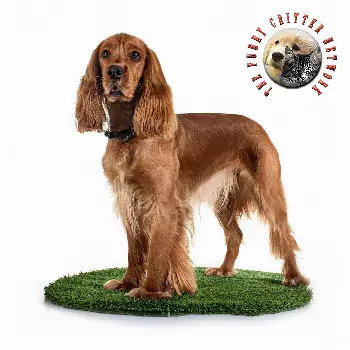
The head is broad and moderately rounded with a medium-length, well-defined muzzle. The stop is moderate, the expression warm and alert. The eyes are a warm brown to dark hazel, set wide and giving the face the gentle, inviting expression that is characteristic of the breed. Light eyes or mismatched eye color are considered a fault. The ears are set slightly above the level of the eye, broad at the base, and hang flat against the cheeks close to the head. They are long enough to frame the face without excessive length. Combined with the rich brown coat color and warm eye color, the Boykin has a unified, earthy appearance that experienced spaniel people find immediately appealing.

The neck is moderately long and gradually arches to the shoulders. The body is sturdy and compact with a level topline and a deep, moderately wide chest carrying good heart-girth. The rib cage is well-sprung rather than flat. The back is firm and the loin short and powerful. The hindquarters are well-muscled with good angulation at the stifle, giving the dog the drive and agility it needs for a full day of hunting in dense cover and water. The forelegs are straight and well-boned with compact, round feet.

The coat is the Boykin's most distinctive physical feature. It is flat to moderately curly, medium in length, with feathering that develops on the ears, chest, abdomen, and legs as the dog matures. The coat is water-resistant and designed for practical hunting use in wet conditions - it does not hold water the way a longer, heavier coat would. The curl or wave in the coat varies by individual and bloodline; both flat and curly expressions are acceptable within the standard. The color is described officially as rich liver to dark chocolate, and there is no mistaking a Boykin for another breed on the basis of coat color alone. That warm, deep brown is as characteristic as any other trait.

The tail is docked to approximately three to five inches in working hunting lines, though natural tails are seen in some companion dogs. Movement is free, balanced, and efficient, with good reach in front and strong drive from behind. The gait should convey a dog that could cover ground all day without tiring.

One quality that photographs capture well but still fail to fully communicate is the warmth of the Boykin's overall appearance. The brown coat, warm eyes, soft expression, and medium size give it an approachability that helps explain why it has been described as the ideal companion for families who also want a capable hunting partner. Pick one up - they are heavier and more solidly built than their size suggests, and that density reflects the genuine musculature of a working dog.

Affectionate With Family
The Boykin is warm and people-oriented to its core, bonding quickly and deeply with every member of the household. It is not a one-person dog - it loves everyone in its family.
Good With Young Children
One of the more naturally child-friendly sporting breeds, the Boykin combines gentle affection with playful energy that makes it a good match for families with kids.
Good With Other Dogs
Socially easy with other dogs, the Boykin was bred to work alongside other spaniels in the field and carries that cooperative nature into the household.
Shedding Level
The wavy to curly coat sheds moderately. Regular brushing keeps shedding manageable and prevents the mats that develop in the longer furnishings.
Coat Grooming Frequency
Brushing several times per week, regular ear cleaning, and occasional trimming of the coat are the main grooming requirements for this breed.
Drooling Level
The Boykin is a clean-mouthed spaniel with no tendency toward drooling. It is a tidy companion inside the home.
Coat Type
The medium-length, water-resistant coat is practical for hunting in wet terrain and can range from moderately wavy to curly. Feathering on the ears, chest, and legs requires regular attention.
Openness To Strangers
Friendly and welcoming by nature, the Boykin tends to treat strangers as people it simply has not met yet. Early socialization brings out this natural openness fully.
Playfulness Level
Enthusiastic and fun-loving, the Boykin stays playful well into adulthood. It approaches most things in life with genuine eagerness and high energy.
Watchdog/Protective Nature
The Boykin is too friendly to be a serious watchdog. It will bark at unusual sounds but is unlikely to follow through with any territorial response.
Adaptability Level
The Boykin adjusts well to different living environments as long as exercise needs are met. Its moderate size and friendly nature make it reasonably adaptable.
Trainability Level
Eager to please and food-motivated, the Boykin responds well to positive training methods. Consistency and early foundation work produce a well-mannered, reliable dog.

Boykin History & Development

The Boykin is one of the few sporting breeds with an origin story specific enough to name the individual responsible for its development. In the early 20th century, a small stray dog - reddish-brown, curly-coated, of unknown parentage - was found wandering near a Methodist church in Spartanburg, South Carolina, by a banker named Alexander White. White passed the dog along to his hunting partner, L. Whitaker Boykin, who recognized the animal's hunting potential and began developing it into a working spaniel suited to the specific demands of South Carolina hunting.

Boykin's goal was a dog small enough to ride in the small boats and canoes used on the Wateree Swamp, calm enough to sit quietly until game was flushed, and capable enough to retrieve ducks and flush wild turkeys across mixed terrain. The foundation stray, given the name Dumpy, became the starting point for crosses with Cocker Spaniels, Springer Spaniels, Chesapeake Bay Retrievers, and possibly American Water Spaniels and other hunting breeds. The result, refined over multiple generations, was the Boykin Spaniel - a versatile, compact, brown spaniel with a practical coat, a willing temperament, and the water-loving instincts of a retriever.

The nickname Boykin carries the founder's name directly, which gives it a slightly different character from most breed nicknames. When someone calls this dog a Boykin rather than a Boykin Spaniel, they are using the founder's name as the entire identifier - an informal acknowledgment of how thoroughly L. Whitaker Boykin defined what this dog is.

The Boykin Spaniel Society was formed in 1977 to maintain the breed's registry and standards, and it operated as the primary breed organization for more than three decades before AKC recognition in 2009. South Carolina named the Boykin Spaniel the state dog in 1985, reflecting the breed's deep roots in the state's hunting culture. September 1st is celebrated annually as Boykin Spaniel Day in South Carolina - it was selected because it marks the opening of dove season, and dove hunting was one of the original uses the breed was developed for.

The breed's path to AKC recognition was a subject of genuine debate within the Boykin community. Some longtime breeders and hunters were concerned that show-ring selection pressures would compromise the hunting ability that the breed was built on. The BSCBAA has worked to maintain both conformation standards and hunting test programs, with the goal of preserving function alongside form. Today the Boykin is firmly established in both the hunting field and the family home, with numbers that have grown steadily since AKC recognition opened the breed to a wider audience. That the nickname Boykin persists as the dominant everyday name for the dog is itself a statement about the breed's identity - it belongs to its founding family and its home state in a way few breeds can claim.

Boykin Temperament & Personality

The Boykin has the kind of temperament that makes it difficult to talk about without reaching for words like "joyful" and "enthusiastic." This is a dog that approaches most things in life with genuine eagerness - the morning walk, the training session, the water retrieval, the family reunion. That energy is one of the breed's most appealing qualities and also one of the things new owners need to be prepared for. An energetic, motivated sporting spaniel that has not received adequate exercise and training is a handful. One that has gets channeled into being one of the most pleasant dogs in the sporting group to live with.

In the field, the Boykin shows a focused, driven side that contrasts interestingly with its easygoing house manner. This is a dog that hunts with intensity - nose down, focused on the task, covering ground efficiently. The flushing and retrieving instincts are strong and require little development in a dog with good breeding. In the right hands, a Boykin needs minimal formal training to become a functional hunting dog; the instincts are already there.

At home, the field drive settles into warmth and sociability. The Boykin is a people-oriented dog that bonds with the whole household rather than attaching exclusively to one person. It typically does well with children of all ages, treating them as playmates and companions with patience and gentleness that makes it a reliable family dog. Aggression toward people is not a breed trait, and a Boykin that shows shyness or hostility toward familiar people is exhibiting a significant temperament fault.

The Boykin's weakness, if it has one, is a susceptibility to hyperactivity and impulsive behavior when its exercise and training needs are not consistently met. An under-exercised, under-stimulated Boykin will find its own entertainment - typically in ways that involve chewing things, barking, or inventive escape attempts. The solution is not complicated: vigorous daily exercise and consistent positive training produce a genuinely easy companion. Owners who provide those things reliably rarely find much to complain about.

With other dogs, the Boykin is typically relaxed and socially easy, reflecting its background working alongside other spaniels in a flushing team. It rarely starts conflict with other dogs. With small pets such as birds and rabbits, the hunting instinct is active and proximity requires management.

The overall temperament picture with the Boykin is of a dog that gives generously and asks in return only for exercise, engagement, and inclusion. It does not demand much beyond the basics of an active, companionable life - and it pays those basics back with remarkable warmth.

Boykin Family Life & Living Requirements

The Boykin is one of the more versatile sporting breeds in terms of where it can live comfortably. It is small enough that apartment living is not out of the question if exercise commitments are genuinely met, but it does best in a house with a yard where it can run and play freely. Fencing matters - a motivated spaniel following scent or a bird across an unfenced yard is a flight risk, and relying on voice commands alone to stop a focused hunting dog is optimistic.

This breed was specifically developed to be a companion as well as a hunting partner, and that dual purpose shows in how naturally it integrates into family life. It wants to be involved in household activities, it follows its people from room to room, and it treats the family as its primary source of meaning and entertainment. This is not a dog that is content in a kennel or backyard run without regular social contact. Isolation and lack of engagement are the conditions most likely to produce a poorly-behaved Boykin.

With children, the Boykin is genuinely excellent. The breed's combination of patience, playfulness, and manageable size makes it a natural family dog, and its gentle mouth and lack of aggression around people make it a safe choice for families with very young children. It plays enthusiastically without becoming rough, and it tolerates the kind of handling that small children subject family dogs to with reasonable good humor.

Multi-dog households tend to work well. The Boykin's cooperative field-working background produces a dog that is socially comfortable with other dogs and rarely a source of conflict. Adding a Boykin to an existing multi-dog household is typically smooth compared to adding more territorial or assertive breeds. Non-canine pets in the bird and small animal category require thoughtful management given the spaniel's hunting instincts, but cats that hold their ground and were introduced thoughtfully are often tolerated well by dogs that were socialized with them early.

In practical terms, the Boykin is one of the easier sporting breeds to fit into a family's daily life. Its size does not create the logistical challenges of a large breed, its temperament is reliably gentle, and its trainability means household rules land relatively quickly. Active families who enjoy outdoor life will find it an ideal match.

Boykin Training & Exercise Needs

The Boykin is a cooperative, motivated dog that takes well to positive reinforcement training from an early age. The breed's eagerness to please and its food motivation make training sessions productive and enjoyable when approached with consistency and patience. Harsh corrections are counterproductive with this sensitive spaniel - they erode the trust and enthusiasm that make training smooth, and they are simply unnecessary for a dog that is already trying to figure out what you want.

Start training the day you bring a Boykin puppy home. Basic household rules, crate training, leash manners, sit, down, and recall should all begin in the first weeks. Puppy kindergarten is an excellent investment for a Boykin puppy - it provides socialization alongside foundation obedience in a structured environment. The breed's social orientation means it responds well to group training settings and enjoys the interaction with other dogs and people.

Recall deserves particular attention. A Boykin with active hunting instincts and a strong nose will follow scent into traffic, neighboring yards, or anywhere else a bird trail leads if the recall is not deeply reliable. Build the recall with extensive positive reinforcement - always make coming to you the most rewarding thing the dog can do - and maintain that training with regular practice throughout the dog's life.

Exercise requirements are real and should be taken seriously before adding a Boykin to your household. This is an active sporting dog that needs at least an hour of genuine exercise daily - running, swimming, fetch, hiking, or structured field work. Swimming is a particular strength for the breed, and most Boykins take to water with remarkable enthusiasm. Hunt tests through AKC or the Boykin Spaniel Society provide an excellent structured outlet for the breed's hunting instincts in non-hunting households. A well-exercised Boykin is a calm, manageable companion at home. An under-exercised one is a persistent source of frustration.

The good news is that the Boykin's enthusiasm for activity makes exercise feel like recreation rather than obligation. If you want a dog that will match your energy on a run, explode into the water on a lake day, or cover ground happily on a long hike, this breed is with you every step of the way.

Boykin Health Concerns

The Boykin has a lifespan of 10 to 15 years with good care, which is excellent for a sporting spaniel. The breed community has been proactive about health screening, and the CHIC program requirements reflect a serious commitment to managing known heritable conditions. Several specific health issues warrant careful attention from buyers and owners.

The Boykin community's comprehensive approach to health screening - one of the more complete programs in the sporting group - means that buyers who source their dogs from CHIC-certified litters are getting a meaningful level of assurance about the health of their puppy's parents. That assurance is worth seeking out deliberately.

Common Health Issues

  • Pulmonic stenosis: Congenital narrowing of the pulmonary valve that restricts blood flow from the heart to the lungs. Documented in Boykin Spaniels - Ranging from subclinical murmurs to progressive heart failure. Cardiac clearance is required for CHIC certification.
  • Exercise-Induced Collapse - EIC, : A genetic condition caused by a DNM1 gene mutation that causes sudden muscle weakness and collapse during or after intense exercise. A DNA test identifies clear, carrier, and affected dogs; required for CHIC certification.
  • Collie Eye Anomaly - CEA, : An inherited developmental defect affecting the choroid layer of the eye. Ranges from subclinical to meaningful vision impairment. DNA test identifies genetic status; required for CHIC certification since 2015.
  • Degenerative Myelopathy - DM, : Progressive spinal cord degeneration causing hind limb weakness and eventual paralysis in older dogs. The Boykin Spaniel is a confirmed susceptible breed per University of Missouri research. SOD1 gene DNA test required for CHIC certification.
  • Hip dysplasia: Malformation of the hip joint causing chronic pain and arthritis - Screened through OFA hip evaluation or PennHIP at 24 months.
  • Patellar luxation: Dislocation of the kneecap - Ranging from occasional to permanent and requiring surgical correction in severe cases. OFA patellar evaluation is recommended.

Preventive Care & Health Monitoring

  • OFA cardiac evaluation to screen for pulmonic stenosis - Required for CHIC certification. Request documentation of clearance for both parents before purchasing a puppy.
  • EIC DNA test from an approved laboratory - Required for CHIC certification. Buyers should confirm that both parents are either clear or carrier-to-clear breedings.
  • CEA DNA test from an approved laboratory - Required for CHIC certification since 2015.
  • DM DNA test for the SOD1 gene mutation - Required for CHIC certification since 2018.
  • Annual OFA or CERF eye examination by a board-certified veterinary ophthalmologist for all breeding dogs. - Annual OFA or CERF eye examination by a board-certified veterinary ophthalmologist for all breeding dogs.
  • OFA hip evaluation at 24 months and OFA patellar luxation evaluation to screen for orthopedic conditions. - OFA hip evaluation at 24 months and OFA patellar luxation evaluation to screen for orthopedic conditions.

Boykin Grooming & Maintenance

The Boykin's coat is practical but not zero-maintenance. The medium-length, wavy to curly coat with feathering on the ears, chest, belly, and legs needs brushing several times per week to stay free of mats and tangles. The feathered areas - particularly behind the ears, in the armpits, and on the lower legs - are the most mat-prone and need the most consistent attention. A slicker brush and a comb work well for most of the coat; a dematting tool handles any tangles that form between brushing sessions.

The Boykin's water-resistant coat is an asset in the field but means bathing is not needed as frequently as with a softer or longer coat. Every four to six weeks is typically appropriate for dogs that are not regularly hunting in dirty water. After hunting trips in heavy cover or muddy water, a rinse and thorough brushout is usually enough. When bathing is warranted, make sure the dog is dried thoroughly - the moderate density of the undercoat can stay damp after towel drying, particularly in the neck and chest area, and prolonged dampness sets up conditions for skin irritation.

Ear care is critical for the Boykin, particularly for dogs used regularly in water. The drop ears trap moisture and limit airflow inside the canal, creating ideal conditions for yeast and bacterial infections. Weekly ear inspection, cleaning when needed with a veterinarian-recommended cleanser, and thorough drying after every water exposure catches most problems before they become significant. Ear infections that are missed or undertreated can become chronic and difficult to resolve.

Nails should be trimmed every two to three weeks. Teeth brushing several times weekly is the most effective way to maintain dental health long-term. A Boykin that is regularly hunted or actively exercised on varied terrain may wear nails naturally between trims, but active monitoring is still warranted.

The overall grooming commitment for a Boykin is moderate - more than a short-coated sporting breed, less than a heavily furnished spaniel like the English Cocker or the Cavalier. Owners who establish a consistent routine find it manageable without professional help, though a trim from a groomer every few months keeps the coat tidy and easier to maintain between sessions.