Boxwood

Boston Terrier

Quick Facts

🐕 Breed Group
Non-Sporting Group
📏 Size Category
Small
📏 Height
Males: 15-17 inches, Females: 15-17 inches
⚖️ Weight
Males: 12-25 pounds, Females: 12-25 pounds
⏱️ Life Expectancy
11-13 years
🧣 Coat Type
Short, smooth, fine-textured single coat
🎨 Coat Colors
Black and white, brindle and white, seal and white
😀 Temperament
Friendly, lively, intelligent, affectionate, gentle, determined
🏃 Exercise Needs
Moderate
🎓 Training Difficulty
Easy to moderate - eager to please but occasionally stubborn
👶 Good with Children
Yes
🐾 Good with Other Pets
Yes - generally sociable with proper socialization

Other Names & Breed Recognition

Boxwood is one of several alternate names that have been applied to the Boston Terrier over the course of the breed's relatively short but colorful history. The name's origin is not definitively documented, but the most compelling theory connects it to the ornamental boxwood shrubs that were ubiquitous in the formal gardens of wealthy Boston households during the late 19th century, the same period and social circles in which the breed was being developed. The boxwood plant was a fixture of the manicured landscapes maintained by the Boston elite who first championed these dogs, and the breed's compact, rounded silhouette may have invited comparison to the neatly clipped boxwood topiaries that adorned their properties. The term appears in breed references alongside the more widely known alternates: American Gentleman, Boston Bull, Boston Bull Terrier, and Roundhead.

The name Roundhead predates Boxwood and reflects the breed's early days before formal standardization. Dogs exhibited by fanciers in the 1880s and early 1890s were commonly called Round Heads, a plain description of the breed's distinctive square, flat-topped skull. When the Boston Terrier Club of America was organized in 1891, the membership chose to replace Roundhead and the earlier designation American Bull Terrier with Boston Terrier, anchoring the breed's identity to its city of origin. Boxwood and American Gentleman emerged as informal nicknames after the official name was established, each capturing a different aspect of the breed's character and cultural associations. American Gentleman, which references the breed's tuxedo-like black and white markings and mannered disposition, became the most enduring and widely recognized of these nicknames.

The breed is formally recognized by every major kennel club worldwide under the name Boston Terrier. The AKC admitted the breed in 1893, making it one of the first American-developed breeds to receive formal recognition. The AKC classifies the Boston Terrier in the Non-Sporting Group, which houses a diverse collection of breeds that do not fit neatly into the sporting, hound, working, terrier, toy, or herding categories. Despite the word Terrier in its name, the Boston Terrier is not classified with the terrier breeds and lacks the temperament and working heritage typical of that group. The United Kennel Club recognizes the breed in its Companion Dog Group, while the FCI places it in Group 9 among companion and toy dogs. The Kennel Club in the United Kingdom classifies the Boston Terrier within its Utility Group.

If you encounter the name Boxwood in a breed reference, a historical account, or a breeder listing, you are looking at the Boston Terrier. The alternate name carries no implication of a different type, size, or lineage. It is simply one of several informal labels that attached themselves to the breed during its formative years in Boston's upper-class households, a product of the social context in which these dogs were first developed and popularized.

Boxwood Organizations & Standards

The Boston Terrier Club of America, founded in 1891, is the AKC parent club and the primary steward of the breed in the United States. The club maintains the official breed standard, promotes responsible breeding through its Code of Ethics, publishes health guidance through its health committee, and supports rescue operations for Boston Terriers in need of rehoming. The club's establishment was a pivotal moment in the breed's history, as it formalized the distinction between the Boston Terrier and the various bull-and-terrier types from which it descended. The club successfully petitioned the AKC for breed recognition in 1893, securing the Boston Terrier's place as one of the earliest American breeds in the registry.

The breed standard describes the Boston Terrier as a lively, highly intelligent, smooth-coated, short-headed, compactly built dog with a short tail and well-balanced proportions. The standard specifies a square appearance in which the length of the body from the point of the shoulder to the point of the buttock equals the height at the withers. Weight is divided into three classes: under 15 pounds, 15 to under 20 pounds, and 20 to not exceeding 25 pounds. The standard places significant emphasis on the breed's distinctive color pattern, requiring brindle, seal, or black as the base color with white markings that must include a blaze between the eyes, a white muzzle band, and a white chest. The ideal Boston Terrier presents a balanced, symmetrical tuxedo pattern that has earned the breed its American Gentleman nickname.

The Boston Terrier Club of America participates in the OFA Canine Health Information Center program, which establishes recommended and required health screenings for the breed. For a Boston Terrier to earn CHIC certification, the dog must have a DNA test for the HSF4 gene associated with hereditary juvenile cataracts, a patellar luxation evaluation by a veterinarian, and a BAER hearing test. An ACVO eye examination by a board-certified veterinary ophthalmologist is also recommended. These screenings address the breed's most significant hereditary health concerns and provide prospective buyers with objective data about a dog's health status. Breeders who participate in the CHIC program demonstrate a commitment to transparency and health-conscious breeding.

Regional Boston Terrier clubs operate throughout the United States and internationally, hosting specialty shows, health clinics, and educational events that support the breed community. These clubs serve as local resources for owners seeking breed-specific guidance on health, training, and responsible ownership. The breed's popularity has remained consistently high in the United States, with the AKC ranking the Boston Terrier among the top 25 most popular breeds in recent years. This sustained demand makes the work of parent and regional clubs particularly important in maintaining breed quality and discouraging irresponsible breeding practices driven by commercial interest.

Kennel Club Recognition

  • American Kennel Club (AKC): Recognized in 1893, Non-Sporting Group
  • United Kennel Club (UKC): Recognized, Companion Dog Group
  • Canadian Kennel Club (CKC): Recognized, Non-Sporting Group
  • FCI: Recognized, Group 9 - Companion and Toy Dogs
  • The Kennel Club (UK): Recognized, Utility

Boxwood Physical Description

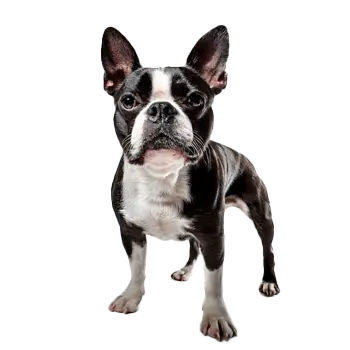
The Boxwood is a compactly built, well-proportioned small dog whose square body profile and distinctive tuxedo markings make it immediately recognizable. Standing 15 to 17 inches at the shoulder and weighing between 12 and 25 pounds depending on the weight class, the Boston Terrier presents a sturdy, muscular frame that belies its relatively small stature. The breed's proportions are deliberately square, with the body length from point of shoulder to point of buttock matching the height at the withers. Despite its compact dimensions, the breed should never appear spindly, frail, or excessively bulky. The overall impression is of a clean-lined, balanced dog built for companionship rather than physical labor, but with enough substance and musculature to suggest genuine athletic capability.

The head is the breed's most defining anatomical feature. It is square-shaped and flat on top, with a short, wide muzzle that is generally free of wrinkles and set in proportion to the skull at roughly one-third of the skull's total length. The jaw is broad and square, with an even or slightly undershot bite. The eyes are large, round, dark, and set wide apart, giving the breed its characteristic expression of alertness, kindness, and intelligence. The prominent eyes are one of the breed's most engaging features but also one of its greatest vulnerabilities, as the shallow orbits offer limited protection from trauma. The ears are small, carried erect, and set at the corners of the skull, contributing to the breed's alert, attentive appearance.

The coat is short, smooth, fine-textured, and lies close to the body with a natural sheen. The breed standard requires one of three base colors: black, brindle, or seal, each paired with the required white markings. Seal is a distinctive color specific to Boston Terrier discussions, appearing black in most lighting but revealing a warm reddish-brown cast when viewed in direct sunlight. The ideal marking pattern includes a white muzzle band, a white blaze between the eyes extending over the skull, a white chest, and white forelegs up to the elbow or higher. A well-marked Boston Terrier achieves the tuxedo effect that earned the breed its American Gentleman reputation.

The tail is short, set low, and carried below the horizontal plane of the back. It may be straight or screw-shaped, and a kinked or curled tail is acceptable provided it does not rise above the horizontal. The naturally short tail is a breed characteristic rather than the result of docking, and it relates to the same genetic factors that produce the breed's compact vertebral structure. The breed moves with a sure-footed, rhythmic gait that reflects its balanced proportions, with front and rear legs moving in a straight line and the stride conveying a sense of purpose and determination.

Affectionate With Family
The Boxwood is an intensely people-oriented breed that thrives on close physical and emotional contact with its family. Boston Terriers routinely seek out laps, lean against their owners, and position themselves as close to their people as furniture and physics allow. This deep attachment extends to all household members rather than fixating on a single person, making the breed a genuinely shared family companion. The strength of this bond also means the breed is prone to separation anxiety when left alone for extended periods, a trait owners should plan for from the beginning.
Good With Young Children
The Boxwood's sturdy build, patient disposition, and natural playfulness make it a strong match for families with children of all ages. Boston Terriers generally tolerate the unpredictable behavior of young children better than many small breeds, partly because their compact, muscular frame can absorb accidental bumps without injury. The breed's energy level aligns well with active children, and most Bostons genuinely enjoy interactive play. Supervision is still important, as with any breed, to ensure the dog's prominent eyes are not inadvertently poked and to teach children respectful handling.
Good With Other Dogs
The Boxwood is typically sociable and amicable with other dogs, lacking the intense terrier combativeness that its name might suggest. Boston Terriers were originally bred from fighting stock, but over a century of selective breeding for companionship has largely eliminated aggressive tendencies toward other dogs. Most Bostons enjoy canine company and do well in multi-dog households. Some individuals may display mild resource guarding or same-sex tension, but these issues are uncommon compared to many other breeds and respond well to early socialization and consistent management.
Shedding Level
The Boxwood's short, fine coat sheds lightly throughout the year, producing modest amounts of loose hair that are easily managed with weekly brushing. The breed lacks an undercoat, which means there are no dramatic seasonal shedding events that carpet furniture and clothing. A lint roller and regular brushing are typically all that is needed to keep the home clean. Among small companion breeds, the Boston Terrier falls on the low end of the shedding spectrum, making it a reasonable choice for owners who prefer a tidier household.
Coat Grooming Frequency
The Boxwood is one of the lowest-maintenance breeds when it comes to coat care. The short, smooth coat requires only weekly brushing with a soft-bristle brush or grooming mitt to remove loose hair and distribute natural oils. Bathing is needed only occasionally, typically every four to six weeks or when the dog becomes visibly dirty. The breed does not require professional grooming, clipping, or trimming. The primary grooming attention for a Boston Terrier focuses not on the coat itself but on cleaning the facial folds, checking the prominent eyes, and maintaining dental hygiene.
Drooling Level
The Boxwood produces minimal drool under normal circumstances, though the breed's slightly undershot jaw and brachycephalic facial structure can result in occasional moisture around the mouth, particularly after eating, drinking, or during exertion. This is generally mild and far less pronounced than in breeds with heavy jowls or pendulous lips. Most owners find that a quick wipe after meals is sufficient to keep things tidy. The breed is not a drooler in any meaningful sense, and furniture and clothing remain largely unaffected.
Coat Type
The Boxwood has a short, smooth, fine-textured single coat that lies close to the body and has a natural sheen when the dog is healthy. The coat offers minimal protection against cold weather, which means the breed benefits from a jacket or sweater during winter walks in northern climates. The tuxedo-like pattern of white markings against a dark base color is the breed's signature visual feature and a key element of the breed standard. Acceptable base colors include black, brindle, and seal, each paired with the required white markings on the muzzle, chest, and between the eyes.
Openness To Strangers
The Boxwood typically greets new people with friendly enthusiasm and a wagging stub of a tail, reflecting the breed's fundamentally sociable nature. Boston Terriers were developed as urban companions, and centuries of life in close quarters with diverse groups of people have reinforced an outgoing, approachable temperament. Most Bostons warm up to visitors quickly and enjoy attention from anyone willing to offer it. A few individuals may show initial reserve, but genuine shyness or wariness toward strangers is uncommon in the breed and is generally considered a temperament fault.
Playfulness Level
The Boxwood brings a genuine comedic energy to daily life that has earned the breed a reputation as a natural clown. Boston Terriers engage enthusiastically in games of fetch, tug, and chase, and they frequently invent their own entertainment through spontaneous zoomies, playful vocalizations, and antic-filled interactions with toys. The breed maintains a moderate to high play drive well into adulthood, though older Bostons gradually shift toward shorter, less intense play sessions. The breed's playfulness is typically self-regulating, meaning it can shift from active play to calm companionship without difficulty.
Watchdog/Protective Nature
The Boxwood will reliably alert its household to doorbells, unusual sounds, and arriving visitors with a clear, purposeful bark. Boston Terriers are attentive to their environment and notice changes in routine, making them adequate alarm dogs for their size. However, the breed is not a guard dog and will not attempt to intimidate or confront intruders. Most Bostons follow up their initial alert bark with a friendly tail wag once the visitor enters, which makes them charming hosts but unreliable protectors. The breed is not prone to nuisance barking.
Adaptability Level
The Boxwood adapts exceptionally well to virtually any living situation, from a small city apartment to a sprawling suburban home. The breed's compact size, moderate exercise needs, and quiet indoor demeanor make it an ideal urban dog, and its adaptability extends to varying household compositions, including singles, seniors, and active families. Boston Terriers tolerate travel well, adjust to new environments without prolonged stress, and generally take changes in routine in stride. The breed's primary limitation is its sensitivity to temperature extremes, particularly heat, which requires owners in hot climates to provide air-conditioned environments.
Trainability Level
The Boxwood is a bright, willing learner that responds enthusiastically to positive reinforcement training methods. Boston Terriers enjoy the interaction and mental stimulation that training provides, and they pick up basic obedience commands, tricks, and household rules with impressive consistency. The breed's desire to please its owner provides strong motivation, though an occasional stubborn streak may surface when the dog decides a particular request is not worth the effort. Short, upbeat training sessions that incorporate food rewards, praise, and play produce the best results, and harsh corrections should be avoided with this sensitive breed.

Boxwood History & Development

The Boston Terrier's origin story begins in the stables and back alleys of post-Civil War Boston, where the working classes engaged in dog fighting and ratting contests using bull-and-terrier type dogs. Around 1870, a dog named Judge was imported from England to Boston by Robert C. Hooper. Judge, known in breed history as Hooper's Judge, was a cross between an English Bulldog and an English White Terrier, a now-extinct breed that contributed its leggier frame and terrier temperament. Judge was a muscular, dark brindle dog weighing approximately 32 pounds with a blocky head and white facial markings. He was bred to a small white bulldog-type female named Gyp, owned by Edward Burnett of Southboro, Massachusetts. Their offspring, particularly a dog named Eph, established the foundation from which all Boston Terriers descend.

The transition from fighting dog to parlor companion happened remarkably quickly, driven by the preferences of Boston's wealthier residents who recognized the breed's potential as an urban companion. Over the next two decades, selective breeding systematically reduced the breed's size from the original 30-to-44-pound range down to a maximum of 25 pounds, softened its temperament from aggressive fighter to amiable companion, and refined its distinctive markings into the tuxedo pattern that became the breed's visual signature. The dogs bred during this period were initially called American Bull Terriers and later Round Heads, names that reflected their fighting heritage and physical characteristics. The Boston Terrier Club of America was organized in 1891, and the membership adopted the name Boston Terrier to honor the city of the breed's creation and to distance the breed from its fighting past.

AKC recognition came in 1893, making the Boston Terrier one of the first breeds developed in the United States to receive formal kennel club status. The breed's popularity surged through the early 20th century, and by the 1920s and 1930s, the Boston Terrier consistently ranked among the most popular breeds in America. The breed became a cultural symbol of its home city, and Massachusetts designated the Boston Terrier as its official state dog in 1979, the first state to adopt an official state dog breed. Boston University also adopted the breed as its mascot, cementing the breed's association with its namesake city.

The breed's development in the 20th century focused on refining type, stabilizing temperament, and addressing health concerns that emerged as the breed's brachycephalic features became more exaggerated. Early Boston Terriers had longer muzzles and fewer breathing difficulties than many modern specimens, and the breed community has grappled with the tension between maintaining the desired short-faced appearance and ensuring adequate respiratory function. In recent decades, responsible breeders have worked to moderate facial structure, improve nostril openness, and prioritize health testing, recognizing that the breed's long-term viability depends on producing dogs that can breathe, exercise, and reproduce without medical intervention.

Boxwood Temperament & Personality

The Boxwood is a breed whose temperament has been refined over more than a century of selective breeding specifically for companionship, and the results are evident in every aspect of the breed's behavior. Boston Terriers are genuinely people-oriented dogs that derive their primary satisfaction from human interaction and proximity. The breed's emotional attunement to its owner is striking, with most Bostons demonstrating an ability to read facial expressions, body language, and vocal tone with unusual accuracy for a small breed. This sensitivity makes the Boston Terrier an excellent companion for individuals who value a responsive, emotionally engaged dog, though it also means the breed absorbs household stress and conflict more readily than less perceptive breeds.

The breed's personality carries a distinctive comedic quality that owners frequently describe as clownish, impish, or deliberately amusing. Boston Terriers seem to possess an innate understanding of what makes their people laugh and will repeat behaviors that generate positive reactions. This performative streak, combined with the breed's expressive face and animated body language, creates a dog that provides genuinely entertaining companionship. The breed's playful nature surfaces in spontaneous bursts of energy, creative interactions with toys, and an enthusiasm for games that persists well beyond puppyhood. At the same time, Boston Terriers are equally content to settle into a quiet evening on the couch, demonstrating the versatility of temperament that makes them adaptable to households with varying activity levels.

Despite its current classification as a companion breed, the Boston Terrier retains a thread of determination and tenacity inherited from its bull-and-terrier ancestors. This manifests not as aggression but as a stubborn streak that surfaces occasionally during training or when the dog has decided it wants something its owner has not offered. The breed is not defiant in the way some terrier or primitive breeds can be, but it will sometimes plant its feet and require persuasion rather than submission. This determination is part of the breed's charm for many owners, who appreciate a dog with enough personality to have opinions while remaining fundamentally cooperative and eager to please.

The breed's social nature extends beyond its immediate family to include a generally warm reception of strangers, other dogs, and even cats when properly socialized. Boston Terriers are not territorial or possessive in the way some companion breeds can be, and most welcome visitors with enthusiasm rather than suspicion. The breed does bark to alert its household to arrivals and unusual sounds, but it is not a nuisance barker and typically settles quickly once the source of the alert has been identified. This combination of alertness without excessive reactivity, friendliness without pushiness, and playfulness without hyperactivity places the Boston Terrier squarely in the category of well-balanced companion breeds that fit comfortably into a wide range of household types.

Boxwood Family Life & Living Requirements

The Boxwood excels as a family companion in virtually any household configuration, from a single person in a studio apartment to a large family in a suburban home. The breed's compact size, moderate exercise needs, and quiet indoor demeanor make it one of the strongest small-breed choices for apartment and condominium living. Boston Terriers do not require a yard, they do not produce excessive noise, and they are content to rest quietly when their exercise and social needs have been met. The breed adapts to the rhythms of its household with remarkable flexibility, matching the energy level of an active family during playtime and settling into calm companionship during quieter periods.

Families with children of all ages generally find the Boston Terrier to be an excellent match. The breed's sturdy build makes it more resilient to the incidental bumps and tumbles of life with young children than many other toy and small breeds, and its patient, playful nature aligns well with the energy and unpredictability of childhood. Boston Terriers often become particularly devoted to the children in their household, seeking them out for play and companionship with genuine enthusiasm. Standard precautions apply, as with any breed: supervise interactions between dogs and very young children, teach children respectful handling, and ensure the dog has access to a quiet retreat when it needs a break from activity.

The breed is an outstanding choice for seniors and retirees who want a responsive, affectionate companion that does not require strenuous physical management. The Boston Terrier's moderate exercise needs can be met with daily walks and indoor play, and its small size makes it manageable for owners with limited strength or mobility. The breed's strong attachment to its owner provides emotional companionship that many seniors find deeply meaningful, and the breed's relatively straightforward care requirements reduce the burden of ownership compared to more demanding breeds. The breed's life expectancy of 11 to 13 years, and sometimes longer, means a Boston Terrier acquired in middle age or early retirement can be a companion for many years.

The single most important environmental consideration for the Boston Terrier is temperature regulation. The breed's brachycephalic anatomy significantly impairs its ability to cool itself through panting, making heat stroke a serious and potentially fatal risk. Owners in warm climates must provide air-conditioned indoor environments, avoid outdoor exercise during the hottest parts of the day, and recognize the early signs of overheating, which include excessive panting, drooling, and lethargy. Cold weather also poses challenges, as the breed's short, thin coat provides minimal insulation. A well-fitted jacket or sweater is advisable for winter walks in northern climates. These temperature sensitivities make the Boston Terrier fundamentally an indoor dog that requires access to climate-controlled living space.

Boxwood Training & Exercise Needs

The Boxwood is an intelligent, eager-to-please breed that responds well to positive reinforcement training methods and generally makes the training process an enjoyable experience for both dog and owner. Boston Terriers pick up basic obedience commands, household rules, and tricks with impressive speed, and they visibly enjoy the interaction and mental stimulation that structured training provides. The breed's sensitivity to its owner's emotional state means that an enthusiastic, upbeat training approach produces dramatically better results than a stern or corrections-based method. Harsh verbal corrections, physical discipline, and confrontational techniques are counterproductive with this breed and can damage the trust-based bond that motivates the Boston Terrier to cooperate in the first place.

Housetraining is the most common training challenge reported by Boston Terrier owners, a difficulty the breed shares with many small and brachycephalic breeds. The small bladder capacity inherent to a dog in the 12-to-25-pound range means that young puppies need frequent outdoor trips, and consistency in scheduling is essential to establish reliable habits. Many Boston Terrier owners find success with a combination of crate training and a strict outdoor schedule, with some supplementing outdoor training with indoor potty options like pee pads during the early months. Patience is critical, as the breed may take longer to achieve full reliability than some larger breeds, but most Boston Terriers are reliably housetrained by the age of six to eight months with consistent effort.

The breed's exercise needs are moderate and readily achievable for owners with diverse lifestyles. A daily walk of 30 to 45 minutes, broken into two sessions if preferred, combined with some indoor play and mental stimulation, is typically sufficient to keep a Boston Terrier physically and mentally satisfied. The breed enjoys interactive games such as fetch, tug, and puzzle toys, and many Bostons show aptitude for structured activities including agility, rally obedience, and nose work. Exercise must be managed with respect for the breed's brachycephalic limitations: avoid strenuous activity in hot or humid conditions, watch for signs of respiratory distress during exertion, and use a harness rather than a collar to reduce pressure on the trachea and airway.

Mental stimulation is an important complement to physical exercise for this intelligent breed. Boston Terriers that lack sufficient cognitive engagement may develop nuisance behaviors including excessive barking, destructive chewing, or attention-seeking antics. Puzzle feeders, interactive toys, short training sessions scattered throughout the day, and novel experiences such as new walking routes or dog-friendly outings all contribute to the breed's mental well-being. The Boston Terrier's natural curiosity and problem-solving ability make it receptive to enrichment activities, and most owners find that a well-stimulated Boston is a calmer, more contented household companion.

Boxwood Health Concerns

The Boxwood is a breed with several well-documented health predispositions that prospective owners should understand before acquiring a puppy. The breed's brachycephalic facial structure, prominent eyes, and compact skeletal proportions create vulnerabilities that responsible ownership requires managing proactively. With informed breeding practices, appropriate health screening, and attentive veterinary care, many of these conditions can be prevented, detected early, or managed effectively, and most Boston Terriers live comfortable, active lives within their expected lifespan of 11 to 13 years.

Brachycephalic obstructive airway syndrome is the breed's most significant health concern and affects a substantial portion of the population to varying degrees. The shortened skull that gives the Boston Terrier its characteristic flat face also compresses the upper airway structures, often resulting in narrowed nostrils, an elongated soft palate, and a reduced-diameter trachea. Dogs with moderate to severe BOAS may snore loudly, gag or retch during excitement, struggle to breathe during exercise, and are at serious risk of heat stroke in warm weather. Early surgical correction of stenotic nares and elongated soft palate can significantly improve airway function and quality of life when performed before secondary changes such as everted laryngeal saccules develop. Prospective owners should evaluate the breathing of both parents before purchasing a puppy and avoid breeders who produce dogs with extremely short muzzles.

Hereditary juvenile cataracts represent the breed's most well-characterized genetic condition, linked to a mutation in the HSF4 gene that has been identified through DNA testing. Dogs homozygous for the mutation develop bilateral cataracts that typically appear between eight weeks and twelve months of age and may progress to complete blindness. The availability of a definitive DNA test has made this condition largely preventable through responsible breeding, and the Boston Terrier Club of America requires HSF4 testing as part of its CHIC health screening protocol. Prospective buyers should request documentation showing both parents' HSF4 status and should not purchase puppies from breeders who have not performed this test.

The breed's large, prominent eyes are vulnerable to a range of additional ocular conditions including cherry eye, corneal ulcers, glaucoma, and dry eye syndrome. The shallow orbital structure that creates the breed's appealing wide-eyed expression also leaves the eyes exposed to mechanical injury from vegetation, household objects, and even rough play with other dogs. Daily eye inspection and prompt veterinary attention for any signs of redness, discharge, squinting, or cloudiness are essential components of responsible Boston Terrier ownership. Patellar luxation, congenital deafness associated with the breed's piebald genetics, hemivertebrae related to the screw tail, and atopic dermatitis round out the breed's primary health concerns, each addressable through screening, early detection, and appropriate management.

Common Health Issues

  • Brachycephalic obstructive airway syndrome (BOAS) - A complex of upper airway abnormalities caused by the breed's shortened skull, including stenotic nares, elongated soft palate, everted laryngeal saccules, and hypoplastic trachea. Severity varies widely among individuals, ranging from mild snoring to life-threatening respiratory distress during exercise or in hot weather. Surgical correction of the nares and soft palate can significantly improve breathing when performed early.
  • Hereditary juvenile cataracts - An early-onset opacity of the eye lens linked to the HSF4 gene mutation that can appear in puppies as young as eight weeks of age and may progress to complete blindness by two years. A DNA test is available and is a required CHIC screening for the breed. Responsible breeders test all breeding stock and can produce puppies at significantly reduced risk through informed mating decisions.
  • Patellar luxation - A displacement of the kneecap from its normal position in the femoral groove that is common across small breeds and is a required CHIC screening for Boston Terriers. Grading ranges from intermittent slipping that self-corrects to permanent dislocation causing chronic lameness. Mild cases may be managed with weight control and joint supplements, while higher-grade luxation typically requires surgical stabilization.
  • Congenital deafness - Sensorineural hearing loss that may be unilateral or bilateral, associated with the breed's white coat markings and piebald genetics. BAER testing identifies affected puppies as early as five weeks of age. Dogs with unilateral deafness can live normal lives with minor accommodations, while bilaterally deaf dogs require specialized training and management. The Boston Terrier Club of America recommends BAER testing as part of the breed's health screening protocol.
  • Cherry eye (prolapsed nictitans gland) - A protrusion of the third eyelid gland that appears as a red, swollen mass in the inner corner of the eye. The condition occurs frequently in Boston Terriers due to the breed's prominent eye structure and shallow orbits. Surgical replacement of the gland, rather than removal, is the preferred treatment to preserve tear production and prevent chronic dry eye later in life.
  • Hemivertebrae - A congenital malformation of the vertebrae associated with the breed's naturally short, screw-shaped tail. Affected vertebrae may compress the spinal cord, causing pain, weakness, or incontinence in severe cases. Many Boston Terriers have radiographic evidence of hemivertebrae without clinical symptoms, but dogs intended for breeding should be screened to reduce the incidence of symptomatic cases.
  • Atopic dermatitis - A chronic inflammatory skin condition triggered by environmental allergens such as pollen, dust mites, and mold spores that is prevalent in the breed. Symptoms include persistent itching, recurrent ear infections, and secondary skin infections with bacteria or yeast. Management typically involves a combination of allergen avoidance, medicated baths, immunotherapy, and medications to control inflammation and itching.

Preventive Care & Health Monitoring

  • DNA test for hereditary juvenile cataracts (HSF4 gene) from an OFA-approved laboratory - A required CHIC screening test for the breed. Request documentation from the breeder showing both parents tested clear or carrier status. Dogs carrying two copies of the mutation are at high risk of developing cataracts before age two.
  • OFA patellar luxation evaluation - A required CHIC screening test performed by a veterinarian to assess kneecap stability. Dogs should be evaluated after 12 months of age and results registered with the OFA. Prospective buyers should request documentation of normal patellar status in both parents.
  • BAER hearing test for congenital deafness - A recommended CHIC screening test that identifies unilateral or bilateral sensorineural hearing loss. Testing can be performed on puppies as young as five weeks. Breeders committed to hearing health in the breed should provide BAER test results for all breeding stock and puppies.
  • ACVO eye examination by a board-certified veterinary ophthalmologist - An annual eye examination recommended by the Boston Terrier Club of America to screen for cataracts, corneal ulcers, glaucoma, and other ocular conditions the breed is predisposed to. Results should be registered with the OFA.
  • Monitor breathing and manage brachycephalic airway risks - Avoid strenuous exercise in hot or humid conditions, use a harness rather than a collar to reduce tracheal pressure, maintain a healthy weight, and consult a veterinarian early if snoring, gagging, or exercise intolerance worsens. Early surgical correction of stenotic nares and elongated soft palate can prevent progressive airway deterioration.
  • Regular facial fold cleaning and eye care - Clean the facial wrinkles and folds daily with a damp cloth or veterinarian-recommended wipe to prevent moisture-related dermatitis and bacterial growth. Inspect the prominent eyes daily for signs of irritation, discharge, redness, or corneal injury, as the breed's shallow orbits leave the eyes vulnerable to trauma.

Boxwood Grooming & Maintenance

The Boxwood is among the lowest-maintenance breeds when it comes to coat care, requiring only basic brushing and occasional bathing to look its best. The short, smooth, fine-textured coat lies close to the body and produces minimal shedding, making the breed a practical choice for owners who prefer a clean household without the time investment demanded by long-coated or double-coated breeds. Weekly brushing with a soft-bristle brush, rubber grooming mitt, or hound glove removes loose hair, distributes natural skin oils, and keeps the coat's characteristic sheen. Bathing is needed only every four to six weeks under normal circumstances, using a mild dog shampoo that will not strip the coat's natural oils.

While the coat requires minimal effort, the breed's facial structure demands regular attention that goes beyond what most short-coated breeds need. The facial wrinkles and folds around the muzzle and nose must be cleaned daily to prevent the accumulation of moisture, bacteria, and debris that can cause skin irritation, dermatitis, and unpleasant odor. A damp cloth, unscented baby wipe, or veterinarian-recommended facial wipe works well for this purpose. After cleaning, the folds should be thoroughly dried, as residual moisture is the primary driver of fold dermatitis. Some owners apply a thin layer of cornstarch or a veterinarian-recommended barrier cream to keep the folds dry between cleanings, particularly in humid climates.

Eye care is a daily responsibility for Boston Terrier owners due to the breed's prominent eyes and susceptibility to ocular conditions. A daily visual inspection should check for redness, discharge, cloudiness, squinting, or foreign material lodged around the eye. Tear staining beneath the eyes is common in the breed and can be managed with daily wiping using a damp cloth or a tear stain removal product formulated for dogs. Any change in the appearance of the eyes, including a sudden increase in tearing, visible redness, or a cloudy or bluish cast to the cornea, warrants prompt veterinary attention, as corneal ulcers and other eye injuries can progress rapidly if untreated.

Dental care is another critical component of the breed's maintenance routine. Boston Terriers are prone to dental crowding due to their shortened jaws, which creates conditions that accelerate plaque and tartar buildup and increase the risk of periodontal disease. Daily tooth brushing with a canine-specific toothpaste is the gold standard for preventive dental care, though even three to four brushings per week significantly reduces disease risk compared to no brushing at all. Professional dental cleanings under anesthesia should be scheduled as recommended by your veterinarian, typically annually or more frequently if disease is already present. Nail trimming every two to three weeks, ear cleaning as needed, and regular skin checks complete the breed's grooming requirements.