Blackmouth Cur

Blackmouth Cur

Quick Facts

🐕 Breed Group
UKC Scenthound Group
📏 Size Category
Medium to Large
📏 Height
Males: 18-26 inches, Females: 16-24 inches
⚖️ Weight
Males: 40-95 pounds, Females: 35-80 pounds
⏱️ Life Expectancy
12-16 years
🧣 Coat Type
Short, close-fitting single coat; texture ranges from fine to coarse
🎨 Coat Colors
All shades of fawn, red, yellow, buckskin, brindle, brown, black; dark muzzle or mask typical; up to 10% white markings allowed
😀 Temperament
Loyal, courageous, driven, protective, intelligent, tenacious
🏃 Exercise Needs
High
🎓 Training Difficulty
Moderate - intelligent and willing but requires experienced, consistent handling
👶 Good with Children
Yes - protective and gentle with family children when properly socialized
🐾 Good with Other Pets
Conditional - strong prey drive toward small animals; generally good with dogs raised alongside

Other Names & Breed Recognition

Blackmouth Cur is one of several spelling variations for the Black Mouth Cur, a medium to large working dog breed that originated in the rural American South. The single-word spelling "Blackmouth" appears frequently in hunting publications, breeder conversations, and informal breed references, particularly among the working dog community where the breed's reputation precedes any need for precise nomenclature. The two-word form "Black Mouth Cur" is the official designation used by the United Kennel Club in its breed standard, but both spellings refer to the same dog. The name itself is descriptive: "Black Mouth" references the distinctive dark melanistic pigmentation around the muzzle, lips, and often extending into the interior of the mouth, while "Cur" identifies the breed within the broader tradition of American cur-type working dogs developed by Southern settlers and frontiersmen.

The breed carries several regional names reflecting its independent development across different parts of the American South. Southern Cur and Southern Black Mouth Cur are general designations used throughout the breed's range. Yellow Black Mouth Cur describes the most common color variant, the golden to fawn dogs with dark muzzles that represent the breed's most recognizable appearance. Regional bloodline names carry specific significance among breed enthusiasts: the Ladner Yellow Black Mouth Cur from Mississippi represents one of the oldest documented lines, the Foundation Black Mouth Cur identifies dogs from original Texas breeding programs, and the Florida Black Mouth Cur designates dogs from Florida lines developed specifically for cattle work and wild boar hunting. Each regional designation points to a distinct breeding tradition within the larger breed, and knowledgeable buyers seek out specific bloodlines based on the working demands they need their dogs to meet.

The term "Cur" requires context for proper understanding. In general English usage, "cur" often carries negative connotations, suggesting a mongrel or worthless dog. In American working dog culture, however, the word identifies a specific and deeply respected class of farm and hunting breeds developed for versatile outdoor work rather than specialized show ring competition. American cur breeds, including the Blackmouth Cur, Mountain Cur, Treeing Tennessee Brindle, and Catahoula Leopard Dog, share a common heritage as the multi-purpose working dogs that accompanied settlers across the American frontier, performing whatever combination of hunting, herding, guarding, and general farm work the family's livelihood demanded.

The Blackmouth Cur is recognized by the United Kennel Club, which admitted the breed on November 1, 1998, classifying it within the Scenthound Group. The breed is not recognized by the American Kennel Club, the Kennel Club in the United Kingdom, or the Federation Cynologique Internationale. The lack of AKC recognition reflects the breed's emphasis on functional working ability over rigid conformation standards, and the wide variation between regional bloodlines that have been selected for different working traits rather than a uniform appearance. The National Kennel Club registered the first Blackmouth Curs, specifically the Ladner line, in April 1964, predating UKC recognition by over three decades.

Blackmouth Cur Organizations & Standards

The Southern Black Mouth Cur Breeders Association (SBMCBA), formed in 1987, was the first organized effort to preserve and promote the Blackmouth Cur as a distinct breed. Before the SBMCBA's establishment, the breed existed as a collection of working lines maintained by individual families and hunting communities who selected dogs for performance rather than pedigree documentation. The SBMCBA changed this by establishing a breed registry, promoting pedigree record-keeping, and working to define what constituted a Blackmouth Cur as opposed to other cur-type dogs. This organizational groundwork made formal kennel club recognition possible and provided the foundation upon which subsequent breed standards were built.

The United Kennel Club breed standard, effective from the date of recognition in 1998, distinguishes itself from most breed standards by explicitly instructing judges to evaluate the Blackmouth Cur as a working animal. Exaggerations or structural faults are to be penalized in proportion to how much they would interfere with the dog's ability to work, rather than according to an aesthetic ideal divorced from function. This working-first philosophy permeates every aspect of the standard: the body should be square or just slightly longer than tall, legs long enough to allow quick and agile movement in rough terrain, the head broad with a moderate stop and moderately broad muzzle, ears set high and dropping, and the tail straight, set low, and of any length.

The standard sets minimum size requirements but, critically, imposes no maximums, preserving the breed's natural size diversity. Males must measure at least 18 inches at the withers and weigh a minimum of 40 pounds; females must be at least 16 inches and 35 pounds. In practice, working Blackmouth Curs range from moderately sized 40-pound treeing dogs to powerful 90-pound hog dogs, with the size variation reflecting the different working demands that different bloodlines have been selected to meet. The standard accepts all shades of fawn, red, yellow, buckskin, brindle, brown, and black, with a black muzzle or mask usually but not always present. White markings are permitted under the chin, on the nose, neck, chest, legs, and tail tip, but cannot exceed 10 percent of the coat.

The standard describes the breed's hunting style as that of a fast, hard hunter that finds game using its eyes, ears, and nose. Silent trailing is preferred, though slightly semi-open trailing on a very hot track is permitted. This preference for silent or near-silent tracking reflects the breed's original role in practical hunting situations where a dog that bayed continuously on trail would push game ahead rather than allowing the hunter to close distance. The temperament section requires courage, determination, and strong working ability combined with tractability and loyalty to the handler, defining the balance between independence and cooperation that characterizes the breed at its best.

Kennel Club Recognition

  • United Kennel Club (UKC): Recognized in 1998, Scenthound Group

Blackmouth Cur Physical Description

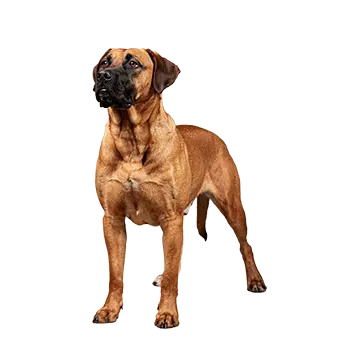
The Blackmouth Cur presents a muscular, athletic silhouette that communicates raw functional capability without the exaggerated proportions seen in breeds shaped primarily by show ring competition. The body is square or just slightly longer than tall, creating a balanced frame that supports the explosive bursts of speed needed for treeing work and the sustained endurance required for all-day hunting or cattle work. The chest is deep, reaching to or near the elbow, providing ample lung capacity for a breed that must maintain high levels of physical output in demanding conditions. The back is strong and level, the loin well muscled, and the underline shows a moderate tuck-up that reflects fitness rather than extreme angulation.

The head is large relative to the body but proportionate, with a broad, flat skull that tapers slightly toward the muzzle and muscular, prominent cheeks that speak to the jaw strength developed through generations of hog-catching work. The muzzle is moderately broad with a well-defined underjaw, and the lips are tight rather than pendulous, a practical feature for a dog that pushes through dense undergrowth where loose skin would catch on vegetation. The stop is moderate. The eyes are set wide apart and can be any shade from yellow to brown to green, conveying an alert, intelligent expression that experienced handlers describe as simultaneously steady and intensely focused. The ears are set high and drop, of medium size, lying close to the head.

The breed's namesake feature, the black muzzle or mask, is one of the most recognizable characteristics in the cur dog world. This melanistic pigmentation covers the muzzle, lips, and often extends into the interior of the mouth, including the gums and roof of the mouth. The tongue, however, should not be black. The intensity and extent of the dark muzzle pigmentation varies among individuals and bloodlines, and while most Blackmouth Curs display a clearly defined dark mask, the standard allows for its absence in dogs with dilute coat coloring. The nose is broad and slightly protruding, with wide nostrils, and is preferably black though red or brown pigmentation is accepted in dogs with dilute coats.

The coat is short, dense, and lies close to the body, ranging in texture from very fine and smooth to coarser and slightly rough depending on bloodline. The UKC standard excludes wiry coats. Color ranges across all shades of fawn, red, yellow, buckskin, brindle, brown, and black, with the golden to fawn shades accompanied by a dark muzzle representing the breed's most iconic appearance. The tail is straight, set low, and can be of any length, from full to naturally bobbed. Movement is efficient and ground-covering, with the breed capable of transitioning between a steady, sustained trot and explosive acceleration without apparent effort. The overall impression is of a dog built for serious work in rough country, combining strength, speed, agility, and endurance in a package that is entirely functional and without cosmetic artifice.

Affectionate With Family
The Blackmouth Cur forms fierce, unwavering bonds with its family, demonstrating a depth of loyalty that reflects centuries of breeding for dogs that lived and worked alongside their people as inseparable partners. These dogs are not distant or aloof with their household; they position themselves close to family members, follow their people through daily routines, and display a genuine emotional connection that goes beyond simple food-based dependence. The breed's affection is quiet and steady rather than demanding, expressed through proximity, attentiveness, and an instinctive protectiveness toward the people it considers its own.
Good With Young Children
The Blackmouth Cur has a well-documented history of patience and gentleness with children in its own family, often adopting a watchful guardian role with the household's youngest members. The breed's tolerance for the unpredictable movements and noise of children is notably higher than many working breeds of similar intensity, and stories of Blackmouth Curs that served as both farm dogs and nursemaids are common in the breed's oral tradition. Supervision is appropriate given the breed's size and energy, but the Blackmouth Cur's instinct is to protect rather than threaten children it knows.
Good With Other Dogs
The Blackmouth Cur can coexist successfully with other dogs in the household, particularly when raised together, and many hunters run Blackmouth Curs in packs where cooperative behavior is essential. However, the breed's assertive temperament and working intensity can produce friction with dogs that challenge its status or compete for resources. Same-sex aggression occurs in some lines, and introductions to unfamiliar dogs should be managed carefully. The breed's pack orientation is functional rather than social, meaning it cooperates with dogs it respects but does not seek out canine companionship for its own sake.
Shedding Level
The short, close-fitting coat sheds at a moderate, steady rate year-round with a somewhat heavier seasonal shed in spring and fall. The shedding is manageable compared to double-coated breeds but more noticeable than in breeds with wire or silky coats. Regular brushing once or twice per week keeps loose hair under control and reduces accumulation on furniture and clothing. The breed's coat texture varies from fine to coarse depending on bloodline, and coarser coats tend to trap and release less hair than finer ones.
Coat Grooming Frequency
The Blackmouth Cur is one of the most low-maintenance breeds in terms of coat care, requiring only weekly brushing to remove loose hair and distribute natural oils. The short, close-fitting coat does not mat, tangle, or require trimming, and bathing is needed only when the dog has encountered something particularly dirty or odorous during field work. This minimal grooming demand reflects the breed's working heritage, where a coat that required extensive care would have been a practical liability for dogs working in rough terrain.
Drooling Level
The Blackmouth Cur has tight, well-fitting lips that produce minimal drooling under normal circumstances. Some individuals drool slightly in anticipation of food or during periods of heavy exertion, and dogs working in extreme heat may produce somewhat more saliva than at rest, but the breed is not associated with the excessive slobbering of looser-lipped breeds. The tight lip structure is a functional feature that prevents excessive skin from catching on brush and vegetation during field work.
Coat Type
The coat is short, dense, and lies close to the body, providing basic protection against sun, light brush, and insect bites without the insulating properties of a double coat. Texture varies significantly across bloodlines, ranging from very fine and smooth to coarser and slightly rough, though the UKC standard specifically excludes wiry coats. This single-layer coat was practical for the breed's development in the hot, humid climate of the American South, where a heavy coat would have been a thermoregulatory burden during long days of strenuous outdoor work.
Openness To Strangers
The Blackmouth Cur is naturally reserved and watchful with unfamiliar people, a trait that reflects its heritage as a guardian of property, livestock, and family. The breed does not approach strangers with open friendliness but rather maintains a calculated distance while assessing the visitor's intentions. This wariness is not fearful or nervous but deliberate and confident, and a well-socialized Blackmouth Cur will accept people its handler clearly welcomes without aggression. Inadequate socialization, however, can tip natural reserve into excessive suspicion.
Playfulness Level
The Blackmouth Cur is more worker than player, approaching interactive activities with purpose and intensity rather than lighthearted frivolity. The breed enjoys games that engage its natural drives, such as retrieving, chasing, and tracking, but does not demand constant entertainment or display the sustained goofiness of some companion breeds. Puppies and young adults show more conventional playfulness, while mature dogs channel their considerable energy into work-oriented activities and structured exercise.
Watchdog/Protective Nature
The Blackmouth Cur is an outstanding watchdog and natural protector, combining keen sensory awareness with the physical capability and courage to back up its warnings. The breed alerts reliably to unusual sounds, unfamiliar visitors, and potential threats with a deep, carrying bark that leaves no doubt about the dog's seriousness. Beyond alerting, the Blackmouth Cur will place itself between its family and a perceived danger without hesitation, a trait that made it invaluable to frontier families who depended on their dogs for security against both human intruders and animal predators.
Adaptability Level
The Blackmouth Cur was developed for a specific lifestyle of active outdoor work, and it does not transition easily to sedentary urban or suburban routines. The breed requires substantial daily exercise, meaningful activity that engages its working drives, and access to outdoor space where it can move freely. Apartment living is essentially incompatible with the breed's needs, and even homes with moderate yards may prove insufficient unless the owner provides extensive daily exercise. The Blackmouth Cur adapts well to rural and semi-rural environments where its natural behaviors have appropriate outlets.
Trainability Level
The Blackmouth Cur is highly intelligent and possesses a genuine desire to work with and please its handler, making it responsive to consistent, fair training methods. The breed learns quickly, retains what it has learned reliably, and brings an intensity to training sessions that can produce impressive results when properly directed. However, the breed's working independence means it is not a push-button dog; it evaluates commands in context and may resist directions that contradict its assessment of a situation. Harsh, correction-heavy methods damage the breed's trust and produce defensive behavior rather than compliance.

Blackmouth Cur History & Development

The Blackmouth Cur's origins lie in the pioneer settlements of the American South, where European settlers arriving in the 18th and 19th centuries needed dogs that could perform multiple demanding tasks in a frontier environment that offered no room for specialization. These settlers brought with them various European herding, hunting, and working dog types, and in the isolated rural communities of the Southern states, those dogs were bred together and selected ruthlessly for functional performance. The dogs that survived and proved useful became the foundation stock for what would eventually be recognized as the Blackmouth Cur: a multi-purpose working dog capable of hunting game, herding livestock, guarding property, and protecting its family against both animal and human threats.

The breed developed independently in several regions of the South, producing distinct bloodlines that shared core working traits but differed in size, coat, and working emphasis. The Ladner family of Mississippi maintained one of the oldest documented lines, with records stretching back to the 1940s and an oral tradition extending considerably further. The first Blackmouth Curs registered with any national kennel organization were Ladner dogs, entered in the National Kennel Club in April 1964. Texas produced its own bloodlines, documented in publications such as "Big Thicket Legacy," bred primarily for cattle herding in the harsh brush country of East Texas. Florida developed lines adapted to swamp work and wild boar hunting, while Alabama and Tennessee contributed their own regional variations to the breed's developing identity.

The Blackmouth Cur occupies a notable place in American literary history as the likely breed of the title character in Fred Gipson's 1956 novel "Old Yeller," set in the Texas Hill Country during the 1860s. While the 1957 Disney film adaptation cast a Labrador Retriever mix in the role, Gipson's written description of a big, yellow, stray dog with a black-ringed muzzle working cattle and protecting a frontier family closely matches the Blackmouth Cur. The novel accurately depicts the breed's versatility, courage, and fierce loyalty to its family, traits that have remained consistent from the frontier era to the present day.

Formalized breed preservation began with the establishment of the Southern Black Mouth Cur Breeders Association in 1987, which created the first systematic registry and documentation framework for the breed. The SBMCBA's work culminated in UKC recognition in 1998, providing the Blackmouth Cur with an official breed standard, a permanent registry, and access to organized competitive events. Despite this formal recognition, much of the breed's population remains in the hands of working dog owners who select breeding pairs based on hunting and herding performance rather than conformation standards, ensuring that the Blackmouth Cur retains the functional capabilities that defined it from its earliest days on the American frontier.

Blackmouth Cur Temperament & Personality

The Blackmouth Cur's temperament is the direct product of centuries of selection for dogs that could think independently in dangerous situations while remaining tractable and loyal to their handler. This combination of independent judgment and cooperative partnership defines the breed and distinguishes it from both the fully handler-dependent sporting breeds and the completely independent livestock guardian breeds. The Blackmouth Cur operates in the space between: it works willingly with its handler, taking direction and coordinating its efforts, but retains the capacity to make critical decisions on its own when circumstances demand it, whether that means treeing a cougar, turning an aggressive bull, or confronting a trespasser.

Loyalty in the Blackmouth Cur runs deep and encompasses the entire family rather than fixating on a single handler, though the dog typically develops a strongest bond with the person who works with it most frequently. This family-wide loyalty extends to a fierce protectiveness that was one of the breed's original functions on the frontier. The Blackmouth Cur positions itself as the household's primary security system, maintaining constant awareness of its surroundings and responding to perceived threats with a graduated escalation from alert attention through vocal warning to physical confrontation if necessary. This protectiveness is genuine and purposeful rather than nervous or reactive, and a well-socialized Blackmouth Cur can distinguish between real threats and normal social situations with considerable accuracy.

The breed's drive to work is not a preference but a fundamental psychological need. A Blackmouth Cur without meaningful activity becomes a stressed, frustrated animal that will channel its considerable energy and intelligence into behaviors the household will find unacceptable. Destructive chewing, excessive barking, digging, fence-jumping, and neurotic pacing are common expressions of an under-stimulated Blackmouth Cur, and these behaviors are symptoms of environmental failure rather than character defects. The breed was developed to work all day in demanding conditions, and modern owners must find appropriate outlets for that drive whether through actual hunting, herding, organized dog sports, or intensive daily exercise combined with mental stimulation.

Wariness toward strangers is a consistent temperament trait that reflects the breed's guardian heritage. A Blackmouth Cur does not greet unfamiliar people with open enthusiasm but rather maintains a watchful distance while assessing the situation. This wariness varies in intensity across individuals and bloodlines, ranging from mild reserve that resolves quickly to pronounced suspicion that requires careful management. Early and thorough socialization during the critical developmental period is essential to ensure that natural caution does not escalate into inappropriate aggression, particularly given the breed's physical capability to inflict serious harm if it perceives a genuine threat to its family.

Blackmouth Cur Family Life & Living Requirements

Living successfully with a Blackmouth Cur requires an honest assessment of whether the household can provide the substantial physical activity, mental engagement, outdoor access, and experienced handling that the breed demands. This is not a dog that adapts to casual pet ownership or environments that constrain its working drives. The ideal home provides significant outdoor space, preferably rural or semi-rural acreage where the dog can patrol, explore, and engage in the kinds of natural behaviors that have defined the breed for generations. Suburban homes with large, securely fenced yards can work if the owner compensates with extensive daily exercise, but apartment living is fundamentally incompatible with the breed's needs.

The Blackmouth Cur's relationship with children in its own family is typically excellent, characterized by a patient protectiveness that has made the breed a trusted companion for rural families with children for generations. The dog positions itself as a guardian of the family's youngest members, tolerating the handling and noise of children with a calm steadiness that belies its intensity in working contexts. However, this tolerance applies specifically to the family's own children; the breed's wariness toward strangers may extend to unfamiliar children visiting the home, and supervision during such encounters is appropriate. Teaching children to respect the dog's space, particularly during meals and rest, establishes the foundation for a safe and positive relationship.

The breed's prey drive is strong and must be factored into household management decisions. Blackmouth Curs have been selected for generations to pursue, bay, and catch wild game, and this instinct does not switch off in a domestic setting. Small household pets including cats, rabbits, and poultry may be at risk unless the dog has been raised with them from puppyhood and has been consistently trained to accept them as part of the family rather than prey. Even dogs that coexist peacefully with household cats may chase unfamiliar cats or small animals encountered outside the property. Secure fencing that prevents both escape and entry by neighborhood animals is essential.

The Blackmouth Cur should not be an outdoor-only dog despite its working heritage. While the breed thrives on outdoor activity and needs substantial time in open environments, it bonds deeply with its family and suffers psychologically when isolated from human contact. The ideal arrangement provides free access to a secure outdoor area during the day, with indoor access to the family's living space during evenings and overnight. A Blackmouth Cur that is banked in a kennel or chained in a yard without regular, meaningful human interaction will develop behavioral problems that can include aggression, destructiveness, and excessive vocalization.

Blackmouth Cur Training & Exercise Needs

Training the Blackmouth Cur rewards the handler who combines clear, consistent leadership with genuine respect for the dog's intelligence and working heritage. The breed is not difficult to train in the conventional sense; it is intelligent, attentive, and genuinely motivated to work with a handler it trusts. What makes the breed challenging for inexperienced handlers is its tendency to evaluate commands in context rather than executing them reflexively. A Blackmouth Cur that respects its handler's judgment will respond promptly and reliably to direction. One that has learned through inconsistency or harshness that its handler's instructions are unreliable or punitive will become progressively more resistant and potentially defensive.

Positive reinforcement methods anchored in the dog's natural drives produce the best training outcomes. Food rewards, toy rewards, and the opportunity to engage in drive-satisfying activities all serve as effective motivators. The breed's prey drive can be harnessed to build powerful retrieve, search, and tracking behaviors, while its desire for handler approval provides motivation for cooperation and compliance. Harsh corrections, physical punishment, and dominance-based methods are counterproductive with the Blackmouth Cur, producing a dog that becomes anxious, defensive, or shut down rather than cooperative. The breed responds to fairness and consistency, not force.

Early socialization is the single most important training investment for the Blackmouth Cur. The breed's natural wariness toward strangers, territorial instincts, and protective drives make the critical developmental window between 3 and 16 weeks absolutely pivotal. Structured exposure to diverse people, animals, environments, sounds, and surfaces during this period gives the dog a broad experiential base from which to distinguish genuine threats from normal life. A Blackmouth Cur that misses this socialization window is significantly more likely to develop problematic behaviors including stranger aggression, dog aggression, and fear-based reactivity that are difficult to resolve in an adult dog of this breed's size and intensity.

Exercise requirements are substantial and non-negotiable. The Blackmouth Cur needs a minimum of one to two hours of vigorous daily physical activity, ideally including running, hiking, swimming, or organized working activities. Casual walking does not satisfy this breed's exercise needs; the Blackmouth Cur requires activities that engage its cardiovascular system, challenge its agility, and provide outlets for its working drives. Hunting, herding, tracking, and organized dog sports including agility, barn hunt, and nose work provide structured outlets that satisfy both physical and psychological needs. A Blackmouth Cur that receives adequate exercise and mental stimulation will be calm, settled, and well-behaved indoors. One that does not will make its frustration abundantly clear.

Blackmouth Cur Health Concerns

The Blackmouth Cur is a generally robust breed with a lifespan of 12 to 16 years, reflecting the practical health advantages of a dog that has been selected for functional performance rather than extreme physical conformation. Generations of working selection eliminated many of the structural weaknesses that plague breeds shaped primarily by aesthetic criteria, and the breed's relatively broad genetic base, maintained through outcrossing between regional bloodlines, has helped preserve overall vigor. Nevertheless, the Blackmouth Cur is susceptible to several conditions that affect medium to large working dogs generally, and responsible ownership includes awareness of these vulnerabilities.

Hip and elbow dysplasia represent the primary orthopedic concerns for the breed. Both conditions involve abnormal joint development that leads to progressive deterioration, pain, and functional limitation. The Blackmouth Cur's active working lifestyle places substantial demands on joint integrity, making even mild dysplasia potentially career-ending for a working dog. Radiographic screening of breeding stock helps reduce incidence, though the breed lacks a formal CHIC protocol since it is not AKC-recognized. Prospective owners should request documentation of hip and elbow evaluations for both parents from any responsible breeder.

Skin allergies and associated yeast infections have been reported across multiple Blackmouth Cur bloodlines and represent one of the breed's more common chronic health concerns. Environmental allergens, food sensitivities, and flea allergy dermatitis can all produce itching, inflammation, paw chewing, and secondary yeast or bacterial infections. Dogs working in environments with high exposure to grasses, pollens, and environmental irritants may be particularly affected. Veterinary allergy testing, dietary trials to identify food sensitivities, and ongoing management with appropriate medications or supplements can significantly improve quality of life for affected dogs.

Gastric dilatation-volvulus presents a serious acute risk given the breed's deep chest conformation. This life-threatening emergency requires immediate surgical intervention and can be fatal within hours. Risk reduction strategies include feeding multiple smaller meals rather than a single large daily ration, using slow-feeder bowls, avoiding intense exercise within an hour before and after meals, and discussing prophylactic gastropexy with the veterinarian. Ear infections are a persistent management concern due to the breed's drop ear structure, which restricts airflow and traps moisture. Working dogs that spend time in water or wet environments need particularly attentive ear care.

The breed's working lifestyle introduces additional health considerations that do not fall under hereditary conditions but are important for owners to understand. Injuries sustained during hunting, herding, or working in rough terrain, including lacerations, puncture wounds, sprains, snakebites, and heat exhaustion, are occupational hazards for active Blackmouth Curs. A working dog first aid kit, familiarity with basic wound care, and an established relationship with a veterinarian experienced in treating working dogs are practical necessities for owners who use their dogs in the field.

Common Health Issues

  • Hip dysplasia - Abnormal development of the hip joint producing progressive joint deterioration, pain, and lameness. The Blackmouth Cur's medium to large frame and high activity level make hip joint integrity particularly important for working soundness. Radiographic screening of breeding stock helps reduce incidence in subsequent generations.
  • Elbow dysplasia - A group of developmental abnormalities affecting the elbow joint that can cause forelimb lameness, particularly in dogs subjected to heavy physical demands during growth. Screening of breeding stock is recommended for lines producing working dogs.
  • Ear infections (otitis externa) - The Blackmouth Cur's drop ear conformation restricts airflow to the ear canal, creating conditions favorable to bacterial and yeast overgrowth. Dogs that swim frequently or work in wet environments are at elevated risk. Weekly ear inspection and cleaning help prevent chronic infections.
  • Skin allergies and yeast infections - Environmental and food allergies producing itching, paw chewing, skin inflammation, and secondary yeast infections have been reported across multiple bloodlines. Identification of specific allergens through veterinary testing and dietary management can significantly reduce symptom severity.
  • Gastric dilatation-volvulus (bloat) - A life-threatening emergency in which the stomach fills with gas and may rotate, cutting off blood supply. The Blackmouth Cur's deep chest conformation places it at elevated risk. Feeding multiple smaller meals, using slow-feeder bowls, and avoiding vigorous exercise immediately after eating are standard preventive measures.
  • Entropion - Inward rolling of the eyelid that causes the eyelashes and lid margin to rub against the corneal surface, producing irritation, tearing, and potential corneal damage. Surgical correction is typically straightforward and produces permanent resolution.

Preventive Care & Health Monitoring

  • Hip and elbow radiographic evaluation before breeding - Radiographic screening of hip and elbow joint conformation to identify dysplasia and reduce heritable joint disease in future generations. Particularly important for bloodlines producing dogs intended for physically demanding work.
  • Weekly ear inspection and cleaning - Check drop ears weekly for debris, redness, odor, or excessive wax buildup. Clean with a veterinary-approved ear solution as needed. Dry ears thoroughly after swimming or exposure to wet conditions to prevent chronic otitis.
  • Bloat risk reduction through feeding management - Feed two to three smaller meals daily rather than one large meal, use slow-feeder bowls for dogs that eat rapidly, avoid strenuous exercise within one hour of feeding, and discuss prophylactic gastropexy with the veterinarian during any scheduled abdominal surgery.
  • Tick and parasite prevention program - Working Blackmouth Curs that spend extensive time in wooded and rural environments face elevated exposure to ticks carrying ehrlichiosis, Lyme disease, and Rocky Mountain spotted fever. Year-round tick prevention and regular body checks after field work are essential.
  • Annual comprehensive veterinary examination - Annual wellness screening including physical examination, dental assessment, weight evaluation, skin and coat assessment, and age-appropriate blood work to detect emerging health issues. Biannual examinations recommended for dogs over seven years of age.
  • Early socialization program between 3 and 16 weeks - Structured exposure to a wide range of people, animals, environments, and stimuli during the critical developmental window to produce a well-adjusted adult. Particularly important for a breed with strong protective and territorial instincts that can become problematic without deliberate early socialization.

Blackmouth Cur Grooming & Maintenance

The Blackmouth Cur's short, close-fitting coat is one of the breed's most practical features and one of the primary reasons working dog owners appreciate the breed: it demands almost nothing in terms of grooming while providing adequate protection for the dog's active lifestyle. The coat lies flat against the body, does not mat or tangle, requires no trimming or shaping, and dries quickly after exposure to water. A weekly brushing with a rubber curry brush or bristle brush removes loose hair, distributes natural oils, and provides an opportunity to check the skin for parasites, hot spots, or injuries that might otherwise go unnoticed beneath the coat.

Bathing should be performed as needed rather than on a rigid schedule, with the frequency determined by the dog's activities and environment rather than cosmetic concerns. A working Blackmouth Cur that has spent the day in mud, swamp water, or decomposing game scent will obviously need a bath, while a companion dog in a suburban setting may go weeks between baths without developing noticeable odor. Over-bathing strips the coat's natural oils and can contribute to dry skin and increased susceptibility to environmental irritants. When bathing is necessary, a mild dog-specific shampoo followed by thorough rinsing and drying is sufficient.

Ear care demands more attention than coat care in the Blackmouth Cur. The drop ear conformation creates a warm, enclosed environment within the ear canal that is ideal for bacterial and yeast proliferation, particularly in dogs that swim regularly or work in humid conditions. Weekly inspection should include visual examination of the ear canal for redness, swelling, or discharge, and olfactory assessment for the yeasty or foul odor that often signals developing infection. Cleaning with a veterinary-approved ear solution, applied and then allowed to work before wiping excess away with a cotton ball, helps maintain ear health. Dogs with a history of chronic ear infections may benefit from more frequent cleaning or prescription ear treatments.

Nail trimming, dental care, and general physical maintenance round out the Blackmouth Cur's grooming requirements. Nails should be trimmed every two to three weeks, though dogs that work regularly on hard ground may wear their nails naturally and require less frequent attention. Dental care is important for long-term health, with daily brushing using canine-specific toothpaste representing the ideal standard and professional cleanings performed as recommended by the veterinarian. Working dogs should receive a thorough post-work inspection after every field outing, checking the paws for cuts, thorns, and abrasions; the body for ticks, lacerations, and embedded foreign objects; and the eyes for irritation or debris. This post-work check takes only a few minutes but can catch injuries early before they develop into complications.