Bichon Bolognese

Bolognese

Quick Facts

🐕 Breed Group
Toy Group
📏 Size Category
Toy
📏 Height
Males: 10-12 inches, Females: 10-12 inches
⚖️ Weight
Males: 6-10 pounds, Females: 6-10 pounds
⏱️ Life Expectancy
12-14 years
🧣 Coat Type
Long, fluffy, non-shedding single coat
🎨 Coat Colors
White
😀 Temperament
Calm, devoted, intelligent, somewhat reserved
🏃 Exercise Needs
Low to moderate
🎓 Training Difficulty
Moderate
👶 Good with Children
Yes, gentle older children
🐾 Good with Other Pets
Yes

Other Names & Breed Recognition

The name Bichon Bolognese places this breed squarely within the Bichon family while honoring its Italian origin. "Bolognese" refers to the city of Bologna in northern Italy, the region most closely associated with the breed's centuries-long history as a noble companion. Adding "Bichon" to the name signals the type of dog - fluffy, white, small, and companion-oriented - to anyone already familiar with related breeds like the Bichon Frise or Bichon Maltais. When you search for Bichon Bolognese, you and the breed club are on the same page: this is the Italian Bichon, and it is its own thing.

In Italy the dog is simply called the Bolognese, and FCI documentation lists it plainly that way. Outside Italy, particularly in countries where the Bichon family is well known, the longer name Bichon Bolognese helps buyers and enthusiasts understand where this dog fits. It is the same dog either way. The name functions as a geographic and type classifier - Italian Bichon - rather than a separate breed designation. Breed clubs in Europe, including The Kennel Club in the United Kingdom, recognize the breed under the name Bolognese. The FCI places it in Group 9, Section 1 alongside its Bichon relatives including the Bichon Frise, Maltese, Havanese, and Coton de Tulear.

In the United States the Bolognese has been listed in the American Kennel Club's Foundation Stock Service since 1999, which means the breed is recorded and tracked while working toward full recognition. American fanciers and breed clubs typically use "Bolognese" as the primary name, though "Bichon Bolognese" appears frequently in online searches, breeder websites, and import documentation. The American Bolognese Club uses both names interchangeably and does not consider one more correct than the other.

Beyond Bichon Bolognese, the breed is sometimes called the Bolo, an informal shorthand used affectionately by owners and breed enthusiasts. This nickname captures the relaxed, easygoing character of the breed without the formality of either full name. If you have encountered the Bolognese under any of these names - Bichon Bolognese, Bolo, or simply Bolognese - you are looking at the same rare, quiet, devoted little dog from the hills north of the Po Valley.

Bichon Bolognese Organizations & Standards

The Federation Cynologique Internationale is the primary international governing body for the Bolognese breed and holds the standard most commonly referenced by European breeders and registries. The FCI places the Bichon Bolognese in Group 9, Companion and Toy Dogs, Section 1, which groups the breed with the Bichon Frise, Maltese, Havanese, and Coton de Tulear. This placement reflects shared ancestry and similar physical type across this family of Mediterranean small white companion dogs. Country of origin for the FCI standard is Italy, and the Italian breed club, the Societa Italiana per il Bolognese, has historically been responsible for developing and maintaining the breed standard.

In the United Kingdom, The Kennel Club recognizes the Bolognese in its Toy Group, placing it alongside other small companion breeds. UK breed clubs hold specialty shows and maintain breed records consistent with Kennel Club guidelines. The Bolognese is classified as a Vulnerable Native Breed in some UK documentation given its relatively low annual registration numbers, which reflects the breed's broader rarity outside Continental Europe.

In the United States, the American Bolognese Club serves as the national parent club and works with the AKC Foundation Stock Service to promote the breed, maintain records, and support eventual full recognition. The ABC encourages its breeder members to conduct health testing on breeding stock, specifically recommending annual OFA CAER ophthalmic examinations performed by board-certified veterinary ophthalmologists and OFA patellar evaluations. These two tests address the primary hereditary concerns documented in the breed. ABC members who conduct these evaluations and report results to the OFA database demonstrate a meaningful commitment to breed health transparency.

The breed standard across registries describes a small, compact, squarely built dog with a distinctive white, fluffy coat that has a soft, almost cottony texture and forms loose, open flocking rather than tight curls. The head is moderately broad with a flat skull, and the face features prominent dark eyes with black pigment on the rims, nose, and lips. The ears are set high and hang close to the head. The overall expression should convey calm intelligence and gentle alertness. Size is specified as 10 to 12 inches at the withers with weight typically ranging from 6 to 10 pounds. Any deviation toward extreme size, either very small or approaching medium weight, is considered a fault in the show ring.

Kennel Club Recognition

  • United Kennel Club (UKC): Recognized, Companion Breeds
  • FCI: Recognized, Group 9 - Companion and Toy Dogs
  • The Kennel Club (UK): Recognized, Toy Group

Bichon Bolognese Physical Description

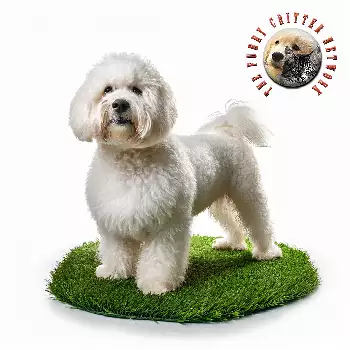
The first thing most people notice about the Bichon Bolognese is that the coat looks nothing like other white, fluffy dogs. This is not the tight, springy curl of the Bichon Frise, and it is not the long silky floor-length drape of the Maltese. The Bolognese coat is soft, loose, and full - somewhere between fluffy and wavy - forming a texture that breeders often describe as flocked or cottony. On a well-groomed specimen standing square in a show ring, the overall impression is of a small white cloud with dark eyes. The coat covers the entire body in roughly uniform length and does not part down the back, which contributes to the dog's rounded, cohesive silhouette.

The head is proportionate to the body - moderately broad across the skull with a flat top and a defined but not exaggerated stop. The muzzle is fairly short and blunt, and the nose is black with well-opened nostrils. Eye color is a deep, rich dark brown, and the pigment ringing the eyes and outlining the lips is black. This dark pigment against the white coat gives the face its characteristic bold, expressive quality. The eyes are large relative to the face and carry a direct, attentive expression. Ears are set high on the skull, hang downward, and are covered in the same long coat as the rest of the body.

The body itself is compact and almost square - the length from prosternum to buttock closely matches the height at the withers. This is not a long, low dog. The back is level and firm, the chest adequately deep but not barrel-like, and the topline is straight from neck to tailset. The tail is set high, carried arched over the back or curled loosely to one side, and covered in long flowing coat. The legs are straight and well-boned for the size of the dog, with feet that are compact and round. Movement is lively and springy without being frantic - there is a bounce to the gait that reflects the breed's active, engaged temperament.

Weight ranges from 6 to 10 pounds and height from 10 to 12 inches. Within that window there is a surprising range in apparent size depending on coat density and condition, but the structural measurements are consistent. Both sexes are similar in size, with females sometimes tending slightly smaller. Color is always white. The FCI standard notes that small shaded or lemon-colored areas on the ears are not penalized but pure white is the ideal. Any markings, patches, or distinct color areas beyond subtle ear shading are considered faults.

Grooming affects the visual impact of this breed considerably. A Bichon Bolognese kept in full coat with regular brushing shows the true extent of the breed's distinctive texture and volume. Many pet owners choose a shorter trim for practical reasons, which produces an equally appealing look but quite different in character from the natural show coat. Either way the coat is non-shedding, a quality that appeals to owners who are sensitive to loose hair. The lack of an undercoat means there is no seasonal blowing coat, and daily grooming requirements depend primarily on coat length and the dog's tendency to tangle in certain areas like behind the ears and under the collar.

The Bichon Bolognese is not a frail or delicate dog despite its small size. The bone structure is adequate, the musculature solid, and the movement reflects a dog that was bred for companionship but is fully capable of normal physical activity. Unlike some extreme toy breeds, there is no structural compromise in the Bolognese that limits its mobility or causes routine discomfort.

Affectionate With Family
The Bichon Bolognese bonds deeply with its household and tends to follow family members from room to room. This is a dog that defines itself through closeness to people.
Good With Young Children
Calm and patient by nature, the Bichon Bolognese does well with children who understand gentle handling. Very young or boisterous children can overwhelm this small, sensitive breed.
Good With Other Dogs
Generally agreeable with other dogs, particularly those of similar size. The Bichon Bolognese lacks the pushy tendencies of some small breeds and typically gets along without drama.
Shedding Level
One of the lightest shedders in the toy group. The single, non-shedding coat produces very little loose hair around the home.
Coat Grooming Frequency
The long, fluffy coat requires regular brushing to prevent tangles and periodic bathing to maintain its white appearance. Professional grooming a few times a year keeps the coat manageable.
Drooling Level
Minimal drooling. The Bichon Bolognese is a tidy companion that does not leave drool marks on furniture or clothing.
Coat Type
Long, fluffy, and soft without curl or wave, the coat has a cottony texture that distinguishes it from the tighter curls of the Bichon Frise.
Openness To Strangers
This breed tends toward reserve with people it does not know. A Bichon Bolognese may hang back or stay close to its owner when strangers are present, warming gradually rather than immediately.
Playfulness Level
Playful in a calm, unhurried way. The Bichon Bolognese enjoys games and interaction but is not frantic or demanding about activity.
Watchdog/Protective Nature
Alert to sounds and movement, the Bichon Bolognese will typically announce visitors. It is not a persistent barker but does serve as a reliable notice-giver.
Adaptability Level
Low exercise needs and a quiet disposition make this breed well-suited to apartment life, travel, and varied living situations as long as human company is consistent.
Trainability Level
Intelligent and willing to please, but occasionally stubborn. Positive, patient training methods work well. Heavy-handed approaches will cause this sensitive breed to shut down.

Bichon Bolognese History & Development

The name Bichon Bolognese is relatively modern, but the dog behind the name is among the oldest companions in European recorded history. Bologna, the northern Italian city for which the breed is named, was a cultural and commercial center during the Renaissance, and it was in the noble households of this region that the dog we now call the Bolognese became a recognized type. Historical records, including letters and portraits from the fifteenth and sixteenth centuries, document small white dogs of this type being exchanged as gifts among Italian nobility. The Duke of Este, the Medici family, and other prominent aristocratic houses kept and gifted these dogs as symbols of friendship and esteem.

The Bichon family of dogs has roots that reach back considerably further, with the Mediterranean basin as the probable geographic origin for the broader type. Small white companion dogs appear in ancient Greek and Roman artistic works, and dogs matching the Bolognese description appear in Flemish tapestries and Italian paintings from the fourteenth century onward. The breed's consistent association with courts and nobility throughout this period reflects both its temperament - calm, loyal, and well-suited to indoor life - and its appearance, which was prized for its purity and visual appeal.

The name Bichon Bolognese as a distinct designation gained prominence in the twentieth century as breed registration and standardization became necessary for dog shows and international recognition. The FCI formalized the breed under Italian jurisdiction, cementing "Bolognese" as the official name while the term "Bichon" was used colloquially to connect the dog to its family. This naming pattern parallels the Bichon Frise, Bichon Maltais, and Bichon Havanais - all names that pair the Bichon type identifier with a geographic origin. The Bolognese's Italian identity is inseparable from its name.

By the late nineteenth and early twentieth centuries the breed had declined sharply, a common fate for breeds whose popularity was tied to aristocratic patronage. As noble households dissolved and the social structures that sustained them changed, many companion breeds associated exclusively with the upper classes fell out of fashion or were absorbed into mixed breeding. The Bolognese came close to extinction. Its survival is credited largely to dedicated Italian breeders in the mid-twentieth century, particularly Gian Franco Giannelli, who worked systematically to rebuild a breeding population from the remnant dogs that remained.

Today the Bichon Bolognese remains rare compared to its cousins. Annual registration numbers in most countries number in the hundreds rather than thousands, which means prospective owners often wait for puppies from established breeders and may need to look beyond their immediate geographic area. This rarity has its advantages: the gene pool, while small, has not been subject to the commercial overbreeding pressures that have compromised the health of more popular breeds. Dedicated breed clubs in Italy, the United Kingdom, and the United States actively work to maintain breed health and promote responsible breeding within a small but committed community.

Bichon Bolognese Temperament & Personality

If you stand next to your aquarium and ask what kind of dog just watches things with calm attention and does not need constant noise or motion to feel content, the Bichon Bolognese is a genuine answer. This breed was developed entirely for companionship, and it shows in the way these dogs orient themselves. A Bichon Bolognese will track your movements through the house. It will settle near you, not on you unless invited, and it will notice when you leave a room. There is an attentiveness here that is not anxiety - it is investment. These dogs care about what you are doing.

The breed's temperament is often described as calm but this can be misleading if you are expecting a dog with low engagement. The Bichon Bolognese is calm in the sense that it does not race around the house or demand constant play - but it is alert, mentally engaged, and observant. It notices guests, sounds, and changes in routine. It watches. This makes it a surprisingly good alert dog despite its gentle reputation. It will tell you someone is at the door before they knock twice.

With family the Bichon Bolognese is deeply affectionate, but it tends to distribute that affection differently than some breeds. Rather than greeting everyone with equal enthusiasm, it tends to bond most strongly with one or two people and reserves its warmth accordingly. Strangers get a measured response - polite reserve rather than alarm, but definitely not the immediate tail-wagging welcome of a Golden Retriever. Early socialization makes a meaningful difference. A Bolognese that meets many people and situations as a puppy develops into a dog that handles the world with quiet confidence. One that is sheltered too closely can become anxious about novelty.

The breed has a mild stubborn streak that comes out during training. These are intelligent dogs - they understand what you are asking. Whether they comply depends on whether they see a point in it. Heavy repetition without reward or variety tends to produce a dog that simply looks away. Positive reinforcement, short sessions, and variety work well. The willingness to please is there but it is conditional on mutual respect. A Bichon Bolognese trained with patience and consistency becomes a reliably responsive companion. One trained with frustration or harshness tends to shut down and disengage.

Separation is the primary behavioral challenge documented in this breed. These dogs were bred for constant human proximity, and an adult that spends long periods alone reliably develops stress behaviors - excessive vocalization, destructive chewing, or anxious pacing. This is not a breed for households where the dog will be alone for most of the workday without adjustment. Gradual alone-time training from puppyhood, a consistent routine, and sometimes the presence of another animal can help manage this tendency, but the Bichon Bolognese's deep need for human company is a core trait and not something that disappears with management.

Bichon Bolognese Family Life & Living Requirements

The Bichon Bolognese fits into apartment life and small homes with genuine ease. Exercise needs are modest - daily walks and indoor play satisfy the breed's physical requirements - and the quiet, non-frantic temperament means the dog does not bounce off walls when space is limited. The flip side is that this breed needs consistent human company to thrive. A roomy house where the dog is isolated most of the day is harder on a Bichon Bolognese than a small apartment where someone is almost always home.

Children who are calm and gentle get along well with this breed. The Bolognese has the patience for a child who wants to sit quietly and brush the dog, play gentle games, or just keep it company. It does not do as well with very young children whose interactions tend to be sudden and physical. Size is a real concern - at 6 to 10 pounds, this dog can be hurt by rough handling, and a startled Bolognese may snap once in warning. Households with toddlers should supervise all interactions carefully and teach appropriate handling from the start.

Other pets are generally not a problem. The Bichon Bolognese coexists peacefully with cats and other small dogs and rarely shows aggression. Introductions should be managed calmly, but this breed does not carry the terrier-style prey drive that makes some small dogs difficult with cats. A household that already has a calm adult dog often helps a new Bolognese settle in faster, since the breed takes comfort from the steady presence of another animal.

Seniors and single-person households are often an excellent match for the Bichon Bolognese because the breed's need for closeness aligns well with people who are home frequently and value a calm, loyal companion. The low exercise demand suits people with limited mobility, and the non-shedding coat is a real practical benefit for clean households. Retirees who travel occasionally should plan carefully - this breed does not do well boarding for extended periods and thrives best when a trusted person, whether family or a known pet sitter, can maintain the dog's routine and social contact in the owner's absence. The Bichon Bolognese is not the right choice for frequent travelers who cannot arrange consistent care. But for a person whose lifestyle is largely home-centered and who wants a quiet, devoted companion that is entirely content with simply being nearby, this breed delivers that experience without significant behavioral complications.

Bichon Bolognese Training & Exercise Needs

Daily exercise for the Bichon Bolognese looks modest by most breed standards. Two or three short walks per day combined with indoor play sessions meets the physical needs of an adult dog. This is not a breed that needs an hour of hard running to settle - and in fact, sustained high-intensity activity is not what these dogs are built for. Leash walks, light play in a yard, and indoor fetch-style games with toys are entirely sufficient.

Housetraining is the area where the Bichon Bolognese can frustrate owners. Small dogs with small bladders need very frequent outdoor opportunities, particularly as puppies, and the breed's sensitivity to cold and rain means they sometimes resist going out in poor weather. Crate training supports housetraining by building the dog's understanding of appropriate elimination timing. Consistency - same schedule, same route, same rewards - produces reliable results, but owners should plan for a longer housetraining period than they might expect with a larger breed.

Basic obedience responds well to short, positive sessions. Sit, stay, come, and leash manners are all achievable with this breed. The key is keeping the sessions engaging. Repetition without variety produces a dog that stops paying attention. A Bichon Bolognese that finds training interesting - varied rewards, interesting sequences, genuine interaction with the handler - will work with focus and enthusiasm. One that finds it boring will simply wander off mentally.

Socialization is perhaps the most important investment an owner can make during puppyhood. The Bolognese's natural reserve with strangers and sensitivity to novelty means that a puppy well-exposed to different people, environments, sounds, and situations during the first few months of life develops into a far more confident, adaptable adult. This early work pays dividends throughout the dog's life and prevents the anxiety-driven behaviors that can develop in unsocialized individuals.

Mental stimulation should not be overlooked. The Bichon Bolognese is an observant, curious dog that benefits from puzzle feeders, training games, and varied environments on walks. A dog that receives only physical exercise but no mental engagement can develop restless, attention-seeking behaviors even though its body is adequately tired. Brief training sessions that challenge the dog to think and respond are as valuable as the walks themselves, and they build the relationship between dog and owner in a way that straightforward exercise alone cannot replicate.

Bichon Bolognese Health Concerns

The Bichon Bolognese is considered a healthy breed with few major genetic conditions relative to many toy breeds, and a typical lifespan of 12 to 14 years reflects reasonable overall robustness. That said, two conditions are specifically flagged by the American Bolognese Club as warranting routine screening in breeding stock.

From a vet-speak standpoint, the testing protocol for responsible breeding centers on annual CAER eye certification and OFA patellar evaluation at minimum. For an owner's practical purposes: keep the teeth clean, watch the rear legs for any skipping gait, and have annual eye exams done on any dog you plan to breed.

Common Health Issues

  • Patellar luxation - The kneecap slides out of its femoral groove, causing intermittent rear limb skipping or lameness. Most cases in the Bolognese are mild to moderate and do not require surgery, though severe grades benefit from orthopedic correction.
  • Legg-Calve-Perthes disease - Reduced blood supply to the femoral head causes bone degeneration and collapse in young dogs, typically between 4 and 12 months. Femoral head and neck excision surgery produces good outcomes in small breeds.
  • Hereditary cataracts - Clouding of the lens that may begin developing in young dogs. Regular annual CAER ophthalmic exams allow early detection; severe cataracts affecting vision can be surgically corrected.
  • Progressive retinal atrophy - A hereditary degenerative condition of the retina that progresses to vision impairment and eventual blindness. There is no treatment, making carrier identification through ophthalmic testing important in breeding decisions.
  • Periodontal disease - Tartar accumulation in the small, crowded jaw leads to gum inflammation, tooth loss, and infection if not managed with consistent home dental care and professional cleanings.

Preventive Care & Health Monitoring

  • OFA CAER annual ophthalmic examination by a board-certified ACVO ophthalmologist - Required by the American Bolognese Club for all breeding dogs to screen for hereditary cataracts and PRA.
  • OFA patellar evaluation - Recommended by the ABC for all breeding dogs to identify luxating patella before passing the predisposition to offspring.
  • Routine dental care including daily brushing with enzymatic toothpaste and professional cleanings under anesthesia every one to two years to manage periodontal disease. - Routine dental care including daily brushing with enzymatic toothpaste and professional cleanings under anesthesia every one to two years to manage periodontal disease.
  • Annual wellness examinations with attention to rear limb gait, eye clarity, and dental status - The three areas of primary documented concern in this breed.

Bichon Bolognese Grooming & Maintenance

The Bichon Bolognese coat requires consistent attention, but the absence of a shedding undercoat means loose hair is not the maintenance challenge it is with many breeds. What you are managing instead is length, texture, and cleanliness. The long, cottony coat tangles most readily in friction areas - behind the ears, under the collar, and in the armpits where the legs meet the body. These spots need brushing attention at every session. A slicker brush followed by a long-toothed comb works well for working through the full coat.

Bathing frequency depends on the dog's lifestyle and coat length. Show dogs in full coat are typically bathed every one to two weeks to maintain the clean white appearance. Pet dogs with trimmed coats can go longer between baths but still benefit from regular washing to prevent the coat from developing a dingy or yellowish tint. White coats show environmental soiling readily. Dog-specific whitening shampoos are commonly used and generally safe when chosen carefully.

Ear cleaning is important for any dog with drop ears, and the Bichon Bolognese qualifies. The hanging ear flap restricts airflow to the ear canal, creating conditions where moisture and debris accumulate. Regular inspection and gentle cleaning with a veterinarian-recommended ear cleaner prevents the yeast and bacterial infections that otherwise become a recurring problem.

Dental care cannot be skipped with this breed. Small dogs accumulate tartar quickly, and periodontal disease in the Bolognese can develop into a significant health issue affecting the gums, teeth, and in severe cases the underlying bone. Daily tooth brushing with dog-safe toothpaste is the gold standard. Dental chews and water additives can supplement but do not replace mechanical cleaning. Professional dental cleanings under anesthesia are typically needed every one to two years for most small breeds.

Nails grow quickly in low-activity indoor dogs and need trimming every three to four weeks. Long nails affect posture and gait, particularly in a small breed where the weight distribution over the feet is already concentrated. Eye discharge, common in white dogs whose tear stains are visible against the coat, should be gently cleaned daily from the corner of the eye to prevent staining and skin irritation beneath the fur.