Australian Toy Terrier

Australian Terrier

Quick Facts

🐕 Breed Group
Terrier Group (AKC, UKC, FCI Group 3)
📏 Size Category
Small
📏 Height
Males: 10-11 inches (25-28 cm), Females: 9-10 inches (23-25 cm)
⚖️ Weight
Males: 15-20 pounds (7-9 kg), Females: 12-18 pounds (5.5-8 kg)
⏱️ Life Expectancy
11-15 years
🧣 Coat Type
Double coat - harsh, straight outer coat approximately 2.5 inches long with soft, short undercoat
🎨 Coat Colors
Blue and tan, sandy, red
😀 Temperament
Spirited, alert, courageous, affectionate, loyal, confident, adaptable
🏃 Exercise Needs
Moderate - daily walks and play sessions
🎓 Training Difficulty
Moderate - intelligent and eager but retains terrier independence
👶 Good with Children
Yes - good with older, respectful children; supervision with very young children
🐾 Good with Other Pets
Conditional - good with dogs when socialized; high prey drive toward small animals

Other Names & Breed Recognition

Australian Toy Terrier is one of the earliest names applied to the breed now officially known as the Australian Terrier. When development of this distinctly Australian breed began around 1820 using rough-coated terrier stock imported from Great Britain, the resulting small, sturdy dogs were identified by several informal names that reflected different aspects of their appearance and character. The most commonly recorded early designations include Toy Terrier, Blue Terrier, and Rough-Coated Terrier, with these names used interchangeably throughout the mid-nineteenth century as the breed was taking shape across various Australian colonies.

The "Toy" designation in the Australian Toy Terrier name reflected the dog's small size rather than any association with the Toy Group classification that modern kennel clubs use. In nineteenth-century Australia, small terriers were colloquially called toy terriers regardless of their working capability, and the dogs that would become the Australian Terrier were firmly working animals despite their diminutive stature. They served as vermin killers in homes, farms, gold mines, and along waterfronts, tackling rats, mice, and even venomous snakes with the fearlessness and speed that defined their daily function. The "Toy" label was purely descriptive of size and carried none of the companion-only connotations it holds in modern breed classification.

The breed's name was formally settled when the Australian Rough-Coated Terrier Club was established in Melbourne in 1887, the first organization to attempt standardization. The dogs were first exhibited as the "broken-coated terrier of blackish blue sheen" at Australian dog shows. By 1892, the breed had been officially recognized and renamed as the Australian Terrier, a designation that honored its national identity while distinguishing it from the many British terrier breeds from which it descended. The older names, including Australian Toy Terrier, Blue Terrier, and Rough-Coated Terrier, gradually fell out of formal use but persisted in casual conversation and regional parlance for decades afterward.

The Australian Terrier holds the distinction of being the first breed developed and recognized in Australia, earning it the informal title of Australia's national terrier. The breed is now recognized by every major international registry under the name Australian Terrier: the AKC admitted it in 1960 under the Terrier Group, the UKC recognized it in 1969, the FCI classifies it in Group 3 as a small-sized terrier, and the Kennel Club in the United Kingdom, the Australian National Kennel Council, and the Canadian Kennel Club all carry the breed under its modern name.

Australian Toy Terrier Organizations & Standards

The Australian Terrier Club of America serves as the AKC parent club for the breed in the United States, maintaining the official breed standard, promoting responsible breeding practices, and coordinating national and regional specialty shows. The club publishes educational resources covering health testing protocols, breeder referral services, and rescue coordination for Australian Terriers in need of rehoming. Members committed to the club's Code of Ethics agree to conduct appropriate health testing before breeding, to refuse sales to pet stores and puppy brokers, and to provide lifelong support for dogs they produce.

The AKC breed standard describes the Australian Terrier as a small, sturdy, medium-boned working terrier, rather long in proportion to height with a harsh, weatherproof coat. The standard specifies a height of 10 to 11 inches at the withers for both sexes, with weight proportional to height, typically between 15 and 20 pounds. The head is described as long and strong with a flat skull, slight but definite stop, and powerful jaws. The expression should be keen and intelligent. The ears are small, erect, and set high, pointed or slightly rounded at the tips. The standard recognizes three color varieties: blue and tan, the most common, with a blue or silver body and rich tan markings on the face, ears, underbody, and lower legs; solid sandy; and solid red.

The breed participates in the OFA Canine Health Information Center program, and health testing recommendations include patellar luxation evaluation, thyroid panel, and ophthalmologic examination. The Australian Terrier Club of America actively promotes these health screenings and publishes results to help breeders make informed decisions about breeding pairs. The club also maintains a health committee that tracks emerging health concerns within the breed population and funds research into conditions of particular relevance to the Australian Terrier.

Internationally, the breed standard maintained by the Australian National Kennel Council serves as the definitive reference, as Australia is the breed's country of origin. The FCI standard follows the ANKC version closely, classifying the breed in Group 3, Section 2 for small-sized terriers. The breed standard across all registries emphasizes that the Australian Terrier should convey the impression of a workmanlike, hardy dog that is alert, active, and sound in structure, reflecting its heritage as a versatile working terrier capable of functioning in Australia's demanding conditions.

Kennel Club Recognition

  • American Kennel Club (AKC): Recognized in 1960, Terrier Group
  • United Kennel Club (UKC): Recognized in 1969, Terrier Group
  • FCI: Recognized, Group 3 - Terriers
  • The Kennel Club (UK): Recognized, Terrier

Australian Toy Terrier Physical Description

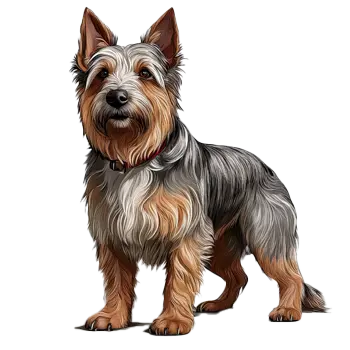
The Australian Toy Terrier is a small, sturdy terrier with a body that is conspicuously longer than it is tall, producing a distinctive rectangular silhouette that distinguishes it from more square-bodied terrier breeds. Males typically stand 10 to 11 inches at the shoulder and weigh between 15 and 20 pounds, while females are slightly smaller at 9 to 10 inches and 12 to 18 pounds. Despite its small size, the breed presents a robust, workmanlike appearance with medium bone, well-developed muscle, and the substance expected of a dog that was developed to kill snakes and rats in harsh conditions. There is nothing fragile or overly refined about a well-bred Australian Terrier.

The head is long and strong, well-filled under the eyes, with a flat skull of moderate width and a slight but definite stop. The muzzle is equal in length to the skull, with powerful jaws and a scissors bite. The nose is black, and the eyes are small, dark brown, and oval-shaped, set well apart and conveying a keen, intelligent expression that is one of the breed's most characteristic features. The ears are small, erect, and pointed or slightly rounded at the tips, set high on the head, and carried firmly upright. A distinctive topknot of soft, silky hair covers the skull, lighter in texture than the body coat and providing a finishing touch that enhances the breed's alert, attentive appearance.

The double coat is one of the breed's most important features, both for breed type and for practical function. The outer coat is harsh, straight, and approximately two and a half inches long, with a protective ruff of longer hair around the neck that extends to the breastbone. The undercoat is short, soft, and dense, providing insulation against both heat and cold. The coat on the muzzle, lower legs, and feet is naturally shorter and smoother. Three color varieties are recognized: blue and tan, the most prevalent, features a blue or silver-blue body with rich tan markings on the face, ears, underbody, lower legs, and feet; sandy and red varieties present solid body colors in their respective shades. The blue color may take up to eighteen months to fully develop from the black of puppyhood.

Movement is free, sound, and purposeful, reflecting the breed's working heritage. The gait should be ground-covering and efficient, with good reach in front and balanced drive behind. The breed should move with the confidence and energy of a dog that is ready to work at a moment's notice. The tail is traditionally docked in countries where docking is legal, set high, and carried erect; where undocked, it is naturally straight or slightly curved and carried upright. The feet are small, round, compact, and well-padded with closely arched toes, suitable for the varied terrain the breed was developed to navigate.

Affectionate With Family
The Australian Toy Terrier bonds deeply with its household and displays a level of affection and devotion that surprises people who expect terrier aloofness. This breed wants to be near its people, following them from room to room and seeking physical contact with a warmth and enthusiasm that makes it an excellent companion dog despite its working heritage.
Good With Young Children
The breed is generally patient and tolerant with children, particularly those old enough to handle a small dog with appropriate care. However, like most small terriers, the Australian Toy Terrier has limits when it comes to rough handling, ear-pulling, and the unpredictable movements of very young children. Supervision during interactions with toddlers is important, and teaching children to respect the dog's boundaries prevents negative encounters.
Good With Other Dogs
The breed gets along reasonably well with other dogs when properly socialized from puppyhood, though it retains the terrier tendency to stand its ground and may challenge dogs significantly larger than itself without apparent awareness of the size difference. Same-sex aggression can occur in intact males. The breed generally does well in multi-dog households when introductions are managed and hierarchy is established.
Shedding Level
The harsh, weatherproof outer coat sheds moderately, with seasonal increases during spring and fall coat transitions. Regular brushing effectively manages loose hair, and the breed is considered a low-to-moderate shedder compared to many double-coated breeds of similar size.
Coat Grooming Frequency
The Australian Toy Terrier's coat is relatively low-maintenance for a terrier breed. Weekly brushing with a slicker brush keeps the coat in good condition, and occasional hand-stripping or trimming maintains the correct rough texture. The breed does not require the extensive grooming regimen of longer-coated terrier breeds and is manageable for owners who prefer a practical grooming routine.
Drooling Level
The breed is exceptionally clean and tidy in its habits, producing virtually no drool under normal circumstances. Owners will not find wet spots on furniture, clothing, or bedding from this neat little dog, making it an excellent choice for people who value a clean living environment.
Coat Type
The double coat features a harsh, straight outer layer approximately two and a half inches long, with a distinctly shorter, softer undercoat that provides insulation. A protective ruff of longer hair around the neck is a breed characteristic, and the coat on the muzzle, lower legs, and feet is naturally shorter. The texture is rough and weatherproof, practical heritage from the breed's working origins in the Australian bush.
Openness To Strangers
The breed is typically friendly and approachable with strangers once proper introductions are made, though it maintains an initial alert watchfulness that reflects its terrier heritage. Unlike some terrier breeds that are genuinely suspicious of newcomers, the Australian Toy Terrier usually warms up quickly once it determines that a visitor is welcome, making it more socially flexible than many breeds in its group.
Playfulness Level
The Australian Toy Terrier is an enthusiastically playful breed that retains its zest for games well into adulthood and even into its senior years. The breed excels at interactive games involving chasing, fetching, and problem-solving, and its natural digging instinct means that sandbox play or supervised garden exploration can provide additional enrichment. This sustained playfulness makes it an engaging companion that keeps its owners entertained.
Watchdog/Protective Nature
Alert and vocal when circumstances warrant it, the Australian Toy Terrier makes an effective alarm dog that will announce visitors, unusual sounds, and perceived threats with a sharp, carrying bark. The breed takes its self-appointed security role seriously and monitors its environment with keen awareness. While too small to serve as a physical deterrent, its vigilance and willingness to sound the alert provide genuine home security value.
Adaptability Level
The Australian Toy Terrier adapts well to a variety of living situations, including apartments, houses, and rural properties. Its moderate size, manageable exercise requirements, and willingness to settle calmly indoors when its activity needs are met make it suitable for urban living. The breed also adjusts well to changes in routine, household composition, and travel, provided its core needs for companionship and activity are maintained.
Trainability Level
Intelligent and more willing to please than many terrier breeds, the Australian Toy Terrier responds well to positive reinforcement training and can excel in obedience, agility, and other structured activities. The breed learns quickly and enjoys the mental challenge of training sessions, though it retains enough terrier independence to require creative motivation from handlers who keep lessons varied and engaging.

Australian Toy Terrier History & Development

The development of the Australian Toy Terrier began in the early nineteenth century when British settlers brought rough-coated terriers from England, Scotland, and Ireland to the Australian colonies. These imported dogs, ancestors shared with breeds including the Cairn Terrier, Dandie Dinmont Terrier, Shorthaired Skye Terrier, Yorkshire Terrier, and Irish Terrier, served essential functions in colonial life: killing rats and mice in homes and warehouses, destroying snakes around homesteads and in goldfields, and providing watchdog services and companionship in frontier conditions where these qualities were valued over pedigree documentation.

The Australian environment imposed its own selection pressures on these imported terrier stocks. Dogs that survived and thrived in the harsh conditions of the Australian bush, the searing heat of the goldfields, the rough terrain of sheep stations, and the myriad of venomous snakes endemic to the continent were naturally tougher, more heat-tolerant, and more resourceful than their British ancestors. Australian breeders, working without the formal breed club structures that existed in Britain, crossed and selected from the available terrier population to produce a small, hardy, rough-coated dog specifically adapted to Australian conditions and requirements.

The breed's formalization began in the 1880s with the establishment of the Australian Rough-Coated Terrier Club in Melbourne in 1887. The breed was initially exhibited under various names including Toy Terrier, Blue Terrier, and Rough-Coated Terrier, and the dogs shown at early Australian shows varied considerably in type, coat texture, and coloring. The first breed standard was established in 1896, and the breed was officially recognized and renamed as the Australian Terrier in 1892. This made the Australian Terrier the first breed to be developed and recognized in Australia, a national distinction that the breed community takes considerable pride in.

The breed appeared in the United Kingdom around 1933 and gained Kennel Club recognition there before reaching the United States. The first Australian Terriers arrived in America in the mid-twentieth century, and the breed was recognized by the AKC in 1960, making it the Terrier Group's newest member at that time. The breed has remained relatively uncommon in the United States compared to more popular terrier breeds, typically ranking in the lower half of AKC breed popularity statistics, but it maintains a dedicated following of owners and breeders who appreciate its working heritage, adaptable temperament, and manageable size.

Australian Toy Terrier Temperament & Personality

The Australian Toy Terrier possesses a temperament that balances the typical terrier attributes of courage, independence, and prey drive with an unusual degree of affection and adaptability that sets it apart from many other breeds in its group. The breed is often described as having a big dog personality in a small dog body, a characterization that reflects its confident, self-assured approach to life and its refusal to be intimidated by size differentials in social interactions with other dogs or in confrontations with the snakes and vermin it was bred to dispatch.

With its family, the breed is remarkably affectionate and people-oriented, forming close bonds with all household members and seeking physical contact and companionship with genuine enthusiasm. Unlike some terrier breeds that maintain emotional distance or show affection only on their own terms, the Australian Terrier actively solicits attention, follows its people from room to room, and displays visible happiness when reunited with family members after even brief separations. This devotion can tip into separation anxiety if the dog is regularly left alone for extended periods, and the breed does best in households where at least one person is home for much of the day.

The breed's intelligence is substantial and practically oriented, reflecting centuries of selection for dogs that could assess situations independently and make quick decisions about how to approach prey, navigate obstacles, and respond to changing circumstances in the field. This intelligence makes the breed highly trainable when the handler understands terrier motivation, but it also means the dog will find creative solutions to boredom that may not align with the owner's preferences, including digging, barking, and rearranging household items. Adequate mental stimulation through training, puzzle toys, and interactive play prevents the destructive behaviors that emerge when a thinking dog has nothing constructive to think about.

The breed's prey drive remains strong and is an essential aspect of its terrier heritage that owners must manage realistically. Small animals including rodents, rabbits, squirrels, and even cats can trigger intense chase and kill instincts that socialization may moderate but rarely eliminates entirely. This drive can extend to birds, lizards, and insects, making supervised outdoor time important in areas where the dog might encounter wildlife. The breed's snake-killing heritage is still functionally present, and Australian Terriers in rural environments have been documented dispatching venomous snakes with the speed and technique that their ancestors employed generations ago.

Australian Toy Terrier Family Life & Living Requirements

The Australian Toy Terrier adapts exceptionally well to a variety of living situations, a quality that reflects its development as a versatile working dog that operated in environments ranging from cramped gold mine camps to sprawling sheep stations. The breed's moderate size, manageable exercise needs, and willingness to settle calmly indoors when adequately exercised make it suitable for apartment living, provided daily walks and play sessions are maintained. The breed is equally at home in houses with yards and on rural properties, where its vermin-hunting instincts find natural expression and its alertness serves practical watchdog functions.

The breed's relationship with children is generally positive, particularly with older children who understand how to interact with small dogs respectfully. The Australian Terrier is sturdier than many toy breeds and more tolerant of typical childhood handling, but it is still a small dog that can be injured by rough play, and its terrier temperament means it may snap if pushed beyond its tolerance threshold. Teaching children to approach the dog calmly, avoid sudden grabs, and respect the dog's signals of discomfort creates the foundation for a rewarding relationship between child and dog.

Fencing is important for any household keeping this breed. The Australian Terrier's prey drive and curiosity mean it will investigate anything interesting beyond the yard boundary if given the opportunity, and its intelligence and determination enable it to exploit weak points in fencing that larger, less agile breeds might not attempt. The breed is also an enthusiastic digger, a trait that reflects its heritage of going to ground after burrowing prey, and fence lines should be reinforced at ground level or supplemented with dig barriers to prevent escape.

The breed's social needs center on human companionship rather than canine company, though it generally coexists well with other dogs in the household. A single Australian Terrier that receives adequate human attention and exercise is typically content, but the breed does not tolerate prolonged isolation well. Households where all members are away at work and school for eight or more hours daily should arrange for midday companionship or consider whether the breed's social needs can be realistically met.

Australian Toy Terrier Training & Exercise Needs

Training the Australian Toy Terrier is a generally rewarding experience that benefits from the breed's intelligence, willingness to please, and food motivation. Compared to many terrier breeds that are notorious for independence and selective hearing, the Australian Terrier is relatively cooperative and responsive to positive reinforcement methods. The breed learns quickly, enjoys the mental stimulation of training sessions, and can achieve impressive results in obedience, agility, rally, and earthdog trials that tap into its natural instincts. Clicker training and treat-based rewards produce the best results, as the breed responds poorly to harsh corrections that can trigger defensive stubbornness.

Socialization should begin early and continue throughout the dog's life, exposing it to diverse people, environments, sounds, and controlled interactions with other animals. The breed's natural alertness and tendency to bark at novel stimuli can be channeled through socialization into appropriate responses rather than allowed to develop into excessive reactivity. Puppy classes that emphasize positive social experiences provide an excellent foundation, and ongoing exposure to new situations maintains the social flexibility that makes the breed a comfortable companion in varied settings.

Exercise requirements are moderate by terrier standards, with most individuals satisfied by 30 to 45 minutes of daily physical activity divided between walks and interactive play. The breed is active and energetic during exercise periods but settles well indoors between sessions, a quality that makes it more manageable than higher-drive terrier breeds that require constant activity. The breed excels in structured activities including agility, where its speed and agility shine, and earthdog trials, where its natural instinct to pursue quarry underground is channeled into a competitive format. Scent work and trick training provide additional mental enrichment.

The breed's digging instinct deserves specific mention in the training context. Attempting to eliminate digging entirely is generally futile, as the behavior is deeply ingrained in the breed's working heritage. A more productive approach is to redirect the behavior by providing designated digging areas, such as a sandbox or a specific section of the garden, where the dog can express its instincts without damaging landscaping. Training the dog to dig on command in the designated area satisfies the behavioral need while protecting the rest of the property.

Australian Toy Terrier Health Concerns

The Australian Toy Terrier is a generally healthy breed that benefits from its diverse genetic heritage and its history as a working dog selected for stamina and physical soundness. The breed's longevity of eleven to fifteen years is excellent for its size category, and many individuals remain active and vital well into their senior years. However, several health conditions occur in the breed with sufficient frequency to warrant awareness from owners and proactive screening from breeders.

Patellar luxation is the most commonly documented orthopedic concern in the breed, a condition shared with many small terrier breeds in which the kneecap slides out of its normal position in the trochlear groove. Severity ranges from grade one, where the kneecap can be manually displaced but returns to position spontaneously, to grade four, where the kneecap is permanently displaced. Mild cases may produce nothing more than an occasional skipping gait, while severe cases cause chronic lameness requiring surgical correction. OFA evaluation of both knees is recommended for all breeding stock.

The breed has a documented predisposition to diabetes mellitus that sets it apart from most other terrier breeds. Studies have identified the Australian Terrier as one of the breeds with elevated diabetes risk, and owners should be aware of the early signs including increased thirst and urination, weight loss despite normal or increased appetite, and lethargy. Early diagnosis through routine blood chemistry panels allows management to begin before serious metabolic complications develop. Diabetic management in dogs requires twice-daily insulin injections, dietary modification to a high-fiber, complex-carbohydrate diet, and regular veterinary monitoring of blood glucose levels.

The breed is also known to be susceptible to a condition similar to Vogt-Koyanagi-Harada syndrome in humans, an autoimmune disease that affects the eyes, skin, and nervous system. In affected dogs, the condition produces uveitis (inflammation within the eye), depigmentation of the nose and skin, and in some cases neurological signs. The condition requires prompt veterinary treatment with immunosuppressive medications to prevent permanent vision loss. While not common, its documentation in the breed means that any changes in eye appearance, nasal pigmentation, or unexplained neurological signs should prompt immediate veterinary evaluation.

Legg-Calve-Perthes disease, an orthopedic condition affecting small breeds, occurs in the Australian Terrier and typically presents in puppies between five and eight months of age with progressive hindlimb lameness. The condition involves degeneration of the femoral head due to disrupted blood supply, and surgical removal of the affected femoral head is the standard treatment. Most dogs recover well from the surgery and return to normal or near-normal function, though the condition removes affected dogs from breeding candidacy.

Common Health Issues

  • Patellar luxation - Displacement of the kneecap from its normal position in the trochlear groove, producing intermittent or persistent lameness. Common in small breeds, the condition ranges from grade one (manual luxation only) to grade four (permanent dislocation). Surgical correction is available for moderate to severe cases, and OFA screening of breeding stock helps reduce incidence.
  • Legg-Calve-Perthes disease - Avascular necrosis of the femoral head occurring in young, growing small-breed dogs, typically presenting between five and eight months of age with progressive hindlimb lameness. The condition results from disrupted blood supply to the developing femoral head, causing bone degeneration and joint collapse. Surgical femoral head ostectomy is the standard treatment and produces good functional outcomes.
  • Diabetes mellitus - The Australian Terrier has a documented predisposition to diabetes mellitus, a metabolic disorder of insulin production or utilization that produces elevated blood glucose levels. Signs include increased thirst, increased urination, weight loss despite normal appetite, and lethargy. Management requires twice-daily insulin injections, dietary modification, and regular veterinary monitoring of blood glucose levels.
  • Allergic dermatitis - Environmental and contact allergies producing skin irritation, itching, hot spots, and secondary infections. The breed's rough double coat can trap allergens close to the skin, and seasonal flare-ups are common. Treatment involves identifying and avoiding triggers when possible, medicated shampoos, antihistamines, and in moderate to severe cases, targeted immunotherapy or medications such as oclacitinib.
  • Thyroid disorders - Both hypothyroidism and autoimmune thyroiditis occur in the breed, producing lethargy, weight gain, coat changes, and skin problems when thyroid function is inadequate. The breed is also known to be susceptible to the autoimmune condition Vogt-Koyanagi-Harada-like syndrome, which affects the eyes, skin, and nervous system. Regular thyroid panels are recommended.
  • Cataracts - Opacity of the lens producing progressive vision impairment, occurring in both hereditary juvenile forms and age-related senile forms. Surgical removal of the affected lens with intraocular lens implantation can restore functional vision in many cases. Annual ophthalmologic examinations help detect cataracts early.

Preventive Care & Health Monitoring

  • OFA patellar luxation evaluation - Veterinary physical examination of both knees with results registered with OFA is recommended for all dogs intended for breeding. Puppies showing signs of intermittent limping or skipping should be evaluated promptly.
  • Annual ophthalmologic examination by a board-certified veterinary ophthalmologist - Regular eye examinations detect hereditary cataracts, progressive retinal atrophy, and other conditions before significant vision loss occurs. Breeding animals should have current ACVO examination results on file.
  • Regular blood glucose monitoring for at-risk individuals - Given the breed's documented predisposition to diabetes mellitus, routine blood chemistry panels that include glucose levels help detect the condition early. Dogs showing increased thirst, urination, or unexplained weight loss should be tested immediately.
  • Annual thyroid panel - Thyroid function testing helps detect hypothyroidism and autoimmune thyroiditis early. Baseline testing at age two with periodic retesting is recommended, particularly for breeding animals and dogs showing lethargy, weight gain, or coat changes.
  • Skin health monitoring and allergen management - Regular skin inspection during grooming sessions helps catch allergic dermatitis early. Maintain a food diary to identify dietary triggers, use hypoallergenic grooming products, and implement year-round flea prevention to reduce allergic stimulation.
  • Dental care program - Small breeds are disproportionately susceptible to periodontal disease. Brush teeth daily or at minimum several times weekly with enzymatic dog toothpaste. Schedule professional dental cleanings as recommended by your veterinarian, typically annually.

Australian Toy Terrier Grooming & Maintenance

The Australian Toy Terrier's grooming requirements are moderate and manageable for most owners, falling well below the maintenance demands of longer-coated terrier breeds while requiring more attention than smooth-coated breeds. The harsh, weatherproof double coat was developed for practical function rather than show-ring beauty, and maintaining it in healthy condition requires a consistent but not burdensome routine that most owners can perform at home without professional grooming assistance.

Weekly brushing with a slicker brush or pin brush is the foundation of the grooming routine, removing loose hair from both the outer coat and the undercoat, preventing mat formation, and distributing the natural oils that keep the coat water-resistant and healthy-looking. During seasonal coat transitions in spring and fall, when the undercoat sheds more heavily, increasing brushing frequency to two or three times weekly helps manage the temporary increase in loose hair. The distinctive soft topknot on the skull may require gentle daily attention with a fine comb to prevent tangling, as this finer-textured hair is more susceptible to matting than the coarser body coat.

The breed benefits from periodic hand-stripping or light trimming to maintain the correct harsh texture and neat outline that defines proper breed type. Hand-stripping, which involves plucking dead hairs from the coat by hand or with a stripping knife, preserves the coat's natural rough texture more effectively than clipping, which tends to soften the coat over time. For owners who prefer a simpler approach, a professional groomer experienced with terrier breeds can provide a rolling strip or a light clip several times yearly to keep the coat tidy without the labor intensity of full hand-stripping.

Bathing should be infrequent, typically every six to eight weeks or as needed when the dog gets genuinely dirty. The harsh outer coat has natural dirt-shedding properties, and over-bathing strips the protective oils that give the coat its weather-resistant quality. When bathing is necessary, a mild dog-specific shampoo preserves coat texture better than human products. Thorough rinsing and complete drying are important, as residual shampoo or trapped moisture can cause skin irritation beneath the dense undercoat.

Dental care is particularly important in this small breed, as small dogs are disproportionately susceptible to periodontal disease due to their compact jaw structure and crowded dentition. Daily tooth brushing with enzymatic dog toothpaste is ideal, with a minimum of three to four brushing sessions weekly. Dental chews and appropriate chew toys supplement brushing, and professional dental cleanings under anesthesia should be scheduled as recommended by the veterinarian. Nail trimming every two to three weeks, weekly ear inspection and cleaning, and regular checking of the pads and between the toes for debris or injury complete the basic grooming routine.