Aussie Terrier

Australian Terrier

Quick Facts

🐕 Breed Group
Terrier Group
📏 Size Category
Small
📏 Height
Males: 10-11 inches, Females: 10 inches
⚖️ Weight
Males: 14-16 pounds, Females: 12-14 pounds
⏱️ Life Expectancy
11-15 years
🧣 Coat Type
Rough, double coat
🎨 Coat Colors
Blue and tan, sandy, red
😀 Temperament
Spirited, loyal, curious, alert
🏃 Exercise Needs
Moderate - daily walks plus playtime
🎓 Training Difficulty
Moderate - independent thinker but food motivated
👶 Good with Children
Yes, with older children
🐾 Good with Other Pets
Caution with small animals - prey drive

Other Names & Breed Recognition

Aussie Terrier is one of the more natural nicknames in the dog world - take the country of origin, shorten the breed name, and you have something that rolls right off the tongue. It is the informal go-to for owners and enthusiasts who want a friendlier handle for a breed whose full name, Australian Terrier, already tells you most of what you need to know. The nickname has been in common use for decades and is especially prevalent in conversations between breed owners, at dog shows, and in online communities dedicated to the breed.

The full, registered name is Australian Terrier, and that is how the breed appears in every major kennel club registry. The AKC recognized the breed in 1960, placing it in the Terrier Group, where it has remained ever since. The Kennel Club in the United Kingdom, the Canadian Kennel Club, the FCI, and the UKC all recognize the breed under the same name. So when someone says Aussie Terrier, they are referring to a breed with a well-established identity across all major international registries.

It is worth clarifying one potential source of confusion right away: the Aussie Terrier is not the same dog as the Aussie, which is the popular nickname for the Australian Shepherd. Those are entirely different breeds in different groups. The Aussie Terrier is a small terrier; the Aussie is a medium-to-large herding dog. They share a country name in their nicknames but nothing else. Anyone who has stumbled across both terms in conversation should know which is which before they start comparing notes.

Other names you might encounter for the Australian Terrier include the Australian Rough-Coated Terrier, which was an earlier name used before the breed fully standardized. Occasionally the breed is simply called the Aussie in terrier-specific circles where the context makes clear that the Australian Shepherd is not being discussed. In Australia itself the name Australian Terrier is the norm, though the shortened Aussie is used affectionately among owners there as well.

The breed holds the distinction of being one of the first breeds developed in Australia to receive international recognition, and Australians take some pride in that history. Whether you call it an Aussie Terrier or the full Australian Terrier, you are talking about a breed that earned its place through practical work, not just good looks.

Aussie Terrier Organizations & Standards

The Australian Terrier Club of America is the AKC parent club for the breed in the United States and the primary resource for breed standards, health information, and breeder referrals. The ATCA maintains the official breed standard that defines what an Australian Terrier should look like and how it should move and behave. If you are considering adding an Aussie Terrier to your family, the ATCA is a reasonable starting point for finding responsible breeders who follow health testing protocols and breed to the standard.

The AKC breed standard describes the Australian Terrier as a small, sturdy, medium-boned terrier. The standard calls for a body longer than it is tall, a harsh outercoat that is straight and about two to two and a half inches in length, and a soft undercoat. The head should carry a topknot of finer, softer hair, which is one of the distinguishing visual features that sets this breed apart from some of its terrier cousins. Color options include blue and tan, sandy, and red. The sandy and red varieties should be rich and even in color.

The Orthopedic Foundation for Animals and the Canine Health Information Center have established a health testing protocol for the Australian Terrier. To earn a CHIC number, breeders must have their dogs evaluated for patellar luxation through an OFA veterinary evaluation, assessed by an ACVO board-certified ophthalmologist, and tested for thyroid function through an OFA-approved thyroid evaluation. These three tests represent the recommended baseline for responsible breeding. Breeders who complete all testing and make results publicly available through the OFA database are the ones worth seeking out.

In Australia, the breed is governed by the Australian National Kennel Council, which oversees breed standards for all recognized breeds across the country of the breed's origin. The ANKC standard aligns closely with AKC requirements, reflecting the international consensus about what the Australian Terrier should be. The Kennel Club in the UK maintains its own standard for the breed and has recognized the Australian Terrier for many decades.

The FCI classifies the Australian Terrier under Group 3, Section 2 - Small-Sized Terriers, which is where you find most of the working small terriers with genuine hunting and vermin-control heritage. This classification reflects the breed's purpose-built origins rather than its compact size.

The Australian Terrier holds an interesting distinction in the international dog world: it is among the first breeds developed in Australia to earn recognition from major overseas registries, a point of national pride that reinforces the breed's identity as genuinely Australian rather than simply a transplanted British type.

Kennel Club Recognition

  • American Kennel Club (AKC): Recognized in 1960, Terrier Group
  • United Kennel Club (UKC): Recognized, Terrier Group
  • Canadian Kennel Club (CKC): Recognized, Terrier Group
  • FCI: Recognized, Group 3 - Terriers
  • The Kennel Club (UK): Recognized, Terrier

Aussie Terrier Physical Description

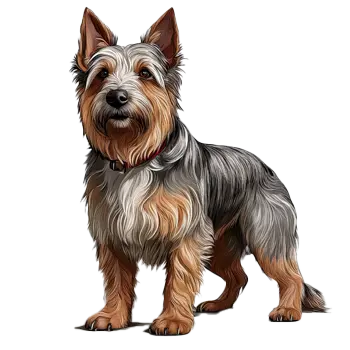
The Aussie Terrier is a compact, low-to-the-ground dog that packs a surprising amount of substance into a small frame. At 10 to 11 inches at the shoulder and somewhere in the range of 14 to 16 pounds for males, this is not a fragile toy breed. The bone structure is medium, the body is muscular, and the overall impression is a dog built to work, not just sit in a lap. When you pick one up for the first time you are usually surprised by how solid they feel.

The body is longer than it is tall - that stretched proportion is typical of terriers built to pursue prey into tunnels and tight spaces. The chest is moderately deep, the back is level, and the hindquarters carry enough muscle to power a dog that needs to scramble and dig in terrain that would discourage a less determined animal. Despite being small, nothing about the Aussie Terrier reads as delicate or fine-boned.

The head is long relative to the body, with a flat skull and a defined stop. The muzzle is strong and roughly equal in length to the skull. Ears are small, erect, and pointed, set high on the head and always upright - a dog with soft or tipped ears is not meeting standard. The eyes are small and dark, with an expression that is alert, intelligent, and frankly assessing. You get the sense that the dog is always evaluating the situation.

The topknot is one of the Australian Terrier's most recognizable features. The crown of the head carries a soft, silky topknot of a different texture than the body coat - this is part of the breed standard and one of the visual details that distinguishes the Australian Terrier from similar breeds at first glance. It gives the dog a slightly distinguished, somewhat amusing appearance that owners tend to find endearing.

The coat is one of the breed's practical assets. The outer coat is harsh, straight, and about two to two and a half inches long across most of the body. Beneath that is a softer undercoat that provides insulation. The combination makes the coat weather-resistant and naturally dirt-resistant - the kind of coat that was practical for a dog working outdoors in varied Australian conditions. Color options are blue and tan, sandy, and red. In the blue and tan variety, the topknot and lower legs should be tan, while the body shows a blue-gray cast. Sandy and red dogs should have an even, rich coloring throughout.

The legs are straight and well-boned, ending in small, compact cat feet with dark nails. The tail was traditionally docked, though this practice is restricted or banned in many countries today. In countries where natural tails are required, the tail is set high and carried upright, continuing the dog's confident, upright overall posture.

Gait is free and straight-moving, with good reach in front and drive from behind. A dog that moves well covers ground efficiently without wasted effort - which makes sense for a breed that historically covered a lot of ground looking for something to hunt. Hackney action or stilted movement signals structural problems worth discussing with a breeder.

The overall picture is a balanced, sturdy little dog that looks purposeful rather than decorative. Nothing is exaggerated - not the length of leg, not the size of head, not the volume of coat. The Aussie Terrier is a working dog in a small package, and the physical description reflects that origin at every point. Size gives this breed access to spaces larger dogs cannot go; structure gives it the tools to work once it gets there.

Affectionate With Family
The Aussie Terrier bonds tightly with its people and thrives on daily interaction and closeness. They tend to pick a favorite person while remaining warm with everyone in the household.
Good With Young Children
They do well with children who understand how to interact respectfully with a small dog. Very young children who grab and chase can trigger defensive responses - supervision keeps things smooth.
Good With Other Dogs
Generally tolerant with other dogs they are raised with, but they will not back down from a challenge. Same-sex pairings can be tricky with some individuals.
Shedding Level
The rough double coat sheds minimally compared to many breeds. Regular brushing keeps loose hair managed and the coat looking tidy.
Coat Grooming Frequency
Routine brushing a few times per week and periodic hand-stripping or trimming keeps the coat in good shape. They are not high-maintenance but not hands-off either.
Drooling Level
Drooling is essentially nonexistent in this breed. A clean chin is a reliable feature of the Aussie Terrier.
Coat Type
The outer coat is harsh and wiry in texture, sitting over a softer undercoat. This combination provided natural weather resistance for a dog that worked outdoors in varied Australian conditions.
Openness To Strangers
Alert and watchful with strangers, they tend to warm up once they take stock of a person. Not aggressive toward people, but not immediately trusting either.
Playfulness Level
These are lively, playful dogs that stay game for fetch, tug, and exploration well into adulthood. Play satisfies their need for mental and physical engagement at the same time.
Watchdog/Protective Nature
They are alert dogs that take their watchdog role seriously and will bark to announce anything out of the ordinary. Do not mistake their size for their level of conviction about protecting the house.
Adaptability Level
Aussie Terriers adapt well to apartment or house living as long as their daily exercise and mental stimulation needs are met. They are more flexible than their working-dog roots might suggest.
Trainability Level
Intelligent and food-motivated, but independent enough that they will test whether a command is really worth following. Consistent, reward-based training gets the best results.

Aussie Terrier History & Development

The nickname Aussie Terrier reflects exactly how this breed came to be seen in the broader dog world - as Australia's terrier, the one that came from that continent and became identified with it. The formal name Australian Terrier tells the same story, but the shortened form carries a certain national pride and informality that suits a breed developed by practical people solving practical problems in a demanding landscape.

The breed's origins trace to the early 19th century in Australia, when British settlers brought various rough-coated terriers from the United Kingdom to help manage vermin on farms and homesteads. Several British terrier breeds contributed to the Australian Terrier's development, including the Dandie Dinmont Terrier, the Skye Terrier, the Yorkshire Terrier, the Irish Terrier, and the Cairn Terrier. Australian breeders crossed these imports selectively over several decades, working toward a dog that could handle the specific demands of the Australian environment - a dog tough enough for the heat, smart enough to problem-solve, small enough to enter burrows, and brave enough to confront snakes and other hazards that British terriers had never encountered.

The breed was initially known by names including the Australian Rough-Coated Terrier and simply the Rough-Coated Terrier. The name Australian Terrier, and by extension the nickname Aussie Terrier, became the established designation by the late 19th century as the breed began to standardize and gain recognition. The first recorded breed club was formed in Melbourne in 1887, and the breed received formal Kennel Club recognition in England in 1933 - a milestone that confirmed the Aussie Terrier's standing as a distinct breed rather than a regional variant of British stock.

AKC recognition followed in 1960, bringing the breed into the American dog fancy and giving it access to conformation shows and performance events. Despite this recognition, the Australian Terrier has never become a high-popularity breed in the United States or globally. It remains relatively uncommon outside of Australia, which has a way of keeping it practical and purposeful - breeders are not catering to mass demand, so the breed retains the working characteristics that defined it from the start.

In Australia itself, the Aussie Terrier still occasionally encounters snakes, vermin, and the kind of rough outdoor life it was developed for. The breed's courage in the face of snakes - which in Australia can be genuinely dangerous - was a valued practical trait that breeders maintained deliberately. This is not a quality that makes the modern suburban pet owner's life easier, but it is part of what makes the Aussie Terrier what it is.

Today, the Aussie Terrier is found in small but dedicated pockets of breeders and enthusiasts across Australia, the United States, the United Kingdom, and parts of Europe. Its rarity compared to more fashionable breeds has kept the breeding community focused on the dogs rather than on volume production. That is probably good news for anyone who wants one: the odds of finding a breeder who takes health testing seriously and cares deeply about the breed are better than with many more popular dogs.

Aussie Terrier Temperament & Personality

If you have spent time around working terriers, the Aussie Terrier's personality will feel immediately familiar: confident, alert, a little bit bossy, and genuinely curious about everything happening within a fifty-yard radius. These are not dogs that sit quietly on the sidelines. They want to know what is going on, and they tend to assume they should have some role in whatever is happening.

The breed's original purpose was hunting and controlling vermin - including snakes in the Australian bush - and that working background shapes the modern pet in ways that are important to understand before you bring one home. Prey drive is real and consistent across the breed. Small animals that move fast - squirrels, rabbits, birds, cats in some cases - will trigger a chase response that recall training alone may not reliably override. The Aussie Terrier in a yard with a well-secured fence is a different proposition than one with a fence that has gaps near the ground. They will find the gap.

With their families, Aussie Terriers are genuinely affectionate dogs that form tight bonds and want close daily contact. They are not the kind of dog that does well left alone for long stretches. When their social and exercise needs are not met, you tend to see the less charming side of the breed - obsessive barking, destructive digging, and general restlessness. The problem behaviors are usually symptoms of an unmet need rather than a character flaw, and addressing the root cause (more exercise, more interaction) typically resolves them.

They are intelligent dogs that notice patterns quickly and figure out what works to get what they want. This cuts both ways: they can learn commands and routines with reasonable speed, but they will also learn very efficiently how to manipulate their owners. An Aussie Terrier that has figured out that dramatic behavior at the window produces treats and attention has learned something that will be hard to undo. Consistent rules applied from day one avoid most of these problems.

The Aussie Terrier's alertness makes it a natural watchdog - it will bark at anything unusual and is not shy about voicing an opinion. This is a trait that can be managed but not fully eliminated, and it is worth considering in an apartment or condo environment where noise complaints are a real possibility. Directing that alertness toward appropriate responses (bark once, then be quiet when told) takes dedicated effort in puppyhood but is achievable.

One quality that surprises many new owners is how much personality this small dog carries. The Aussie Terrier has opinions, preferences, and moods. It will tell you when it wants attention, when something outside has earned comment, and when its needs are not being met. This expressiveness is part of the appeal for people who want a dog with real character rather than a compliant shadow. For owners who prefer a more passive companion, the Aussie Terrier is probably not the right match. Choose this breed because you want a dog with a real point of view.

Aussie Terrier Family Life & Living Requirements

The Aussie Terrier is a genuinely adaptable dog that can thrive in a variety of living situations, including apartments, provided its exercise and mental stimulation requirements are consistently met. Small size makes it practical for urban life; terrier energy levels make neglecting daily exercise a mistake. The combination of those two realities means Aussie Terrier owners in cities tend to be active, engaged people who commit to daily walks and play sessions as non-negotiable parts of their routine.

Fenced yards are ideal but require attention to security. This breed can squeeze under fencing with surprising determination when something interesting is on the other side, and they can cover ground quickly once free. A fence that reaches the ground with no gaps underneath is the practical minimum; a fence tall enough that they cannot see over it to be tempted by passing squirrels is better still. Off-leash parks are enjoyable for this breed but should not substitute for a secure outdoor space at home.

Families with children should consider the age and temperament of the children involved. The Aussie Terrier does best with children old enough to interact respectfully with a small dog. Very young children who grab, pull, or chase can trigger defensive behavior from any terrier, and this breed is no exception. Families with toddlers and younger children should supervise all interactions and teach children appropriate ways to approach and handle the dog. Given those conditions, Aussie Terriers can be patient and genuinely fond of the children in their household.

As a general principle, other dogs in the household need to be compatible in size and energy level. The Aussie Terrier is not a pushover despite its small stature and will stand its ground with larger dogs if it feels threatened or challenged. Introductions should be done carefully, and same-sex pairings may require extra attention. Small pets - guinea pigs, hamsters, rabbits - are typically not safe with this breed unsupervised given the strong prey drive.

One thing that often surprises new owners is how much this small dog benefits from having a job or regular mental challenge. Puzzle toys, training sessions, and activities that engage the nose and problem-solving instinct keep the Aussie Terrier content and out of trouble. A dog that has done some genuine thinking during the day settles more readily in the evening. The mental work counts just as much as the physical exercise for this breed's daily balance.

Aussie Terrier Training & Exercise Needs

Training an Aussie Terrier works best when you approach it as a negotiation rather than a command structure. These dogs are smart enough to understand what you want and independent enough to evaluate whether complying seems worthwhile to them at the moment. That is not stubbornness in the problematic sense - it is terrier intelligence, which is a practical intelligence rooted in problem-solving and decision-making rather than simple compliance. Working with that quality rather than against it makes training more productive.

Positive reinforcement with high-value food rewards gets the best results. Short training sessions - five to ten minutes of focused work - tend to outperform long sessions that allow the dog's attention to drift. The Aussie Terrier that is engaged and rewarded learns quickly; the one that is bored or frustrated shuts down and starts looking for something else to do. Ending sessions on a successful repetition keeps the dog interested and coming back.

Housetraining can take longer than with some other breeds, and consistency in the early months is essential. Using a crate provides a structure that supports the process, and taking puppies out on a tight schedule at the same times each day helps them understand what is expected. Accidents that are ignored or inconsistently corrected tend to extend the housetraining period unnecessarily.

Exercise requirements are moderate but genuine. Daily walks are non-negotiable, and these dogs benefit from some form of active play in addition to structured walking. Fetch, tug, and exploration in a secure area all work well. This is not a breed that requires marathon exercise sessions, but one that needs its energy outlets met reliably. An under-exercised Aussie Terrier will find its own entertainment, and that entertainment usually involves digging, barking, or rearranging household items. Dog sports including earthdog trials - which tap directly into this breed's instincts - are well-suited to the Aussie Terrier and provide excellent mental and physical engagement.

One training area that requires consistent attention is recall. A dog with the Aussie Terrier's prey drive should not be trusted off-leash in unfenced areas until the recall is rock-solid under high-distraction conditions. Building a reliable recall takes time and repetition, but it is the single most important safety skill for a terrier with chase instincts. Practice in progressively more distracting environments, always rewarding the return generously, builds the reliability needed over time.

Socialization in puppyhood matters as much as obedience work. Aussie Terrier puppies that meet a wide variety of people, dogs, sounds, and surfaces during the early months develop into more confident, adaptable adults. Socialization does not mean overwhelming the puppy - it means positive, gradual exposure that builds good associations.

Aussie Terrier Health Concerns

The Aussie Terrier is one of those breeds where a specific, unusual health risk sits alongside the general maintenance concerns any small dog owner should know about. That specific risk is diabetes. Research indicates that Australian Terriers develop diabetes at a rate roughly 32 times higher than the average dog population. The condition involves the body's failure to regulate blood sugar properly, and while it is manageable with the right care, it requires daily commitment - typically a controlled diet, regular exercise to keep weight stable, and for many dogs, insulin injections on a regular schedule. Knowing this risk exists means knowing what early signs to watch for: increased water consumption, increased urination, weight loss despite normal eating, and reduced energy are all worth a call to your vet.

Pancreatitis can be triggered by high-fat meals and is connected to the breed's general tendency toward weight gain if diet is not managed carefully. Keeping meals consistent and limiting fatty treats are practical steps any owner can take. A lean Aussie Terrier faces fewer health complications across the board than one allowed to carry excess weight.

Common Health Issues

  • Diabetes mellitus - Australian Terriers develop diabetes at a significantly elevated rate compared to the general dog population. The condition involves inadequate insulin production or response, leading to unregulated blood sugar. Signs include increased drinking, frequent urination, weight loss despite good appetite, and reduced energy.
  • Legg-Calve-Perthes disease - A disorder where blood supply to the femoral head is disrupted, causing bone cell death and eventual collapse of the hip joint in young dogs, typically under 12 months. Causes progressive hind-leg lameness and usually requires surgical correction.
  • Patellar luxation - The kneecap shifts out of its groove in the femur, causing intermittent lameness ranging from a brief skip-step to significant disability depending on severity. Surgical correction is available for moderate to severe cases.
  • Skin allergies - Inhalant and contact allergies cause itching and inflammation, most often affecting the belly, feet, and ear flaps. Management involves identifying triggers where possible and working with a vet on appropriate treatment.
  • Retinal dysplasia - An inherited condition involving abnormal retinal development, documented in Australian Terrier puppies. Severity varies; mild cases may not significantly impact vision, while severe cases can lead to significant visual impairment. Pancreatitis can be triggered by high-fat meals and is connected to the breed's general tendency toward obesity if diet is not managed carefully. Keeping meals consistent, limiting fatty treats, and maintaining a healthy weight through regular exercise are the practical lines of defense. A lean Aussie Terrier simply faces fewer health risks across the board than one allowed to carry excess weight. The connection between weight and diabetes risk, joint stress, and overall vitality is well established and worth taking seriously from the beginning.

Preventive Care & Health Monitoring

  • OFA patellar luxation evaluation - Have breeding dogs assessed for patellar luxation through an OFA-approved veterinary evaluation before breeding. This is a required CHIC test for the Australian Terrier.
  • ACVO ophthalmologist evaluation - Eye exams by an ACVO board-certified ophthalmologist identify retinal dysplasia and other heritable eye conditions. Required for CHIC certification.
  • OFA thyroid evaluation - Thyroid function testing is part of the recommended CHIC protocol for the Australian Terrier.
  • OFA Legg-Calve-Perthes evaluation - Hip radiographs evaluated by OFA-certified radiologists can identify LCP changes; dogs over 12 months with normal OFA hip results are also considered clear for LCP.
  • Weight management - Maintaining a healthy body weight directly reduces the severity of patellar luxation, lowers the risk of pancreatitis, and helps manage blood sugar stability in dogs predisposed to diabetes. Keep treats meaningful and small.

Aussie Terrier Grooming & Maintenance

The Aussie Terrier's rough double coat is relatively low-maintenance compared to some of its terrier cousins, but it still needs regular attention to stay clean and healthy. A thorough brushing two to three times per week prevents the undercoat from matting and keeps the outer coat clear of debris. The coat's natural harshness actually helps shed dirt - a dog that has been through a muddy field will often clean up significantly once the coat dries, without needing an immediate bath.

The traditional grooming method for Australian Terriers is hand-stripping, which involves pulling out the dead outer coat by hand to encourage regrowth of the proper harsh texture. Pet owners who are not concerned with show presentation often opt for clipping instead, which is quicker but gradually softens the coat texture over time. Breeders and show enthusiasts generally prefer hand-stripping to maintain the coat quality the standard calls for. If you are working with a professional groomer, clarify which method you want used.

The topknot needs periodic trimming and brushing to keep it tidy. Ears should be checked regularly for debris and wax buildup - the erect ear position actually helps with airflow, which reduces the risk of ear infections compared to drop-eared breeds, but they still need routine inspection. Nails grow fairly quickly in this breed and should be trimmed every three to four weeks, or more often if the dog does not wear them down naturally on hard surfaces. Dental care deserves real attention given the breed's elevated risk for conditions made worse by obesity, and keeping the teeth clean through regular brushing or dental chews is worth the effort.

Bathing frequency depends on the dog's lifestyle. A clean indoor dog that gets brushed regularly might need a bath every four to six weeks; a dog that spends time digging in the yard might need more frequent washing. Using a shampoo designed for harsh-coated terriers helps preserve the coat's natural texture. After baths, the coat should be dried thoroughly, particularly in cooler weather, to prevent the dog from getting chilled. Keeping the Aussie Terrier well-groomed is a regular but manageable commitment.