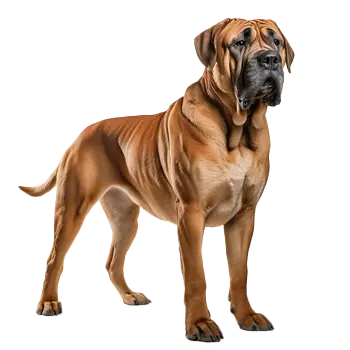

Argentine Mastiff

Dogo Argentino

Quick Facts

🐕 Breed Group
Working Group
📏 Size Category
Large
📏 Height
Males: 24-26.5 inches, Females: 24-25.5 inches
⚖️ Weight
Males: 80-100 pounds, Females: 75-95 pounds
⏱️ Life Expectancy
10-12 years
🧣 Coat Type
Short, smooth, dense
🎨 Coat Colors
White only; small dark patch near one eye acceptable
😀 Temperament
Loyal, courageous, affectionate with family, alert
🏃 Exercise Needs
High
🎓 Training Difficulty
Moderate to challenging - strong-willed, requires experienced handler
👶 Good with Children
Good with family children when properly raised and socialized
🐾 Good with Other Pets
Variable - high prey drive; can be dog-selective

Other Names & Breed Recognition

Argentine Mastiff is the name that English speakers often reach for when they know mastiff-type dogs and recognize the Dogo Argentino's structural and temperamental kinship with that tradition. It is a natural translation - the breed is Argentine in origin and mastiff-type in classification - and it communicates something true about what this dog is. The FCI places the Dogo Argentino in Group 2, Section 2.1, alongside Mastiff-type breeds including the Bullmastiff, Cane Corso, and Neapolitan Mastiff. The Argentine Mastiff name acknowledges that family relationship directly.

The official registered name across all kennel clubs is Dogo Argentino. That name reflects the Spanish-language tradition of the breed's Argentine homeland, where dogo is the equivalent of the French dogue - a general term for large, powerful dogs of mastiff heritage. The two names describe the same dog from different linguistic and cultural perspectives: Argentine Mastiff from the English-speaker's framework of familiar mastiff breeds, Dogo Argentino from the breed's actual national and linguistic context.

Other names for this breed include Argentine Dogo, which is a simple inversion of the official Spanish name; Argentinian Mastiff, an anglicized spelling variant; and occasionally simply Dogo, as the breed is referred to within Argentina where national identity is implied. The breed has no regional variants, no historical name changes of significance, and no competing official designations - the registry name has been stable since Dr. Antonio Nores Martinez published the first breed standard in 1928 and remained consistent through the FCI's international recognition in 1973 and the AKC's recognition in 2020.

The mastiff frame is useful for people approaching this breed from prior knowledge of European guardian breeds. Someone familiar with the Cane Corso, the Bullmastiff, or the Rottweiler will recognize the Argentine Mastiff's structural priorities and temperament orientation more readily than someone unfamiliar with the mastiff tradition. The critical difference that people in that framework must understand is that this is not a sedentary, heavy mastiff - the Argentine Mastiff is a high-energy hunting dog that happens to be built like a guardian, and that combination of characteristics creates a management profile that differs meaningfully from heavier, lower-energy mastiff types.

Argentine Mastiff Organizations & Standards

The Dogo Argentino Club of America, known as DACA, is the AKC parent club for the Argentine Mastiff in the United States, established to promote the breed, maintain ethical breeding standards, and administer the health programs that responsible breeding requires. DACA coordinates with the Federacion Cinologica Argentina, the Argentine national kennel club that holds the original breed registration and standards established by the Martinez family over decades of development beginning in the 1920s.

The AKC breed standard was developed from the FCI standard maintained by Argentina and describes a large, athletic, uniformly white dog with a broad, powerful head, well-muscled body, and the balanced proportions of a dog built for sustained physical work. Males stand 24 to 26.5 inches at the shoulder and typically weigh 80 to 100 pounds. Females range from 24 to 25.5 inches in height with somewhat less mass. The standard requires balance and athletic capability rather than the extreme heaviness of some mastiff types - an overweight or poorly conditioned Argentine Mastiff fails the standard's intent as clearly as one that lacks substance.

DACA approved the breed's participation in the OFA Canine Health Information Center program in 2021. The CHIC requirements reflect the breed's documented health priorities directly. Mandatory tests include: a BAER evaluation for congenital deafness - linked to the white coat genetics - an OFA or PennHIP hip evaluation for the orthopedic health concerns common to large breeds, and a cardiac examination by a board-certified cardiologist at twelve months of age or older. One elective test is required in addition: either an OFA elbow evaluation, an OFA autoimmune thyroiditis panel, or a CAER ophthalmology examination by a board-certified veterinary ophthalmologist. These requirements are the minimum standard for responsible breeding, and reputable breeders often go beyond them.

The UKC classifies this breed in its Guardian Dogs group, which accurately reflects the Argentine Mastiff's dual heritage as both hunter and protector. The FCI Group 2 classification alongside European mastiff types acknowledges the structural and ancestral relationships that make Argentine Mastiff such a fitting alternate name. International breed organizations in South America, Europe, and beyond maintain their own national registries under FCI oversight, and the consistent standard maintained across jurisdictions reflects the clarity of Dr. Martinez's original vision for the breed.

Ownership restrictions in some jurisdictions create a practical consideration that prospective owners should research before acquiring this breed. Several countries and municipalities restrict or prohibit ownership of the Dogo Argentino. Homeowner's insurance policies may also be affected by ownership of this breed, as some insurers exclude coverage for listed breeds. Verifying local regulations and insurance implications before acquisition protects both the prospective owner and the dog from difficult circumstances that are preventable with early research.

Kennel Club Recognition

  • American Kennel Club (AKC): Recognized in 2020, Working Group
  • United Kennel Club (UKC): Recognized, Guardian Dogs
  • Canadian Kennel Club (CKC): Recognized, Working Group
  • FCI: Recognized, Group 2 - Pinscher and Schnauzer type
  • The Kennel Club (UK): Recognized, Working

Argentine Mastiff Physical Description

The Argentine Mastiff is built for work in a way that is immediately apparent but easily misread. People familiar with heavy mastiff types like the Neapolitan or the Saint Bernard may expect something slow and ponderous. What they encounter instead is a dog that is hard-muscled and athletic, with the substance of a guardian breed and the conditioning of a hunting dog - a combination that produces an appearance both powerful and capable rather than simply large.

The head is broad and strong with a slightly domed skull and a deep, powerful muzzle that carries some jowl but not the dramatic flews of heavier mastiff types. The stop is defined without being abrupt. The eyes are dark, set well apart, and carry a direct, watchful expression in a dog with sound temperament. The ears may be left natural - folding close to the head - or cropped to a triangular upright shape. Both configurations appear in the breed internationally, with cropping more traditional in Argentina and parts of South America and less common in countries where the practice is restricted.

The neck is heavily muscled and arched, blending into well-laid-back shoulders that allow the long, efficient reach of a dog that covers ground at a gallop in hunting situations. The chest is deep and wide - genuinely deep, providing substantial heart and lung capacity - while remaining distinct from the barrel-chested roundness of some guardian breeds. The back is strong, level, and compact. The hindquarters are well-developed and powerful, providing the drive that complements the front-end reach. The tail is natural, thick at the base and tapering, carried low at rest and actively when the dog is alert or working.

The coat is short, smooth, and uniformly white. The brevity of that description does not fully convey what it means visually - the pure white coat on a heavily muscled, well-conditioned dog creates a striking appearance that accounts for much of the breed's immediate visual impact. A single dark patch covering less than 10 percent of the head near one eye is acceptable in some registries and seen in individual dogs, but the ideal specimen in most standards is completely white. The short coat provides minimal insulation, making this breed better suited to warm and temperate climates than to extreme cold.

Feet are large, compact, and well-padded, built for the varied terrain of Argentine hunting country. The overall gait should be powerful and ground-covering without being labored - a well-built Argentine Mastiff moving at a trot demonstrates the athletic capacity that distinguishes it from heavier, lower-energy mastiff types. Any structural faults that compromise movement are taken seriously in a breed whose functional purpose demands genuine athleticism.

Size puts this breed firmly in the large category. Males typically weigh 80 to 100 pounds at proper working condition, with females somewhat lighter at 75 to 95 pounds. The build is dense and hard rather than padded and soft, and a dog in good condition should look like it could work all day without struggling. Maintaining lean working condition throughout the dog's life is important for joint health and cardiovascular function.

The Argentine Mastiff stands apart from heavier European mastiff types in one important way: this is an active, athletic dog that requires genuine conditioning. It is not a dog that can carry extra weight without consequence. The joints, the cardiovascular system, and the working capability the breed was developed for all suffer when a dog is allowed to become overweight. Owners who have experience with lower-energy mastiff types need to recalibrate their expectations - this dog is built to move and needs to move regularly to remain healthy and well-behaved.

Affectionate With Family
Behind the imposing exterior is a dog that bonds with extraordinary depth and expresses that bond openly - the Argentine Mastiff's devotion to its household is one of its defining characteristics.
Good With Young Children
Patient and gentle with children it has been raised with, though supervision is always appropriate given the breed's size and the physical nature of its play.
Good With Other Dogs
Same-sex dog aggression is a documented tendency in this breed - multi-dog households require experienced management and careful selection of compatible dogs.
Shedding Level
Year-round moderate shedding from the short white coat - visible on dark surfaces and furniture, managed with regular brushing but not eliminated.
Coat Grooming Frequency
The smooth, short coat is minimal-maintenance - a weekly brush, occasional bath, and basic hygiene care is the full grooming requirement.
Drooling Level
Moderate drooling from the breed's characteristic heavy jowls - more than a clean-mouthed dog, less than a dedicated mastiff type like the Neapolitan.
Coat Type
Short, smooth, and white - the simplest coat type possible in terms of maintenance, lying flat against a muscular body that the minimal coat shows clearly.
Openness To Strangers
The Argentine Mastiff reserves judgment on strangers - watchful and assessing rather than welcoming, consistent with the guardian function the breed was developed for.
Playfulness Level
Physically enthusiastic and engaged with family members, though their play is vigorous and muscular rather than light and frivolous.
Watchdog/Protective Nature
Guardian instincts run deep in this breed - the Argentine Mastiff protects its family and territory without requiring that instinct to be trained or encouraged.
Adaptability Level
Size, strength, and guardian temperament make this breed a better fit for experienced owners and appropriate housing than for general adaptability across diverse living situations.
Trainability Level
Capable and intelligent, but strong-willed enough to require a confident, consistent handler who earns the dog's respect through clear, fair communication rather than force.

Argentine Mastiff History & Development

The Argentine Mastiff came into being because one man had a specific vision and the patience to execute it over decades. Dr. Antonio Nores Martinez began work on the breed in Cordoba, Argentina in the early 1920s, starting with the Viejo Perro de Pelea Cordobes - a fighting dog of considerable courage and tenacity that was close to extinction and lacked the cooperative, pack-compatible temperament needed for hunting work. Dr. Martinez crossed this foundation with a documented series of other breeds: Great Dane for size and refinement, Bull Terrier for determination and jaw structure, Spanish Mastiff and Great Pyrenees for substance and guardian qualities, Pointer and Boxer for hunting function and agility, and others including the Irish Wolfhound for further size and reaching stride.

The mastiff lineage in this breeding program was deliberate. Dr. Martinez understood that the hunting conditions in Argentina's provinces - wide-open terrain, large and dangerous prey including wild boar and puma, hunts that could last all day - required a dog with the size and physical courage that the European mastiff tradition had been developing for centuries. The mastiff contribution to the Argentine Mastiff is visible in the broad head, the heavy musculature, the guardian temperament, and the physical presence that makes this dog so immediately striking.

The first breed standard was published in 1928, and the work of refinement continued until Dr. Martinez's death in 1956. His brother Agustin carried the program forward, and the Federacion Cinologica Argentina registered the breed with an established standard developed over those decades of careful selection. FCI international recognition followed in 1973 - making the Dogo Argentino the only dog breed of Argentine origin to achieve that status, a distinction that holds today.

The name Argentine Mastiff reflects something the breed's history makes clear: this was never just an Argentine novelty. It was a serious working dog program, drawing on the best of the mastiff tradition and the hunting breeds of Europe, executed in a South American context for South American conditions. The result was a genuinely original breed that belongs to the international mastiff family while standing apart from any specific European ancestor.

AKC recognition in 2020, following years of AKC Foundation Stock Service listing, brought the Argentine Mastiff into the American show ring and formalized the health programs that DACA had been developing since its founding. For a breed that spent much of the twentieth century known primarily in South America, the international recognition of the past three decades represents a significant expansion of the breed's global presence.

The Martinez family's contribution to dog breeding history is notable precisely because it was disciplined, purposeful, and transparent. Dr. Martinez documented his crosses, his selection criteria, and his goals from the beginning - the breed has an unusually clear origin record compared to many older breeds whose ancestry is reconstructed from physical characteristics alone. That documentation is part of why the breed achieved FCI recognition relatively quickly after formal introduction to international cynology, and it is part of why the Argentine Mastiff's temperament and working characteristics are so consistent across well-bred lines today.

Argentine Mastiff Temperament & Personality

The Argentine Mastiff carries two temperament threads that can seem contradictory until you understand how they fit together. It is a hunting dog - bred to pursue dangerous prey cooperatively in packs, which produces a dog with high drive, physical courage, and working enthusiasm. And it is a mastiff type - bred with guardian instincts, deep family loyalty, and the watchful reserve around strangers that guardian breeds universally share. Both threads are real, and both shape daily life with this breed in ways that require honest preparation.

The family devotion is deep and expressive. Argentine Mastiffs bond completely with the people they live with and show that bond through physical closeness and consistent attentiveness. They are not cold or professionally detached guardian types - they want to be part of the family's life, present in the household, included in activity. The hunting-dog sociability that comes from working in packs with people has produced a dog that is genuinely warm with its family in a way that surprises observers expecting guardian-breed aloofness.

The prey drive is real and cannot be dismissed. The breed was specifically developed to pursue and engage large wild animals, and that drive activates readily around small animals including cats, rabbits, and small dogs. Individual variation exists, and some Argentine Mastiffs live peacefully with small household pets they were raised alongside from puppyhood. But the instinct does not disappear through familiarity, and management of interactions with small animals is a permanent responsibility for owners of this breed.

Dog-selectivity, especially between males, is documented in the breed and represents a meaningful management challenge given the size and strength involved. Two intact males in the same household is a configuration experienced breeders typically avoid. Even neutered males can exhibit competitive tension. Opposite-sex pairings and dogs raised together from early puppyhood have the best outcomes, but any multi-dog situation with an Argentine Mastiff requires thoughtful structure and supervision.

With family children who are part of the household, this breed is typically excellent - patient, gentle, and physically tolerant of childlike unpredictability. The guardian instinct extends to the children of the family, which can create protective behavior around those children in the presence of unfamiliar people or other dogs. Early socialization that establishes appropriate thresholds for what constitutes a genuine threat prevents this protective instinct from becoming problematic in everyday social situations.

Problem behaviors in this breed almost always trace back to unmet needs or inadequate structure. An Argentine Mastiff that is bored, isolated, or living without clear household rules becomes a genuinely difficult animal to manage. One that receives appropriate exercise, consistent training, genuine social inclusion, and the confident leadership it needs to feel secure is a stable, rewarding companion that exemplifies what the mastiff tradition was always about: a powerful dog in complete cooperation with its family.

The breed is not a dog for passive owners who want a large, impressive animal without the corresponding responsibility. It is a dog for people who genuinely enjoy working with powerful breeds - who find satisfaction in the training process, who prioritize socialization and structure, and who understand that the qualities that make this dog remarkable are the same qualities that require ongoing management and commitment throughout the dog's life.

Argentine Mastiff Family Life & Living Requirements

The Argentine Mastiff is not a casual companion dog for a casual companion-dog owner. It is a large, powerful animal with strong guardian instincts, high prey drive, and significant exercise needs that requires experienced handling, appropriate housing, and a household that can provide the structure and engagement this breed needs to be safe, healthy, and happy. That is not a criticism of the breed - it is a realistic description of what responsible ownership requires.

Housing should include a securely fenced yard with substantial fencing - six feet of solid material is the appropriate baseline, not as an aspiration but as a practical minimum for a dog this size with this level of drive. The Argentine Mastiff should live inside the home with its family. This is a socially oriented breed whose guardian temperament is best expressed through genuine integration into household life, not isolation in a yard or kennel. A dog kept separate from its family becomes anxious, bored, and potentially difficult to manage in ways that its size and strength make genuinely concerning.

The breed is not recommended for apartment living or for households with limited outdoor access. Beyond the exercise requirements, the dog's size and the occasional vocalization associated with watchdog behavior make dense residential living challenging. A house with a yard, ideally in a non-urban setting, provides the appropriate context.

Prospective owners should research ownership regulations in their specific area before acquiring this breed. Argentine Mastiffs appear on restricted breed lists in some municipalities and countries, and in some jurisdictions insurance coverage for the property may be affected. Finding out after the dog is part of the family is a problem that is difficult to resolve. Responsible acquisition means knowing the legal and insurance landscape first.

Heat management is important. The white coat provides no sun protection, and the breed is more susceptible to sunburn and heat-related distress than darker-coated dogs. Exercise should be scheduled for cooler parts of the day in summer, shade and fresh water should always be available, and the dog should never be left in an enclosed space during warm weather.

First-time dog owners are genuinely not the right match for this breed, and saying so clearly is more respectful than hedging. The combination of size, drive, guardian instincts, and dog-selectivity requires someone who has already learned the fundamentals of dog handling with a less demanding breed. Experienced handlers who prepare properly and commit honestly to the breed's requirements consistently describe the Argentine Mastiff as one of the most rewarding dogs they have owned.

Argentine Mastiff Training & Exercise Needs

Training an Argentine Mastiff well is one of the most important investments an owner can make, and the time to start is before the puppy is eight weeks old - from the first day you have the dog, everything you do is shaping what the adult becomes. The breed is intelligent and capable of learning complex tasks, but it applies its intelligence with an independence that means compliance is earned rather than automatic. Handlers who project confidence, use clear consistent communication, and build genuine trust through fair interaction get excellent results. Those who rely on intimidation, harsh corrections, or inconsistent rules get a dog that is uncertain, resentful, or unpredictably reactive.

Positive reinforcement is the appropriate foundation. Food motivation is high in most individuals, and reward-based training creates the cooperative relationship that makes this dog manageable and enjoyable in daily life. Socialization must begin immediately and continue actively through the first two years of life - different environments, different people, different dogs, varied situations. The time spent on early socialization determines whether the adult dog is a confident, well-adjusted companion or an anxious, suspicious animal that is difficult to take anywhere.

Exercise requirements are substantial. This is not a dog that is satisfied with a daily walk around the neighborhood. Adult Argentine Mastiffs need one to two hours of vigorous exercise daily - running, swimming, hiking, or structured activities like weight pulling or protection sports. The breed's hunting heritage means these dogs have genuine endurance, and under-exercising them produces restlessness, anxiety, and the kind of destructive or reactive behavior that their size makes hazardous. A well-exercised Argentine Mastiff is a calm, settled, manageable dog in the house.

Growth plate protection matters for puppies. High-impact exercise like distance running and repetitive jumping should be limited until eighteen months of age to protect the developing joints of a large-breed dog. Shorter, varied activity during puppyhood builds condition without creating the orthopedic problems that premature intense exercise can cause.

The Argentine Mastiff is capable of considerable achievement in working dog sports including Schutzhund, weight pulling, and structured protection work. These activities leverage the breed's physical capability and intelligence in directed ways that produce the kind of mental satisfaction that prevents the problem behaviors that emerge when this dog has too much energy and too little direction. Finding a community of experienced Argentine Mastiff owners and handlers is one of the most valuable investments a new owner can make.

Argentine Mastiff Health Concerns

The Argentine Mastiff carries several health concerns that are well-documented enough to drive formal breeding requirements through DACA's CHIC program. Understanding these concerns is part of responsible ownership and an important factor in choosing a breeder who participates in the health testing protocols that protect future generations of the breed.

The CHIC program administered by DACA provides the health testing infrastructure that responsible breeders use to make informed decisions. A buyer looking for an Argentine Mastiff puppy should expect to see BAER results for the puppy itself, OFA hip evaluations for both parents, and the current cardiologist clearance required by the CHIC program. A breeder who cannot provide all three is not meeting the minimum standard that DACA's ethical breeding guidelines require. The relatively recent establishment of CHIC requirements for this breed means that the depth of accumulated health data is still growing - which makes participation by every responsible breeder especially important for building the baseline that benefits all future litters.

Common Health Issues

  • Congenital deafness (pigment-linked) - Approximately 10 percent of dogs affected; caused by the genetics of the white coat; BAER testing required for all breeding stock and recommended for all puppies.
  • Hip dysplasia - Documented large-breed orthopedic condition causing joint malformation, arthritis, and progressive mobility decline; OFA or PennHIP evaluation mandatory for CHIC.
  • Gastric dilatation-volvulus (GDV/bloat) - Life-threatening stomach twist documented in deep-chested large breeds; prophylactic gastropexy at spay/neuter is a commonly recommended preventive measure.
  • Glaucoma - Documented in the breed; painful increase in intraocular pressure causes rapid blindness if untreated.
  • Hypothyroidism - Underactive thyroid causing weight gain, lethargy, and coat changes; manageable with medication once diagnosed.

Preventive Care & Health Monitoring

  • BAER test for congenital deafness - Mandatory CHIC requirement; should be performed on all puppies from responsible programs given the approximately 10 percent incidence rate.
  • OFA or PennHIP hip evaluation - Mandatory CHIC requirement; performed after 24 months for OFA final rating.
  • Cardiac examination by a board-certified cardiologist at 12 months or older - Mandatory CHIC requirement.
  • One of: OFA elbow evaluation, OFA autoimmune thyroiditis panel, or CAER eye exam - Required elective CHIC component.
  • Discussion with veterinarian about prophylactic gastropexy to prevent fatal stomach rotation in a breed with documented GDV risk. - Discussion with veterinarian about prophylactic gastropexy to prevent fatal stomach rotation in a breed with documented GDV risk.

Argentine Mastiff Grooming & Maintenance

The Argentine Mastiff's short, smooth coat is one of the breed's genuinely uncomplicated aspects. Weekly brushing with a rubber curry or bristle brush keeps the coat clean, removes loose hair, and distributes skin oils that maintain the coat's brightness. The all-white color shows dirt and staining very clearly, which means bathing is needed more frequently than for darker-coated breeds - every three to four weeks under normal conditions, and whenever the dog has been in contact with mud or debris.

White coat care has an additional consideration beyond simple cleanliness: sun exposure. The lack of pigmentation in the skin beneath the white coat means the Argentine Mastiff is vulnerable to sunburn on the nose, ear tips, and any areas of pink or unpigmented skin. Dogs that spend extended time outdoors in strong sunlight benefit from dog-safe sunscreen applied to vulnerable areas, or from restricting midday outdoor time during peak summer months. Persistent redness or recurring skin sores on exposed skin areas warrant veterinary evaluation.

Skin allergies appear in the breed and can manifest as itching, redness, recurring hot spots, or recurrent ear infections. Environmental and food allergies are both documented. A dog with chronic skin issues should be evaluated for allergic causes rather than treated symptomatically long-term without a diagnosis.

Ear care depends on ear type. Dogs with cropped, upright ears rarely develop moisture-related ear infections due to the open, well-ventilated ear canal. Dogs with natural, folded ears need weekly ear inspection and cleaning with an appropriate ear cleaner to prevent the yeast and bacterial overgrowth that folded ear anatomy can promote. Nail trimming every three to four weeks, routine dental care, and regular veterinary wellness exams round out the basic maintenance picture for this low-grooming-demand but high-attention breed.

Of all the characteristics to focus on when evaluating this breed for your household, coat care is honestly the least important consideration. The grooming investment is minimal. The time and consistency required for exercise, training, and socialization is where the real commitment lies, and anyone entering ownership of an Argentine Mastiff with their energy primarily directed at coat management has their priorities inverted. This is a remarkable working dog that happens to be easy to keep clean - not a decorative breed that requires elaborate grooming.