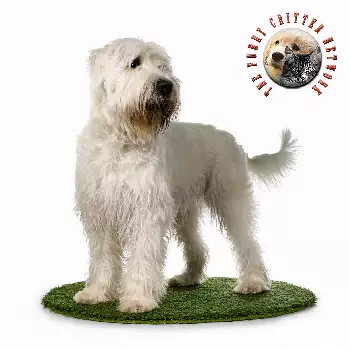
The Ardennes Cattle Dog looks like it was assembled for work rather than for the show ring, and that is precisely what it was. The overall impression is compact, powerful, and somewhat rough around the edges - a dog honed by centuries of demanding physical labor in some of the most challenging terrain in Belgium. There is no elegance here in the show-ring sense, and the breed takes no apology for that.
The head is strong and rather short, with a broad, flat skull and a well-defined stop emphasized by the characteristic bushy eyebrows. The muzzle is short but not snubbed, with a broad, fully black nose. The eyes are medium-sized and oval, set moderately close together, and as dark as possible - nearly black is the ideal. Yellow eyes are a disqualification. Full black pigmentation of the eye rims is required. The ears are triangular, rather small, and set high on the skull. Fully erect ears are the preference; semi-prick ears are tolerated but drop ears lying flat against the head are a disqualification.
The body is square in proportion - the distance from shoulder to buttock approximately equals the height at the withers. The chest is deep to the elbows and quite broad, providing the lung capacity needed for sustained herding work. The back is broad and firm, the topline level from withers to croup. There is little tuck-up, giving the dog a solid, substantial appearance without looking bloated. The tail is thick and set high; docked and natural lengths are equally acceptable under the standard.
Forehand and hindquarters are both well-muscled and moderately angulated. The feet are round and tight, with arched toes and thick dark pads that can handle rough ground without difficulty. The overall movement is purposeful and ground-covering - not flashy, but efficient and sustainable. Rear dewclaws should be removed.
The coat is the breed's most visually distinctive feature: coarse, tousled, and dense, with a thick undercoat beneath the wiry outer layer. The hair is approximately two and a half inches long over most of the body, shorter and flatter on the head and upper face. The mandatory beard and mustache are about two inches in length and should partially cover the corners of the eyes. These furnishings are not decorative afterthoughts - they provide genuine face protection during work in heavy brush and cold, wet weather. The undercoat is dense and full year-round, providing effective insulation against the cold, wet climate of the Ardennes.
The overall silhouette is compact and somewhat forbidding - not a breed that invites casual petting from strangers on first encounter, which suits its natural watchdog temperament well. The rugged appearance accurately communicates the dog's character.
Size is medium - not small enough to be confused with a terrier type, not large enough to be imposing alongside a Bouvier des Flandres. The compact, square-coupled build concentrates power in a frame that is agile enough for the demands of driving cattle across rough ground. The thick-boned structure gives the dog genuine physical presence that exceeds what its weight figure alone might suggest. Males weigh between 62 and 77 pounds; females run 49 to 62 pounds. The combination of dense coat and heavy bone means this dog looks and feels more substantial than the numbers on paper indicate.
Gait is evaluated without stacking by the handler - a standard requirement that reflects the breed's working identity. The correct movement is free and purposeful: ground-covering without exaggeration in any direction, with good reach in front and strong drive from behind. A dog that moves correctly can work all day without the mechanical inefficiency that leads to early fatigue or joint breakdown. Conformation faults are assessed specifically for their effect on working ability and long-term health, not for deviations from an aesthetic ideal.
Affectionate With Family
★★★★☆
Deeply loyal and attached to its people, the Ardennes Cattle Dog forms close bonds and is affectionate within the family circle. The warmth is reserved for those it knows and trusts.
Good With Young Children
★★★☆☆
Good with children it has grown up with, but the strong herding instinct and robust energy can be overwhelming for toddlers. Supervision and early socialization are important.
Good With Other Dogs
★★★☆☆
Generally manageable with dogs it knows, but same-sex dominance issues are documented. Early socialization reduces friction considerably.
Shedding Level
★★★☆☆
Light to moderate shedding most of the year, with heavier seasonal blows in spring and fall. Regular brushing controls the loose coat effectively.
Coat Grooming Frequency
★★★☆☆
The coarse double coat needs weekly brushing to prevent matting, with extra attention to the beard and eyebrow furnishings where tangles form most easily.
Drooling Level
★☆☆☆☆
Not a drooler. The breed is clean-mouthed and tidy.
Coat Type
★★★☆☆
A dense undercoat supports a coarse, tousled outer coat that sheds rain and resists debris from the field. The beard and eyebrows are functional as much as characteristic.
Openness To Strangers
★★☆☆☆
Reserved and watchful with people it does not know. This is a natural guardian trait that makes early socialization important for dogs living in busy households.
Playfulness Level
★★★☆☆
Curious and playful with people it trusts, though the play style tends toward the purposeful and active rather than silly. This is a working dog at heart.
Watchdog/Protective Nature
★★★★☆
Calm until there is reason not to be - the Ardennes Cattle Dog is a natural watchdog that takes its protective role seriously and does not back down when it senses a genuine threat.
Adaptability Level
★★★☆☆
Highly adaptable to working conditions and terrain, but needs meaningful activity. It does not adapt well to an inactive lifestyle regardless of the setting.
Trainability Level
★★★★☆
Intelligent and capable of learning quickly, but requires a consistent handler. The breed has an independent streak and will test authority if it senses inconsistency.