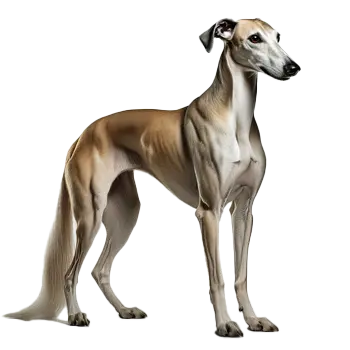
Quick Facts

πŸ• Breed Group
Hound Group
πŸ“ Size Category
Medium
πŸ“ Height
23-28 inches
βš–οΈ Weight
35-65 pounds
⏱️ Life Expectancy
12-15 years
πŸ§₯ Coat Type
Smooth or Feathered
🎨 Coat Colors
Any color including cream, white, fawn, red, black, and combinations
😊 Temperament
Reserved, dignified, gentle
πŸƒ Exercise Needs
High
πŸŽ“ Training Difficulty
Moderate
πŸ‘Ά Good with Children
Good with gentle children
🐾 Good with Other Pets
Moderate with proper socialization

Other Names & Breed Recognition

The Arabischer Windhund represents one of the most historically significant names for what the Western world knows as the Saluki. This German designation translates directly to Arabian Sighthound, reflecting the breed's Middle Eastern heritage and its primary hunting method of pursuing prey by sight rather than scent. Throughout history, this elegant breed has collected numerous names across different cultures and regions, each highlighting various aspects of its character or origin.

In English-speaking countries, the breed is most commonly recognized as the Saluki, a name derived from the ancient Arabian city of Saluki, though some historians debate whether the city or the dog came first. The breed is also known as the Persian Greyhound, the Gazelle Hound, and the Arabian Hound. These various appellations underscore the breed's geographic spread across the Middle East and its primary purpose as a coursing hound capable of catching swift desert game.

The breed's recognition extends far beyond its multiple names. As one of the oldest domesticated dog breeds, with ancestry dating back to ancient Mesopotamia around seven thousand years ago, the Arabischer Windhund holds a revered position in canine history. Archaeological evidence places these dogs alongside pharaohs in ancient Egypt, where they were so valued that they were mummified and entombed with their royal owners. Ancient carvings and artwork from Sumerian civilization show unmistakable representations of this breed, confirming their presence in human society since the dawn of civilization.

The breed's status in Islamic culture particularly distinguished it from other dogs. Considered a gift from Allah, the Arabischer Windhund was exempted from the general Islamic restriction on keeping dogs inside homes. Bedouin tribes treasured these dogs as family members, allowing them to sleep in tents and share the intimate spaces of daily life. This exceptional status reflected the breed's importance to survival in harsh desert environments, where their speed and endurance made the difference between feast and famine.

Arabischer Windhund Organizations & Standards

The American Kennel Club officially recognized the Saluki in 1927, establishing breed standards that honor the diverse appearance variations developed across different desert regions. The standard acknowledges both smooth and feathered coat varieties, recognizing that traditional breeding focused on function over uniform appearance. This unusual flexibility in the breed standard reflects historical respect for regional differences that emerged across vast geographic territories.

Unlike many breeds developed in recent centuries, the Arabischer Windhund presents unique challenges for standardization because authentic breeding continued in isolated desert communities for millennia before Western dog fanciers encountered them. When the breed first arrived in England during the early twentieth century, enthusiasts wisely chose to preserve the natural variation rather than imposing artificial uniformity. This decision maintained genetic diversity and honored the breed's heritage as a working hunter adapted to different terrains and prey species.

The breed standard emphasizes the essential greyhound-like build that enables extraordinary speed and endurance. Key characteristics include long, slender legs, a relatively narrow body, deep chest, slightly arched loin, small waist, and long tail. The head should be long and narrow with a broad skull, and the ears hang close to the head. Eye color ranges from dark hazel to brown, conveying an expression of gentle dignity. Movement should be smooth and effortless, suggesting the breed's ability to maintain high speeds over considerable distances.

Height variations in the standard are notably broad, ranging from twenty-three to twenty-eight inches at the shoulder, with most contemporary dogs trending toward the taller end. Weight proportions vary from approximately thirty-five pounds for small females to sixty-five pounds for large males. The standard accepts all colors and color combinations, from pure white to black, including cream, fawn, red, grizzle, and various particolor patterns. This inclusive approach to color reflects the breed's desert origins, where camouflage and survival mattered more than aesthetic preferences.

International kennel clubs have likewise embraced standards that honor historical diversity while establishing parameters for health and soundness. The breed should move with grace and efficiency, demonstrating the athletic capability required for coursing game across challenging terrain. Judges evaluate structural soundness, movement quality, and breed type while respecting individual variation within acceptable parameters.

  • American Kennel Club (AKC): "Recognized in 1927 in the Hound Group"
  • United Kennel Club (UKC): "Recognized in the Sighthound and Pariah Group"
  • FΓ©dΓ©ration Cynologique Internationale (FCI): "Recognized in 1966 in Group 10, Section 1 - Long-haired or fringed Sighthounds"
  • The Kennel Club (UK): "Recognized in the Hound Group, first registered in early 1900s"
  • Canadian Kennel Club (CKC): "Recognized in the Hound Group"

Arabischer Windhund Physical Description

The Arabischer Windhund embodies elegance and athleticism in a distinctive package designed for speed and endurance. The overall impression should be one of grace and balance, with a streamlined silhouette that suggests explosive acceleration and sustained pursuit capability. Every aspect of the physical structure serves the purpose of efficient movement across varied terrain in pursuit of swift prey.

The head presents a refined, aristocratic appearance with a long, narrow skull that broadens slightly between the ears. The stop is barely perceptible, maintaining clean lines from skull to muzzle. Dark, expressive eyes convey intelligence and sensitivity, set well apart and gazing forward with quiet awareness. The nose is large and typically black, though lighter colors appear in dogs with pale coat colors. Ears hang close to the head, covered with long, silky hair in feathered varieties, creating an elegant frame for the face.

The body construction reflects centuries of selective breeding for coursing performance. The neck arches gracefully from well-laid-back shoulders, providing the reach necessary for sustained galloping. The chest is deep and moderately narrow, allowing for efficient lung expansion without impeding leg movement. Ribs are well-sprung in their upper portions but flatten toward the bottom, creating the characteristic tucked-up appearance in the loin region. The back is fairly broad and slightly arched over the loin, providing spring and flexibility during high-speed pursuit.

Legs are long, straight, and slender, with strong yet refined bone structure. Front legs stand well under the body, while rear legs show moderate angulation that provides powerful drive. Feet are moderately long with well-arched toes and thick pads that withstand rocky terrain. The tail is set low and carried naturally with a gentle curve, often with a distinctive ring at the tip in feathered varieties.

Coat texture and pattern distinguish the two variety types. Smooth Salukis feature short, silky hair over the entire body with minimal feathering. Feathered Salukis display long, silky hair on the ears, tail, between the toes, and sometimes on the backs of the thighs and under the throat, while the body coat remains short and smooth. Both varieties possess a soft, flowing coat texture that provides some protection from desert sun and thorny vegetation while remaining sleek and manageable. The breed's lean physique often shows hip bones and last ribs prominently, which is normal and healthy for this body type.

Affection Level
β˜… β˜… β˜… β˜… β˜…
This breed forms deep bonds with family members and shows devotion through quiet companionship. They prefer sitting beside you rather than on your lap, offering loyal presence without being overly demonstrative. Their affection style is subtle yet genuine.
Good with Children
These dogs exhibit remarkable gentleness with children when properly socialized. They naturally understand the need for care around small people and demonstrate patience. Best suited for families with older children who respect their sensitive nature.
Good with Other Dogs
β˜… β˜… β˜… β˜… β˜…
Generally peaceful with other canines, especially when raised together. They particularly enjoy the company of other sighthounds and typically avoid confrontation. Their calm demeanor makes them pleasant companions in multi-dog households.
Good with Other Pets
Strong hunting instincts make them unreliable around small animals like rabbits, rodents, and birds. Cats can sometimes work if raised together from puppyhood, but supervision remains essential. Their prey drive is deeply ingrained.
Playfulness
These dogs enjoy moderate play sessions but aren't constantly seeking entertainment. They appreciate interactive games and running opportunities but also value quiet downtime. Their play style tends to be elegant rather than boisterous.
Energy Level
Built for speed and endurance, they require daily opportunities to run freely in safe, enclosed areas. While calm indoors, they need vigorous exercise to maintain physical and mental health. Sprint sessions satisfy their athletic nature.
Trainability
Intelligent but independent-minded, they require patient, positive-reinforcement training methods. Harsh corrections damage their sensitive spirits and create resistance. They excel when training feels like partnership rather than obedience demands.
Intelligence
These dogs possess keen problem-solving abilities and quick learning when properly motivated. Their intelligence manifests in subtle observation and strategic thinking. They understand situations deeply but may choose independence over compliance.
Tendency to Bark
Remarkably quiet dogs that rarely vocalize without purpose. They make adequate watchdogs by alerting to strangers but won't bark excessively. Their reserved nature extends to their vocal habits, preferring silence.
Amount of Shedding
These dogs shed minimally throughout the year with slightly heavier periods during seasonal changes. Their short, silky coat doesn't produce excessive hair accumulation. Weekly brushing typically manages loose fur effectively.
Grooming Needs
Low-maintenance coat requires weekly brushing to maintain shine and remove debris. Feathered varieties need extra attention to ear and tail hair to prevent tangling. They rarely develop strong odor and need bathing only when dirty.
Prey Drive
Exceptionally strong hunting instincts drive them to chase anything that moves quickly. Once locked onto potential prey, recall becomes nearly impossible. They must remain leashed or within secure fencing to prevent dangerous pursuit.

Arabischer Windhund History & Development

The Arabischer Windhund stands among the most ancient of all domesticated dog breeds, with verified lineage extending back at least seven thousand years to the cradle of civilization in Mesopotamia and ancient Egypt. Archaeological discoveries have unearthed carvings and artwork depicting unmistakable representations of these elegant sighthounds, confirming their presence alongside humanity's earliest organized societies. This breed walked beside pharaohs, shared tents with Bedouin nomads, and served as valued hunting companions for Persian nobility throughout millennia of human history.

Ancient Egyptian tombs contain elaborate carvings and paintings showing dogs identical to modern Salukis, often depicted hunting gazelles alongside their royal masters. The discovery of King Tutankhamun's tomb revealed numerous clear illustrations of these dogs, reflecting the young pharaoh's passion for hunting with his cherished hounds. So revered were these dogs in Egyptian culture that they were frequently mummified and entombed with their owners, ensuring companionship in the afterlife. This extraordinary honor was rarely extended to animals and demonstrates the exceptional status these dogs held in ancient society.

The breed's distribution across the Middle East and North Africa created regional variations as dogs adapted to different terrains, climate conditions, and prey species. Bedouin tribes of the Arabian Peninsula developed strains suited to desert hunting, while Persian varieties evolved in the mountainous regions of modern-day Iran. Each isolated population maintained breeding programs focused on performance, selecting dogs based on speed, endurance, intelligence, and hunting success rather than appearance conformity. This practical approach created diversity within the breed while maintaining essential sighthound characteristics.

For Islamic peoples, the Saluki held unique religious significance. Unlike other dogs, which traditional Islamic teaching generally excluded from indoor living spaces, the Saluki was considered a gift from Allah and welcomed into family tents. This special status reflected the breed's importance to survival in harsh desert environments where successful hunting meant the difference between prosperity and starvation. Bedouin families treasured their Salukis, carefully breeding them and treating them as family members entitled to the same care and protection as children.

The breed remained relatively unknown in Europe until the late nineteenth century when Western travelers began encountering these remarkable dogs during Middle Eastern expeditions. Florence Amherst brought a breeding pair to England around 1895, marking the beginning of Western interest in the breed. However, serious breeding programs didn't commence until the early twentieth century when returning military personnel and diplomats brought additional dogs to Britain following World War I. The English Kennel Club officially recognized the breed in 1922, establishing the first Western breed standard.

American recognition followed in 1927 when the American Kennel Club accepted the Saluki into its hound group. Early American fanciers worked diligently to maintain the breed's authentic character while adapting to modern show requirements. The transition from working hunter to companion animal and show dog proceeded gradually, with breeders striving to preserve the speed, endurance, and independent temperament that defined the breed for thousands of years.

Throughout the twentieth century, the breed gained popularity among those attracted to its exotic heritage, elegant appearance, and gentle temperament. However, the Saluki never achieved widespread popularity, partly due to its specialized exercise requirements and independent nature. This limited popularity proved beneficial, helping the breed avoid many of the health problems that afflict breeds subjected to intensive commercial breeding.

Today, the Arabischer Windhund continues to attract devoted enthusiasts who appreciate its ancient heritage and distinctive character. While some dogs still participate in lure coursing and racing, most serve primarily as companions, bringing their serene presence and noble bearing to modern homes. The breed maintains strong connections to its working past, with many dogs retaining the speed, endurance, and hunting instincts that made their ancestors invaluable to desert peoples thousands of years ago.

Arabischer Windhund Temperament & Personality

The Arabischer Windhund presents a complex and sophisticated temperament that reflects thousands of years living in close partnership with humans across challenging desert environments. These dogs combine fierce independence with deep devotion, creating a unique personality that captivates those who understand and appreciate their subtle nature. Unlike breeds developed to eagerly please their owners, these ancient sighthounds maintain a dignified reserve and make decisions based on their own assessment of situations.

With family members, the breed displays quiet affection and unwavering loyalty. They form profound bonds with their people and genuinely enjoy companionship, though they express attachment differently than more demonstrative breeds. Rather than demanding constant attention or following owners from room to room, they prefer settling nearby where they can observe and remain available. This independent closeness characterizes their relationship style, offering devoted presence without neediness or excessive enthusiasm.

Their sensitivity runs deep, making them highly attuned to household moods and emotional atmospheres. They perceive subtle changes in family dynamics and respond to stress or conflict with visible concern. This emotional intelligence makes them wonderful companions for those dealing with mental health challenges or seeking gentle emotional support. However, their sensitivity also means harsh corrections or raised voices can damage their trust and create lasting behavioral problems.

Toward strangers, the breed typically exhibits reserve or aloofness, rarely approaching unfamiliar people with enthusiasm. This cautious nature stems from their independent heritage rather than fearfulness or aggression. Early socialization helps them develop confidence in various situations, though most dogs retain some degree of wariness around new people. They make adequate watchdogs, alerting families to unusual activities, but their gentle nature and lack of territorial aggression make them unsuitable as guard dogs.

Their intelligence manifests in observation and strategic thinking rather than eager obedience. They study situations carefully before responding and often choose independent action over compliance with commands they consider unnecessary. This thoughtful approach can frustrate owners expecting instant obedience, but it reflects the breed's problem-solving heritage where success depended on making split-second decisions during hunts. Training must respect their intelligence and autonomy, using positive methods that make cooperation appealing rather than mandatory.

The prey drive dominates much of their behavioral expression. Movement triggers intense focus and pursuit instincts that override all other considerations. A rabbit darting across a field, a squirrel scaling a tree, or even a plastic bag blowing in the wind can transform a calm companion into a focused predator. This instinct creates significant management challenges, requiring secure fencing and reliable leash control. Owners must accept that recall training will never completely overcome prey drive when these dogs lock onto potential quarry.

Indoors, the breed typically displays remarkable calmness, often spending hours lounging in comfortable spots while observing household activities. This serene presence makes them surprisingly suitable for apartment living, provided exercise needs are met elsewhere. They rarely display hyperactivity or destructive tendencies when properly exercised, preferring dignified rest between activity periods. Many dogs enjoy elevated resting spots where they can survey their territory while remaining comfortable.

Arabischer Windhund Family Life & Living Requirements

Integrating an Arabischer Windhund into family life requires understanding their unique needs and behavioral characteristics. These ancient sighthounds thrive in homes that provide both physical exercise opportunities and emotional security, creating balanced environments where their gentle nature flourishes alongside their athletic requirements. Success depends on matching the breed's temperament with appropriate living situations and family dynamics.

Housing considerations begin with secure fencing. These dogs require six-foot fencing with buried extensions or concrete footings to prevent digging escapes. Their exceptional jumping ability and strong prey drive create constant escape motivation when interesting sights or sounds beckon beyond boundaries. Chain-link, wooden privacy, or other solid fencing works well, but invisible electronic fencing proves completely inadequate because prey drive easily overrides discomfort when chase instinct engages. Apartment living can succeed if owners commit to providing adequate exercise through daily trips to secure dog parks or private fenced areas.

Family members must understand the breed's gentle sensitivity and avoid harsh treatment or loud confrontations. Children should be taught appropriate interaction methods, including respect for the dog's personal space and calm approach techniques. The breed generally tolerates respectful children well, showing remarkable patience and gentleness. However, their lean build makes them vulnerable to rough handling, and their sensitive nature means chaotic households with constant commotion may create stress. Families with older, calmer children typically find better compatibility than those with very young, energetic toddlers.

Multi-pet households present challenges due to strong prey instincts. Other dogs, particularly fellow sighthounds, usually coexist peacefully when proper introductions and management occur. The breed rarely displays dog aggression and typically avoids confrontation. However, small pets including cats, rabbits, ferrets, and birds remain at risk unless dogs are raised with them from puppyhood, and even then, supervision remains essential. Many owners successfully keep cats and Salukis together, but introducing adult dogs to small animals requires extreme caution and realistic expectations.

Daily exercise routines must include opportunities for free running at full speed in secure areas. While leash walks provide mental stimulation and bathroom opportunities, they don't satisfy the breed's need for sprint sessions. Access to fenced dog parks, private property, or lure coursing facilities becomes essential for physical and mental health. Without adequate exercise, these dogs may develop behavioral problems including excessive digging, destructive chewing, or anxious behaviors. Most adults thrive with two daily exercise sessions totaling at least an hour, though individual needs vary.

The breed's independence extends to sleeping arrangements, with most dogs appreciating their own comfortable beds rather than seeking constant physical contact. However, they enjoy having their sleeping areas near family gathering spaces where they can observe activities. Many dogs appreciate elevated sleeping platforms or furniture access, though individual preferences vary. Their lean build and low body fat make soft bedding essential for comfort and joint health.

Travel and separation tolerance varies significantly among individuals. Some dogs adapt well to temporary boarding or travel accommodations, while others experience considerable stress when separated from familiar people and environments. Many dogs struggle with extended separation, forming such strong bonds with family members that absence creates anxiety. Owners should build separation tolerance gradually and consider whether their lifestyle accommodates a dog that may not handle frequent travel or long work hours well.

Arabischer Windhund Training & Exercise Needs

Training an Arabischer Windhund requires patience, creativity, and deep respect for the breed's independent nature. These ancient sighthounds possess keen intelligence but lack the eager-to-please attitude common in many working breeds. Success comes from building partnership rather than enforcing obedience, using positive reinforcement methods that make cooperation rewarding rather than mandatory. Traditional correction-based training approaches typically fail with this sensitive breed, often creating resistance or breaking trust.

Early socialization forms the foundation for well-adjusted adults. Puppies should experience diverse people, animals, environments, and situations during their critical development period between eight and sixteen weeks of age. Positive exposure to various stimuli builds confidence and reduces the tendency toward excessive shyness or fearfulness. Puppy kindergarten classes provide excellent socialization opportunities while introducing basic training concepts in a structured environment. Choosing classes that emphasize positive methods and respect individual temperament ensures appropriate learning experiences.

Basic obedience training should begin early using reward-based methods that keep sessions short, fun, and productive. These dogs respond well to treats, toys, and praise but quickly lose interest in repetitive drills or harsh corrections. Training sessions lasting five to ten minutes, repeated several times daily, maintain engagement better than lengthy practice periods. Incorporating training into daily activities rather than treating it as isolated work makes learning feel natural and relevant.

Recall training deserves special attention despite inevitable limitations. While these dogs can learn to come when called in low-distraction environments, prey drive will override recall when they lock onto moving targets. Realistic expectations prevent frustration and dangerous situations. Practice recall extensively in controlled settings, gradually increasing distractions, but never trust off-leash reliability near roads, unfenced areas, or places where wildlife might appear. The best recall training in the world cannot overcome thousands of years of hunting instinct.

Exercise requirements extend beyond simple walks, demanding opportunities for high-speed running in secure areas. These dogs were bred for sustained pursuit across desert terrain, and their bodies crave the physical expression of that heritage. Daily sprint sessions in fenced dog parks or private yards satisfy both physical and mental needs. Lure coursing provides ideal exercise, allowing dogs to chase mechanical lures across fields while safely expressing hunting behaviors. Many clubs offer coursing opportunities, and the breed excels in this sport.

Leash manners training proves essential because the breed's strong prey drive makes controlled walking challenging. Teaching loose-leash walking requires consistency and patience, using positive reinforcement when dogs maintain appropriate position. Expecting perfect heel position seems unrealistic for most individuals, but achieving reliable forward movement without pulling creates enjoyable walks. Front-clip harnesses often help manage pulling tendencies while training progresses.

Crate training benefits both dogs and owners, providing safe containment during unsupervised periods and travel. These dogs generally accept crates readily when introduced properly using positive associations. Some individuals appreciate crates as secure dens even after training completes, voluntarily seeking their crates for rest and security. Others prefer open sleeping areas once house-training and destructive behavior concerns pass. Individual preferences should guide long-term crate use decisions.

Mental stimulation through puzzle toys, scent games, and training challenges helps prevent boredom-related behavior problems. These intelligent dogs need cognitive engagement beyond physical exercise. Interactive feeding toys, hide-and-seek games with treats or toys, and regular training sessions introducing new skills provide mental workouts that tire minds as effectively as physical exercise tires bodies.

Arabischer Windhund Health Concerns

The Arabischer Windhund generally enjoys excellent health and longevity, with many individuals living twelve to fifteen years or longer when provided proper care. This breed's ancient heritage and limited commercial breeding have protected it from many genetic problems plaguing more popular breeds. However, responsible ownership requires awareness of health conditions that can affect these dogs and proactive veterinary care to maximize lifespan and quality of life.

Heart disease represents a significant concern, particularly dilated cardiomyopathy where the heart muscle weakens and enlarges, reducing pumping efficiency. Early detection through regular veterinary examinations allows for medication management that can extend comfortable life for years. Annual cardiac evaluations including auscultation and potentially echocardiography help identify problems before symptoms develop. Monitoring for signs like coughing, exercise intolerance, or labored breathing enables prompt intervention when issues arise.

Progressive retinal atrophy affects some lines, causing gradual vision loss that eventually leads to complete blindness. This genetic condition typically manifests as difficulty seeing in low light initially, progressing to total sight loss over months or years. No treatment currently exists, though affected dogs usually adapt remarkably well to blindness in familiar environments. Responsible breeders screen breeding stock to reduce disease incidence. Annual eye examinations by veterinary ophthalmologists detect early changes and other ocular conditions.

Hip dysplasia occurs less frequently in this breed than many large dogs but deserves monitoring. This developmental condition where hip joints don't form properly can cause pain and mobility problems. Maintaining lean body condition reduces stress on joints, and early detection allows for management through medication, physical therapy, or surgical intervention when necessary. Regular veterinary check-ups including gait evaluation help identify developing problems.

The breed shows sensitivity to anesthesia, requiring veterinarians familiar with sighthound physiology when procedures requiring sedation become necessary. Their lean body composition and unique metabolism affect drug processing, making standard dosing protocols potentially dangerous. Always inform veterinary staff about breed-specific anesthesia concerns before any procedure, and choose veterinarians experienced with sighthounds when possible.

Bloat, technically called gastric dilatation-volvulus, poses life-threatening risk to deep-chested breeds. This emergency condition occurs when the stomach fills with gas and potentially twists, cutting off blood supply. Immediate veterinary intervention proves essential for survival. Preventive measures include feeding multiple small meals rather than one large portion, avoiding vigorous exercise immediately after eating, and using elevated food bowls cautiously as research shows mixed results regarding prevention benefits.

Thyroid disorders occasionally affect the breed, potentially causing weight changes, coat problems, or behavioral shifts. Simple blood tests diagnose thyroid function, and supplementation effectively manages deficiencies. Regular screening as part of wellness examinations identifies these conditions before severe symptoms develop. Weight management through appropriate feeding and regular exercise prevents obesity-related health problems including diabetes, joint stress, and reduced lifespan.

Dental disease prevention requires consistent home care combined with regular professional cleanings. Periodontal disease affects overall health beyond oral comfort, potentially contributing to heart and kidney problems when bacteria enter the bloodstream. Daily teeth brushing, dental treats, and veterinary monitoring maintain oral health throughout life. Parasite prevention through year-round heartworm medication, flea and tick control, and regular fecal examinations protects against internal and external parasites that compromise health and comfort. Vaccinations appropriate for individual risk factors and local disease prevalence maintain immunity against preventable illnesses.

Regular veterinary care including annual examinations for young adults and semi-annual visits for senior dogs allows early problem detection when treatment proves most effective. Blood work screening identifies organ function changes before clinical symptoms appear. Maintaining healthy weight, providing appropriate exercise, feeding quality nutrition, and ensuring mental stimulation all contribute to longevity and quality of life throughout the aging process.

Common Health Issues

  • Heart disease represents a significant concern, particularly dilated cardiomyopathy where the heart muscle weakens and enlarges, reducing pumping efficiency.
  • Hip dysplasia occurs less frequently in this breed than many large dogs but deserves monitoring.
  • Dental disease prevention requires consistent home care combined with regular professional cleanings.

Preventive Care & Health Monitoring

  • Early detection through regular veterinary examinations allows for medication management that can extend comfortable life for years.
  • Monitoring for signs like coughing, exercise intolerance, or labored breathing enables prompt intervention when issues arise.
  • Regular veterinary check-ups including gait evaluation help identify developing problems.
  • Preventive measures include feeding multiple small meals rather than one large portion, avoiding vigorous exercise immediately after eating, and using elevated food bowls cautiously as research shows mixed results regarding prevention benefits.

Regular veterinary check-ups and preventive care are essential for maintaining your Arabischer Windhund's health and longevity.

Arabischer Windhund Grooming & Maintenance

The Arabischer Windhund ranks among the most low-maintenance breeds regarding grooming requirements, though regular care maintains health and appearance. Their naturally clean habits and minimal coat care needs make them ideal for owners seeking elegant dogs without extensive grooming commitments. Both smooth and feathered varieties require similar basic care with slight differences in brushing techniques and frequency.

Coat care begins with weekly brushing using a soft bristle brush or grooming mitt. This removes loose hair, distributes natural oils, and provides bonding time while checking for skin problems or parasites. Feathered varieties benefit from extra attention to ear fringes, leg feathering, and tail plumes where tangles may develop. A metal comb helps work through these longer sections gently, preventing mats that require cutting. Most dogs naturally keep themselves remarkably clean, often spending time grooming like cats.

Bathing needs remain minimal because the breed rarely develops strong odor. Most dogs require bathing only when visibly dirty or after rolling in unpleasant substances. Overbathing strips natural oils that protect skin and maintain coat condition. Using mild dog shampoo formulated for sensitive skin prevents irritation when baths become necessary. Thorough rinsing removes all product residue, and towel drying usually suffices for the short coat. Some feathered dogs appreciate blow-drying on cool settings to fluff ear and tail feathering.

Nail trimming deserves attention every two to three weeks, as nails that grow too long cause discomfort and affect gait. These dogs often dislike nail handling, making early positive conditioning essential. Grinding tools create smoother edges than clippers and allow gradual shortening that many dogs tolerate better than sudden clip pressure. Regular nail maintenance prevents overgrowth that makes trimming painful and difficult. If nails click on hard floors, they need shortening.

Dental care prevents serious health problems, requiring daily teeth brushing with dog-specific toothpaste. Starting this routine during puppyhood establishes cooperation before resistance develops. Dental treats and toys supplement but don't replace brushing for maintaining oral health. Regular veterinary dental examinations identify problems early, and professional cleanings remove accumulated tartar that home care cannot address.

Ear care involves weekly inspection and cleaning when needed. The hanging ears create warm, moist environments that can harbor infections, especially in dogs with heavy ear feathering. Gentle cleaning with veterinary-approved solutions removes debris and helps prevent problems. Never insert anything deep into ear canals, limiting cleaning to visible portions. Any signs of redness, odor, or excessive discharge warrant veterinary evaluation.

Skin health deserves monitoring because the breed's lean build and short coat offer little protection from environmental irritants. Regular inspection during grooming sessions identifies hot spots, abrasions, or unusual lumps early. Their thin skin tears easily, making protection from thorny vegetation or rough play important. Sunscreen applied to light-colored or exposed skin areas prevents sunburn during extended outdoor exposure.

Seasonal coat changes bring slightly increased shedding, though amounts remain modest compared to heavy-coated breeds. Increasing brushing frequency during these periods removes loose hair before it settles throughout the home. Regular grooming sessions provide opportunities to check overall condition, noticing weight changes, developing lumps, or other concerns requiring attention.

Arabischer Windhund Rescue Organizations

If you're looking to adopt a Arabischer Windhund, consider contacting these breed-specific rescue organizations:

Saluki Tree of Life Alliance (STOLA)

STOLA serves as the United States National Saluki Rescue Organization, incorporated in 2000 as a registered 501(c)(3) charity. This all-volunteer organization dedicates itself to rescuing, rehabilitating, and rehoming Salukis across the country. All donations directly support their rescue program, providing medical care, foster homes, and placement services for dogs in need. They work with shelters, owners, and breed enthusiasts to ensure every Saluki finds a safe, appropriate forever home.

Visit Website
Luke's Hidden Haven Saluki Hound Sanctuary

Located in Pennsylvania, this facility represents the largest Saluki rescue in the United States. Set on Battle Creek Farm in the Endless Mountains, this million-dollar sanctuary provides high-fenced running areas, comfortable housing, expert veterinary care, and lifetime care options for Salukis. The sanctuary has rescued and placed over 1,100 Salukis from the Middle East, United States, and other countries over twenty years of dedicated service.

Visit Website
Gentle Giants Rescue - Saluki Division

This rescue organization specializes in large and giant breed dogs including sighthounds like Salukis. They rescue dogs regardless of health status, providing necessary medical care before placement in loving homes. Operating as inside family members, they ensure every rescued Saluki receives comprehensive evaluation, veterinary care, and behavioral assessment before adoption to compatible families who understand the breed's unique needs.

Visit Website

"Don't Shop... Please Adopt" - There are many wonderful Arabischer Windhunds waiting for their forever homes.