Alabay

Central Asian Shepherd Dog

Quick Facts

🐕 Breed Group
Working Group
📏 Size Category
Giant
📏 Height
Males: 26-32 inches, Females: 24-27 inches
⚖️ Weight
Males: 110-170 pounds, Females: 88-130 pounds
⏱️ Life Expectancy
12-15 years
🧣 Coat Type
Double coat, short to medium length
🎨 Coat Colors
White, fawn, brindle, black, gray, piebald
😀 Temperament
Bold, independent, confident, deeply territorial
🏃 Exercise Needs
Moderate - space and purpose more important than distance
🎓 Training Difficulty
Challenging - requires experienced, confident handler
👶 Good with Children
Good with family children when raised together from puppyhood
🐾 Good with Other Pets
Can coexist with proper early socialization; dominant with other dogs

Other Names & Breed Recognition

Alabay is an alternate spelling of Alabai, both names rooted in the Turkmen language and used to refer to the same breed - the Central Asian Shepherd Dog. If you have been searching for information on the Alabay and finding it alongside results for the Alabai, that is correct: these are not two different breeds but two different transliterations of the same Turkmen word into the English alphabet. The variation in spelling occurs because Turkmen uses its own script, and the transliteration of that script into Latin letters does not follow a single universal standard. Both Alabai and Alabay appear in breed literature, kennel names, breed club documents, and online communities, and both refer to the same ancient guardian dog.

The formal international name for this breed is Central Asian Shepherd Dog, used by the FCI for international registration and by the American Kennel Club for its Working Group listing. The informal Turkmen names - Alabai and Alabay - carry cultural significance that the formal name does not quite capture. In Turkmenistan, this dog is more than a registered breed; it is a national emblem. The country maintains an official Alabay Day celebration, and a gold statue of the breed stands in the capital Ashgabat alongside a statue of the Akhal-Teke horse - another of Turkmenistan's national symbols. The choice of the Alabay spelling in the name of that celebration and statue reflects its use in official Turkmen government documentation.

Other names for the breed depend on the language and region. The Russian name Turkmensky Volkodav - Turkmen wolf-crusher - describes what the dog was built to do with no embellishment. In Kazakhstan it is known as Tobet. The name Central Asian Ovcharka, using the Russian word for shepherd dog, appears in older literature and among Russian breed community members. Sage Koochee is used in Afghanistan. Each regional name reflects the same dog evaluated through a different cultural lens.

In the United States, dogs are registered as Central Asian Shepherd Dogs through the AKC Working Group, where the breed has been recognized since 1996. The UKC uses the same formal name within its Guardian Dogs group. Whether you know the breed as Alabay, Alabai, or Central Asian Shepherd Dog, you are searching for the same ancient and formidable working guardian.

Alabay Organizations & Standards

The Central Asian Shepherd Dog, known informally as the Alabay, is governed formally in the United States by the American Kennel Club, where it sits in the Working Group. The international standard is maintained by the FCI under Group 2, Section 2.2, classifying the breed alongside other Molossoid mountain-type dogs. The FCI standard is the benchmark used by breeders across Europe and internationally, and it describes the breed's required physical characteristics, working temperament, and evaluation criteria in detail.

The breed standard calls for a large to giant dog with a massive, rectangular head, a broad and deep chest, a strong level back, and a coat that is practical and functional rather than decorative. The body should be slightly longer than it is tall. Males must be significantly larger and more powerful than females - the sexual dimorphism is not just acceptable but expected and required by the standard. A male Alabay that does not substantially outsize a female of the same bloodline is considered below standard in most serious evaluation contexts.

Russia has historically maintained one of the most active breeding and evaluation programs for this breed outside of Central Asia itself. The RKF - Russia's FCI-recognized kennel club - has required mandatory temperament testing and working titles for breeding stock in addition to conformation show ratings. This multi-dimensional evaluation approach, which tests whether the dog actually functions as a guardian rather than simply looking correct, is considered by many Alabay breeders internationally to be the most appropriate framework for a breed whose entire existence has been defined by working performance.

Health screening recommendations include hip evaluation through OFA or PennHIP protocols for all breeding stock, given the large breed's documented susceptibility to joint dysplasia. Cardiac screening is recommended. Weight management throughout the dog's life is essential to protect joint health. The rare but documented hereditary skin condition dystrophic epidermolysis bullosa is a known concern in the breed, and breeders should be aware of its presence and work to exclude affected and carrier dogs from their breeding programs. Regular ear inspections help prevent infection in drop-eared individuals.

Puppies from properly vetted breeders in North America increasingly come with documented OFA hip results for both parents, CERF or OFA eye evaluations where applicable, and evidence of the breeder's working relationship with an established Central Asian or Russian bloodline. This documentation trail matters because the Alabay's rarity in the United States means that buyers have limited ability to verify claims through local breeder reputation alone. A breeder who cannot produce health clearances or who cannot trace the ancestry of their dogs to recognized Central Asian or Russian lines is a warning sign worth taking seriously.

Kennel Club Recognition

  • American Kennel Club (AKC): Recognized in 1996, Working Group
  • United Kennel Club (UKC): Recognized, Guardian Dogs
  • FCI: Recognized, Group 2 - Pinscher and Schnauzer

Alabay Physical Description

If you are seeing an Alabay in person for the first time, the experience is immediately different from encountering most other large dog breeds. The scale is part of it - males commonly exceed 130 pounds, and some individuals from traditional Central Asian bloodlines approach 170 - but the more striking thing is the complete absence of nervous energy. The Alabay does not bark, fidget, or posture. It observes. That quality of calm, watchful self-possession in a dog of this size is what makes the breed genuinely arresting to encounter.

The head is massive and bear-like, broad at the skull with a moderately short, wide muzzle. The stop is defined but not extreme. The jaws are heavy and strong. The eyes are typically dark, set wide apart, and carry that characteristic watchful expression - calm, steady, and missing nothing. The neck is short and thick, supported by enormous musculature, and in fully mature males it is often surrounded by heavier coat forming a lion-like ruff that adds to the overall impression of density and substance.

The ears are naturally drop or fold ears, carried against the sides of the head. Historical working practice included ear cropping, based on the belief that smaller ear profile reduced vulnerability to injury from wolf or predator bites. This practice is now legally restricted or culturally discouraged in most countries, and the natural ear is the standard in modern breeding programs outside the breed's traditional homeland regions.

The body is slightly rectangular - the length from chest to rump slightly exceeding the height at the shoulder. The chest is broad and deep, the back strong and level, and the overall musculature substantial throughout. Front and rear legs are straight and well-boned. Feet are large, compact, and tough. The tail is long and saber-like; some working dogs have docked tails from traditional practice, but natural tails are increasingly the norm. The hindquarters are powerfully developed, giving the dog the strength to cover rough terrain with endurance.

The double coat comes in short or medium length depending on the dog's regional origin. Short-coated individuals have a dense, relatively flat coat with a thick undercoat. Medium-length individuals carry heavier coat on the neck, tail, and rear of the legs. Both coat types are double-layered and designed for the extreme temperature swings of Central Asian climate. Colors span a wide range including white, fawn, gray, brindle, black, and piebald combinations in various shades and patterns.

Sexual dimorphism is one of the breed's most consistent characteristics. Mature males are substantially heavier, broader in the head, and more powerful in overall structure than females of the same bloodline. A well-bred female Alabay is an impressive dog in her own right, but she looks distinctly different in scale and heaviness from a mature male. This difference is deliberate and required by the breed standard rather than being a variation to work against.

The Alabay in motion is worth observing carefully, because movement tells you a lot about construction. This is not a breed that trots in a flashy, high-stepping way designed to impress in a show ring - it moves with the ground-covering efficiency of a dog that needs to patrol large territory without exhausting itself. The stride is long, the back stays relatively level, and the overall impression is of mechanical efficiency rather than athletic display. A dog that moves with exaggerated action or appears to expend a lot of energy to cover ground is not moving correctly for the breed's working function.

Size within the breed varies considerably depending on regional bloodline. Dogs from Turkmenistan and Kazakhstan often run larger than dogs from Russian breeding programs, and Russian-bred dogs sometimes differ in head type and bone from Central Asian imports. This variation is a feature of the breed's diverse geographic origin rather than a flaw - the Central Asian Shepherd Dog is not a single tightly standardized type but a family of working guardian dogs united by common function and shared ancestry, with regional adaptation creating real variation in how the breed looks across its range.

Affectionate With Family
The Alabay shows deep, calm devotion to those it guards. With its family it is warm and present; away from them it is watchful. The fierce guardian quality disappears entirely inside the circle of trust this dog maintains.
Good With Young Children
Raised from puppyhood with children, the Alabay is a steady and protective presence. Its size demands adult supervision with very young children - an inadvertent collision with a toddler can injure without any aggression involved.
Good With Other Dogs
Strong dominant instincts make the Alabay challenging in multi-dog households, particularly with same-sex pairings. Careful introductions and stable household structure are essential for managing this successfully.
Shedding Level
The Alabay sheds steadily year-round with heavier seasonal coat blows. For a dog of its size, the shedding volume is manageable with regular brushing but should not be underestimated.
Coat Grooming Frequency
Weekly brushing handles routine coat care for the Alabay, with daily attention needed during seasonal blows. This is a practical working coat that does not require elaborate grooming.
Drooling Level
Moderate drooling is expected - less than in loose-lipped mastiff breeds, but the Alabay's jaw structure means some drool after drinking or exertion is normal.
Coat Type
The Alabay's double coat comes in short or medium length depending on regional origin. Dense, weather-resistant, and purpose-built for Central Asian climate extremes.
Openness To Strangers
Wariness of strangers is the Alabay's foundational trait - it is what the breed was built for. Unfamiliar people entering this dog's territory will be assessed seriously, not welcomed with open curiosity.
Playfulness Level
The Alabay is a serious guardian rather than a playful companion. It has genuine warmth for its family but approaches the world with measured purpose rather than exuberant playfulness.
Watchdog/Protective Nature
Everything about the Alabay was shaped by the need to guard. Its presence alone deters threats, and its willingness to act when genuine danger arises is absolute and well-documented over centuries of working use.
Adaptability Level
Built for open terrain and working purpose, the Alabay adapts best to environments that give it space, purpose, and a settled routine. Small urban homes and apartment life are poor matches.
Trainability Level
Intelligent and capable but independently minded, the Alabay trains best through earned respect and clear, consistent structure. A handler it does not respect will get little cooperation from this dog.
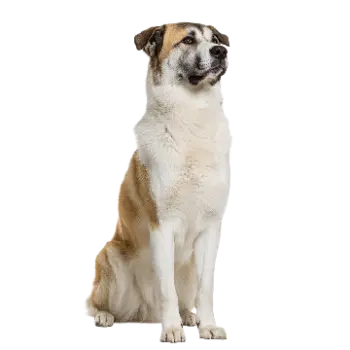

Alabay History & Development

The Alabay spelling carries a specific cultural association - it appears in official Turkmen government documentation and in the name of Turkmenistan's national celebration of the breed. Understanding that the Alabay and Alabai spellings refer to the same Turkmen name in different transliterations helps clarify the history, which is shared: this is among the oldest working dog breeds in documented existence, shaped by millennia of natural selection across Central Asia rather than by a formal human breeding program.

The ancestors of the Alabay were working across the Central Asian steppe and mountain regions at least 4,000 years ago, and possibly much earlier. The geographic range is vast - from the Caspian Sea east toward China's northwestern borders, from the Ural Mountains south to Afghanistan. Different populations developed in different countries and developed somewhat different characteristics over time, but the fundamental type - large, massive-headed, independently intelligent, and fiercely guardian - remained consistent because the working environment that selected for those traits remained consistent.

Nomadic and semi-nomadic peoples of Central Asia developed an intimate relationship with these dogs. The Alabay was not a pet or a companion in the modern sense - it was a working partner whose capabilities directly affected whether livestock survived predator attacks and whether camps were protected from both animals and human threats. Dogs that worked effectively were kept and bred; dogs that did not were not. This harsh practical selection produced a breed of genuine physical and psychological soundness that still distinguishes the Alabay from many modern breeds with shorter histories.

The name Alabay became internationally prominent through Turkmenistan's active cultural promotion of the breed in the 21st century. The gold statue erected in Ashgabat depicting an Alabay alongside the Akhal-Teke horse cemented the breed's status as a national symbol alongside the country's other celebrated heritage. State media coverage, official breed days, and international gifting of Alabay dogs by Turkmen president Gurbanguly Berdimuhamedov to foreign leaders brought the Alabay name to global attention in a way that the formal registration name Central Asian Shepherd Dog had never achieved.

In the United States, the breed arrived with increasing frequency after 1991 and received AKC Working Group recognition in 1996. The breed remains uncommon in North America compared to its presence in Russia and Central Asia, where it is among the most actively bred and celebrated working breeds. Serious breeders in the United States source dogs from established Central Asian and Russian bloodlines and maintain the health testing and temperament evaluation standards that distinguish responsibly bred Alabay from poorly bred large dogs carrying the same name.

The Alabay spelling specifically reflects the breed's Turkmen connection and continues to gain international visibility as Turkmenistan's active promotion of the breed reaches wider audiences. Dog enthusiasts who encounter the Alabay name in diplomatic news, cultural reporting, or international breed competitions are meeting the same ancient working dog that nomadic Central Asian peoples depended on for protection thousands of years ago. The spelling may vary between sources, but the dog it describes has been doing its work without interruption for longer than most modern breeds have existed.

Alabay Temperament & Personality

The Alabay's temperament is not a mystery if you understand what it was designed for. This is a breed that spent thousands of years working independently in remote terrain, making judgment calls about what constituted a real threat and responding accordingly - without a human handler present to direct its behavior in real time. That background produces a specific kind of dog: confident without being impulsive, watchful without being reactive, and capable of decisive action when the situation actually requires it. Everything else about the Alabay's personality flows from that working foundation.

At home, with its own family, the Alabay shows its other face entirely. These dogs are devoted, warm, and calm with the people in their household. They follow their person, seek contact, and show affection in steady, quiet ways rather than boisterous displays. They are not velcro dogs that demand constant attention - the Alabay has a settled quality that allows it to be near its family without being anxious about proximity. When the family is safe and the territory is quiet, the Alabay rests. When something changes, it notices immediately.

The breed's territorial instinct is strong and consistent. The Alabay takes ownership of the property and people in its care and will not tolerate intrusions without assessing them carefully. For most owners this instinct is exactly what they wanted when they chose the breed - a dog that knows when something is wrong and acts on that knowledge. The management challenge is making sure the dog has been socialized broadly enough to distinguish normal human activity from genuine threat. An Alabay that mistakes a utility worker for a predator is not wrong according to its own evaluation system - it simply needs more experience with the variety of normal human behavior to calibrate correctly.

Dog relationships require careful management from the beginning. Same-sex pairings are particularly challenging, and the Alabay's strong dominant instincts mean that a multi-dog household needs clear, stable structure that is maintained consistently. The Alabay is not a breed that will naturally defer to a long-established canine resident if it decides otherwise.

The combination of intelligence, independence, and physical capability makes the Alabay a breed where the human-dog relationship really matters. A handler who earns this dog's respect and establishes clear, consistent boundaries gets a remarkably capable and steady partner. A handler who does not cannot simply compensate through force, which this dog will resist, or through permissiveness, which it will exploit. The relationship is built on earned authority, patient consistency, and genuine engagement with what the dog needs to be at its best.

Owners who approach the Alabay with appropriate expectations - who understand that this dog was built to guard rather than to please, and who provide the structure, space, and socialization the breed needs - consistently report that the bond they form with a well-managed Alabay is among the most genuine and rewarding they have experienced with any dog. The depth of loyalty this breed shows toward the people it claims as its own is real, and it grows stronger over the years in a way that reflects the Alabay's fundamental character. Trust is built slowly and holds firmly once established.

Alabay Family Life & Living Requirements

Bringing an Alabay into your household is a long-term commitment that requires honest assessment of your living situation, your experience level, and your willingness to invest in the ongoing work this breed needs to be well-managed. This is not a breed you acquire because it looks impressive and then figure out as you go - the Alabay will fill whatever void of structure, clear expectations, and experienced handling exists, and the results of that are predictably difficult.

Space is the starting point. A large secured yard with solid fencing is not optional - it is the foundational infrastructure for keeping an Alabay safely and responsibly. The Alabay is a territorial guardian and will patrol its property, but those property lines need to be physically real and secure. Fencing should be solid rather than chain link that allows the dog to see everything passing by, and it should be tall enough - six feet is a minimum standard - to prevent this powerful breed from scaling it. Electronic perimeter systems are not appropriate for this breed and should not be considered as alternatives to proper physical containment.

The breed does well with children it has been raised alongside from puppyhood. There is a consistent pattern across Alabay culture and breed accounts of these dogs showing genuine protectiveness toward the children of the household, treating them as part of the guarded family unit. The size difference requires supervision with toddlers and young children regardless of how well-tempered the individual dog is - an Alabay that accidentally knocks over a two-year-old while moving through the house is still a problem that needs managing.

Urban apartments and small homes are genuinely unsuitable for this breed. The Alabay needs outdoor access, space to move through its territory, and a settled environment where its guardianship function has a legitimate purpose. A breed that was built to patrol large open spaces under extreme conditions will not thrive in a studio apartment regardless of how much the owner loves the breed.

Maturity takes time. Physical and behavioral adulthood in the Alabay does not arrive until age three or four, and the period from six months to two years in particular requires consistent management, active socialization, and patience with a dog that is large enough to create real problems but not yet settled enough in its own judgment to be trusted without oversight.

Alabay Training & Exercise Needs

The Alabay responds to training in a way that surprises people who are used to more biddable breeds. It is not stubborn in the sense of being confused or refusing to engage - it is independently minded in the sense that it evaluates whether compliance serves its own purposes. Getting consistent, reliable behavior from an Alabay requires the handler to be someone the dog genuinely respects, which means projecting calm confidence, following through on every expectation you set, and never making requests you cannot enforce. This is not a harsh standard - it simply describes what leadership looks like to a dog that was developed to function autonomously.

Start training the day the Alabay puppy arrives. The foundations of sit, stay, come, and leash manners should begin before the puppy is large enough to make those lessons difficult. By the time an Alabay puppy is six months old it is already a significant physical presence, and habits established in the first weeks of ownership shape what you are dealing with for the next decade. Early training done well is far more effective than corrective training attempted after problems have developed.

Socialization is the other non-negotiable that begins immediately. The Alabay needs to meet many different types of people, hear many different sounds, and experience many different environments during puppyhood. The goal is not to suppress the breed's natural wariness with strangers but to give the dog a broad enough frame of reference that it can accurately distinguish between ordinary human activity and genuine threats. A puppy whose early experiences were limited to a small circle of familiar people and environments will be harder to manage as an adult simply because its threat-assessment calibration is too narrow.

Exercise needs are moderate given the breed's size. The Alabay is a patrolling guardian rather than a distance runner, and its daily needs are satisfied by a combination of regular leashed walks, access to yard space, and the purposeful activity of monitoring its territory. Vigorous endurance exercise is not required and should not be pushed on young dogs whose skeletal system is still developing. Giant breed growth plates close considerably later than in smaller breeds, and the Alabay should not be asked to do sustained impact exercise until physical maturity is established.

Alabay Health Concerns

The Alabay is documented as one of the more robust giant breeds, and the explanation for this lies in its history. Thousands of years of performance-based natural selection in demanding conditions filtered out dogs that could not maintain sound health under serious physical and environmental stress. The breed's longevity - 12-15 years is a well-documented range, exceptional for a giant-breed dog - reflects the genetic soundness that results from this kind of long-term natural filtering.

Rapid growth in puppyhood is a documented risk factor for orthopedic problems in giant breeds, including the Alabay. Puppies should be kept on controlled, appropriate feeding programs that support steady growth rather than maximum growth speed. The bones and joints of a giant breed puppy developing too quickly accumulate stress that expresses as structural problems in the adult dog. Your breeder and veterinarian are both good resources for establishing appropriate puppy feeding guidelines.

Common Health Issues

  • Hip Dysplasia: Malformation of the hip joint causing instability and progressive degenerative joint disease. Documented in the breed - Risk increases with excess body weight and rapid growth in puppyhood. OFA or PennHIP screening is recommended for breeding stock.
  • Dystrophic Epidermolysis Bullosa - DEB, : A documented hereditary skin disorder specific to the Central Asian Shepherd Dog causing severe ulceration of skin and mucous membranes from birth. No cure available; responsible breeders work to identify and exclude affected and carrier dogs.
  • Obesity-Related Orthopedic Disease: Excess body weight in a giant-breed dog dramatically accelerates joint degeneration and worsens hip dysplasia outcomes - Maintaining a lean body weight throughout life is among the most impactful health management decisions for this breed.
  • Ear Infections: Drop-eared individuals can accumulate moisture and debris in the ear canal - Promoting bacterial or yeast infections. Regular inspection and gentle cleaning is effective prevention.

Preventive Care & Health Monitoring

  • Hip Evaluation - OFA or PennHIP, : Recommended for all breeding stock before use in a breeding program. Hip dysplasia is the primary documented orthopedic risk in this large breed.
  • Cardiac Screening: Recommended for breeding stock given the cardiovascular demands associated with giant breed body size. - Cardiac Screening: Recommended for breeding stock given the cardiovascular demands associated with giant breed body size.
  • Controlled Puppy Growth Management: Giant breed puppies should not be pushed toward maximum growth speed through overfeeding - A controlled growth rate protects developing joints from the stress of carrying excess weight too early.
  • Regular Ear Inspection and Cleaning: Routine care prevents the buildup that leads to infection in drop-eared individuals. - Regular Ear Inspection and Cleaning: Routine care prevents the buildup that leads to infection in drop-eared individuals.
  • Weight Management Throughout Life: Lean body condition significantly reduces the progression rate of joint disease and supports the Alabay's documented longevity. - Weight Management Throughout Life: Lean body condition significantly reduces the progression rate of joint disease and supports the Alabay's documented longevity.

Alabay Grooming & Maintenance

The Alabay's coat maintenance is refreshingly manageable for a dog its size, and that reflects the breed's practical origins. The double coat - whether shorter or medium-length depending on the individual's regional bloodline - was designed for function in harsh outdoor working conditions. It handles weather, dirt, and outdoor wear without requiring elaborate intervention. For owners who chose this breed partly because they did not want a high-maintenance coat, the Alabay delivers on that expectation.

A weekly brushing session with a firm bristle brush and metal comb handles routine coat care during normal periods. The comb is important for working through the undercoat - that is where loose fur accumulates and where regular attention prevents the seasonal blow periods from becoming overwhelming. Twice a year the Alabay sheds its undercoat more substantially in a seasonal molt that increases the volume of loose fur significantly. During these weeks, brushing daily or every other day keeps the loose coat from distributing itself throughout your home at maximum rate. An undercoat rake or deshedding tool is useful during heavy shed periods.

Bathing the Alabay is not a frequent requirement. The coat's natural oils maintain its protective function and healthy condition, and over-bathing removes those oils without providing meaningful benefit. Two to four baths per year, or when the dog has gotten into something genuinely messy, is typical for most individuals. Between baths, spot cleaning muddy paws and legs after outdoor activity handles the routine maintenance need.

Nail trimming every two to three weeks prevents overgrowth, which is particularly important in a dog this size - overgrown nails affect gait and can create orthopedic stress over time. Ear checks should happen during every brushing session: lift the ear flap, look for redness, unusual odor, or debris, and clean gently when needed with an appropriate veterinary ear cleaner. Dental care through regular brushing or appropriate chew products reduces the risk of periodontal disease over this dog's long lifespan.