Ainu Inu

Hokkaido

Quick Facts

🐕 Breed Group
Working Group (Foundation Stock Service - AKC)
📏 Size Category
Medium
📏 Height
Males: 18.5-20.5 inches, Females: 17.5-19.5 inches
⚖️ Weight
Males: 44-66 pounds, Females: 35-57 pounds
⏱️ Life Expectancy
12-15 years
🧣 Coat Type
Double coat - harsh straight outer, thick soft undercoat
🎨 Coat Colors
Red, white, black, brindle, sesame, wolf gray
😀 Temperament
Loyal, brave, alert, dignified, devoted, bold
🏃 Exercise Needs
High
🎓 Training Difficulty
Moderate to High - strong-willed and independent
👶 Good with Children
Yes, with proper socialization
🐾 Good with Other Pets
Conditional - high prey drive; best with early socialization

Other Names & Breed Recognition

Ainu Inu is one of the oldest recorded names for the breed now officially recognized as the Hokkaido. The name translates directly as "Ainu dog" and reflects the breed's deep historical connection to the Ainu people, the indigenous inhabitants of Hokkaido, Sakhalin, and the Kuril Islands. For centuries before Japanese settlers arrived on Hokkaido in significant numbers, the Ainu relied on these dogs for hunting deer, bear, and other large game across the island's mountainous terrain. The dogs were not simply tools but held a place of genuine importance in Ainu culture, valued for their courage, loyalty, and ability to work in brutal winter conditions that would break less hardy animals.

The name Ainu Inu persisted as the primary designation for the breed through much of the early modern period. When Japanese dog researchers and breed preservationists began documenting and classifying the native Japanese dog types in the early twentieth century, the breed was widely referred to as the Ainu Inu or Ainu Ken in both popular and scholarly sources. The shift away from this name came gradually as Japan's approach to its indigenous Ainu population evolved and as breed naming conventions increasingly favored geographic rather than ethnic designations. The Japanese government's 1937 designation of the breed as a Natural Monument used the name Hokkaido-Ken, tying the dog to the island rather than to the people who originally developed it.

Today the breed is officially listed as Hokkaido by the Japan Kennel Club, the FCI, and other international registries. The AKC accepted the breed into its Foundation Stock Service in 2014 under the name Hokkaido. Despite the official shift, Ainu Inu remains in common usage among breed enthusiasts, in historical literature about Japanese dog breeds, and in general reference materials. It appears frequently in discussions comparing the six native Japanese spitz breeds recognized under the Nihon Ken Hozonkai preservation framework. Prospective owners researching the breed will encounter both names regularly, and understanding that they refer to the same dog is essential for navigating breed-specific health data, pedigree information, and breeder resources.

The breed also carries several other historical and regional names including Ainu Ken, Hokkaido Ken, Seta, and Shita, though none of these achieved the widespread recognition of either Ainu Inu or Hokkaido. Among the six native Japanese breeds, the Hokkaido occupies a middle position in size between the smaller Shiba Inu and the larger Akita Inu, and it is often considered the most primitive in temperament and physical type, retaining working characteristics that some of the other Japanese breeds have softened through generations of companion-focused breeding.

Ainu Inu Organizations & Standards

The primary custodian of the Hokkaido breed standard is the Japan Kennel Club, which classifies the breed under Group 5 as a spitz and primitive type. The JKC standard describes a medium-sized, strongly built dog with a double coat, erect triangular ears, and a curled or sickle-shaped tail carried over the back. The standard emphasizes sexual dimorphism, balanced proportions, and an expression that conveys dignity, alertness, and bold confidence. The FCI adopted the JKC standard and recognizes the breed under Group 5, Section 5, as an Asian spitz. The breed has been registered with the FCI since 1964, giving it one of the longer international recognition histories among the Japanese native breeds.

In Japan, breed preservation efforts fall under the broader umbrella of the Nihon Ken Hozonkai, commonly known as NIPPO, which was established in 1928 to protect and promote the six native Japanese dog breeds. NIPPO maintains its own breed standards and holds specialty shows where Hokkaido dogs are evaluated against detailed criteria covering structure, coat quality, temperament, and overall type. NIPPO judging places particular emphasis on what Japanese breed evaluators call kan-i, the combination of bold spirit, alertness, and good nature that defines correct Japanese dog temperament. A Hokkaido that lacks kan-i, regardless of its physical conformation, will not place well in NIPPO evaluation.

The American Kennel Club accepted the Hokkaido into its Foundation Stock Service in 2014, which allows the breed to be registered and shown in AKC companion events and in the Miscellaneous Class but not yet in the regular conformation classes. Progress toward full AKC recognition requires a sustained population of dogs in the United States, an active parent club, and demonstrated adherence to a breed standard acceptable to the AKC. The breed's numbers in North America remain relatively small compared to more established Japanese breeds like the Shiba Inu and Akita. The United Kennel Club recognizes the Hokkaido under its Northern Breed Group, and UKC conformation shows are open to the breed.

Breed-specific health testing protocols for the Hokkaido are less formalized in North America than for breeds with established CHIC requirements, owing to the small population size. Responsible breeders typically perform hip evaluations, patellar luxation screening, eye examinations by a board-certified veterinary ophthalmologist, and DNA testing for Collie eye anomaly where available. As the breed's North American population grows and a formal parent club gains traction, the development of standardized health testing requirements modeled on established CHIC programs will become increasingly important for maintaining breed health and genetic diversity.

Kennel Club Recognition

  • American Kennel Club (AKC): Recognized in 2014, Foundation Stock Service
  • United Kennel Club (UKC): Recognized, Northern Breed Group
  • FCI: Recognized in 1964, Group 5 - Spitz and Primitive Types
  • jkc: Recognized in 1937, Group 5 - Spitz

Ainu Inu Physical Description

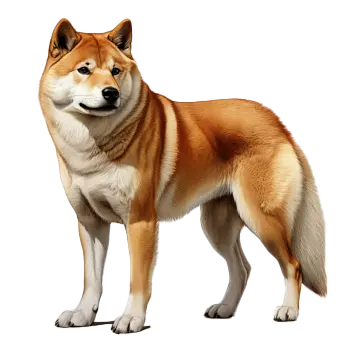
The Ainu Inu is a medium-sized spitz-type dog built for endurance, agility, and strength in rough mountain terrain. Males stand between 18.5 and 20.5 inches at the shoulder and typically weigh between 44 and 66 pounds, while females are slightly smaller at 17.5 to 19.5 inches and 35 to 57 pounds. The overall impression is one of sturdy, balanced athleticism without the heaviness of larger working breeds or the refinement of companion-oriented spitz types. The body is slightly longer than tall, with a well-developed chest that reaches to the elbows and a firm, level topline that speaks to functional structure rather than exaggerated show ring aesthetics.

The head is broad with a defined but not abrupt stop, and the muzzle is wedge-shaped and strong, reflecting the breed's history of confronting large and dangerous game. The small, triangular ears are firmly pricked and set at a slight forward angle, contributing to the alert, intense expression that is characteristic of the breed. The eyes are relatively small and triangular in shape, dark brown in color, and convey an expression of sharp intelligence and watchful determination. The jaw structure is strong with a full complement of teeth meeting in a scissors bite, appropriate for a breed that historically needed to grip and hold when engaged with bears and boar.

The double coat is the breed's defining physical feature from a functional standpoint. The outer coat consists of straight, harsh guard hairs that stand off the body at a noticeable angle, creating the slightly bristled silhouette typical of primitive spitz breeds. Beneath that outer layer lies a remarkably thick, soft undercoat that provided insulation against the severe winters of Hokkaido, where temperatures routinely drop well below freezing and heavy snowfall is the norm for months at a stretch. Coat colors include red, white, black, brindle, sesame, and wolf gray, with red and white being the most commonly seen. The coat around the cheeks and the underside of the tail is noticeably longer and fuller, giving the breed a ruffed appearance that adds to its visual impact.

The tail is thick and carried in a curl or sickle shape over the back, a hallmark of the Japanese spitz breeds. The legs are straight, well-boned, and muscular, with compact cat-like feet that provided sure footing on the rocky, uneven mountain trails of Hokkaido. Movement is light, efficient, and ground-covering, with the breed showing the kind of effortless trotting gait that reflects its heritage as a dog that needed to cover long distances over difficult terrain without tiring. There is nothing exaggerated or overdone in the Ainu Inu's physical structure; every element serves a clear functional purpose rooted in the breed's working history.

Affectionate With Family
The Ainu Inu forms an exceptionally tight bond with its household, often choosing one primary person to shadow throughout the day while remaining warmly attached to every family member. This is a breed that craves closeness with its people and will position itself wherever it can maintain visual contact with the family. Centuries of living alongside the Ainu people in harsh northern conditions forged a dog that views its human family as the center of its world.
Good With Young Children
The Ainu Inu can be a patient and protective companion for children when raised alongside them from puppyhood, but its size, energy level, and bold temperament require supervision around toddlers and very young children. The breed does not typically tolerate rough or unpredictable handling gracefully, and its natural guarding instinct means it may misread rowdy play between children and their friends. Families with older children who understand how to interact respectfully with dogs will find the Ainu Inu a devoted and gentle playmate.
Good With Other Dogs
Same-sex aggression is a well-documented trait in the Ainu Inu, rooted in the breed's history as a pack hunter that nonetheless maintained a clear dominance hierarchy. Introductions to unfamiliar dogs should be conducted carefully on neutral ground, and dog park visits require close attention to body language. Early and ongoing socialization can soften the edges of this tendency, but owners should expect that the Ainu Inu will always carry itself with a degree of assertiveness around other dogs that demands responsible management.
Shedding Level
The dense double coat of the Ainu Inu sheds heavily year-round and undergoes two dramatic seasonal blowouts during spring and fall when the undercoat releases in large clumps. During these periods, daily brushing barely keeps pace with the volume of loose fur. Owners who are particular about clean furniture and clothing should prepare for a significant ongoing commitment to lint rollers and vacuuming, as shedding is one of the defining realities of living with this breed.
Coat Grooming Frequency
Outside of seasonal coat blows, the Ainu Inu's coat is relatively self-maintaining and naturally repels dirt and debris thanks to its harsh outer texture. A thorough weekly brushing with an undercoat rake and a slicker brush keeps the coat in good condition and distributes natural oils across the skin. During the twice-yearly heavy shedding periods, daily brushing sessions of fifteen to twenty minutes become necessary to remove the loosening undercoat and prevent matting close to the skin.
Drooling Level
The Ainu Inu is a clean, dry-mouthed breed that produces virtually no excess drool under normal circumstances. Its tight lip structure and spitz-type muzzle mean you will not find wet spots on furniture or clothing after interactions. The occasional string of saliva around mealtimes or when anticipating a treat is about as much drool as this breed produces.
Coat Type
The Ainu Inu carries a classic double coat built for survival in the cold mountain environments of Hokkaido. The outer coat consists of straight, harsh guard hairs that stand off the body and provide protection from rain, snow, and underbrush. Beneath that lies a thick, plush undercoat that insulates against extreme cold. This combination made the breed functional in some of the harshest winter conditions in Japan, and the coat retains that weatherproof quality today.
Openness To Strangers
The Ainu Inu approaches unfamiliar people with a reserved wariness that reflects its long history as a guardian breed. It does not rush to greet visitors and will typically observe new arrivals from a measured distance before deciding whether to approach. This is not timidity but rather a deliberate, assessing temperament that makes the breed a natural watchdog. Owners who entertain frequently will need to invest in socialization to ensure that wariness does not escalate into overt suspicion or defensive behavior.
Playfulness Level
Beneath the Ainu Inu's dignified exterior lies a genuinely playful dog that enjoys interactive games, retrieving, and spirited outdoor romps with its family. The breed retains a strong prey drive that translates into enthusiastic chasing games and keen interest in moving objects. Play sessions that challenge both the body and the mind tend to produce the most satisfaction for this breed, and a well-exercised Ainu Inu will initiate play on its own terms with endearing persistence.
Watchdog/Protective Nature
The Ainu Inu is a fearless and vigilant watchdog that takes the protection of its home and family seriously. Bred to confront bears and wild boar in the mountains of Hokkaido, this is a dog with genuine courage that will not back down from a perceived threat regardless of the size difference. Its alert, territorial nature means it will reliably announce the arrival of visitors, unfamiliar animals, or anything out of the ordinary in its environment. The protective instinct runs deep and requires channeling through proper training and socialization.
Adaptability Level
The Ainu Inu is best suited to homes with access to outdoor space where it can move, explore, and satisfy its substantial exercise requirements. Apartment living is not ideal for this breed unless the owner is committed to multiple long daily outings and active enrichment. Changes in routine, environment, or household composition can unsettle the breed more than some others, and the Ainu Inu thrives on consistency and predictability in its daily life. Hot climates also pose a challenge given the heavy double coat designed for cold northern weather.
Trainability Level
The Ainu Inu is intelligent and capable of learning complex commands, but it brings an independent streak to the training process that requires patience and creativity from the handler. This is not a breed that lives to please in the way a retriever or herding dog might. Positive reinforcement methods work best, as harsh corrections will damage the bond and produce a dog that shuts down or becomes defensive. Short, varied training sessions that maintain the dog's interest will produce far better results than repetitive drilling.

Ainu Inu History & Development

The Ainu Inu traces its origins to the medium-sized dogs that accompanied the Ainu people when they inhabited the island of Hokkaido, Japan's northernmost major island. Archaeological evidence and genetic studies suggest that the ancestors of the Hokkaido breed arrived on the Japanese archipelago with early human migrations and subsequently developed in relative isolation on Hokkaido, where the Ainu maintained a semi-nomadic hunting and gathering lifestyle long after agricultural societies had transformed life on the main islands. The dogs that evolved alongside the Ainu were shaped by the demands of hunting large game including the Hokkaido brown bear, Ezo deer, and wild boar in mountainous terrain marked by dense forests, heavy snowfall, and extreme cold.

The relationship between the Ainu and their dogs was not merely utilitarian. Ainu oral traditions and cultural practices reflect a deep respect for the dogs that hunted alongside them, and the bond between hunter and dog was understood within the broader Ainu spiritual framework that attributed kamuy, or divine spirit, to elements of the natural world. Dogs that showed exceptional courage, particularly those willing to hold a bear at bay while hunters moved into position, were highly prized and their bloodlines carefully maintained through selective breeding practices that predated any formal breed standard by centuries.

The modern history of the Hokkaido breed begins in the Meiji era, when Japan's rapid modernization brought new attention to the country's native dog populations. Zoologist Thomas Wright Blakiston is credited with first noting the superior quality of the Ainu dogs during his travels in Hokkaido in the 1870s, and his observations helped bring the breed to broader Japanese attention. In 1937, the Japanese government designated the Hokkaido as a Natural Monument under the Cultural Properties Protection Act, a status shared with five other native Japanese breeds. This designation provided legal protection and a framework for organized preservation efforts, though the breed's remote geographic base and small population meant that preservation work proceeded more slowly than for breeds like the Shiba Inu and Akita.

The breed survived the deprivations of World War II better than some Japanese breeds, partly because Hokkaido's distance from major military operations and urban centers meant that the dogs were less affected by the food shortages, military requisitions, and population displacements that devastated dog populations elsewhere in Japan. In the postwar decades, Japanese breed preservation societies worked to document and stabilize the remaining Hokkaido bloodlines, and the breed gradually gained recognition outside Japan. The FCI recognized the Hokkaido in 1964, and the breed began appearing in small numbers in North America and Europe from the 1990s onward, though it remains one of the rarest of the Japanese native breeds internationally.

The Hokkaido experienced a surge of international interest in 2012 when a telecommunications company in Japan featured a white Hokkaido named Otosan in a widely popular series of television commercials. While this commercial exposure significantly raised the breed's profile, it also created concern among preservation-minded breeders that sudden demand could lead to careless breeding practices and the introduction of genetic problems into an already small gene pool. The breed's ongoing challenge is balancing growing international interest with the careful genetic stewardship required to maintain the health and working character that define the Ainu Inu at its best.

Ainu Inu Temperament & Personality

The Ainu Inu possesses a temperament that reflects its heritage as a serious working dog bred for demanding and dangerous tasks. Loyalty is the breed's most defining personality trait, and it is not the generalized friendliness of a golden retriever but rather an intense, focused devotion to its family that borders on exclusivity. The Ainu Inu bonds deeply and permanently with its household, and that bond brings with it a protective instinct that is always present just beneath the surface. This is a dog that will position itself between its family and any perceived threat without hesitation, and the courage that once held bears at bay translates into a modern companion that takes its guardian role with complete seriousness.

Within the family circle, the Ainu Inu is affectionate, expressive, and often surprisingly playful. Many owners describe a distinct sense of humor in the breed, manifested in antic behavior during play sessions and a tendency to invent games when bored. The breed communicates vocally with a range of sounds beyond standard barking, including a distinctive howl and various grumbling vocalizations that owners learn to interpret over time. The Ainu Inu is not a silent dog, and prospective owners should expect a companion that has opinions and is willing to share them.

The breed's relationship with strangers is markedly different from its behavior with family. The Ainu Inu is naturally reserved and often suspicious of unfamiliar people, and it does not warm up quickly to new acquaintances. This wariness is not nervousness or fear aggression but rather a measured, deliberate assessment that the breed makes before deciding whether to accept or merely tolerate a newcomer. Extensive socialization from puppyhood can broaden the circle of trusted people, but the breed will always maintain a degree of reserve with strangers that distinguishes it from more openly social breeds.

The Ainu Inu's prey drive is strong and deeply embedded, a direct inheritance from generations of hunting large and small game across Hokkaido's wilderness. Cats, rabbits, squirrels, and other small animals will trigger pursuit behavior that can be difficult to override once activated. Off-leash reliability in unfenced areas is generally not achievable with this breed regardless of training level, as the sight or scent of potential prey can override even the strongest recall conditioning. Owners should plan their exercise and outdoor activities around this reality rather than attempting to train against it.

The breed's independence is a double-edged quality that new owners sometimes underestimate. The Ainu Inu is capable of making decisions on its own and does not look to its handler for constant direction, which can be interpreted as stubbornness by owners accustomed to more biddable breeds. Understanding that this independence is a fundamental aspect of the breed's character rather than a training failure is essential for building a successful partnership. The Ainu Inu respects leaders who earn its trust through consistency and fairness, not those who attempt to dominate through force or intimidation.

Ainu Inu Family Life & Living Requirements

The ideal home for an Ainu Inu is one with experienced dog owners who understand the needs of a primitive, independent working breed. First-time dog owners will find the Ainu Inu's combination of strong will, high exercise needs, prey drive, and protective instincts challenging to manage without prior experience handling similar breeds. The breed does best with owners who appreciate its unique temperament and are willing to invest the time required for proper socialization, consistent training, and daily physical and mental exercise. Families who want a dog that will be an active participant in outdoor activities and who are prepared for a companion that demands respect rather than simply offering compliance will find the Ainu Inu deeply rewarding.

A securely fenced yard is strongly recommended for Ainu Inu ownership. The breed's prey drive and independence mean that a dog left in an unfenced area will eventually find something worth chasing, and its athletic ability makes short fences inadequate. Fencing should be at least five to six feet high, and some owners find that lean-in extensions or coyote rollers at the top of the fence provide additional security for particularly determined climbers. The breed has been known to dig under fences as well, so ground-level barriers or buried wire along the fence line may be necessary for dogs that develop excavation tendencies.

The Ainu Inu can coexist with children in the family when raised alongside them, but the dynamics require ongoing supervision and clear boundaries. Children should be taught to respect the dog's space, to avoid rough handling, and to recognize the body language signals that indicate the dog has had enough interaction. The breed's protective nature can be a positive quality in a family setting, but it needs to be properly socialized so that the dog can distinguish between normal childhood play and genuine threats. Visiting children who are unfamiliar to the dog should be introduced carefully, and the dog should always have access to a quiet retreat area where it can withdraw if social situations become overwhelming.

Multi-pet households present specific challenges with the Ainu Inu. The breed's high prey drive makes cohabitation with cats, rabbits, ferrets, or other small animals risky unless the dog was raised with those animals from a very young age, and even then, supervision is advisable. Same-sex dog aggression is common in the breed, and introducing an Ainu Inu into a home with an existing dog of the same sex requires careful management and may not be successful in all cases. Opposite-sex pairings generally produce fewer conflicts, though individual temperament variation means there are no guarantees.

The Ainu Inu does not tolerate hot, humid climates well. Its thick double coat, designed for the cold winters of northern Japan, provides far more insulation than is comfortable in warm weather. Owners in temperate or warm climates need to provide air-conditioned indoor spaces, schedule exercise during cooler morning and evening hours, and watch for signs of heat stress during summer months. The breed's northern heritage means it genuinely thrives in cold weather and is happiest in climates where winter brings real cold and ideally snow.

Ainu Inu Training & Exercise Needs

Training an Ainu Inu requires a fundamentally different approach than training a retriever, herding dog, or other traditionally biddable breed. The Ainu Inu learns quickly and has excellent problem-solving ability, but it evaluates commands against its own judgment before deciding whether to comply. This is not defiance in the conventional sense but rather the expression of an independent working temperament that was selectively bred for centuries. A dog that blindly followed orders would not have survived confrontations with Hokkaido brown bears; the breed needed to think for itself, and that capacity for independent decision-making persists in modern dogs. Effective training acknowledges this reality and works with it rather than against it.

Positive reinforcement methods are essential with the Ainu Inu. The breed responds well to food rewards, play, and verbal praise, and will engage enthusiastically in training sessions that feel collaborative rather than coercive. Harsh corrections, raised voices, and physical intimidation will damage the trust between dog and handler and produce a dog that becomes either shutdown or defensively aggressive. Training sessions should be kept short, varied, and interesting. The Ainu Inu has a low tolerance for repetitive drills and will disengage from training that feels monotonous. Five minutes of focused, rewarding work will produce better results than thirty minutes of repetitive command practice.

Socialization is the single most important training investment an Ainu Inu owner can make. The breed's natural reserve with strangers and tendency toward dog aggression can intensify into serious behavioral problems if the puppy is not exposed to a wide range of people, dogs, environments, and experiences during the critical socialization window between three and sixteen weeks of age. Structured puppy socialization classes, controlled introductions to friendly adult dogs, visits to varied environments, and positive exposure to different types of people should begin as soon as the puppy's vaccination status permits and continue well into adolescence.

Exercise requirements for the Ainu Inu are substantial and non-negotiable. This is a breed built for all-day mountain hunting, and it retains the stamina and drive that work demands. A minimum of sixty to ninety minutes of vigorous daily exercise is needed to maintain physical and mental health, and more is better. Long hikes on leash, trail running, and structured play sessions in securely fenced areas are all appropriate outlets. The breed also benefits significantly from mental enrichment activities such as puzzle feeders, scent work, and training games that engage its problem-solving abilities. An under-exercised Ainu Inu will find its own outlets for excess energy, and those outlets will invariably involve behaviors the owner finds destructive or problematic.

Recall training deserves special mention because it is the area where the Ainu Inu's independence and prey drive most directly conflict with owner expectations. While basic recall can be taught and reinforced, expecting reliable off-leash recall in environments where prey animals may be present is unrealistic for most Ainu Inu. Long lines of fifteen to thirty feet provide a compromise that allows the dog more freedom of movement during walks and hikes while maintaining physical control. Owners who accept this limitation and plan their outdoor activities accordingly will have a much more satisfying relationship with their dog than those who insist on achieving off-leash reliability that the breed's fundamental temperament makes impractical.

Ainu Inu Health Concerns

The Ainu Inu benefits from a relatively robust genetic health profile compared to many more heavily bred dog breeds, a consequence of its long history as a working dog where natural selection played a significant role alongside human breeding choices. The breed's small population size, however, introduces its own set of genetic considerations that responsible owners and breeders must take seriously. Limited gene pools increase the risk of inbreeding depression and the concentration of recessive disease alleles, making thoughtful breeding decisions and comprehensive health testing essential for the breed's long-term viability.

Collie eye anomaly is the most significant hereditary eye condition documented in the Hokkaido breed. CEA is a congenital condition affecting the development of the choroid, the layer of tissue beneath the retina that supplies blood and nutrients to the eye. The condition ranges in severity from mild choroidal hypoplasia, which may have no functional impact on vision, to more serious manifestations including colobomas and retinal detachment that can cause significant vision loss or blindness. A DNA test is available that identifies clear, carrier, and affected dogs, and all breeding stock should be tested before mating. Purchasing a puppy from a breeder who cannot provide CEA test results for both parents should be avoided.

Hip dysplasia and patellar luxation represent the primary orthopedic concerns for the breed. The Ainu Inu's active lifestyle and high exercise needs mean that joint problems, even mild ones, can produce clinical lameness and discomfort during the vigorous physical activity the breed requires. Radiographic hip screening through OFA or PennHIP and veterinary patellar evaluation should be standard practice for breeding dogs. Maintaining appropriate body weight throughout the dog's life is one of the most effective measures owners can take to reduce the mechanical stress on joints and delay the progression of any underlying dysplasia.

The breed can be prone to allergies manifesting as skin irritation, hot spots, and recurrent ear infections. Environmental allergens including pollen, mold, and dust mites are common triggers, and some dogs develop food sensitivities that compound the problem. The thick double coat can trap allergens and moisture close to the skin, creating conditions favorable for secondary bacterial or yeast infections. Regular grooming, particularly during coat-blowing seasons, helps manage this risk, and owners should work with their veterinarian to identify and address allergen sources when chronic skin or ear problems develop.

The Ainu Inu's intense bonding behavior and sensitivity to changes in routine can predispose it to separation anxiety, which is better understood as a behavioral health concern than a simple training issue. Dogs affected by separation anxiety may exhibit destructive behavior, excessive vocalization, house soiling, and self-harm when left alone. Prevention through early independence conditioning is far more effective than attempting to treat established separation anxiety in an adult dog. Gradual desensitization to departures, crate training presented positively, and ensuring the dog receives adequate exercise before periods of confinement all contribute to building a dog that can tolerate reasonable periods of solitude without distress.

Common Health Issues

  • Collie eye anomaly (CEA) - A congenital inherited eye condition affecting the choroid and retina that has been documented in the Hokkaido breed at notable frequency; severity ranges from mild choroidal hypoplasia with no vision impact to retinal detachment causing blindness. DNA testing is available and should be performed before breeding.
  • Hip dysplasia - Abnormal development of the hip joint leading to progressive arthritis and lameness; while less prevalent than in larger breeds, the Hokkaido's active lifestyle means even mild dysplasia can produce clinical signs during vigorous exercise. Radiographic screening through OFA or PennHIP is recommended for breeding stock.
  • Patellar luxation - Displacement of the kneecap from the trochlear groove that ranges from occasional intermittent slipping to permanent luxation requiring surgical correction; medium-sized breeds like the Hokkaido carry moderate risk and veterinary evaluation of patella stability should be included in routine examinations.
  • Heart murmurs and cardiac conditions - Some Hokkaido lines have shown a predisposition to cardiac murmurs detected on auscultation; echocardiographic evaluation by a board-certified veterinary cardiologist is advisable for breeding dogs to rule out structural heart disease.
  • Anxiety and compulsive behaviors - The breed's intense loyalty and sensitivity can predispose it to separation anxiety and stress-related compulsive behaviors such as excessive licking or spinning when left alone for extended periods. Early independence training and gradual desensitization to absences help mitigate the risk.
  • Allergies and dermatitis - Environmental and food-related allergies producing skin irritation, hot spots, and ear infections have been reported in the breed; identifying and eliminating allergens through dietary trials and environmental management is the primary treatment approach.

Preventive Care & Health Monitoring

  • DNA test for Collie eye anomaly from an approved laboratory before breeding - CEA testing identifies carriers and affected dogs and allows breeders to make informed mating decisions that reduce incidence in future generations. Request documentation from the breeder showing both parents' CEA status.
  • Radiographic hip evaluation through OFA or PennHIP for breeding stock - Hip screening radiographs taken after age two provide a baseline assessment of joint conformation and help breeders select against dysplasia in their lines.
  • Veterinary patellar luxation evaluation - A physical examination of patella stability performed by a veterinarian, ideally with results registered with OFA, should be part of the pre-breeding health screening protocol.
  • Cardiac auscultation or echocardiogram for breeding dogs - A cardiac evaluation by a board-certified veterinary cardiologist can identify murmurs or structural abnormalities before they are passed to offspring.
  • Early socialization and independence training beginning in puppyhood - Structured exposure to varied environments, people, and other animals combined with gradual alone-time conditioning helps prevent the anxiety-related behavioral issues the breed can develop.
  • Regular ear cleaning and skin inspections, especially during seasonal coat changes - The dense undercoat can trap moisture and allergens close to the skin during shedding periods, making routine inspection and cleaning important for preventing secondary infections.

Ainu Inu Grooming & Maintenance

Grooming the Ainu Inu is straightforward in approach but demands consistency and willingness to manage the substantial volume of hair the breed produces. The double coat requires weekly brushing with an undercoat rake and a slicker brush during normal periods, with sessions lasting fifteen to twenty minutes. This routine removes dead hair, distributes natural skin oils across the coat, and provides an opportunity to inspect the skin for signs of irritation, parasites, or developing hot spots. The outer guard hairs have a naturally harsh texture that repels dirt and debris effectively, which means the coat stays relatively clean between baths and does not develop the doggy odor common in some other breeds.

The twice-yearly coat blow is the grooming event that defines life with an Ainu Inu. During spring and fall, the dense undercoat releases in large quantities over a period of two to four weeks, and daily brushing becomes essential to keep the shedding manageable. An undercoat rake is the most effective tool during these periods, working through the coat in sections to pull out the loosening undercoat before it mats against the skin or deposits itself across every surface in the home. A high-velocity pet dryer can accelerate the process by blowing loose undercoat free, and many owners find that a thorough blowout session reduces the duration of the shedding period noticeably. During coat blow, it is entirely normal to remove enough undercoat to fill multiple grocery bags from a single dog.

Bathing should be infrequent, typically no more than once every two to three months unless the dog has gotten into something particularly messy. The natural oils in the Ainu Inu's coat serve a protective function, and frequent bathing strips those oils and can lead to dry skin and increased shedding. When bathing is needed, a high-quality dog shampoo formulated for double-coated breeds should be used, and thorough rinsing is critical to prevent shampoo residue from causing skin irritation beneath the dense undercoat. Complete drying after bathing is equally important, as moisture trapped in the undercoat can create conditions favorable for fungal growth and hot spots.

Nail trimming should be performed every two to three weeks, or as needed based on the dog's activity level and the surfaces it walks on regularly. Dogs that spend significant time on hard surfaces like pavement or concrete will naturally wear their nails down and may require less frequent trimming. The Ainu Inu is not typically enthusiastic about nail trimming, and introducing the process gradually during puppyhood with plenty of positive reinforcement will make the experience significantly less stressful for both dog and owner throughout the dog's life.

Dental care is an area that is easy to overlook but important for long-term health. Daily tooth brushing with a dog-specific enzymatic toothpaste is the gold standard for preventing periodontal disease, which affects the majority of dogs over age three and can contribute to systemic health problems including heart and kidney disease. For dogs that resist brushing, dental chews, water additives, and regular professional cleanings provide supplementary protection. The ears should be checked weekly for signs of redness, odor, or discharge, and cleaned with a veterinarian-recommended ear solution as needed. Dogs with allergies may require more frequent ear cleaning to prevent the buildup of wax and debris that can lead to infection.