Peach-Fronted Conure Species Guide - Furry Critter Network

Peach-Fronted Conure

Quick Facts

🔬 Scientific Name
Eupsittula aurea
📊 Care Level
Intermediate
😊 Temperament
Playful, Energetic, Social
📏 Adult Size
10-11 inches
⏱️ Lifespan
20-30 years
🔊 Noise Level
Loud
🗣️ Talking Ability
Limited to Moderate
🍽️ Diet Type
Pellet-based
🌍 Origin
South America (Brazil, Bolivia, Peru, Paraguay, Argentina)
🏠 Min Cage Size
24x24x30 inches
📐 Size
Medium

Peach-Fronted Conure - Names & Recognition

The Peach-Fronted Conure is scientifically classified as Eupsittula aurea, though it was formerly placed in the genus Aratinga until a 2013 taxonomic revision separated several species into the new genus Eupsittula. This reclassification was based on genetic and morphological studies that revealed distinct evolutionary relationships. The species name "aurea" derives from Latin meaning "golden," referencing the bird's vibrant orange-gold forehead coloring that distinguishes it from other conure species.

Common names for this species vary by region and language. In English-speaking countries, it's known as the Peach-Fronted Conure or Peach-Fronted Parakeet, with both terms used interchangeably in aviculture, though "conure" is more prevalent. In South America, Portuguese speakers call it "periquito-rei" (king parakeet) or "aratinga-de-testa-azul," while Spanish speakers use "aratinga frentidorada" or "perico frente naranja." These regional names reflect the bird's widespread distribution across multiple South American countries.

Two subspecies are currently recognized within Eupsittula aurea. The nominate subspecies, E. a. aurea, is found in the eastern and central portions of the range and is the form most commonly kept in captivity. The second subspecies, E. a. major, occurs in the western range and is slightly larger with more extensive orange coloring on the forehead. However, some ornithologists debate whether the differences are significant enough to warrant subspecies designation, suggesting they may represent clinal variation across the species' broad range.

In aviculture, the Peach-Fronted Conure is sometimes confused with other orange-fronted species, particularly the Orange-Fronted Conure (Eupsittula canicularis), which shares similar coloring but has different range and subtle plumage differences. Color mutations are not commonly bred in Peach-Fronted Conures as they are in some other conure species, with the natural wild-type coloration remaining standard in the pet trade. Occasionally, birds with slightly more intense orange or variations in green shading appear, but selective breeding for mutations has not been widely pursued.

Peach-Fronted Conure Physical Description

The Peach-Fronted Conure is a medium-sized parrot measuring 10 to 11 inches in length from beak to tail tip, with body weight ranging from 70 to 90 grams. Their build is compact and sturdy, typical of conure species, with well-proportioned bodies and long, graduated tails that comprise approximately half their total length. The overall impression is of a sleek, athletic bird built for agile flight and acrobatic maneuvering through forest canopies.

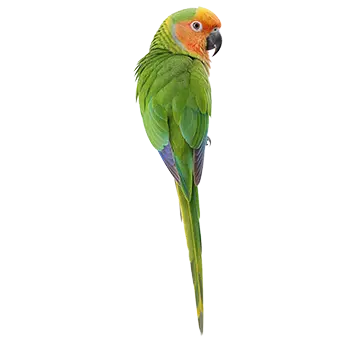
The species' most distinctive feature is the brilliant orange-to-peachy forehead and forecrown that gives the bird its common name. This vibrant coloring extends from just above the cere (the fleshy area above the beak) back to the mid-crown, creating a striking contrast with the surrounding plumage. The intensity of the orange varies among individuals, with some displaying deeper, richer tones while others show lighter peachy-orange shades. Behind the orange crown, the head transitions to bright green.

The body plumage is predominantly green, with the upperparts showing a rich grass-green color. The breast and underparts display a slightly yellower-green shade, creating subtle variation in the overall green coloration. The primary flight feathers are blue, visible during flight as flashes of color when the wings are extended. The underwing coverts show a yellow-orange coloration, another flash of color visible during flight. The tail feathers are green on top with olive-yellow undersides, and the tail appears long and tapered when at rest.

The Peach-Fronted Conure has a distinctive orange patch at the bend of the wing (the carpal edge), which is visible even when the wings are folded. The eye is surrounded by a conspicuous white eye-ring formed by bare skin, giving the bird an alert, wide-eyed expression. The iris is orange to reddish-brown in adults. The beak is horn-colored to gray, strong and curved for cracking seeds and nuts. The legs and feet are gray with zygodactyl toe arrangement (two forward, two back) typical of parrots.

Sexual dimorphism in Peach-Fronted Conures is minimal to absent, making visual sexing unreliable. Males and females appear virtually identical in size, coloration, and markings. Some experienced breeders suggest that males may have slightly more extensive or brighter orange forehead patches, but this is not consistent enough for definitive sexing. DNA testing through blood or feather samples remains the only reliable method for sex determination.

Juvenile Peach-Fronted Conures can be distinguished from adults by their duller overall coloration and reduced orange on the forehead. Young birds show less vibrant green plumage and may have dark tips on the upper mandible. The orange forehead patch is smaller and less intense in juveniles, developing to full adult brilliance by 12 to 18 months of age. The eye color in juveniles is darker brown, lightening to orange-red as the bird matures. This gradual color development helps distinguish young birds from adults in the pet trade.

Affection Level
Peach-Fronted Conures are affectionate birds that bond strongly with their favorite people. They enjoy head scratches and physical contact, often seeking out their owners for attention. While loving, they can be somewhat moody and may show preference for one or two family members over others.
Sociability
Extremely social birds that thrive on interaction and can become depressed without adequate companionship. They enjoy being part of family activities and do well in pairs or small groups. Wild flocks inform their strong need for social engagement, making them unsuitable for owners with limited time.
Vocalization
Peach-Fronted Conures are notably vocal with loud, piercing calls that can be challenging in apartments or noise-sensitive environments. They vocalize enthusiastically during morning and evening, and when excited or seeking attention. Their contact calls carry considerable distance, reflecting their wild flock communication needs.
Intelligence
These clever birds demonstrate strong problem-solving abilities and quick learning. They excel at figuring out puzzle toys and can learn numerous tricks. Their intelligence requires consistent mental stimulation through training, foraging activities, and environmental enrichment to prevent boredom and associated behavioral problems.
Exercise Needs
Highly active and energetic, Peach-Fronted Conures require extensive daily exercise including several hours of out-of-cage flight time. They are natural acrobats who love climbing, swinging, and flying. Insufficient exercise leads to obesity, muscle atrophy, and behavioral issues including aggression and feather destruction.
Maintenance Level
Moderate maintenance needs include daily cage cleaning, regular toy rotation, and frequent bathing opportunities. They are messier eaters than smaller species, scattering food widely. Weekly deep cleaning is essential. Their active nature means more frequent cage maintenance compared to sedentary species, but grooming needs remain minimal.
Trainability
Highly trainable with positive reinforcement methods, responding well to clicker training and food rewards. They can learn complex tricks, flight recall, and even limited vocabulary. Their energy and short attention span require brief, frequent training sessions. Consistent training from a young age produces the best-behaved adults.
Independence
Low independence with high attention requirements. Peach-Fronted Conures demand significant daily interaction and become distressed when ignored. They're prone to separation anxiety and destructive behaviors if left alone extensively. Best suited for households where someone is home most of the day or for dedicated owners committed to substantial daily engagement.

Natural Habitat & Range

The Peach-Fronted Conure inhabits a vast range across central and eastern South America, with populations found in Brazil, eastern Bolivia, northern Paraguay, northern Argentina, and southeastern Peru. This extensive distribution makes it one of the more widespread conure species, occupying diverse habitats across multiple countries and ecosystems. The range extends from the Amazon basin southward to the Gran Chaco region, covering both tropical and subtropical zones.

These conures occupy a variety of wooded habitats including tropical and subtropical forests, woodland savannas, gallery forests along rivers, palm groves, and forest edges. They show remarkable adaptability to different elevations, found from lowland areas near sea level up to approximately 2,000 meters in foothill regions. Peach-Fronted Conures favor semi-open habitats where forests meet grasslands or agricultural areas, avoiding dense, unbroken rainforest. They readily adapt to human-modified landscapes, frequently appearing in cultivated areas, parks, and even suburban environments where suitable food and nesting sites exist.

In their natural environment, Peach-Fronted Conures are highly gregarious, forming flocks that typically number 10 to 30 birds, though larger congregations of over 100 individuals gather at abundant food sources or communal roost sites. These flocks maintain cohesion through constant vocal communication, with birds calling frequently to maintain contact while foraging. The social structure provides protection through increased vigilance, with multiple birds watching for predators while others feed.

Daily activity patterns follow a predictable routine. Flocks leave roosting sites shortly after dawn, flying to feeding areas with loud, raucous calls that announce their presence. Morning feeding continues for several hours before the flock settles into midday rest during the hottest hours, seeking shade in tree canopies. Late afternoon brings renewed feeding activity before the flock returns to roosting sites at dusk. These communal roosts, often in palm trees or tree cavities, may be used consistently for extended periods.

Wild Peach-Fronted Conures have a varied diet reflecting seasonal availability. They feed primarily on seeds, fruits, nuts, flowers, and blossoms from a wide variety of trees and plants. Berries, palm fruits, and the seeds of leguminous trees feature prominently in their diet. During certain seasons, they visit agricultural areas to feed on corn, sunflowers, and other crops, sometimes bringing them into conflict with farmers. They also consume insects occasionally, providing protein supplementation to their primarily vegetarian diet.

Breeding behavior in the wild involves nesting in natural tree cavities, abandoned woodpecker holes, or palm tree hollows. Pairs maintain strong monogamous bonds and may return to the same nesting site across multiple breeding seasons. The breeding season varies by region but typically coincides with periods of maximum food availability. Females lay 3 to 5 white eggs, which she incubates while the male provides food.

The conservation status of the Peach-Fronted Conure is currently listed as Least Concern by the IUCN, indicating stable populations across most of their range. Their adaptability to human-modified landscapes and broad distribution buffer them against localized habitat loss. However, they face ongoing pressures including deforestation, particularly in the Amazon and Atlantic Forest regions, capture for the pet trade (though international trade is regulated), and persecution by farmers due to crop damage. In some regions, populations have declined, but overall the species remains relatively common. The pet trade now relies predominantly on captive-bred birds, reducing pressure on wild populations compared to past decades when wild capture was more prevalent.

Temperament

Peach-Fronted Conures are energetic, playful, and highly social parrots with vibrant personalities that demand attention and engagement. Their temperament reflects their wild flock behavior, requiring substantial daily interaction and mental stimulation. These birds form strong bonds with their chosen family members and thrive in households that can meet their considerable social and environmental needs. Prospective owners should understand that Peach-Fronted Conures are demanding companions unsuitable for casual pet ownership.

These conures display enthusiastic affection toward their bonded humans, seeking physical contact through head scratching, cuddling, and perching on shoulders or laps. They show their affection openly but can be somewhat moody, with individuals varying considerably in how they express attachment. Some become velcro birds that constantly seek their owner's presence, while others show affection on their own terms. Many Peach-Fronted Conures develop strong preferences for one or two family members, though proper socialization from a young age helps them accept multiple handlers.

The playful nature of Peach-Fronted Conures manifests in constant activity and mischief. They are natural clowns who enjoy entertaining themselves and their owners with acrobatic displays, hanging upside down, wrestling with toys, and investigating everything within reach. Their curiosity drives them to explore their environment thoroughly, often getting into things they shouldn't. Providing appropriate outlets for this playfulness through diverse toys and activities prevents destructive behaviors directed at furniture, electrical cords, or other household items.

Social interaction is absolutely critical for Peach-Fronted Conures' mental health and happiness. These birds evolved in large, interactive flocks and expect similar social engagement in captivity. They require several hours of direct interaction daily, ideally spread throughout the day rather than concentrated in one session. When their social needs go unmet, they can develop serious behavioral problems including excessive screaming, aggression, self-mutilation through feather plucking, and depression. Potential owners who work full-time outside the home should seriously consider whether they can provide adequate companionship or whether getting two birds might be more appropriate.

Vocalization is one of the most challenging aspects of Peach-Fronted Conure ownership. These birds are loud, with piercing calls that can be heard at considerable distances. Their natural flock calls serve to maintain contact over long distances in the wild, and captive birds retain this vocal intensity. Morning and evening vocalizations are especially pronounced, with birds greeting the day and settling down at dusk with enthusiastic calling. Throughout the day, they produce various chirps, squawks, and contact calls, particularly when excited, seeking attention, or unable to see their favorite person.

The noise level makes Peach-Fronted Conures unsuitable for apartments or situations where neighbors are close. Their calls are not only loud but also high-pitched and penetrating, capable of causing noise complaints. Owners must accept a certain level of vocalization as normal and healthy communication. While training can help manage excessive screaming, the bird's natural tendency to vocalize cannot and should not be completely suppressed. Those seeking a quiet companion should consider quieter species.

Peach-Fronted Conures demonstrate a range of moods and emotions that owners must learn to read and respect. Signs of contentment include relaxed posture, soft vocalizations, preening, and gentle exploration. Stress or fear manifests through fluffed feathers, rapid breathing, backing away, or freezing in place. Aggression warnings include pinned eyes, raised wings, open beak displays, and lunging. Understanding and responding appropriately to these signals prevents bites and builds trust.

Hormonal behaviors emerge as Peach-Fronted Conures reach sexual maturity around 2 to 4 years of age. During breeding season (often spring, though indoor birds may show hormonal behavior year-round), both males and females may become more territorial, aggressive, or possessive. They may attempt to pair bond with a favorite person, showing jealousy toward others. Managing hormonal behavior requires environmental adjustments such as reducing daylight hours, removing nesting materials or sites, limiting petting to head and neck only, and maintaining consistent routines. These behaviors typically intensify seasonally and decrease outside breeding periods.

The energy level of Peach-Fronted Conures is consistently high, requiring owners who appreciate active, engaging pets. These are not birds content to sit quietly on a perch for hours. They need constant mental and physical stimulation through flight, climbing, foraging, training, and interaction. Their activity peaks during morning and evening hours but remains substantial throughout the day. Providing adequate exercise opportunities and environmental enrichment is essential for preventing obesity, muscle problems, and behavioral issues stemming from pent-up energy.

Care Requirements

Proper housing is essential for Peach-Fronted Conures' physical and mental wellbeing. The minimum cage size for a single bird is 24x24x30 inches, though significantly larger is better for these active birds. Ideally, provide a cage at least 36 inches wide and 24 inches deep to allow wing-stretching and short flights. For pairs, minimum cage dimensions should be 48x24x36 inches or larger. Bar spacing should be 1/2 to 3/4 inch, small enough to prevent head entrapment but large enough for the bird to climb. Choose powder-coated or stainless steel cages, avoiding zinc, lead, or rust-prone materials.

Cage location significantly impacts your bird's quality of life and behavior. Place the cage in the main family living area where household activities occur, allowing the bird to feel included in the flock. Avoid kitchens due to cooking fumes, particularly from non-stick cookware containing polytetrafluoroethylene (PTFE), which releases deadly fumes when heated. Position the cage away from direct sunlight, drafts, heating or cooling vents, and windows where temperature fluctuations occur. The cage should be at chest to eye level; positioning too high may encourage dominance behaviors, while too low can increase stress. Ensure at least one side is against a wall, providing security.

Perch variety promotes foot health and prevents pressure sores or arthritis. Provide natural wood branches in varying diameters from 1/2 to 1 inch, forcing feet to exercise different muscles and preventing repetitive stress. Include perches of different materials such as rope perches, mineral perches for beak conditioning, and therapeutic perches. Position perches at various heights throughout the cage, ensuring food and water dishes are not directly beneath perches to prevent fecal contamination. Avoid sandpaper or concrete perches as primary perches, though one concrete perch placed away from sleeping areas can help with nail maintenance.

Toys are critical for preventing boredom in these intelligent, active birds. Provide destructible toys made from wood, cardboard, paper, palm leaves, and natural materials that the bird can shred and destroy. Include foraging toys requiring manipulation to access treats, puzzle toys that challenge problem-solving abilities, swings and hanging toys for acrobatic play, bells and noisemakers, and mirrors (though these should be limited as some birds become too attached to their reflection). Rotate toys weekly to maintain interest and novelty. Ensure all toys are bird-safe, avoiding zinc hardware, lead weights, toxic woods, frayed rope that could entangle feet, and small parts that could be swallowed.

Out-of-cage time is absolutely essential for Peach-Fronted Conures. These energetic birds require a minimum of 4-5 hours daily outside their cage in a bird-proofed area, with more being better. This time allows for flight exercise, social interaction, mental stimulation, and preventing cage-bound behaviors. Supervise all out-of-cage time carefully to prevent accidents and ensure safety. Create a bird-safe room by covering windows and mirrors to prevent collision injuries, securing or removing electrical cords, removing toxic plants, closing toilet lids and aquariums, turning off ceiling fans, keeping other pets separated, and removing accessible items the bird could damage or that could harm the bird.

Safety hazards requiring vigilance include non-stick cookware fumes which cause rapid death, scented products including candles, air fresheners, essential oils, and aerosol sprays, toxic plants such as avocado, chocolate, caffeine, and many common houseplants, heavy metals from old paint, costume jewelry, or stained glass, open water sources where birds can drown, and small spaces where birds can become trapped. Research plant toxicity before introducing any new plants to your home.

Environmental enrichment extends beyond basic toys and perches. Provide regular bathing opportunities through shallow dishes, misting bottles, or shower perches, as most Peach-Fronted Conures enjoy water. Offer foraging opportunities by hiding treats in paper, placing food in puzzle feeders, or scattering pellets in shredded paper. Create exploration opportunities with play gyms, T-stands, and multiple perching locations outside the cage. Some Peach-Fronted Conures enjoy television, music, or videos designed for birds. Provide safe chewing materials like untreated wood blocks, vegetable-tanned leather, and cardboard.

Temperature and humidity requirements are moderate, with Peach-Fronted Conures comfortable in typical household temperatures of 65-80°F. Avoid sudden temperature changes or drafts. They tolerate brief exposure to temperatures outside this range but suffer in prolonged extremes. Humidity should be maintained at 40-60%, typical in most homes. During dry winter months, a humidifier near (not directly on) the cage may benefit respiratory health and feather condition.

Lighting plays important roles in health and behavior regulation. Provide 10-12 hours of darkness nightly for adequate sleep, essential for immune function and preventing hormonal or behavioral problems. Maintain consistent sleep/wake schedules, covering the cage if necessary to block light and noise. Full-spectrum UV lighting benefits vitamin D synthesis, particularly important for birds without access to unfiltered natural sunlight (window glass blocks beneficial UV rays). Position UV lights 12-18 inches from perching areas, replacing bulbs according to manufacturer recommendations as UV output diminishes before visible light fails.

Feeding & Nutrition

In their natural habitat, Peach-Fronted Conures consume a diverse diet of seeds, fruits, nuts, berries, flowers, blossoms, and occasional insects, with specific food items varying seasonally and regionally. This varied wild diet provides balanced nutrition and demonstrates their adaptability as opportunistic feeders. Replicating this diversity in captivity ensures optimal health, longevity, and disease resistance.

The foundation of a captive Peach-Fronted Conure's diet should be high-quality, species-appropriate pellets, comprising 60-70% of daily food intake. Pellets are nutritionally balanced and formulated to prevent the selective eating that occurs with seed-based diets, where birds consume only favorite (often least nutritious) items. Choose organic, dye-free pellets specifically formulated for conures or small-to-medium parrots. Reputable brands include Harrison's, TOPS, Roudybush, and Zupreem Natural. Transitioning from seed diets to pellets requires patience, gradually mixing increasing pellet amounts with decreasing seed amounts over several weeks to months. Some birds resist initially but eventually accept pellets with persistence.

The ongoing seeds versus pellets debate in avian nutrition has largely settled in favor of pellet-based diets among veterinarians and nutritionists. All-seed diets are excessively high in fat, deficient in calcium and vitamin A, lack adequate protein, and allow selective eating where birds consume only preferred seeds, typically the fattiest ones. This leads to obesity, fatty liver disease, malnutrition, and shortened lifespans. If feeding seeds, strictly limit them to 10-15% of the diet as occasional treats or training rewards, offering quality mixes rather than sunflower seeds alone, which are extremely high in fat.

Fresh vegetables should comprise 20-30% of daily intake, providing essential vitamins, minerals, and variety. Excellent vegetable choices include dark leafy greens like kale, collard greens, mustard greens, and dandelion greens, which are rich in calcium and vitamin A. Orange and red vegetables such as carrots, sweet potato, butternut squash, and red bell peppers provide beta-carotene. Other beneficial vegetables include broccoli, green beans, peas, snap peas, zucchini, and sprouted seeds or legumes. Rotate vegetable offerings to ensure nutritional diversity and prevent boredom. Offer vegetables in the morning when birds are hungriest, removing uneaten portions after 2-4 hours to prevent bacterial growth.

Fruits should be limited to 5-10% of the diet due to high natural sugar content, though they provide valuable vitamins and antioxidants and serve as healthy treats. Suitable fruits include berries (blueberries, strawberries, raspberries), apple slices without seeds, grapes, mango, papaya, pomegranate, kiwi, and melons. Always remove pits, seeds, and cores from apples, pears, cherries, and stone fruits, as these contain cyanogenic compounds that release cyanide when digested. Never feed avocado, which is highly toxic to birds even in small amounts.

Foods requiring strict avoidance include chocolate containing toxic theobromine, caffeine in any form, alcohol, high-salt foods including chips and crackers, high-sugar foods, avocado, onions, garlic, dried uncooked beans (raw or dry beans contain toxins destroyed by proper cooking), apple seeds and fruit pits, rhubarb leaves, mushrooms, and excessive dairy products. Birds lack enzymes to properly digest lactose, though small amounts of plain yogurt or cheese are occasionally tolerated. Additionally, non-stick cookware fumes (PTFE) are deadly to birds, requiring elimination of Teflon and similar products from homes with birds.

Calcium and mineral needs are particularly critical for female Peach-Fronted Conures due to egg-laying risks but benefit all birds for bone health and metabolic function. Provide cuttlebone or mineral blocks for supplemental calcium and beak conditioning. Dark leafy greens also supply dietary calcium. Breeding or egg-laying females require increased calcium supplementation to prevent egg binding and calcium depletion. Consult an avian veterinarian about appropriate calcium supplementation levels.

Vitamin supplementation is generally unnecessary for birds consuming varied, pellet-based diets with adequate fresh foods. Over-supplementation can cause toxicity, particularly with fat-soluble vitamins A, D, E, and K that accumulate in the body. If supplementing, use products specifically formulated for birds, following dosage instructions precisely. Birds maintained on seed-only diets require vitamin supplementation until successfully transitioned to pellets, as seeds lack many essential nutrients.

Water requirements include providing fresh, clean water in dishes cleaned thoroughly daily to prevent bacterial and algal growth. Change water at least once daily, more frequently if contaminated with food or droppings. Use stainless steel or ceramic water dishes rather than plastic, which harbors bacteria in scratches. Most municipal tap water is safe unless it contains high chlorine, fluoride, or other additives; if concerned, use filtered or bottled water. Avoid distilled water for long-term use as it lacks essential minerals.

Foraging opportunities enrich feeding time and provide critical mental stimulation for these intelligent birds. Hide vegetables in paper bags, wrap nuts in paper for unwrapping, scatter pellets in shredded paper for searching, use puzzle feeders requiring manipulation, skewer vegetables for hanging treats, or hide treats in cardboard boxes or tubes. Foraging mimics natural feeding behaviors where birds spend hours daily searching for food, preventing boredom and associated behavioral problems. Dedicate at least 15-30 minutes daily to foraging activities, rotating different foraging methods to maintain interest and challenge.

Peach-Fronted Conure Health & Lifespan

Peach-Fronted Conures are generally robust birds capable of living 20 to 30 years or more with excellent care, though their health depends significantly on diet, environmental conditions, and preventive veterinary attention. Like all parrots, they are susceptible to various health conditions, and early recognition of problems dramatically improves treatment outcomes. Psittacosis, caused by the bacteria Chlamydia psittaci, represents a significant concern in all parrot species including Peach-Fronted Conures. This respiratory infection can cause lethargy, discharge from eyes and nose, difficulty breathing, and is transmissible to humans, making diagnosis and treatment essential. Respiratory infections from bacterial, viral, or fungal sources are common in birds kept in poor ventilation or exposed to drafts, smoke, or airborne irritants. Aspergillosis, a fungal respiratory disease, develops in environments with poor air circulation or exposure to moldy food, bedding, or environments, and can be difficult to treat once established.

Annual wellness exams should include weight checks, visual examinations of feathers, skin, beak, and nails, and potentially blood work to assess organ function and detect developing problems. Fecal examinations check for parasites. Many avian veterinarians recommend gram stains of fecal samples to assess digestive health. Establishing a relationship with an avian veterinarian before emergencies arise ensures access to appropriate care when needed. Being observant to changes in your bird's behavior, appetite, droppings, or appearance enables prompt intervention when health issues develop. Warning signs requiring veterinary attention include changes in eating or drinking patterns, abnormal droppings, labored breathing, nasal discharge, eye discharge or swelling, fluffed feathers and lethargy, tail bobbing with breathing, loss of balance, sudden behavior changes, and any injury. With attentive care, proper nutrition, mental stimulation, and regular veterinary oversight, Peach-Fronted Conures typically enjoy long, healthy lives as cherished family companions.

Common Health Issues

  • Like all parrots - They are susceptible to various health conditions, and early recognition of problems dramatically improves treatment outcomes.\n\nPsittacosis, caused by the bacteria Chlamydia psittaci, represents a significant concern in all parrot species including Peach-Fronted Conures.
  • This respiratory infection can cause lethargy - Discharge from eyes and nose, difficulty breathing, and is transmissible to humans, making diagnosis and treatment essential.
  • Respiratory infections from bacterial - Viral, or fungal sources are common in birds kept in poor ventilation or exposed to drafts, smoke, or airborne irritants.
  • Aspergillosis, a fungal respiratory disease - Develops in environments with poor air circulation or exposure to moldy food, bedding, or environments, and can be difficult to treat once established.\n\nFeather plucking behavior in Peach-Fronted Conures often indicates underlying problems including boredom, stress, poor diet, medical conditions, or insufficient social interaction.
  • Once established - Feather plucking becomes a difficult habit to break, making prevention through proper care essential.
  • Polyomavirus primarily affects young birds and can cause sudden death in chicks - Though adult birds may carry and spread the virus without showing symptoms.
  • Psittacine Beak and Feather Disease - PBFD, , while less common in conures than in other parrot species, is a serious viral infection affecting feather development, beak growth, and immune function with no cure.\n\nFatty liver disease develops from high-fat, seed-heavy diets and lack of exercise, leading to liver dysfunction and potentially fatal complications if not addressed through dietary changes and increased activity.
  • Female Peach-Fronted Conures face risks from egg binding - Particularly if they're young, calcium-deficient, obese, or stressed, requiring immediate veterinary intervention as this condition can be fatal within hours.

Preventive Care & Health Monitoring

  • Female Peach-Fronted Conures face risks from egg binding - Particularly if they're young, calcium-deficient, obese, or stressed, requiring immediate veterinary intervention as this condition can be fatal within hours.
  • Conures may also develop gout from high-protein diets or kidney dysfunction - Vitamin A deficiency from poor diets, and parasitic infections.\n\nPreventive care forms the foundation of maintaining your Peach-Fronted Conure's health throughout its long life.
  • Regular veterinary checkups with an experienced avian veterinarian should occur at least annually for healthy adult birds - With new birds, seniors, or those with health concerns requiring more frequent visits.
  • Proper diet and nutrition based on high-quality pellets supplemented with fresh vegetables and limited fruits supports immune function - Maintains healthy weight, and prevents nutrition-related diseases.\n\nEnvironmental enrichment through varied toys, foraging opportunities, flight exercise, and social interaction prevents psychological stress that manifests as health problems including feather plucking, aggression, and immune suppression.
  • Cage cleanliness - Including daily spot-cleaning and weekly thorough disinfection, reduces exposure to bacteria, fungi, and parasites that cause infections.
  • UV lighting benefits vitamin D synthesis necessary for calcium absorption and bone health - Particularly important for egg-laying females and growing birds.

Training & Vocalization

Peach-Fronted Conures demonstrate excellent training potential, responding enthusiastically to positive reinforcement-based methods. Their intelligence, food motivation, and desire for interaction make them capable students when training is approached correctly. Begin training early with hand-raised chicks for best results, though older, well-socialized birds can also learn new behaviors with patience. Keep training sessions short (5-10 minutes) but frequent (2-4 times daily) to maintain attention and enthusiasm without causing frustration or burnout.

Fundamental commands every Peach-Fronted Conure should master include "step up" (stepping onto an offered hand or perch), which is essential for safe handling and establishing trust. Practice step-up multiple times daily during routine interactions, rewarding compliance with praise and treats. "Step down" teaches the bird to step off your hand onto a perch or surface. Recall training, where the bird flies or walks to you on command, requires a safe, enclosed space and high-value food rewards. Start with very short distances, gradually increasing as the bird gains confidence and reliability.

Advanced trick training provides mental stimulation and strengthens the human-bird bond while showcasing the species' intelligence. Peach-Fronted Conures can learn to wave, turn in circles, play dead, retrieve objects and return them to your hand, place objects in containers, navigate obstacle courses, ring bells on command, and fly to specific locations or perches. Break complex behaviors into small, manageable steps, rewarding incremental progress. Use a clicker or verbal marker ("yes" or "good") to precisely mark desired behaviors, immediately followed by a treat reward. This clear communication accelerates learning.

Talking ability in Peach-Fronted Conures ranges from limited to moderate, varying significantly among individuals. Some birds never speak, while others learn a small vocabulary of 10-20 words or short phrases. Males typically show more inclination toward vocal mimicry than females, though exceptions exist. Their clear, bright voices make any words they do learn quite intelligible. However, they excel more at mimicking sounds, whistles, tones, and household noises than at extensive speech. Realistic expectations prevent disappointment; appreciate any talking ability as a bonus rather than an expectation.

Noise levels in Peach-Fronted Conures are high and represent one of the species' most challenging characteristics. Their natural contact calls are loud, piercing, and can be heard at considerable distances, reflecting their wild behavior of maintaining flock cohesion across expansive territories. These vocalizations are significantly louder than smaller conures and approach the volume of larger parrots. Morning and evening represent peak vocal times, with birds enthusiastically greeting the day and settling for the night with extended calling sessions. Throughout the day, they produce various chirps, squawks, and contact calls when excited, seeking attention, or unable to see their favorite person.

Managing noise in Peach-Fronted Conures requires accepting a baseline level of vocalization as normal, healthy communication that should not be suppressed. However, excessive attention-seeking screaming can be reduced through proper training and management. Ignore screaming for attention, providing no response whatsoever, as even negative attention reinforces the behavior. Reward quiet behavior and appropriate vocalizations with attention and treats. Teach the bird alternative ways to request attention, such as ringing a bell or saying specific words.

Establishing predictable daily routines reduces anxiety-based vocalization. Ensure adequate sleep (10-12 hours of darkness nightly), as overtired birds become cranky and scream more. Provide sufficient exercise and mental stimulation through out-of-cage time, toys, and foraging. Address underlying causes of screaming such as hunger, boredom, fear, or desire for attention. Morning flock calls are natural and typically brief; trying to eliminate them is frustrating and unrealistic.

Socialization importance cannot be overstated for developing a well-adjusted, confident Peach-Fronted Conure. Expose young birds to various people of different ages, genders, and appearances, preventing the development of fear or aggression toward unfamiliar people. Introduce new environments, sounds, toys, and experiences gradually and positively, rewarding calm behavior and building confidence. Take the bird on supervised outings in a secure carrier or harness once harness-trained. Continue socialization throughout the bird's life to maintain flexibility and prevent development of phobias or rigid preferences.

Bonding techniques that strengthen your relationship include spending dedicated one-on-one time daily without distractions, offering favorite treats from your hand, providing gentle head and neck scratches, talking softly and regularly to your bird, including the bird in appropriate family activities, and learning to read and respond appropriately to body language. Trust develops gradually through thousands of small, positive interactions demonstrating you are safe, predictable, and caring.

Behavioral challenges common in Peach-Fronted Conures include biting or nipping, which often stems from fear, territorial behavior, hormonal aggression, or boundary testing. Address biting by identifying and removing triggers, using distraction techniques, employing the "earthquake method" (gentle hand shaking that forces the bird to focus on balance rather than biting), and never reinforcing biting with dramatic reactions. Territorial aggression around the cage can be managed by training the bird to step up before removing it from the cage and avoiding reaching into the cage to grab the bird.

Positive reinforcement training methods form the foundation of all effective training. Reward desired behaviors immediately with treats, verbal praise, or head scratches. Ignore unwanted behaviors when safely possible, as attention (even negative attention) reinforces behaviors. Never physically punish, hit, spray with water, or yell at your bird, as these methods damage trust, increase fear and aggression, and are completely ineffective for lasting behavior change. Redirect unwanted behaviors to appropriate alternatives and reward the bird for making better choices.

Children & Other Pets

Peach-Fronted Conures can coexist with children in families committed to education, supervision, and establishing clear interaction rules, though they are generally better suited for households with older, more mature children. Their loud vocalizations, strong beaks capable of inflicting painful bites, and specific care requirements make them challenging for families with young children. Success requires realistic expectations, consistent supervision, and teaching both children and birds appropriate behavior.

Suitability for families with children depends heavily on the children's ages, maturity levels, and ability to follow rules consistently. Children under 6 years typically lack the impulse control, understanding, and fine motor skills necessary for safe bird interaction. Their sudden movements, loud voices, and inability to read subtle bird body language can frighten or provoke even well-socialized birds. Young children can observe and learn about the bird from a safe distance but should not handle the bird directly.

Age recommendations for child interaction suggest children 6-10 years old can begin supervised, limited interaction after receiving thorough instruction on gentle handling, recognizing stress signals, and respecting the bird's space and moods. At this age, children can participate in feeding, basic care under supervision, and brief, calm handling sessions. Children 10-15 years old can assume more responsibility with continued supervision, potentially managing daily feeding, cage cleaning, and training activities. Teenagers can potentially serve as primary caregivers for Peach-Fronted Conures if they demonstrate consistent responsibility, maturity, and long-term commitment.

Supervision requirements are absolute regardless of the child's age or the bird's temperament. Never leave children alone with the bird, even momentarily, as situations can change instantly. Children's unpredictable behavior can startle birds, triggering defensive biting or escape attempts. Conversely, Peach-Fronted Conures have strong beaks capable of causing significant injury to small hands and faces. Active supervision means watching interactions closely, ready to intervene immediately if either the child or bird shows stress, fear, or inappropriate behavior.

Teaching children proper bird handling begins with education about parrot body language and behavior. Explain that fluffed feathers with pinned eyes, raised wings, open beak, or backing away indicates the bird wants space and should not be approached. Relaxed posture, soft vocalizations, and actively approaching the child suggests the bird is comfortable with interaction. Teach children to move slowly and quietly around the bird, avoiding sudden gestures or loud noises. Demonstrate gentle petting limited to the head and neck, explaining that touching the back, wings, or tail can trigger hormonal responses.

Family rules essential for bird safety and child safety include always washing hands before and after handling the bird (preventing disease transmission both directions), never chasing, cornering, or grabbing at the bird, maintaining calm voices and movements around the bird, asking permission before removing the bird from its cage, never teasing, hitting, or punishing the bird, and understanding that the bird may bite if frightened, sick, or hormonal, which is not always predictable. Establish clear consequences for rule violations to ensure compliance.

Benefits of bird ownership for children include learning responsibility through daily care tasks, developing empathy through understanding the bird's needs and emotions, gaining knowledge about animal behavior, biology, and environmental science, experiencing companionship and emotional connection, and learning patience through training and interaction. Children who grow up properly caring for birds often develop lifelong respect for animal welfare and environmental conservation.

Peach-Fronted Conures with other pets require extreme caution and should never be left unsupervised together under any circumstances. The bird's instinctive fear of predators causes stress even without direct contact. Dogs and cats retain predatory instincts; even a seemingly gentle interaction or playful grab can be fatal. A single scratch or bite from a cat or dog can kill a bird through infection, trauma, or stress.

Compatibility with dogs varies tremendously by the individual dog's breed, training, prey drive, and temperament. Terriers, hounds, and hunting breeds often have strong prey drives that no amount of training fully suppresses. Some dogs peacefully coexist with birds, showing no interest or even gentle protectiveness, while others become fixated on the bird as prey. If introducing a Peach-Fronted Conure to a household with dogs, do so extremely gradually with the dog securely leashed, reward calm behavior, and never allow unsupervised interaction. The bird should always have a secure room where dogs cannot enter and high perching areas unreachable by jumping dogs.

Compatibility with cats is generally more problematic due to cats' strong, instinctive hunting behaviors triggered by bird movements and sounds. Even declawed cats carry deadly bacteria in their saliva; a single scratch or bite causes potentially fatal infections. Cats are skilled hunters capable of reaching seemingly secure locations. If keeping cats and birds in the same household, maintain absolute separation, with the bird in a room cats never access. Never allow the bird out of its cage when cats are present, even in separate rooms, as birds can fly unexpectedly and cats move quickly.

Housing Peach-Fronted Conures with other bird species requires careful compatibility assessment. They generally coexist peacefully with other conure species of similar size, though introductions must be gradual and supervised until harmony is established. They should not be housed with much larger birds like macaws or cockatoos that could injure them, or with aggressive species like lories or some Amazon parrots. Very small birds such as finches or canaries may be bullied or injured by the larger, more boisterous Peach-Fronted Conure. Even compatible species should have separate cages for sleeping and retreat, with supervised interaction in neutral territory only after successful introduction.