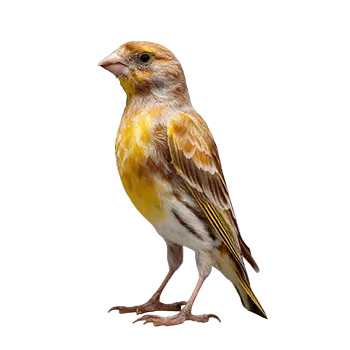

The Crested Canary is a domestically developed variety of the common canary (Serinus canaria domestica), bred specifically for the distinctive feather crest adorning the head that creates its most recognizable and prized feature. This variety is also known as the Crest Canary, Lancashire Canary (a specific crested type), Crested Norwich Canary, or simply as Crested. The term "Crested Canary" encompasses several distinct breeds including the Gloster Fancy Canary (which comes in crested "Corona" and non-crested "Consort" varieties), the Lancashire Canary, the Crested Norwich, and other crested varieties, each with specific breeding standards regarding crest size, shape, and overall conformation.
Taxonomically, all domestic canaries regardless of variety belong to the species Serinus canaria domestica, representing domesticated descendants of the wild canary (Serinus canaria) native to the Canary Islands, Azores, and Madeira. Domestic canaries have been selectively bred for over 400 years, resulting in hundreds of distinct varieties classified into three main groups: song canaries (bred for vocal ability), type canaries (bred for specific physical characteristics including the Crested varieties), and color canaries (bred for specific plumage colors). Crested Canaries fall into the type canary category, where physical appearance rather than song or color is the primary breeding focus.
The scientific classification places canaries in the family Fringillidae (true finches) rather than Estrildidae (waxbills and munias), making them more closely related to goldfinches, siskins, and other true finches than to the estrildid finches commonly kept in aviculture. The genus Serinus contains numerous wild finch species, though the domestic canary is the only member extensively bred in captivity for the pet trade.
The crest itself is a genetic mutation affecting feather growth and direction on the crown of the head. Crested varieties display distinctive circular or radial arrangements of elongated feathers emanating from a central point on the crown, creating appearances ranging from neat, symmetrical crests resembling crowns to larger, more dramatic crests that may partially obscure the eyes. The crest gene is dominant, meaning only one parent needs to carry it for offspring to potentially inherit the trait. However, breeding two crested birds together can produce lethal genetic combinations, so responsible breeders pair crested birds with non-crested birds (called "plainheads" or "consorts") to maintain healthy breeding lines.
Among crested varieties, the Gloster Fancy Canary is perhaps the most popular and widely kept type. Glosters are small, compact canaries with either a neat, even crest (Corona variety) or no crest (Consort variety). The Lancashire Canary is a larger crested variety nearly extinct until preservation efforts revived the breed. The Crested Norwich is another traditional crested type known for its large size and impressive crest. Each variety has specific breed standards established by canary clubs and societies worldwide.
In aviculture and among bird enthusiasts, Crested Canaries are recognized for combining visual appeal with the musical abilities typical of canaries. While show-quality crested birds command premium prices and require careful breeding to maintain proper crest formation, pet-quality crested canaries are readily available and affordable. The distinctive appearance makes them instantly recognizable and appealing to people seeking birds with unique characteristics. The varieties have been bred in numerous color mutations including yellow, white, buff, cinnamon, and variegated patterns, allowing considerable choice in appearance while maintaining the characteristic crest.