
Origins & Development

The Checkered Giant rabbit traces its ancestry to Europe, where large spotted rabbits were selectively bred in France and Germany during the late nineteenth century. French breeders working with Flemish Giants, French Lops, and spotted breeds developed a large rabbit with distinctive markings that would eventually become known on the continent as the Giant Papillon. The emphasis from the beginning was on producing a sizable rabbit with a bold, clearly defined pattern of markings against a white base coat.

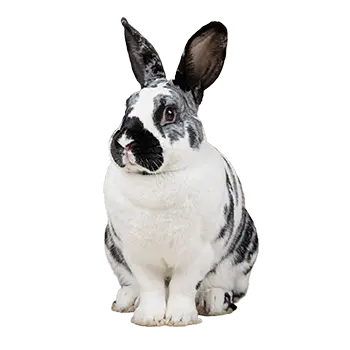
German breeders played a particularly important role in refining the breed during the 1890s and early 1900s. Through careful selection, they worked to standardize the butterfly nose marking, the eye circles, the cheek spots, the ear coloration, and the distinctive dorsal stripe and side markings that define the breed. The goal was not merely a large rabbit but one whose markings were symmetrical, sharply delineated, and visually dramatic.

The breed arrived in the United States in 1910, where American fanciers embraced it with enthusiasm. Early American breeders continued the refinement process, ultimately developing a rabbit that differed somewhat from its European counterpart in body type and marking preferences. The American Rabbit Breeders Association recognized the Checkered Giant, and it has maintained a dedicated following among exhibitors and breeders ever since.

The development of the Checkered Giant stands as a testament to the patience and skill of selective breeding. Producing rabbits that consistently meet the exacting marking standards remains one of the greatest challenges in the rabbit fancy, as the genetics governing pattern expression are complex and unpredictable. Many kits born in Checkered Giant litters do not carry the correct markings for show, which has always made successful breeding a pursuit requiring deep knowledge and commitment.

Historical Roles

The Checkered Giant was originally developed as a dual-purpose breed, valued for both its substantial size and its striking appearance. In Europe during the late nineteenth and early twentieth centuries, large rabbit breeds served practical roles in rural households, providing meat and fur. The Giant Papillon, as it was known on the continent, was no exception, and its size made it a productive addition to the rabbitry.

As the breed made its way into the exhibition world, however, its role shifted decisively toward the show table. The dramatic black-and-white markings of the Checkered Giant made it a crowd favorite at rabbit shows, and breeders increasingly prioritized aesthetic qualities over utilitarian traits. The challenge of producing correctly marked specimens added a competitive dimension that appealed to serious fanciers.

In the United States, the Checkered Giant became almost exclusively a show breed by the mid-twentieth century. Its full-arch body type and active temperament made it a lively and eye-catching presence in exhibition halls. Judges evaluated specimens against an exacting standard that awarded points for the precision and placement of each marking element, making the breed one of the most technically demanding to exhibit successfully.

The breed also played a historical role in advancing the understanding of rabbit genetics. The inheritance patterns governing the Checkered Giant's markings attracted the attention of early geneticists and serious breeders who documented how color and pattern traits were passed from generation to generation. This body of knowledge contributed to the broader understanding of coat color genetics across all rabbit breeds.

Cultural Symbolism

The Checkered Giant occupies a unique place in the cultural imagination of the rabbit fancy. Its bold, high-contrast markings have made it one of the most immediately recognizable rabbit breeds, and it has long been associated with the artistry and precision of selective breeding. For many fanciers, the Checkered Giant represents the pinnacle of the breeder's craft, where beauty must be produced within extremely narrow parameters.

The breed's name itself carries symbolic weight. The word "giant" speaks to its imposing physical presence, while "checkered" evokes the patterned markings that define the breed's identity. In European traditions, the name Giant Papillon, meaning "giant butterfly," references the distinctive butterfly-shaped marking on the nose, lending the breed an association with delicacy and elegance despite its substantial size.

Within the rabbit breeding community, the Checkered Giant has come to symbolize the intersection of challenge and reward. Because producing a show-quality specimen is so difficult, breeders who consistently produce winning Checkered Giants earn considerable respect among their peers. The breed is often described as a "breeder's breed," a designation that carries prestige and implies a deep mastery of genetics and husbandry.

The visual appeal of the Checkered Giant has also made it a popular subject for rabbit-themed artwork, photography, and promotional materials within the hobby. Its striking appearance lends itself to graphic representation, and images of Checkered Giants frequently appear on the covers of breed publications and show catalogs.

Breed Clubs & Standards

The American Checkered Giant Rabbit Club has served as the breed's national specialty club in the United States for decades, operating under the umbrella of the American Rabbit Breeders Association. The club promotes the breed through education, supports breeders with resources and mentorship, and sponsors sweepstakes competitions at national and regional shows. Membership in the specialty club has long been considered essential for serious Checkered Giant breeders.

The ARBA standard of perfection for the Checkered Giant is among the most detailed and exacting of any rabbit breed. The standard allocates points across multiple marking elements, including the butterfly nose marking, eye circles, cheek spots, colored ears, the herringbone dorsal stripe, and the side markings. Each element must be clearly defined, properly shaped, and symmetrically placed. The body itself must exhibit the full-arch type, with the rabbit standing tall on long, powerful legs.

In Europe, the Giant Papillon is recognized by national rabbit breeding federations in France, Germany, and other countries, though the European standard differs from the American version in several respects. European standards may allow for a broader range of color varieties and may place different emphasis on body type versus marking precision. These differences reflect the divergent breeding philosophies that developed as the breed evolved on separate continents.

The breed standard has been refined over the years through the collaborative work of breeders, judges, and club officials. Revisions to the standard reflect evolving aesthetic preferences, improved genetic understanding, and the practical realities of breeding. The standard serves not only as a judging guide but as a shared vision that unites the Checkered Giant community around common goals.

The Breed Today

The Checkered Giant remains a respected and admired breed within the American rabbit fancy, though it has never achieved the widespread popularity of smaller, easier-to-manage breeds. Its size, space requirements, and the difficulty of producing correctly marked show specimens limit the number of breeders who take on the challenge. Those who do, however, tend to be deeply committed and knowledgeable, forming a tight-knit community within the broader rabbit world.

At contemporary rabbit shows, the Checkered Giant continues to draw attention from spectators and fellow exhibitors alike. A well-marked Checkered Giant on the show table is a showstopper, and Best in Show wins by Checkered Giants, while not common, are celebrated events. The breed's full-arch body type requires skilled posing by exhibitors, adding another layer of expertise to the competitive equation.

Modern breeders benefit from advances in genetic understanding that have improved the consistency of marking quality in their herds. Online communities and social media have also expanded the reach of the Checkered Giant fancy, allowing breeders across the country to share knowledge, coordinate pairings, and promote the breed to newcomers. These tools have helped sustain interest in the breed even as the overall rabbit fancy has evolved.

The Checkered Giant also has a small but growing following as a companion animal. Owners who appreciate its active personality, striking appearance, and engaging temperament find it a rewarding pet, though its size and exercise needs require appropriate housing and space. The breed's future depends on the continued dedication of breeders who value its unique combination of beauty, challenge, and tradition.

Notable Individuals

Throughout the history of the Checkered Giant, individual rabbits and breeders have left lasting impressions on the breed's development. Best in Show winners at the ARBA National Convention have periodically included Checkered Giants, and each such win represents years of dedicated breeding effort. These victories are milestone events for the breed community, demonstrating that the Checkered Giant can compete at the highest levels against all breeds.

Certain breeders have become legendary within the Checkered Giant fancy for their sustained excellence over decades. These individuals have developed lines known for consistent marking quality, strong body type, and vigorous health. Their breeding programs have produced generation after generation of competitive show rabbits, and their stock has influenced herds across the country through sales and cooperative breeding arrangements.

The Checkered Giant has also benefited from dedicated judges and educators who have championed the breed within the ARBA system. These individuals have written breed guides, conducted seminars, and mentored new breeders, ensuring that the knowledge required to breed and evaluate Checkered Giants is passed on to each new generation. Their contributions extend beyond the show table to the preservation of the breed's heritage and standards.

In the international arena, notable Giant Papillon breeders in Europe have maintained and advanced the breed along lines that sometimes diverge from American preferences. The exchange of ideas and, occasionally, breeding stock between American and European programs has enriched the breed on both sides of the Atlantic, contributing to the genetic diversity and overall vitality of the Checkered Giant worldwide.

Always consult a qualified professional before making any health-related decisions. This content is provided for informational reference only and should not replace professional guidance specific to your animal.