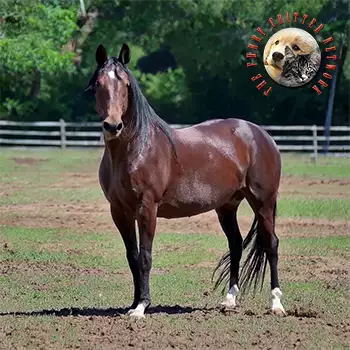

The Standardbred traces its origins to eighteenth-century America, where informal trotting races on public roads and at county fairs laid the foundation for a breed defined by speed at the trot and pace. The breed's development was driven by a uniquely American enthusiasm for harness racing, a sport that grew from impromptu contests between farmers to a highly organized industry with dedicated tracks, breeding programs, and enormous public followings.
The breed's foundation sire is Hambletonian 10, a bay stallion foaled in 1849 in Sugar Loaf, New York. Hambletonian was a grandson of the English Thoroughbred Messenger, who was imported to the United States in 1788 and whose descendants showed an exceptional aptitude for trotting. Hambletonian proved to be one of the most prepotent sires in equine history, producing over 1,300 foals during his breeding career, and virtually every modern Standardbred traces its lineage back to him.
The breed's name derives from the practice of requiring horses to meet a speed standard in order to be registered. Originally, a horse had to trot or pace a mile within a specified time to qualify as a Standardbred. This performance-based criterion distinguished the breed from others that were defined primarily by pedigree or appearance, and it embedded the principle of athletic merit into the breed's very identity.
Throughout the nineteenth century, the breed was refined through selective crossing of Hambletonian's descendants with mares of Thoroughbred, Morgan, and Canadian pacer bloodlines. These crosses produced horses that combined speed with the endurance and temperament needed for competitive harness racing. By the turn of the twentieth century, the Standardbred had established itself as the preeminent harness racing breed in North America and was gaining recognition internationally.