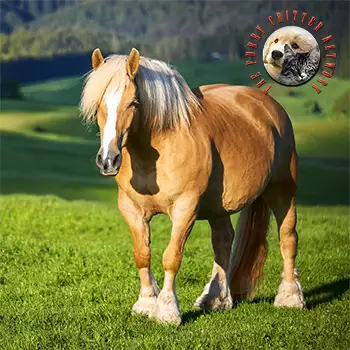

The Haflinger traces its roots to the mountainous Tyrol region, which straddles modern-day Austria and northern Italy. The breed's foundation stallion, 249 Folie, was born in 1874 in the village of Schluderns. Folie was sired by the half-Arabian stallion El Bedavi XXII out of a refined native Tyrolean mare, and his influence on the breed was so profound that all modern Haflingers can trace their lineage back to him through seven distinct stallion lines. The rugged Alpine terrain shaped a horse that was compact, sure-footed, and remarkably hardy.
Early breeders in the South Tyrolean valleys refined the Haflinger through careful selection, prioritizing animals that could navigate steep mountain trails while carrying heavy loads. The name "Haflinger" derives from the village of Hafling, located above Merano in what is now the Italian province of South Tyrol. For centuries these small, chestnut horses with flaxen manes and tails were indispensable partners to Alpine farmers, serving as pack animals, draft horses, and riding mounts in terrain where larger breeds simply could not operate.
By the late nineteenth century, the Austrian government recognized the breed's value and began supporting organized breeding programs. The first formal studbook was established to preserve bloodline records and maintain breed standards. These early institutional efforts ensured that the Haflinger's defining traits—its golden chestnut coat, flaxen mane and tail, compact muscular build, and dependable temperament—were consistently passed from generation to generation.
The twentieth century brought significant challenges and transformations. Both World Wars placed enormous demands on the breed, as military forces requisitioned Haflingers for transport duties in mountainous theaters of operation. Wartime breeding priorities temporarily shifted toward producing stockier animals for heavy draft work, which diluted some of the breed's original refinement. Post-war breeders worked diligently to restore the Haflinger's characteristic balance of strength and elegance, reintroducing Arabian bloodlines in measured doses to recover quality without sacrificing the hardiness that made the breed invaluable.