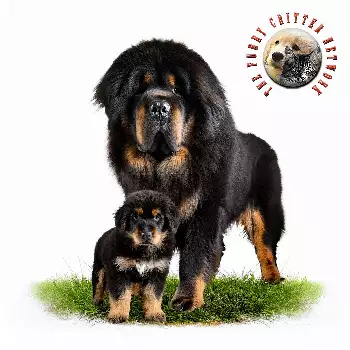

The Tibetan Mastiff is considered one of the most ancient dog breeds in existence, with roots tracing back thousands of years to the high plateaus and remote valleys of Central Asia. Genetic studies have placed the breed among the earliest divergences from the ancestral wolf population, suggesting that dogs resembling the modern Tibetan Mastiff were already established long before written records began documenting livestock guardian breeds. The extreme altitude, harsh winters, and isolation of the Tibetan Plateau played a central role in shaping the breed's physical and behavioral characteristics.
Early Tibetan Mastiffs served as guardians for nomadic herders and their flocks, protecting camps and monasteries from predators such as wolves, snow leopards, and bears. Their massive size, thick double coat, and deep territorial instincts made them ideally suited for life at elevations exceeding 14,000 feet. Unlike many European guardian breeds that were refined through selective breeding programs, the Tibetan Mastiff developed largely through natural selection, with the harshest environmental pressures dictating which dogs survived and reproduced.
Western awareness of the breed began in the early 19th century when European travelers and explorers brought accounts of enormous guardian dogs back from their journeys through the Himalayas. Captain Samuel Turner mentioned large dogs during his diplomatic mission to Tibet in the late 1700s, and subsequent travelers offered similar descriptions. The first Tibetan Mastiffs to arrive in England came in the mid-1800s, though the breed remained exceedingly rare outside of Asia for well over a century.
The modern breed as recognized by Western kennel clubs descends from a relatively small gene pool of dogs imported from Nepal, India, and Tibet during the 20th century. Breeding programs in the United States and Europe worked to preserve the breed's imposing structure and independent temperament while also addressing the health and socialization challenges that come with maintaining such a primitive and powerful dog in domestic settings.