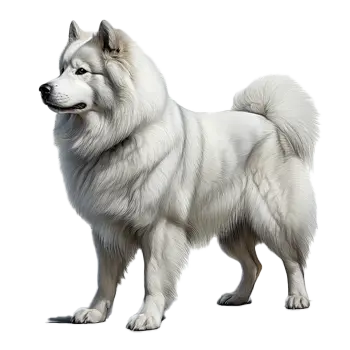

The Samoyed takes its name from the Samoyedic peoples of northern Siberia, semi-nomadic reindeer herders who relied on their dogs for survival in one of the harshest climates on Earth. For thousands of years these dogs lived in intimate partnership with their human families, serving as herders, sled pullers, hunters, and even bed warmers during the brutal Arctic winters. The closeness of this relationship is reflected in the breed's famously sociable and people-oriented disposition, a trait that has been reinforced across countless generations.
Archaeological and genetic evidence places the Samoyed among the most ancient of domesticated dog breeds. DNA studies have shown that Samoyeds share deep ancestral roots with other primitive spitz-type dogs, diverging relatively early from the broader canine family tree. Their geographic isolation in the Siberian tundra helped preserve an unusually pure genetic lineage, making the modern Samoyed one of the closest living relatives of the original domesticated dog.
Western awareness of the breed began in the late nineteenth century when European and British explorers encountered these striking white dogs during Arctic expeditions. Ernest Kilburn-Scott is widely credited with bringing the first Samoyeds to England in the 1890s, where they quickly attracted attention for their beauty and temperament. The Kilburn-Scotts became instrumental in establishing a breeding program that would form the foundation of the Western Samoyed population.
From those early imports the breed spread across Europe and eventually to North America, where dedicated fanciers worked to preserve the Samoyed's working heritage while also refining its appearance for the show ring. The breed's transition from a rugged Arctic working dog to a beloved companion and exhibition breed took place over roughly a century, yet the core qualities that made Samoyeds indispensable to nomadic peoples — endurance, intelligence, and an unwavering bond with humans — remain firmly intact today.