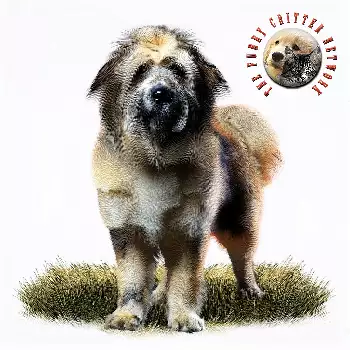

The Pyrenean Shepherd, known in its homeland as the Berger des Pyrénées, is widely considered one of the oldest herding breeds in France. Archaeological and historical evidence suggests that small, agile herding dogs have worked alongside shepherds in the Pyrenees Mountains for thousands of years, with some breed historians tracing their lineage back to dogs depicted in Neolithic cave art from the region. The rugged, isolated valleys of the French Pyrenees provided the ideal environment for these dogs to develop into a distinct type, shaped entirely by the demands of managing flocks across steep, unforgiving terrain.
The breed's development was driven almost exclusively by function rather than appearance. Shepherds in the high mountain pastures needed a dog that was fast, tireless, and capable of covering vast stretches of rocky hillside with minimal direction. Over centuries of selective breeding for working ability, the Pyrenean Shepherd evolved into two coat varieties — rough-faced (long-haired) and smooth-faced — both sharing the same intense energy and keen intelligence. These dogs were bred to work in tandem with the much larger Great Pyrenees, which served as a livestock guardian while the smaller Pyrenean Shepherd actively moved and directed the flock.
Isolation played a critical role in preserving the breed's characteristics. Unlike many European herding breeds that were crossbred or standardized during the nineteenth century, the Pyrenean Shepherd remained relatively unchanged in the remote mountain communities where it worked. Shepherds passed their dogs down through generations, valuing working instinct above all else. It was not until the early twentieth century that the breed began to attract attention outside its native region, setting the stage for formal recognition and broader appreciation.
The devastating losses of World War I brought an unexpected spotlight to the breed. Pyrenean Shepherds were recruited by the French military as messenger dogs, search-and-rescue animals, and sentries along the front lines. Their intelligence, speed, and adaptability made them exceptionally effective in these roles, and soldiers who served alongside them carried stories of the breed's remarkable capabilities back to cities and towns far from the Pyrenees. This wartime service is often credited with sparking wider interest in the breed beyond its pastoral origins.