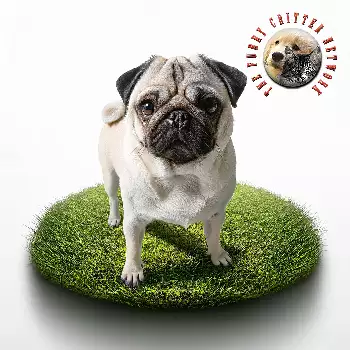

Origins & Development

The Pug is one of the oldest dog breeds in existence, with roots stretching back more than two thousand years to ancient China. Bred as companions for Chinese emperors during the Han Dynasty, Pugs lived in extraordinary luxury and were sometimes guarded by soldiers. Their earliest ancestors were prized for their small size, flat faces, and deeply wrinkled brows, traits that were selectively refined over many generations of careful breeding within the imperial courts.

Historians believe the Pug shares ancient ancestry with other short-faced Chinese breeds such as the Pekingese and the Shih Tzu, though the precise lineage remains a subject of scholarly debate. Early Chinese manuscripts refer to short-mouthed dogs known as "Lo-sze," which many breed historians consider to be the direct predecessors of the modern Pug. These dogs were treasured not merely as pets but as symbols of status and refinement within the ruling classes.

The breed made its way westward through trade routes, arriving in Europe by the sixteenth century. Dutch traders of the East India Company are widely credited with introducing the Pug to the Netherlands, where the breed quickly captured the affections of the aristocracy. From the Netherlands, the Pug spread across European courts, gaining admirers in England, France, Spain, and Italy. Each culture adopted the breed and adapted its role, but the Pug's essential character as a devoted companion remained constant throughout its long migration across the globe.

Over the centuries, the Pug's physical appearance has shifted somewhat. Earlier Pugs tended to have slightly longer muzzles and leaner bodies compared to the more compact, heavily wrinkled dogs seen in modern show rings. Victorian-era breeders in England played a particularly influential role in shaping the Pug's current look, favoring shorter noses and stockier frames. Despite these changes, the breed's core temperament, a blend of playful humor and affectionate loyalty, has endured remarkably well across the ages.

Historical Roles

Throughout much of their history, Pugs have served primarily as companion animals rather than working dogs. In the Chinese imperial courts, they were lap dogs in the truest sense, spending their days alongside emperors and empresses and sleeping in lavishly appointed quarters. Their role was one of emotional comfort and companionship, a function they fulfilled with an almost theatrical devotion that endeared them to generations of royal owners.

In Europe, the Pug assumed a similarly elevated status. The breed became closely associated with the House of Orange in the Netherlands after a Pug reportedly saved the life of William the Silent in 1572 by alerting him to an approaching Spanish ambush. This act of canine vigilance cemented the Pug's place as the official breed of the House of Orange and elevated its reputation throughout the Dutch Republic. The story, whether embellished or entirely accurate, gave the Pug a heroic narrative that boosted its popularity enormously.

Pugs also found favor among European monks. Tibetan monasteries are believed to have kept Pugs as companions, and later, monks in certain European orders adopted the breed as well. The dogs provided companionship in settings where human social interaction was limited, and their calm indoor temperament made them well suited to monastic life. Their presence in both sacred and secular spaces speaks to the breed's remarkable adaptability.

By the eighteenth and nineteenth centuries, Pugs had become fixtures of fashionable European society. They appeared in the salons of Paris, the drawing rooms of London, and the courts of Naples. Napoleon's wife Joséphine famously kept a Pug named Fortuné, who reportedly bit Napoleon on their wedding night. Such colorful anecdotes only deepened the breed's cultural footprint, transforming the Pug from a simple companion into a symbol of refined domesticity and aristocratic taste.

Cultural Symbolism

The Pug has long carried rich symbolic meaning across different cultures. In China, the breed's deep facial wrinkles were highly valued because they were thought to resemble the Chinese character for "prince." Breeders worked deliberately to produce dogs whose forehead wrinkles formed patterns that evoked good fortune and nobility, turning the Pug's face into a kind of living calligraphy that blended aesthetics with superstition.

In European culture, the Pug came to symbolize loyalty, devotion, and a certain playful defiance. The breed's association with the House of Orange gave it political overtones in the Netherlands, and Pug imagery appeared on pottery, paintings, and decorative objects as a quiet declaration of political allegiance. When William of Orange ascended to the English throne in 1688, the Pug's symbolic association with loyalty and courage traveled with him, embedding itself in English culture as well.

During the Victorian era, Pugs became symbols of domestic contentment and the comforts of home. They appeared frequently in paintings and lithographs depicting idealized family scenes, their compact bodies and expressive faces lending warmth and humor to compositions that celebrated middle-class respectability. Queen Victoria herself kept several Pugs, lending the breed an aura of royal endorsement that further solidified its symbolic connection to comfort and gentility.

In the modern era, the Pug has taken on new symbolic dimensions. The breed's distinctive appearance, with its bulging eyes, wrinkled face, and perpetual look of mild bewilderment, has made it a natural icon of internet humor and self-deprecating charm. Pugs now symbolize a lighthearted approach to life, an embrace of imperfection, and a refusal to take oneself too seriously. This shift from regal symbol to comedic icon says as much about changing cultural values as it does about the breed itself.

Breed Clubs & Standards

The formal organization of Pug breeding began in earnest during the nineteenth century, when kennel clubs across Europe and North America started establishing written breed standards. The Pug Dog Club of England, founded in 1883, was among the first breed-specific organizations dedicated to the Pug and played a pivotal role in defining the physical and temperamental characteristics that breeders would strive to produce.

The American Kennel Club recognized the Pug in 1885, making it one of the earlier breeds to gain official status in the United States. The AKC standard describes the Pug as "multum in parvo," a Latin phrase meaning "a lot in a little," which captures the breed's substantial personality packed into a small frame. The standard calls for a square, cobby body, a large round head, and a short muzzle with clearly defined wrinkles.

Over the decades, breed standards have been revised and refined to address evolving priorities. In recent years, growing awareness of brachycephalic health concerns has prompted some kennel clubs, particularly in Europe, to reconsider standards that may encourage extreme facial shortening. The Dutch Kennel Club and the Norwegian Kennel Club have been among those advocating for breed standards that prioritize health and functional breathing, sparking debates within the Pug community about the balance between tradition and welfare.

Pug breed clubs today serve multiple functions beyond maintaining standards. They organize specialty shows, fund health research, coordinate rescue efforts, and provide educational resources for owners and prospective buyers. National and regional clubs exist in most countries where the Pug has a significant following, and international coordination through bodies like the Fédération Cynologique Internationale helps ensure that breed standards maintain a degree of global consistency while allowing for regional variation.

The Breed Today

The Pug remains one of the most popular companion breeds worldwide, consistently ranking among the top breeds registered by major kennel clubs in the United States, the United Kingdom, and across Europe. Their small size, adaptable temperament, and minimal exercise requirements make them especially well suited to urban living, and they have thrived as apartment dogs in cities around the globe.

However, the breed's popularity has brought increased scrutiny regarding health. Pugs are brachycephalic, meaning they have shortened skulls and compressed airways, which can lead to breathing difficulties, overheating, and related complications. Eye problems, spinal issues, and obesity are also common concerns. These health challenges have sparked a significant and ongoing conversation within the breeding community about responsible practices, with some breeders working to produce Pugs with slightly longer muzzles and more open nostrils to improve respiratory function.

The retro Pug movement represents one response to these health concerns. Breeders involved in this effort cross Pugs with longer-muzzled breeds such as the Jack Russell Terrier to produce dogs that retain the Pug's characteristic personality but with more moderate facial structure. While controversial among purists, this approach has gained traction in several European countries and reflects a broader shift in the dog breeding world toward prioritizing health outcomes over strict adherence to traditional appearance standards.

Despite these debates, the Pug's appeal shows no signs of diminishing. The breed's social nature, comedic personality, and deep attachment to their owners continue to attract new admirers. Pug meetups, social media communities, and breed-specific events draw enthusiastic participation worldwide, and the Pug's cultural presence remains as vibrant as ever. The challenge for the breed's future lies in preserving the qualities that make Pugs beloved while ensuring that the dogs themselves can live long, comfortable, and healthy lives.

Notable Individuals

Throughout history, certain individual Pugs have achieved a level of fame that transcended the breed itself. Pompey, the Pug credited with saving the life of William the Silent, is arguably the most historically significant Pug ever recorded. Whether the story is fully accurate or partly legend, Pompey's alert during the Spanish assassination attempt in 1572 became one of the most retold tales in canine history and permanently linked the Pug breed with courage and loyalty.

Fortuné, the Pug belonging to Joséphine de Beauharnais, earned a different kind of notoriety. Known for his fierce protectiveness of his mistress, Fortuné reportedly refused to vacate the marital bed when Napoleon entered it for the first time and bit the future emperor on the leg. The incident became a widely repeated anecdote in Napoleonic lore and illustrated the Pug's reputation for boldness and unwavering attachment to their chosen person.

In the modern era, individual Pugs have achieved celebrity status through media and social platforms. Doug the Pug became one of the most followed pets on social media, amassing millions of followers across platforms and appearing in merchandise, books, and public events. His success demonstrated the Pug's natural photogenic quality and the breed's ability to connect with audiences through humor and charm. Other Pugs have found fame through film, advertising, and viral moments that collectively reinforce the breed's status as a cultural icon.

Queen Victoria's personal involvement with Pugs also elevated specific dogs to historical note. She bred Pugs at the royal kennels and is credited with helping to popularize the fawn-colored variety in England. Her preference for Pugs with less extreme features and more natural proportions is sometimes cited by advocates of healthier breeding practices as evidence that the breed's current appearance represents a departure from its earlier, more moderate form.

Always consult a qualified professional before making any health-related decisions. This content is provided for informational reference only and should not replace professional guidance specific to your animal.