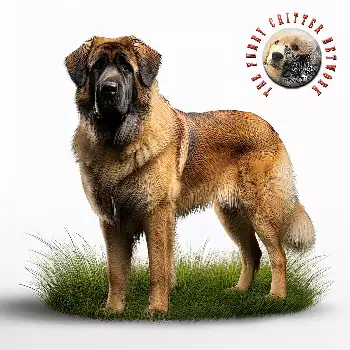

Origins & Development

The Leonberger traces its origins to the city of Leonberg in Baden-Württemberg, Germany, where politician and animal enthusiast Heinrich Essig is credited with creating the breed during the 1830s and 1840s. Essig claimed to have crossed a Landseer Newfoundland with a Saint Bernard over several generations, later introducing a Great Pyrenees into the mix. His goal was to produce a large, lion-like dog that would serve as a living emblem of the city of Leonberg, whose coat of arms features a rearing lion.

While Essig was a gifted marketer and promoter, the precise breeding records from his program remain incomplete, and some historians have questioned the exact combination of breeds involved. What is clear is that by the mid-nineteenth century, Essig had produced a remarkably imposing dog with a lush golden coat and a calm, dignified bearing. These early Leonbergers attracted attention from dog fanciers across Europe, and Essig sold them to aristocrats, artists, and even royalty.

After Essig's death in 1889, a group of devoted breeders formed the first Leonberger club in 1895 to preserve and standardize the breed. They worked to codify the traits that had made the dog so distinctive — the lion-like mane, the expressive dark mask, and the gentle but watchful temperament. Their efforts established the foundation upon which all modern Leonberger breeding programs are built.

The breed's development was shaped as much by adversity as by design. Two World Wars decimated the Leonberger population in Europe, and the breed came perilously close to extinction on both occasions. Each time, a small number of dedicated breeders gathered the surviving dogs and painstakingly rebuilt the gene pool, ensuring that the Leonberger's essential character and physical attributes were preserved for future generations.

Historical Roles

From their earliest days, Leonbergers served a variety of practical purposes that went well beyond companionship. In rural Germany and neighboring countries, they were valued as versatile farm dogs capable of pulling carts loaded with goods to market. Their enormous strength and patient disposition made them ideally suited to draft work, and they proved more biddable than many other large breeds when harnessed to a load.

Leonbergers also earned a strong reputation as water rescue dogs, particularly in the coastal communities of Germany and the Low Countries. Their powerful build, webbed feet, and water-resistant double coat allowed them to swim effectively in rough conditions. Fishermen and dock workers relied on them to help haul in nets, retrieve objects from the water, and, on occasion, assist in the rescue of drowning swimmers.

As companion animals, Leonbergers became fixtures in the households of European aristocracy during the late nineteenth century. Their imposing size and regal bearing made them status symbols, and they were frequently given as diplomatic gifts. Several European royal families, including those of the Austro-Hungarian Empire, Italy, and Russia, are documented as having kept Leonbergers on their estates. The breed's calm temperament and loyalty to its family made it well suited to life in grand households with large staffs and frequent visitors.

In the modern era, Leonbergers continue to serve in working capacities, particularly in water rescue and therapy work. Their gentle nature and sensitivity to human emotions have made them outstanding therapy dogs in hospitals, schools, and assisted living facilities. Organizations in Europe and North America regularly train Leonbergers for certified water rescue, and the breed remains one of the few giant breeds actively deployed in lifesaving roles.

Cultural Symbolism

The Leonberger's connection to the city of Leonberg is more than historical trivia — it represents one of the most deliberate acts of civic branding in the history of dog breeding. Heinrich Essig envisioned a dog that would literally embody the lion on the city's coat of arms, and the breed he created fulfilled that vision so thoroughly that the Leonberger has been inseparable from the city's identity ever since. Statues, plaques, and public artwork throughout Leonberg celebrate the breed, and the city continues to host annual events honoring its canine namesake.

Beyond its hometown, the Leonberger has come to symbolize a particular set of values in the broader dog-loving community. The breed is often associated with steadfastness, quiet strength, and a noble bearing that belies its playful and affectionate personality. Leonberger enthusiasts frequently describe their dogs as gentle giants, and the breed's reputation for patience with children and smaller animals has reinforced its image as a family protector rather than an aggressive guardian.

The breed's near-extinction during the two World Wars has added a layer of resilience and survival to its cultural narrative. The story of dedicated breeders gathering the handful of remaining Leonbergers and rebuilding the population from almost nothing has become a powerful symbol within the purebred dog community of what commitment and perseverance can achieve. This narrative has inspired similar preservation efforts for other rare breeds around the world.

In art and literature, the Leonberger has appeared in European paintings and illustrations since the late nineteenth century, often depicted alongside children or in pastoral settings that emphasize the breed's gentle nature. The contrast between the dog's massive frame and its tender interaction with people has made it a compelling subject for artists seeking to capture the bond between humans and animals.

Breed Clubs & Standards

The first dedicated Leonberger breed club was established in 1895 in Germany, just six years after the death of founder Heinrich Essig. This club took on the critical task of writing a formal breed standard, which described the ideal Leonberger in terms of structure, coat, color, temperament, and movement. The original standard emphasized the lion-like appearance that had been Essig's hallmark, including the dramatic mane of longer fur around the neck and chest that distinguishes males of the breed.

The Fédération Cynologique Internationale recognized the Leonberger and adopted the German breed standard as the international reference document. Under FCI guidelines, the Leonberger is classified in Group 2 (Pinscher and Schnauzer type, Molossoid breeds, Swiss Mountain Dogs and Swiss Cattle Dogs), Section 2.2 (Molossoid breeds, Mountain type). The standard calls for a large, muscular dog with a balanced build, a black mask, and a medium-soft to long coat in shades ranging from lion-yellow to reddish-brown.

In the United States, the Leonberger Club of America serves as the parent breed club recognized by the American Kennel Club, which granted the breed full recognition in the Working Group in 2010. The LCA maintains a comprehensive code of ethics for breeders and promotes health testing for conditions prevalent in the breed, including hip dysplasia, elbow dysplasia, and certain inherited eye conditions. The club's health committee coordinates research efforts and maintains a health database to support responsible breeding decisions.

International cooperation among Leonberger clubs has been a hallmark of the breed's modern history. Clubs in Germany, France, Scandinavia, the United Kingdom, and North America regularly share health data, coordinate breeding strategies, and collaborate on efforts to maintain genetic diversity within a breed whose population bottlenecked severely during the twentieth century. This spirit of cooperation has helped ensure that the Leonberger remains genetically viable despite its relatively small global population compared to more common breeds.

The Breed Today

The Leonberger remains a relatively rare breed worldwide, though its popularity has grown steadily since the turn of the twenty-first century. In the United States, the breed typically ranks in the middle tier of AKC registrations, attracting owners who seek a large, family-oriented dog with a calm and affectionate temperament. The breed's combination of imposing size and gentle personality continues to set it apart from other giant breeds and draws a devoted following.

Modern Leonberger breeding programs place a strong emphasis on health and longevity, which has been an ongoing concern for the breed. Like many giant breeds, Leonbergers have a relatively short lifespan, and efforts to extend it through careful genetic selection and health screening are a top priority within the breeding community. Responsible breeders conduct extensive testing for orthopedic, cardiac, and neurological conditions before making breeding decisions, and the breed's parent clubs actively support research into conditions that disproportionately affect large and giant dogs.

The Leonberger's versatility continues to be one of its greatest assets. Today's Leonbergers compete in conformation, obedience, rally, agility, drafting, and water rescue trials. Their intelligence and willingness to work with their handlers make them surprisingly agile for their size, and many owners discover that their Leonbergers thrive when given a job to do. The breed's aptitude for therapy work remains one of its most celebrated traits, and Leonberger therapy teams are active in communities throughout North America and Europe.

The breed community itself is characterized by a strong sense of camaraderie and mutual support. Leonberger owners frequently gather for regional and national specialty shows, breed-specific health clinics, and social events that celebrate the breed's unique qualities. Online communities and social media groups have expanded the reach of the Leonberger community, connecting owners and breeders across geographic boundaries and fostering a global network of enthusiasts dedicated to the breed's welfare and future.

Notable Individuals

Throughout the breed's history, individual Leonbergers have distinguished themselves through remarkable achievements and contributions to the breed's legacy. Among the earliest notable dogs were those from Heinrich Essig's own breeding program, which were gifted to prominent figures including Napoleon III of France, Empress Elisabeth of Austria, the Prince of Wales, and other European heads of state. While records from that era are incomplete, these dogs played a critical role in establishing the breed's reputation as a companion worthy of royalty.

In the aftermath of the World Wars, a small group of dogs and their dedicated breeders became legendary within the breed community for their role in saving the Leonberger from extinction. After World War I, only five Leonbergers suitable for breeding could be located in all of Germany. After World War II, the situation was similarly dire. The dogs that survived and contributed to the breed's revival are revered as foundation animals, and their pedigrees appear in the lineage of virtually every living Leonberger today.

In the modern era, individual Leonbergers have gained recognition in competitive dog sports, therapy work, and water rescue. Several dogs have earned advanced titles across multiple disciplines, demonstrating the breed's remarkable versatility. Leonbergers have also appeared as goodwill ambassadors at major kennel club events and public demonstrations, where their calm demeanor and striking appearance help introduce the breed to a wider audience.

The breed's therapy dogs deserve particular mention, as many individual Leonbergers have logged thousands of hours visiting hospitals, rehabilitation centers, and schools. Their size, which might seem intimidating in another context, often proves to be their greatest asset in therapy settings — patients and children find comfort in leaning against or wrapping their arms around these large, warm, and endlessly patient dogs. These individual contributions have done much to shape the public perception of the Leonberger as a breed defined by compassion and service.

Always consult a qualified professional before making any health-related decisions. This content is provided for informational reference only and should not replace professional guidance specific to your animal.