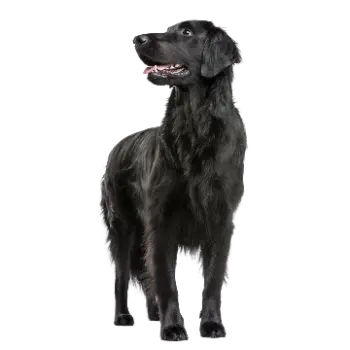

The Flat-Coated Retriever traces its roots to mid-nineteenth-century England, where breeders sought to develop a versatile gundog capable of working on both land and water. Early crosses are believed to have involved the Lesser Newfoundland (St. John's Water Dog), various setter breeds, and possibly the Collie, blending natural retrieving instinct with a biddable temperament and a sleek, weather-resistant coat. These early retrievers were collectively known as "wavy-coated" retrievers, a descriptor that reflected the texture of their coats before selective breeding refined them.
By the 1860s, breeders had begun to distinguish the Flat-Coated Retriever as a type in its own right, separating it from the heavier, curlier retrievers that would eventually become the Curly-Coated Retriever. The breed's development was shaped heavily by gamekeepers on large English estates who prized dogs that could handle the demands of driven shoots, working through dense undergrowth, marshes, and cold rivers with equal enthusiasm. Their elegant, racy build set them apart from the stockier retrievers that were also emerging during this period.
One of the most influential figures in the breed's early history was S. E. Shirley, a founding member of The Kennel Club in England, who played a pivotal role in stabilizing type and promoting the breed. Under his guidance and that of other dedicated breeders, the Flat-Coated Retriever was refined into a consistent and recognizable form. By the 1870s and 1880s, the breed had become one of the most popular retrievers in Britain, favored by both sporting gentlemen and professional gamekeepers alike.
The breed's signature flat-lying coat, which gives it its name, was achieved through careful selection over several generations. This dense, moderately long coat provided excellent protection from water and brambles while remaining easy to maintain compared to the coats of other working breeds. The standard coat colors settled into solid black and solid liver, both of which remain the only accepted colors in most registries today.