
Origins & Development

The Savannah cat traces its origins to a single crossbreeding event on April 7, 1986, when a male African Serval was bred with a domestic Siamese cat. The resulting kitten, named Savannah, became the namesake and foundation of the entire breed. This first-generation hybrid displayed a remarkable combination of wild appearance and domestic temperament, sparking immediate interest among exotic cat enthusiasts and breeders who saw the potential for a new kind of companion animal.

Patrick Kelley, one of the earliest advocates for the breed, acquired one of Savannah's offspring and began working with breeder Joyce Sroufe to establish the breed standard. Throughout the late 1980s and 1990s, these pioneering breeders developed careful breeding protocols, crossing early-generation Savannahs with domestic breeds such as Egyptian Maus, Ocicats, Oriental Shorthairs, and eventually other Savannahs to stabilize the line. The filial generation system, ranging from F1 through F7 and beyond, became central to classifying each cat's proximity to its wild Serval ancestry.

The breed's development required extraordinary patience and expertise. Early-generation Savannahs proved challenging to produce, with low conception rates and small litter sizes. Male Savannahs in the first several generations were typically sterile, which meant breeders relied heavily on female hybrids paired with domestic males or later-generation Savannah males. This biological constraint slowed the breed's development considerably but ultimately contributed to the careful, deliberate approach that defined its early history.

By the early 2000s, the Savannah cat had attracted a growing community of dedicated breeders across North America and Europe. The breed's dramatic appearance, tall and lean with bold spotted markings and oversized ears, made it one of the most visually distinctive domestic cats in the world. Its development stands as one of the most ambitious and closely documented breeding programs in modern feline history.

Historical Roles

Unlike many domestic cat breeds that emerged to fill practical roles such as pest control or companionship in specific settings, the Savannah cat was developed primarily as an exotic companion animal. Its creation was driven by the desire to produce a cat that captured the beauty and athleticism of a wild African feline while possessing a temperament suitable for life in a domestic household. In this sense, the Savannah's historical role has always been that of a living bridge between the wild and the domestic.

The breed also served an important role in shifting public perception of hybrid animals. Before the Savannah, most wild-domestic cat hybrids were regarded as curiosities or novelties with unpredictable temperaments. The careful breeding work that produced later-generation Savannahs demonstrated that hybrid vigor and wild appearance could coexist with sociability and trainability. This helped pave the way for broader acceptance of hybrid breeds in the feline fancy and influenced public conversations about responsible exotic pet ownership.

Savannahs have also played a notable role in conservation education. Their striking resemblance to their Serval ancestors has made them effective ambassadors for raising awareness about African wildcats and the conservation challenges those species face. Some breeders and owners have partnered with wildlife education organizations to introduce Savannahs to the public as a way of sparking interest in wild cat preservation without supporting the exotic pet trade in actual wild-caught animals.

In competitive cat showing, the Savannah carved out a unique niche. As the breed gained recognition from registries, it attracted exhibitors who appreciated its dramatic presence in the show ring. The breed's journey through the competitive landscape helped redefine what was considered acceptable within the domestic cat fancy and expanded the boundaries of breed diversity.

Cultural Symbolism

The Savannah cat has come to symbolize a particular kind of modern luxury and aspiration. With early-generation kittens commanding prices that can reach tens of thousands of dollars, ownership of a Savannah, particularly an F1 or F2, became associated with exclusivity and status. The breed entered the cultural imagination as the exotic cat for people who wanted something extraordinary but legal and domesticated, occupying a space between traditional pet ownership and the allure of the wild.

Beyond wealth and status, the Savannah also represents the human fascination with bridging the gap between nature and domesticity. The breed embodies a desire to bring the aesthetic power of the African savanna into the living room, a miniaturized wildness that is safe to touch and welcome into the home. This symbolic resonance has made the Savannah a frequent subject in lifestyle photography, interior design features, and social media content where the juxtaposition of wild beauty and domestic comfort creates a compelling visual narrative.

The breed has also become a symbol within debates about the ethics of hybrid breeding and exotic pet ownership. For advocates, the Savannah represents a responsible alternative to keeping actual wild cats in captivity. For critics, it raises questions about the commodification of wildlife genetics and the welfare implications of creating animals that straddle the line between wild and domestic. This tension has made the Savannah a culturally significant breed that sparks conversation well beyond the cat fancy.

In online communities, the Savannah cat has become an icon of feline athleticism and intelligence. Videos of Savannahs performing impressive leaps, playing fetch, walking on leashes, and interacting with their owners in dog-like fashion have cemented the breed's reputation as something genuinely different from a typical house cat. This cultural identity as the cat that acts like a dog has broadened the breed's appeal to audiences who might not otherwise consider cat ownership.

Breed Clubs & Standards

The International Cat Association, known as TICA, has been the primary registry for the Savannah cat since the breed's earliest days. Joyce Sroufe submitted the first breed standard to TICA in 1996, and the organization accepted the Savannah for registration in 2001. After years of careful evaluation and documentation, TICA granted the breed Championship status in 2012, allowing Savannahs of F3 generation and beyond to compete for titles alongside established domestic breeds.

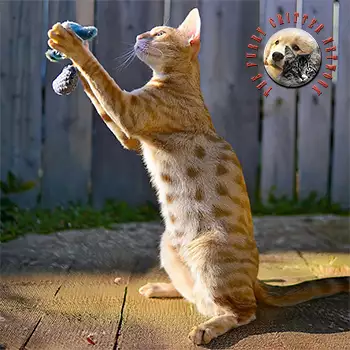
The breed standard emphasizes the Savannah's tall, lean, and athletic build. Judges look for a long neck, large upright ears with rounded tips and ocelli markings, and a medium-length tail. The coat should display bold, dark spots on a warm background color, with variations accepted in brown spotted tabby, silver spotted tabby, black, and black smoke. The overall impression should be one of a wild cat in miniature, with the grace and proportions of the African Serval translated into a domestic frame.

Breed clubs dedicated to the Savannah have played a vital role in maintaining breeding standards and educating prospective owners. The Savannah Cat Association and similar organizations provide breeder directories, educational resources, and community forums where experienced owners mentor newcomers. These clubs also advocate for the breed in legislative contexts, working to ensure that Savannah ownership remains legal in jurisdictions where hybrid cat regulations are under review.

Other registries have taken varied positions on the Savannah. The Cat Fanciers' Association, the largest cat registry in North America, does not currently recognize the breed, reflecting a more conservative stance on hybrid breeds. Some international registries in Europe and Australia have established their own standards and recognition pathways. This patchwork of recognition reflects the ongoing evolution of attitudes toward hybrid breeds within the broader cat fancy community.

The Breed Today

The Savannah cat today enjoys a dedicated and growing following worldwide. Advances in breeding have produced later-generation cats, from F5 through F7 and beyond, that retain much of the breed's striking appearance while exhibiting reliably domestic temperaments. These later generations are more widely available and affordable than early-generation cats, which has broadened the breed's accessibility and introduced Savannahs to a wider range of households.

Modern Savannah breeders emphasize health testing, socialization, and transparent communication with buyers. Reputable catteries conduct genetic screening for conditions such as hypertrophic cardiomyopathy and progressive retinal atrophy, and they socialize kittens extensively from birth to ensure confident, well-adjusted adults. The breed community has also become increasingly vigilant about identifying and discouraging backyard breeding operations that prioritize profit over animal welfare.

The Savannah's reputation as an active, intelligent, and interactive cat has made it particularly popular among owners who want a deeply engaged feline companion. The breed thrives with owners who provide enrichment, outdoor access through secured enclosures or leash walks, and consistent interactive play. This high-engagement ownership model has fostered a passionate community of Savannah owners who share training tips, enrichment ideas, and veterinary guidance through online groups and breed-specific forums.

Looking ahead, the breed faces ongoing challenges related to legal restrictions in certain jurisdictions, public misconceptions about hybrid cat behavior, and the need to maintain genetic diversity as the breeding population expands. However, the strength of the breed community, the dedication of responsible breeders, and the continued appeal of the Savannah's unique combination of wild beauty and domestic charm suggest a secure future for this remarkable breed.

Notable Individuals

The most historically significant Savannah cat is the breed's namesake, Savannah herself, born on April 7, 1986. As the first documented offspring of an African Serval and a domestic cat bred in a controlled setting, she proved that the hybrid cross could produce a healthy, sociable animal. Her existence inspired everything that followed in the breed's development, and her name became permanently attached to the breed she founded.

A Savannah cat named Scarlett's Magic held the Guinness World Record for the tallest domestic cat, standing at 17.1 inches at the shoulder. This record brought international media attention to the breed and introduced millions of people to the Savannah for the first time. The visual impact of a domestic cat standing nearly as tall as a medium-sized dog proved irresistible to journalists and social media users alike, generating widespread coverage that significantly boosted public awareness of the breed.

Joyce Sroufe and Patrick Kelley deserve recognition as the human individuals most responsible for the breed's establishment. Sroufe's meticulous breeding program and her authorship of the original breed standard laid the genetic and institutional foundation for the Savannah. Kelley's early advocacy and his efforts to connect breeders and build a community around the new breed were equally essential. Together, they transformed a single remarkable kitten into a recognized and celebrated breed.

In the competitive show ring, several Savannahs have achieved distinguished titles under TICA's championship program, demonstrating that the breed can excel against established competition. These show cats have served as ambassadors for the breed, showcasing the Savannah's elegance, athleticism, and distinctive markings to judges and spectators who might otherwise be unfamiliar with hybrid breeds. Their success has helped legitimize the Savannah within the broader cat fancy and encouraged wider acceptance of the breed standard.

Always consult a qualified professional before making any health-related decisions. This content is provided for informational reference only and should not replace professional guidance specific to your animal.