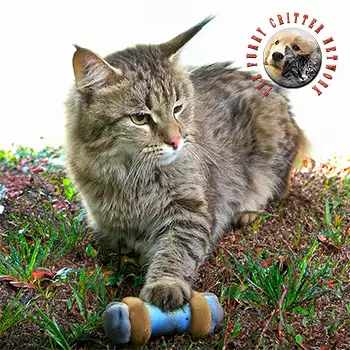

The American Bobtail is a comparatively young breed whose defining feature — a naturally short, expressive tail — arose from a spontaneous genetic mutation rather than from deliberate human design. The breed traces to the late 1960s and a brown tabby kitten with a stubby tail discovered by John and Brenda Sanders while they were traveling through the American Southwest. That cat, later named Yodie, is cited in virtually every account as the foundation of the entire breed.
According to the widely repeated origin story, the Sanders found Yodie near Show Low, Arizona, and brought him home. When Yodie was later bred with the family's seal-point Siamese, the resulting kittens inherited the short tail — an early clue that the trait was carried by a dominant gene. That single observation set the breed in motion.
Early enthusiasm rested on a narrow foundation, and the original bloodline drew on too small a gene pool to sustain a healthy program. During the 1980s a second wave of breeders effectively redeveloped the American Bobtail, outcrossing to domestic cats that carried the short tail and selecting for a robust, athletic, wild-looking animal rather than any single ancestral line.
The breed should not be confused with the Japanese Bobtail, which descends from a different gene and a different part of the world, or with the Manx, whose taillessness comes from a separate mutation that can carry health risks. The American Bobtail's tail is moderate — typically one-third to one-half the length of a normal cat's tail — flexible, and carried above the back.