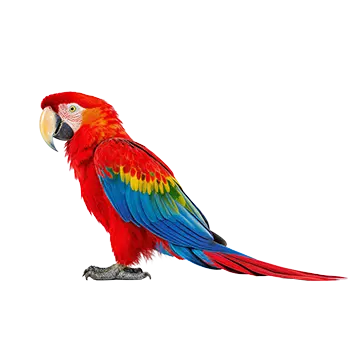

Early Artistic Depictions

The Scarlet Macaw's presence in visual art long predates the invention of modern media. Pre-Columbian artists across Mesoamerica depicted macaws in stone carvings, ceramic painting, mural work, and textile design, establishing an artistic tradition that would carry forward through the colonial period and into the modern era. When European naturalist-illustrators arrived in the Americas, the Scarlet Macaw became one of the most frequently rendered New World birds, its vivid plumage offering an irresistible subject for watercolorists and engravers working to catalog the natural wonders of the tropics.

During the 17th and 18th centuries, Scarlet Macaws appeared in European oil paintings as symbols of exotic wealth and colonial reach. Dutch and Flemish still-life painters, known for their meticulous depictions of luxury goods and natural specimens, occasionally included macaws alongside tropical fruits, shells, and imported textiles. These compositions situated the Scarlet Macaw within a visual language of abundance, curiosity, and the expanding boundaries of the known world, reinforcing the bird's association with distant and desirable places.

The tradition of natural history illustration produced some of the most enduring images of the Scarlet Macaw. Edward Lear, better known to many as a writer of nonsense verse, was also a gifted ornithological artist whose lithographs of parrots, published in the 1830s, included detailed and scientifically accurate renderings of Ara macao. John James Audubon likewise depicted macaws in his monumental works, and the species became a standard inclusion in the illustrated encyclopedias and field guides that proliferated throughout the 19th and early 20th centuries. These images shaped the way millions of people who had never seen a living macaw understood and imagined the species.

The Scarlet Macaw's artistic legacy extends into contemporary fine art, where the bird continues to appear in painting, sculpture, photography, and mixed-media work. Latin American artists in particular have drawn on the macaw as a symbol of regional identity, ecological fragility, and the complex relationship between human cultures and the natural world. The species' visual impact, driven by its large size and saturated coloration, ensures that it remains a compelling subject for artists working in virtually any medium.

Literature & Written Works

The Scarlet Macaw has occupied a recurring role in literature spanning several centuries and multiple literary traditions. Early European travel narratives and natural histories frequently described the species in vivid terms, emphasizing the brilliance of its plumage and the startling volume of its calls. These accounts introduced the Scarlet Macaw to a reading public hungry for tales of the New World, and the bird quickly became a literary shorthand for the tropics themselves, a device used by writers to evoke the sensory richness and unfamiliarity of equatorial landscapes.

In fiction, macaws have appeared as background elements, plot devices, and occasionally as characters in their own right. Adventure novels and maritime fiction set in the Caribbean and Central America have long used the presence of macaws to establish a tropical atmosphere, from the pulp adventure stories of the early 20th century to more literary treatments of the region. Gabriel Garcia Marquez and other Latin American authors have woven macaws into the fabric of magical realist narratives, using the birds as elements of a natural world that is at once familiar and charged with symbolic possibility.

Children's literature has embraced the Scarlet Macaw with particular enthusiasm. The bird's bright colors, large size, and perceived personality make it an appealing character for picture books, early readers, and illustrated nature guides aimed at young audiences. Educational publishers have produced numerous titles featuring Scarlet Macaws as entry points into topics such as rainforest ecology, biodiversity, and conservation, helping to establish the species as a gateway animal through which children encounter broader environmental themes.

Poetry and essays have also engaged with the Scarlet Macaw, often using the bird as a lens through which to examine themes of beauty, wildness, captivity, and loss. Environmental writers have drawn on the macaw's declining populations and shrinking habitat to anchor arguments about deforestation, species extinction, and the ethical dimensions of the exotic pet trade. In these works, the Scarlet Macaw functions not merely as a subject but as a symbol, standing in for the broader struggle to preserve the planet's biological richness in the face of human expansion.

Film & Television

The Scarlet Macaw's screen presence reflects its visual magnetism. Filmmakers and television producers have long recognized that the species' large frame, dramatic coloration, and expressive behavior make it exceptionally photogenic, and macaws have appeared in a wide range of productions, from blockbuster feature films to nature documentaries and children's programming.

Nature documentaries have provided some of the most impactful screen representations of the Scarlet Macaw. Major wildlife series produced by the BBC, National Geographic, and similar organizations have featured the species prominently in episodes devoted to tropical forests, avian intelligence, and biodiversity. Footage of Scarlet Macaws congregating at Amazonian clay licks, soaring above the rainforest canopy, and tending their young in tree-cavity nests has become iconic within the nature documentary genre, and these sequences have done more than perhaps any other medium to shape public perceptions of the species and its habitat.

In feature films, macaws have frequently been cast as colorful accessories to tropical settings. Pirate and adventure films have made particular use of macaws as visual signifiers of the Caribbean and the high seas, an association that, while historically tenuous, has become deeply embedded in the popular imagination. The animated film franchise Rio, while centered on Spix's Macaws rather than Scarlet Macaws, brought renewed mainstream attention to macaw species broadly and inspired significant public interest in parrot conservation. Scarlet Macaws themselves have appeared in numerous live-action films as background animals, set dressing, or companion animals belonging to characters positioned as exotic, worldly, or eccentric.

Television has employed the Scarlet Macaw in contexts ranging from sitcoms and crime dramas to educational programming and reality shows. The bird's vocal abilities and willingness to interact with trainers make it a practical choice for productions requiring a live animal with a commanding on-screen presence. Animal training companies specializing in film and television work maintain Scarlet Macaws among their rosters, and the species has developed a quiet but steady career as one of Hollywood's most reliable avian performers.

Advertising & Brand Identity

The Scarlet Macaw's commercial appeal is rooted in its instant recognizability and the powerful associations its image carries. Advertisers and brand strategists have deployed the macaw's likeness for decades to communicate ideas of tropical luxury, vibrant energy, natural beauty, and escape from the ordinary. The bird's saturated reds, yellows, and blues photograph and reproduce exceptionally well across print, digital, and broadcast media, making it a versatile visual asset for campaigns targeting a wide range of audiences.

The tourism industry has been among the most consistent users of Scarlet Macaw imagery. National tourism boards in Costa Rica, Honduras, Guatemala, Belize, and Peru have all featured the species in promotional materials, using photographs and illustrations of wild macaws to sell the idea of unspoiled tropical wilderness and world-class birdwatching. Airlines serving Central and South American destinations have incorporated macaw motifs into their branding, and resort properties throughout the region display macaw imagery as a signal of the exotic, nature-rich experience they offer to visitors.

Beyond tourism, the Scarlet Macaw has lent its image to a diverse array of consumer products and corporate identities. Beverage companies, apparel brands, home furnishing retailers, and tropical food producers have all drawn on macaw imagery to evoke freshness, color, and a connection to nature. The bird has appeared on everything from rum bottles and surfboard graphics to wallpaper patterns and fashion accessories. In each of these contexts, the Scarlet Macaw functions as a design element that carries an immediate emotional resonance, invoking warmth, vibrancy, and the allure of faraway places.

The use of Scarlet Macaw imagery in advertising raises questions that intersect with conservation and ethics. Critics have noted that the commercial celebration of the macaw's beauty can coexist uncomfortably with the ongoing threats to wild populations, and that idealized depictions of macaws in marketing materials may inadvertently stimulate demand for captive birds without communicating the responsibilities of ownership. Some conservation organizations have sought to channel this commercial interest constructively, partnering with brands to incorporate conservation messaging into campaigns that feature macaw imagery, turning the bird's pop-culture cachet into a tool for public education and fundraising.

Digital Media & Social Platforms

The rise of digital media and social networking platforms has amplified the Scarlet Macaw's cultural visibility to an unprecedented degree. Photographs and videos of Scarlet Macaws are among the most widely shared avian content on platforms such as Instagram, YouTube, TikTok, and Facebook, where the bird's photogenic qualities translate directly into high engagement metrics. Owners, breeders, rescue organizations, and wildlife photographers all contribute to a steady stream of macaw content that reaches millions of viewers worldwide.

Several individual Scarlet Macaws have achieved substantial social media followings, with dedicated accounts documenting their daily lives, vocalizations, interactions with owners, and antics. These accounts humanize the species and create communities of followers who engage with macaw-related content on a daily basis. While the positive effects of this exposure include increased awareness and appreciation for the species, critics have raised concerns that social media portrayals of macaws as cuddly, entertaining companions can misrepresent the realities of macaw ownership, downplaying the noise, mess, behavioral complexity, and decades-long commitment that these birds require.

YouTube has been a particularly significant platform for Scarlet Macaw content. Channels dedicated to parrot care, training, and enrichment frequently feature Scarlet Macaws, offering tutorials, product reviews, and behavioral advice to a growing audience of current and prospective owners. Nature and travel channels have also leveraged the species' visual appeal, producing high-quality footage of wild Scarlet Macaws in their natural habitats that complements and sometimes rivals the production values of traditional television documentaries.

Digital media has also created new avenues for conservation communication. Organizations working to protect Scarlet Macaw populations use social platforms to share research updates, fundraising campaigns, and live-streamed nest camera feeds that allow global audiences to observe breeding pairs in real time. These digital tools have proven effective at building emotional connections between distant audiences and the conservation challenges facing wild macaws, translating social media engagement into tangible support for habitat protection and anti-poaching efforts.

Symbolic Legacy in Visual Culture

The Scarlet Macaw's position in visual culture extends beyond any single medium or era. Across centuries and across the boundary between traditional and digital art forms, the species has served as one of the natural world's most potent visual symbols, a bird whose image communicates a complex set of ideas about beauty, wildness, ecological richness, and the fraught relationship between human desire and natural abundance.

In national iconography, the Scarlet Macaw carries particular weight. Honduras adopted the species as its national bird, and the macaw appears on Honduran currency, government insignia, and cultural emblems. Other Central and South American nations reference the species in regional flags, coats of arms, and official tourism identities. This civic deployment of the Scarlet Macaw's image reflects a broader trend in which charismatic wildlife species are enlisted to represent national pride, ecological heritage, and commitment to conservation, even as the practical challenges of protecting those species remain formidable.

The macaw's influence on design and aesthetics is pervasive. Interior designers, fashion houses, and graphic artists routinely draw on the Scarlet Macaw's color palette and form as inspiration for patterns, textiles, and visual compositions. The species' particular combination of scarlet, gold, and cerulean has influenced color trends in industries ranging from home decor to automotive paint, and stylized macaw motifs appear in contexts as varied as airline liveries, hotel lobbies, and street art murals. The bird has become, in effect, a design archetype, a visual shorthand for tropical vitality that transcends geographic and cultural boundaries.

The Scarlet Macaw's symbolic legacy is not without tension. The same qualities that make the bird so appealing as an image, its beauty, its rarity, its association with vanishing wild places, also carry an undertone of loss. As wild populations continue to face pressure from habitat destruction and illegal trade, the proliferation of Scarlet Macaw imagery in media and design can feel both celebratory and elegiac, a reminder of what is at stake. This duality gives the Scarlet Macaw a cultural resonance that few other bird species can match, ensuring that its presence in visual culture will remain significant for as long as there are audiences capable of appreciating the extraordinary intersection of color, form, and meaning that the species represents.

Always consult a qualified professional before making any health-related decisions. This content is provided for informational reference only and should not replace professional guidance specific to your animal.