
Origins & Discovery

The domestic canary traces its ancestry to the wild Atlantic canary (Serinus canaria), a small finch native to the Canary Islands, Madeira, and the Azores. Spanish sailors and traders first encountered these melodious birds in the fifteenth century and were immediately captivated by their rich, complex songs. The islands themselves take their name from the Latin word "canariae," meaning "of the dogs," a reference to the large dogs once found there rather than to the birds. Nevertheless, the canary and the archipelago became forever linked in the public imagination.

By the late 1400s, Spanish conquistadors had begun capturing wild canaries and bringing them back to the European mainland. Spain initially attempted to monopolize the canary trade by exporting only male birds, ensuring that breeding stock remained under Spanish control. This strategy succeeded for several decades and made canaries an exotic luxury item available only to the wealthy elite. Monasteries in southern Spain became early centers of canary breeding, where monks refined husbandry techniques and began selecting for particularly pleasing vocal traits.

The Spanish monopoly eventually collapsed in the sixteenth century when, according to popular accounts, a trading vessel carrying a large shipment of canaries was wrecked near the Italian coast. Escaped birds established small feral populations, and Italian breeders seized the opportunity to begin their own captive-breeding programs. From Italy, canary keeping spread rapidly across Europe, reaching Germany, the Netherlands, England, and beyond within a few generations. Each region would go on to develop its own distinctive varieties.

Historical Roles

Canaries played a surprising and vital role in industrial history as living gas detectors in coal mines. Beginning in the late nineteenth century and continuing well into the twentieth, miners carried caged canaries deep underground to serve as early-warning systems for toxic gases such as carbon monoxide and methane. Because of their small size, rapid metabolism, and highly efficient respiratory system, canaries succumbed to dangerous gas concentrations far more quickly than humans, giving miners precious time to evacuate. The phrase "canary in a coal mine" entered everyday language as a metaphor for any early indicator of danger.

This practice became standard protocol in British mines after John Scott Haldane, a Scottish physiologist, formally recommended it in 1911 following his extensive research into mine gas poisoning. The British mining industry did not officially retire its canary sentinel program until 1986, when electronic gas detection equipment finally replaced the birds. The retirement of mining canaries was met with mixed emotions among miners, many of whom had developed genuine attachments to their feathered companions and took great care in maintaining the birds' health and comfort underground.

Beyond the mines, canaries also served historical roles as status symbols and diplomatic gifts. European royalty exchanged prized singing canaries as tokens of goodwill, and elaborate gilded cages became fashionable decorative items in aristocratic households. In some courts, the quality of a noble's canary collection was considered a reflection of their refinement and taste. The birds were also kept aboard sailing vessels, where their songs provided comfort during long voyages and their sensitivity to atmospheric changes occasionally served as informal weather indicators.

Cultural Symbolism

Throughout history, the canary has accumulated a rich tapestry of symbolic meanings across different cultures. In European literary and artistic traditions, the caged canary frequently represents themes of captivity, longing, and the tension between beauty and confinement. Writers and painters from the seventeenth century onward used the image of a singing bird behind bars to explore questions of freedom, domesticity, and the human desire to possess and control nature's beauty. The canary's willingness to sing even in captivity added layers of poignancy to these artistic explorations.

In Victorian England, canary keeping became deeply entwined with domestic culture and gender expectations. The canary cage in the parlor window was a nearly universal symbol of a well-kept, genteel home. Young women were often gifted canaries as companions, and caring for the bird was seen as both a wholesome pastime and a subtle training ground for the nurturing responsibilities of future motherhood. The canary's song was believed to have a calming, morally uplifting influence on the household, and advice manuals of the era devoted considerable space to the proper care and management of these cherished pets.

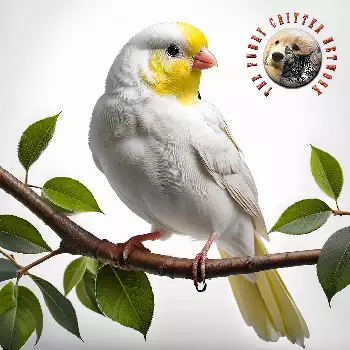
The bright yellow coloring most commonly associated with domestic canaries has itself become a cultural touchstone. "Canary yellow" is a recognized color name in fashion, interior design, and the visual arts. The color carries connotations of cheerfulness, optimism, and warmth. In more modern contexts, the canary continues to serve as a symbol of alertness and sensitivity, a legacy of its coal mine heritage. Environmental organizations and watchdog groups have adopted canary imagery to represent vigilance and the importance of heeding early warning signs.

Breeding Societies & Standards

The formalization of canary breeding into a structured hobby with defined standards began in earnest during the eighteenth and nineteenth centuries, as European enthusiasts organized the first bird shows and breeding competitions. Germany, Belgium, England, and the Netherlands emerged as major centers of canary culture, each developing distinctive breeds that emphasized different qualities. Some breeders focused on song, producing varieties like the German Roller (Harz Mountain canary), prized for its soft, rolling melodies delivered with a nearly closed beak. Others prioritized physical appearance, developing color canaries, type canaries with unusual postures and feather patterns, and frilled varieties with dramatically curled plumage.

Today, the Confederation Ornithologique Mondiale (COM) serves as the primary international governing body for canary and cage-bird exhibitions, coordinating standards and competitions across dozens of member countries. National organizations such as the National Cage Bird Show in the United Kingdom and the National Colorbred Association in the United States maintain detailed breed standards and host annual exhibitions that draw hundreds of competitors. Judges evaluate birds on criteria that vary by breed category, including song quality, feather color intensity and uniformity, body type and posture, and overall condition and presentation.

The canary fancy has also driven significant advances in avian genetics. Color canary breeders in particular have developed a sophisticated understanding of feather pigmentation genetics, including the inheritance of lipochrome (yellow and red) and melanin-based colors. The introduction of red factor canaries in the early twentieth century, achieved through hybridization with the Venezuelan black-hooded red siskin, represented a landmark in selective breeding and remains one of the most celebrated achievements in aviculture. Modern breeders continue to refine color varieties and explore new genetic combinations, supported by an increasingly scientific approach to pedigree management.

The Canary Today

In the twenty-first century, the canary remains one of the most popular pet birds worldwide, valued for its manageable size, relatively simple care requirements, and of course its celebrated song. While the canary fancy continues to thrive as a competitive hobby, the vast majority of canaries are kept simply as household companions. Their cheerful vocalizations, attractive appearance, and generally peaceful demeanor make them well-suited to apartment living and to owners who prefer a pet they can enjoy without the intense hands-on interaction demanded by parrots and other larger birds.

Modern canary keeping has been enriched by advances in avian nutrition, veterinary care, and housing design. Commercial seed mixes formulated specifically for canaries are widely available, and knowledgeable keepers supplement these with fresh fruits, vegetables, and egg food to ensure balanced nutrition. Avian veterinarians now offer specialized diagnostic and treatment services for small birds that were virtually unheard of a generation ago. Cage design has also evolved, with an emphasis on spacious, horizontally oriented enclosures that allow for flight and exercise, reflecting a growing awareness of the importance of physical and psychological well-being.

The internet has transformed the canary community, connecting breeders and enthusiasts across geographic boundaries in ways that were previously impossible. Online forums, social media groups, and video-sharing platforms allow keepers to exchange husbandry advice, showcase their birds' songs, and arrange breeding partnerships with distant colleagues. Virtual bird shows, which gained traction during the early 2020s, have opened competition to participants who might never have attended a traditional in-person exhibition. These digital communities have also played an important role in conservation awareness, highlighting the status of the wild Atlantic canary and supporting habitat preservation efforts in the Canary Islands and Macaronesia.

Notable Canaries & Their Legacy

While individual canaries rarely achieve the name recognition of famous dogs or horses, several notable birds have left their mark on history and popular culture. Perhaps the most symbolically significant canaries are the countless unnamed birds that served in coal mines across Britain, Europe, and North America. Their collective sacrifice saved untold numbers of human lives, and their legacy endures in the English language itself. In 1986, when British Coal officially replaced its last mining canaries with electronic detectors, the event received widespread media coverage and prompted public reflection on the unique relationship between miners and their avian sentinels.

In the world of competitive breeding, certain bloodlines and individual birds have achieved legendary status within the canary fancy. Champion singers from the Harz Mountain tradition in Germany, St. Andreasberg in particular, established vocal standards that continue to influence breeding programs today. The development of the red factor canary in the 1920s by German geneticist Hans Duncker, working with canary breeder Karl Reich, stands as one of the great collaborative achievements in animal breeding and brought international attention to the scientific potential of the canary fancy.

The canary's cultural influence extends into music, where "canary" became mid-twentieth-century slang for a female vocalist, reflecting the bird's association with beautiful singing. Several jazz and swing-era singers embraced the nickname. The bird has also lent its name to geographic features, sports teams, and even a shade of wine from the Canary Islands that was popular in Elizabethan England. Shakespeare himself referenced "canary wine" in several plays, cementing the cultural link between the islands, their birds, and the broader European imagination.

Always consult a qualified professional before making any health-related decisions. This content is provided for informational reference only and should not replace professional guidance specific to your animal.