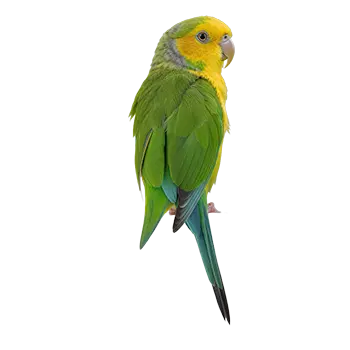

Yellow-Faced Parrotlet chicks hatch after an incubation period of approximately 18 to 22 days, emerging as tiny, nearly helpless creatures that weigh between 2 and 3 grams. As the largest species within the Forpus genus, their hatchlings are still remarkably small compared to larger parrot species, and this diminutive size demands meticulous care from the very first moments. The chick will be blind, covered in sparse white down, and entirely reliant on either its parents or a hand-feeder for warmth and nourishment. Observing the chick's initial activity level and skin color provides the first indicators of overall health.
In clutches raised by parent birds, the hen will typically begin feeding the first chick within several hours of hatching. Yellow-Faced Parrotlets usually produce clutches of four to six eggs, and because the hen often begins incubating before the last egg is laid, hatching is staggered across several days. This means chicks of different ages and sizes may share the nest box simultaneously, and the smallest or last-hatched chick can be at a disadvantage when competing for food. Monitoring each chick's crop fill during the first day helps identify any individual that the parents may be neglecting.
For breeders who plan to hand-raise the chick, the first feeding should be delayed until the yolk sac has been fully absorbed, which generally occurs within six to ten hours after hatching. Attempting to feed before absorption is complete can cause digestive distress and crop complications. The initial hand-feeding should consist of a thin, well-hydrated formula offered in very small amounts. Because the chick's crop is no larger than a small pea at this stage, overfeeding even slightly can stretch or damage the delicate crop tissue.
The brooder must be prepared and stabilized well before the chick hatches. Temperatures should be maintained between 96 and 99 degrees Fahrenheit with relative humidity around 60 to 65 percent. The substrate should be soft, absorbent, and free of loose fibers or particles that could be ingested. Paper towels layered over a soft cloth work well for the first several days. Draft exposure is particularly dangerous for a hatchling this small, as its body surface area relative to mass is extremely high, making rapid heat loss a constant threat.