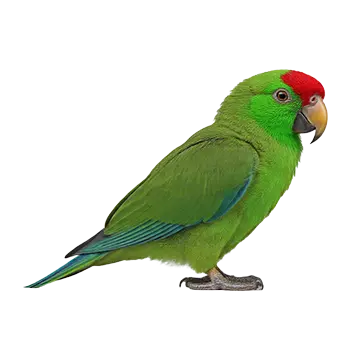

Weaning is one of the most consequential phases in a young Red-Lored Amazon's life, marking the transition from complete dependence on hand-feeding formula or parental regurgitation to independent consumption of solid foods. For Red-Lored Amazons, this process generally begins between eight and ten weeks of age and may extend through fourteen to sixteen weeks, depending on the individual bird's pace. Rushing weaning to meet an arbitrary schedule is one of the most harmful mistakes a caregiver can make, as it can produce lasting psychological and physical damage.
The first indicators of weaning readiness are behavioral rather than calendar-based. A chick that is approaching weaning will begin to show curiosity about solid foods, picking up, mouthing, and manipulating items in its environment. It may start refusing or taking notably less formula at one or more feeding sessions. These are healthy signs that the chick's digestive system and foraging instincts are maturing, and the caregiver should respond by offering a variety of appropriate weaning foods while continuing to provide formula feedings on demand.
Ideal weaning foods for Red-Lored Amazons include softened pellets formulated for medium-sized parrots, finely chopped vegetables such as carrots, sweet potatoes, green beans, and leafy greens, and small portions of fruit like apple, banana, and berries. Warm, soft foods tend to be accepted more readily at first because their texture is closer to the formula the chick is accustomed to. Scatter food on a flat surface or shallow dish near the chick so it can explore at its own pace. Avoid placing food directly in front of the bird in a way that implies a demand to eat, as pressure can create food aversion.
Throughout the weaning period, continue to offer formula feedings and allow the chick to determine how much it takes. Track daily weight carefully. Some weight loss during weaning is normal as the chick transitions from the calorie-dense formula to solid foods, but the loss should not exceed ten percent of peak body weight. If the chick loses more than this or shows signs of lethargy, dehydration, or regression in its willingness to eat solid food, increase formula feedings and consult an avian veterinarian. Abundance weaning, where the chick always has access to both formula and solid food and sets its own pace, produces the most confident, well-adjusted birds.