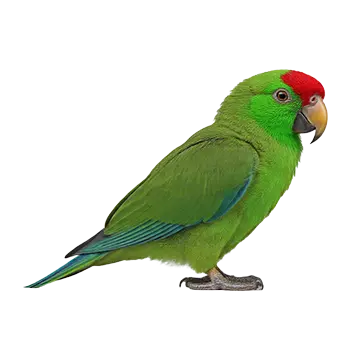

The adult Red-Lored Amazon reaches its full body size and weight by roughly one year of age, and from this point forward nutritional management shifts from supporting growth to maintaining optimal body condition and preventing the obesity that plagues captive Amazon parrots. Red-Lored Amazons are enthusiastic eaters with a natural tendency to overindulge, particularly on high-fat seeds and nuts. Without deliberate dietary management, an adult Red-Lored Amazon in a typical household setting will steadily gain excess weight, creating a foundation for liver disease, atherosclerosis, and metabolic disorders that can shorten the bird's life by decades.
The backbone of the adult diet should be a high-quality formulated pellet designed for medium Amazon parrots, comprising 60 to 70 percent of total daily intake by volume. Pellets provide balanced amino acids, vitamins, and minerals in a form that prevents selective feeding, where the bird picks out preferred items and discards the rest. If the bird was transitioned to pellets during the juvenile stage, maintaining this dietary structure is straightforward. If an adult bird arrives in your care on a predominantly seed diet, the conversion to pellets must be done gradually and under veterinary supervision to prevent dangerous weight loss during the transition.
Fresh vegetables are the second pillar of the adult diet, making up 20 to 25 percent of daily intake. Rotate offerings to provide a broad spectrum of nutrients: dark leafy greens such as collard greens, kale, and mustard greens supply calcium and vitamin A precursors, while orange vegetables like cooked sweet potato and butternut squash provide beta-carotene and complex carbohydrates. Red-Lored Amazons generally accept vegetables readily if they were introduced during the weaning and juvenile stages. For birds that are resistant, persistence and creative presentation, such as threading vegetables on skewers, mixing finely chopped vegetables into warm grain dishes, or offering vegetables at peak hunger times, can improve acceptance over weeks or months.
Fruit should remain a small component of the diet, limited to 5 to 10 percent of daily intake. While nutritionally valuable in moderation, fruit's high sugar content makes it a contributor to weight gain and yeast overgrowth when fed excessively. Use small portions of fruit as training rewards, foraging enrichment, or occasional treats rather than as a meal staple. Monitor the bird's weight weekly using a gram scale and adjust food portions and composition based on trends. An adult Red-Lored Amazon in healthy condition typically weighs between 310 and 480 grams, but the ideal weight for any individual bird depends on its skeletal frame, and your avian veterinarian can help establish the target range for your specific bird.