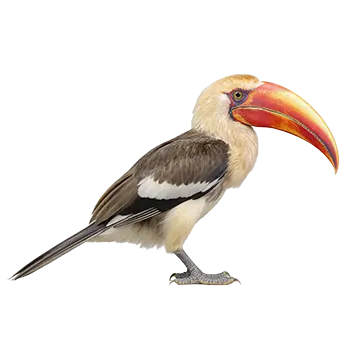

Red-Billed Hornbills reach full physical maturity at approximately one to two years of age, though subtle refinements in plumage coloration and bill appearance may continue beyond this point. The transition from juvenile to adult is not marked by a single event but rather by the cumulative completion of several developmental milestones including the attainment of adult body weight, the completion of the first full molt cycle into definitive adult plumage, and the development of the characteristic vivid red-orange bill that gives the species its common name. Recognizing when a bird has achieved full maturity helps caretakers adjust management practices from the growth-focused approach of the juvenile stage to the maintenance-oriented strategy appropriate for the adult years.
Adult Red-Billed Hornbills typically weigh between 90 and 180 grams, with males generally larger and heavier than females. Sexual dimorphism in this species is relatively subtle compared to some other hornbill species, but experienced observers can distinguish the sexes by bill size, with males possessing slightly longer and more robust bills, and by overall body proportions. The casque, the low ridge along the top of the upper mandible, is more pronounced in males. These sex-based differences become most apparent once the bird has reached full maturity and are important for pairing decisions in breeding programs.
Behaviorally, mature Red-Billed Hornbills exhibit the full repertoire of species-typical actions including territorial calling, courtship displays, elaborate food-offering rituals, and established daily routines of foraging, bathing, resting, and social interaction. An adult bird that has been properly socialized during the juvenile period will demonstrate a predictable temperament, engaging confidently with caretakers while maintaining appropriate wariness of genuinely novel stimuli. The adult years represent the longest phase of the Red-Billed Hornbill's life and, with attentive husbandry, can be a period of robust health and engaging companionship.
The prime adult period also represents the years of peak reproductive capability. Even if the bird is not part of a breeding program, the hormonal cycles associated with breeding season will influence behavior on an annual basis. Understanding and anticipating these seasonal behavioral shifts, which can include increased territorial aggression, nesting behavior directed at enclosure furnishings, and changes in vocalization patterns, is an important aspect of adult hornbill management.