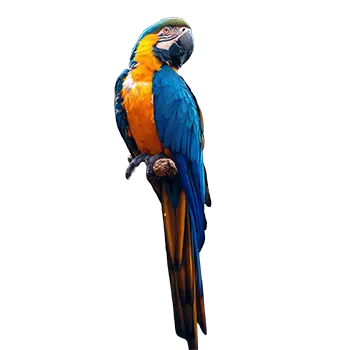

Blue and Gold Macaws reach sexual maturity at approximately four to seven years of age, though this can vary by individual. Sexual maturity does not necessarily mean a bird is ready to breed. Physical maturity, stable health, appropriate body weight, and emotional readiness all factor into the decision. Both the male and female should be in excellent health, free from infectious diseases, and confirmed as opposite sexes through DNA testing or surgical sexing, since Blue and Gold Macaws are not reliably sexually dimorphic.
Before any breeding attempt, both birds should undergo a comprehensive veterinary examination including blood work, screening for Psittacine Beak and Feather Disease, Avian Polyomavirus, and Chlamydia psittaci. Breeding birds that carry these diseases risks transmitting them to offspring and to other birds in the household or aviary. A clean bill of health for both partners is a non-negotiable prerequisite.
Pair compatibility is crucial and cannot be assumed simply because two macaws of the correct age and sex are placed together. Blue and Gold Macaws form strong pair bonds, and forced pairings often fail or result in aggression. The introduction process should be gradual, beginning with cages placed side by side so the birds can see and hear each other without physical contact. Positive mutual behaviors such as vocalizing together, displaying, and preening near each other through the cage bars indicate growing compatibility.
The decision to breed should also account for practical considerations. Raising macaw chicks, whether parent-raised or hand-fed, demands significant time, expertise, space, and financial resources. Homes must be secured for offspring well in advance, and breeders must be prepared for the possibility of complications including infertile eggs, egg binding, chick illness, or parental rejection. Breeding is a serious commitment that should never be undertaken casually.