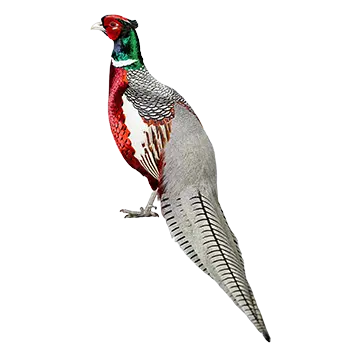

Recognizing the Aging Pheasant

Lady Amherst's Pheasants typically begin showing signs of aging between seven and ten years of age, though the onset varies considerably depending on genetics, lifetime management quality, and breeding history. Unlike mammals, birds do not gray or wrinkle in visually obvious ways, which makes recognizing the transition from prime adulthood to the senior phase more challenging. The changes are gradual and subtle, and keepers who see their birds daily may not notice the slow accumulation of aging indicators until the bird has crossed well into its geriatric years.

The earliest reliable sign of aging in Lady Amherst's Pheasants is a decline in plumage quality following the annual molt. A male that previously grew long, brilliantly iridescent tail feathers and a pristine white ruff may begin producing feathers that are slightly shorter, less intensely colored, or structurally weaker than in prior years. The metallic sheen on the green mantle and crown may appear duller, and fault bars may develop in feathers that were previously flawless, even when nutrition and management have not changed. These plumage shifts reflect the gradual decline in the efficiency of the feather follicles and the metabolic processes that support keratin production.

Behavioral changes provide additional markers of aging. A senior pheasant typically becomes less active overall, spending more time resting in sheltered areas and less time foraging across the aviary. The bird may be slower to react to stimuli that previously elicited immediate flight or alarm responses, not because it has become tamer but because its reflexes and muscle response speed are diminishing. The breeding drive weakens, with males performing fewer and less vigorous courtship displays and hens producing fewer eggs per season or ceasing to lay entirely. These behavioral shifts are normal aspects of aging and should not be treated as medical problems unless they are accompanied by other signs of illness.

Physical examination during routine handling may reveal additional age-related changes. The scales on the legs and feet may become thicker and rougher, sometimes developing a raised or irregular texture. The spur on the male's tarsus may continue to grow but become more brittle. Muscle mass along the keel may decrease even if the bird's weight remains stable, reflecting a shift from lean tissue to body fat that is common in aging birds. Palpating the keel during each handling session provides a longitudinal record of body composition changes that helps the keeper distinguish normal aging from disease-related wasting.

Nutritional Adjustments for Senior Birds

The dietary needs of a senior Lady Amherst's Pheasant shift in ways that reflect the bird's declining metabolic rate, reduced physical activity, and changing organ function. The standard gamebird maintenance diet that sustained the bird through its prime years may need modification to prevent obesity on one hand or to counteract the muscle wasting and weight loss that can occur in advanced age on the other. The direction of adjustment depends on the individual bird's condition, which reinforces the importance of regular weight and body condition monitoring.

For senior birds that are maintaining or gaining weight, a slight reduction in the energy density of the diet helps prevent the obesity that predisposes aging pheasants to fatty liver disease, cardiovascular strain, and joint problems. Reduce the proportion of high-calorie seeds and grain in the supplemental portion of the diet, and increase the volume of leafy greens and vegetables that provide nutrients without excess calories. The base maintenance pellet can remain the same formulation, but the total daily quantity may need to be reduced by ten to fifteen percent if the bird's activity level has dropped significantly.

For senior birds that are losing weight or showing declining muscle condition, the approach is reversed. Increase the protein content of the diet slightly, either by switching to a higher-protein pellet or by supplementing with easily digestible protein sources such as hard-boiled egg, small amounts of cooked fish, or additional insect protein. Mealworms and waxworms are calorie-dense and readily accepted by most pheasants. If the bird is losing weight despite adequate food intake, a veterinary workup to rule out internal parasites, organ disease, or occult infection is warranted before attributing the decline purely to age.

Digestive efficiency often decreases in older birds, meaning that the same diet that was fully utilized during the prime years may now pass through the system with incomplete nutrient absorption. Signs of reduced digestive function include changes in droppings consistency, undigested food particles visible in the fecal portion, or increased water content in the droppings. Offering food in smaller, more frequent portions rather than a single daily feeding can improve digestive efficiency. Some keepers find that lightly moistening the pellet base with warm water creates a softer texture that is easier for aging birds to process, particularly if the bird's beak has developed the slight overgrowth or misalignment that sometimes occurs with age.

Joint and bone support becomes a nutritional priority in the senior years. While clinical arthritis is discussed separately, the nutritional foundation for joint health includes adequate omega-3 fatty acids, which can be provided through flaxseed or small amounts of fish oil added to the feed. Vitamin D3 supplementation may be beneficial for birds housed in northern latitudes where winter daylight is limited, as vitamin D3 is essential for calcium metabolism and bone maintenance. Discuss specific supplementation protocols with your avian veterinarian, as both deficiency and excess of fat-soluble vitamins can cause harm.

Common Age-Related Health Conditions

As Lady Amherst's Pheasants age beyond their prime years, they become increasingly susceptible to a range of health conditions that are uncommon or absent in younger birds. Familiarity with these conditions enables the keeper to recognize early signs and seek veterinary intervention before the situation becomes critical. While aging cannot be prevented, many age-related conditions can be managed effectively to maintain quality of life for extended periods.

Arthritis is one of the most prevalent conditions in senior pheasants. The hock joints, the stifle joints, and the toe joints are most commonly affected. An arthritic bird will show stiffness when rising from rest, reluctance to perch at its usual height, a visible limp or favoring of one leg, or a tendency to sit for prolonged periods rather than standing and foraging. Cold, damp weather typically worsens arthritic symptoms. Treatment options include anti-inflammatory medications prescribed by your avian veterinarian, environmental modifications to reduce the physical demands on affected joints, and nutritional supplementation to support joint health. Do not administer over-the-counter human pain medications to birds, as many common analgesics including ibuprofen and acetaminophen are toxic to avian species.

Cataracts, the progressive clouding of the lens of the eye, occur in aging pheasants and gradually reduce visual acuity. A bird with developing cataracts may become more easily startled because it cannot clearly see approaching objects. It may misjudge distances when moving through the aviary, collide with objects it previously navigated around, or have difficulty locating food items on the ground. In advanced cases, the cloudiness of the lens is visible as a whitish or bluish opacity when the eye is viewed at close range. Surgical cataract removal is theoretically possible but is not commonly performed in pheasants. Management focuses on maintaining a consistent aviary layout to reduce collision risk and ensuring food and water are placed in predictable, easily accessible locations.

Renal disease affects the kidneys' ability to filter metabolic waste products from the blood and is a common finding in aged pheasants. The most visible manifestation is visceral or articular gout, where uric acid crystals deposit in the internal organs or the joints, respectively. Articular gout presents as painful swelling of the toe joints, which may appear whitish or chalky under the skin. Visceral gout is more insidious and may not produce obvious clinical signs until the condition is advanced. Both forms are associated with chronic dehydration, high-protein diets sustained beyond the bird's renal capacity, and genetic predisposition. Once established, gout can be managed but not cured, and treatment focuses on dietary protein reduction, maintaining hydration, and pain management under veterinary supervision.

Reproductive tract disorders in senior hens deserve particular mention. Hens that continue to lay eggs into their later years are at increased risk for egg peritonitis, a condition where yolk material is released into the abdominal cavity rather than being captured by the oviduct. This triggers a severe inflammatory response that can progress to sepsis and death without aggressive veterinary treatment. Tumors of the reproductive tract, including ovarian adenocarcinoma, are also more common in aged hens. A hen that develops a distended abdomen, labored breathing from internal pressure on the air sacs, or a sudden decline in condition should be evaluated promptly. Retiring senior hens from breeding programs well before they reach advanced age reduces the risk of these reproductive complications.

Housing Modifications for Aging Birds

The aviary that served an adult Lady Amherst's Pheasant perfectly during its prime years may need thoughtful modification as the bird ages. The goal of these modifications is to reduce physical strain, prevent injuries that an aging body recovers from more slowly, and ensure that essential resources remain accessible to a bird with declining mobility, vision, or stamina. These changes need not be dramatic, and in many cases small adjustments make a significant difference in the senior bird's daily experience.

Perch height and design are among the first elements to address. A senior pheasant with arthritic hock or stifle joints may struggle to jump up to perches that it accessed easily for years. Lower the roosting perches to a height that the bird can reach with a short hop rather than a full jump or flight. If the bird can no longer perch at all, provide a ground-level roosting platform in the sheltered area. The platform should be slightly raised above the substrate on a bed of clean straw or hay to provide insulation from ground cold and dampness. Perch surfaces should be flat or slightly concave rather than round, as flat perches distribute the bird's weight more evenly across the foot and reduce the pressure on arthritic toe joints.

Feeding and watering station placement requires reconsideration for birds with reduced mobility or vision. Position food and water containers within easy reach of the bird's preferred resting areas rather than requiring it to traverse the full length of the aviary to access essential resources. If the senior bird is housed with younger, more dominant flock mates, ensure that the senior has dedicated feeding opportunities that are not monopolized by more aggressive individuals. This may mean providing multiple feeding stations or separating the senior bird during mealtimes.

Ground surface modifications help prevent slipping and falling injuries that aging birds are more susceptible to. Hard, smooth surfaces such as bare concrete or wet paving stones become hazardous for a bird with weakened grip strength or arthritic feet. Cover hard surfaces with textured matting, straw, or coarse sand that provides traction without being abrasive. In wet weather, ensure that areas around water containers and shelter entrances do not become muddy and slippery, as a fall that a young bird would recover from instantly could result in a leg or wing injury in a senior bird with brittle bones.

Shelter accessibility becomes more important as the bird's tolerance for weather extremes diminishes. Senior pheasants are more vulnerable to temperature extremes at both ends of the spectrum than their younger counterparts. The shelter should be easy to enter and exit without requiring the bird to navigate steps, high thresholds, or narrow openings. In cold climates, consider adding supplemental heat to the shelter during the coldest months, such as a ceramic heat emitter mounted safely out of the bird's reach. In hot weather, ensure the shelter provides genuine shade and ventilation rather than becoming a heat trap. Monitoring the senior bird's shelter use during different weather conditions helps the keeper identify whether the current setup is meeting the bird's changing needs.

Mobility & Comfort Management

Declining mobility is one of the most visible and impactful consequences of aging in Lady Amherst's Pheasants. A bird that once moved through its aviary with the quick, confident gait of a healthy pheasant may gradually slow, develop an uneven stride, or begin spending the majority of its time stationary in a single location. Managing this decline compassionately and effectively requires a combination of environmental support, medical intervention where appropriate, and careful observation to distinguish between the normal limitations of age and the signs of a treatable condition.

The first step in mobility management is accurate diagnosis. Not all mobility decline in senior birds is attributable to arthritis. Neuropathy, where nerve function deteriorates and causes weakness or poor coordination in the legs, can produce similar symptoms. Bumblefoot that has progressed to a chronic stage causes pain with every step. Overgrown or deformed toenails alter the bird's stance and gait. Spinal spondylosis, a degenerative condition of the vertebrae, can compress nerves that control leg function. A thorough veterinary examination, potentially including radiography, helps distinguish between these causes and guides appropriate treatment.

For confirmed arthritis, a multimodal management approach produces the best outcomes. Veterinary-prescribed anti-inflammatory medications reduce joint pain and improve mobility. Environmental modifications as described in the housing section reduce the physical demands on affected joints. Maintaining a healthy body weight is critical, as excess weight places additional mechanical load on inflamed joints. Gentle exercise, encouraged through food placement that requires the bird to walk short distances, helps maintain joint flexibility and muscle tone without overtaxing compromised structures. The balance between encouraging movement and allowing rest requires daily judgment calls based on the bird's apparent comfort level.

Foot care becomes a regular maintenance task for senior birds. Toenails that are not naturally worn down by walking on hard surfaces may overgrow and curl, altering the bird's stance and making walking painful. Regular trimming with sharp nail clippers, taking care to avoid the quick, keeps the nails at a functional length. Inspect the plantar surface of the feet at each handling session for signs of bumblefoot, pressure sores, or dry cracked skin. A thin application of a bland emollient such as coconut oil or a veterinary-recommended foot cream can help maintain skin integrity on feet that have become dry and scaly with age.

Comfort management extends beyond mobility to encompass the bird's overall sensory and physical experience. A senior bird that has developed cataracts benefits from consistency in its environment, as rearranging the aviary layout disoriants a vision-impaired bird and increases collision risk. Temperature sensitivity increases with age, making the availability of warm, dry shelter during cold periods and cool, shaded areas during heat essential for the bird's moment-to-moment comfort. Observing where the senior bird chooses to rest at different times of day provides insight into its thermal preferences and helps the keeper optimize the environment to meet those preferences.

Cognitive & Behavioral Changes

Cognitive decline in aging birds is a subject that has received far less research attention than its equivalent in mammals, but experienced keepers consistently report behavioral changes in senior pheasants that suggest a gradual diminishment of cognitive function. Recognizing these changes helps the keeper adapt management practices to support the bird's changing needs and maintain the best possible quality of life during the final years.

One of the earliest cognitive changes reported in senior pheasants is a reduction in alertness and environmental awareness. The bird may not react to stimuli that previously elicited an immediate response, such as the approach of a person, the presence of food, or the alarm calls of wild birds nearby. This reduced reactivity can be mistaken for tameness or contentment, but in many cases it reflects a genuine decline in the processing speed and attentional capacity of the aging brain. The practical implication is that the keeper must be more cautious about startling the bird with sudden close-range stimuli, as the delayed startle response can produce a more violent panic reaction than the quick, proportionate response of a younger bird.

Changes in spatial memory may become apparent as the bird ages. A pheasant that has navigated the same aviary for years may begin appearing disoriented, walking into corners or walls, or failing to locate food and water containers that have not been moved. These behaviors are more pronounced if the bird is also experiencing visual decline from cataracts, as the combination of impaired vision and reduced spatial memory compounds the difficulty of navigating the environment. Keeping the aviary layout stable and consistent helps compensate for declining spatial memory. If changes to the layout are necessary, make them gradually, one element at a time, and observe the bird's response before making additional modifications.

Social behavior may also shift in senior birds. A pheasant that was previously dominant within its flock group may lose its position as it becomes less physically capable of enforcing its rank. This social demotion can cause stress if the now-subordinate senior bird is bullied or excluded from resources by younger flock mates. Monitoring social dynamics becomes increasingly important as the age disparity within a group widens. In some cases, the most compassionate management decision is to house the senior bird separately or with a single calm companion rather than leaving it in a competitive group where it cannot hold its own.

The keeper's relationship with a senior bird often deepens during this phase. Many keepers report that senior pheasants, particularly those that were well socialized from a young age, become more tolerant of and even receptive to human proximity as they age. Whether this reflects a genuine shift in the bird's social orientation, a reduction in the energy available for flight responses, or a combination of both is difficult to determine. Regardless of the underlying mechanism, the increased approachability of a senior bird provides opportunities for closer health monitoring and more effective comfort management that benefit the bird's welfare.

Extending Quality of Life

The overarching goal of senior care for Lady Amherst's Pheasants is not simply to extend the bird's lifespan but to maximize the quality of the time it has remaining. A senior pheasant that lives an additional two years in comfort, engaging in natural behaviors and free from unmanaged pain, has been better served than one that survives three additional years in chronic discomfort due to untreated conditions. This distinction between longevity and quality requires the keeper to make ongoing assessments and, sometimes, difficult decisions about the intensity and direction of care.

Establishing a quality-of-life framework early in the senior phase provides a structured basis for these assessments. Consider the bird's ability to engage in its core natural behaviors: foraging, dust bathing, perching, and moving freely through its environment. Evaluate its appetite, its interest in its surroundings, and its social engagement with flock mates or the keeper. Assess the balance between good days and bad days over a rolling weekly period. A bird that is eating with interest, moving voluntarily, dust bathing, and showing awareness of its environment is experiencing an acceptable quality of life regardless of age-related limitations. A bird that has stopped engaging in most or all of these behaviors, or that spends the majority of its time hunched and immobile despite treatment for identified conditions, is signaling that its quality of life has declined below a sustainable threshold.

Preventive veterinary care becomes more, not less, important during the senior phase. Semi-annual veterinary examinations allow the detection of emerging conditions before they become advanced. Blood work, including a basic biochemistry panel, provides insight into kidney function, liver function, and metabolic status that physical examination alone cannot reveal. Fecal testing for parasites should continue on schedule, as an aging immune system is less able to suppress parasite populations that a younger bird would control naturally.

The keeper's observational relationship with the bird is the most valuable diagnostic tool available during the senior years. No laboratory test or veterinary examination captures the nuanced, day-to-day changes in behavior and condition that a attentive keeper notices through daily interaction. Keep a simple log noting the bird's appetite, activity level, droppings quality, and any notable behavioral observations. Over weeks and months, this log reveals trends that are invisible in any single day's snapshot. A slow, steady decline in appetite over six weeks is more meaningful than a single day of reduced eating, and a log makes these gradual trends visible.

Finally, prepare emotionally and practically for the transition from senior care to end-of-life care. The boundary between these phases is not always clear-cut, and having thought about your values and priorities in advance makes the eventual decisions less overwhelming. Discuss end-of-life options with your veterinarian before they are urgently needed. Knowing what palliative care can accomplish, what its limitations are, and what the euthanasia process involves allows you to approach the final stage from a position of informed compassion rather than crisis-driven reaction.

Always consult a qualified professional before making any health-related decisions. This content is provided for informational reference only and should not replace professional guidance specific to your animal.