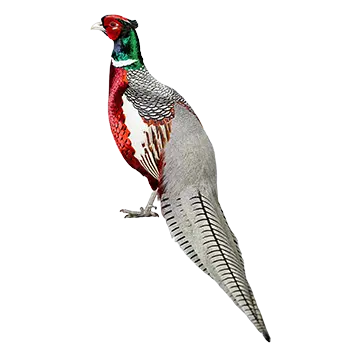

Understanding the Natural Lifespan

Lady Amherst's Pheasants in well-managed captive settings typically live between ten and fifteen years, with exceptional individuals occasionally reaching their late teens. This lifespan is significantly longer than what the species experiences in the wild, where predation, disease, harsh winters, and habitat pressures reduce average survival to a fraction of the captive potential. Understanding the natural arc of the species' life helps keepers develop realistic expectations about the timeline of aging and the eventual arrival of the end-of-life stage.

The transition from the senior phase to end-of-life is not marked by a single event or diagnosis. It is a gradual process in which the accumulation of age-related changes reaches a point where the bird's ability to maintain normal function and experience comfort is progressively compromised. Some birds arrive at this stage through the slow progression of chronic conditions such as arthritis, organ failure, or progressive vision loss. Others may be pushed into end-of-life territory by an acute event, such as a stroke, a severe injury, or the sudden worsening of a previously stable condition.

Recognizing where a bird falls on this continuum requires the keeper to synthesize multiple sources of information: the bird's daily behavior, its response to treatment for identified conditions, its appetite and weight trajectory, and the overall trend in its quality of life over weeks and months rather than individual good or bad days. A bird that is declining slowly but steadily over the course of several months is on a different trajectory than a bird that has experienced a sudden catastrophic change, and the management approach for each scenario differs accordingly.

It is worth acknowledging that the end-of-life stage can be emotionally difficult for the keeper, particularly when the bird has been in the collection for many years and a genuine bond has formed. The keeper who hand-raised a chick, watched it grow through its juvenile molt, admired its first full display plumage, and managed its care through more than a decade of seasons carries a relationship with the bird that, while different from a mammalian pet bond, is real and meaningful. Approaching this stage with both emotional honesty and clinical clarity serves the bird's welfare and the keeper's own ability to make sound decisions.

Quality-of-Life Assessment

Objective quality-of-life assessment is the most important tool available to a keeper navigating the end-of-life stage. Without a structured framework for evaluation, decisions tend to be driven by emotional reactions to individual moments, whether optimistic responses to a brief period of improved appetite or despairing reactions to a particularly difficult day. A consistent assessment approach provides the basis for decisions that are grounded in the bird's actual experience over time.

The core domains to evaluate are pain, mobility, nutrition, hygiene, social engagement, and the overall ratio of good days to bad days. Pain assessment in birds is challenging because avian species are evolutionarily conditioned to conceal signs of vulnerability. A pheasant in significant pain may not vocalize or display the obvious distress behaviors that a mammal would show. Instead, look for subtle indicators: a hunched posture with feathers held slightly raised, reluctance to move or bear weight on one leg, grinding or clicking of the beak, squinting or partially closed eyes, or an unusual stillness where the bird stands in one position for extended periods rather than engaging in normal foraging and exploratory behavior.

Mobility assessment considers the bird's ability to access essential resources and perform core behaviors. Can the bird reach food and water without excessive effort? Can it move to its preferred shelter area? Can it dust bathe, which is a fundamental comfort behavior for all Galliformes? Can it perch, even at a reduced height? A bird that can no longer perform any of these activities despite environmental modifications has reached a stage where its fundamental behavioral needs are unmet.

Nutritional status provides another critical assessment axis. A bird that is eating with apparent interest, maintaining stable weight, and producing normal droppings is meeting a basic physiological requirement. A bird that has stopped eating, picks at food without consuming meaningful quantities, or is losing weight despite food being readily available is signaling that its body is no longer sustaining normal function. Some degree of appetite reduction is expected in aging birds, but a complete cessation of eating, sustained over more than forty-eight hours in a bird that is not acutely ill with a treatable condition, is a significant end-of-life indicator.

The good-days-to-bad-days ratio is perhaps the most practical assessment tool. Define in advance what a good day looks like for your specific bird: eating, moving voluntarily, showing awareness of surroundings, engaging in at least some normal behavior. Define what a bad day looks like: refusing food, remaining stationary, appearing distressed or withdrawn, showing signs of pain. Track these assessments daily over a two-week period. When the bad days consistently outnumber the good days, the bird's quality of life has fallen below a sustainable threshold, and the keeper must decide whether further intervention can change the trajectory or whether the kindest course of action is to prevent further decline.

Palliative & Comfort Care

Palliative care shifts the goal of management from treating or curing a condition to maximizing the bird's comfort during the time it has remaining. This approach acknowledges that some conditions in an aging Lady Amherst's Pheasant cannot be resolved and that the most meaningful thing the keeper can do is ensure the bird's remaining days are as free from discomfort as possible. Palliative care is not the same as giving up. It is a deliberate, active management strategy that requires as much thought and attention as curative treatment.

Pain management is the cornerstone of palliative care. Work with your avian veterinarian to develop a pain control protocol appropriate to the bird's condition. Meloxicam is the most commonly prescribed anti-inflammatory and analgesic medication for avian species and can be administered orally in small volumes. Dosing must be precise and guided by the veterinarian, as the therapeutic window in birds is narrower than in mammals. For birds with advanced arthritis or other painful conditions, the difference that effective pain relief makes in behavior and apparent comfort is often dramatic. A bird that has been hunched and immobile may resume walking, foraging, and engaging with its environment once pain is adequately controlled.

Environmental comfort measures complement pharmaceutical pain management. Move the bird's food and water containers to within easy reach of its preferred resting spot. Provide soft, deep bedding of clean straw or hay that cushions the bird's body and insulates it from ground cold. If the bird can no longer perch, ensure its ground-level resting area is dry, draft-free, and positioned in the location the bird naturally gravitates toward. A low-wattage ceramic heat emitter mounted safely overhead can provide gentle supplemental warmth that aging birds often seek out, particularly in cooler weather.

Nutritional support during palliative care focuses on palatability and ease of consumption rather than optimal nutritional balance. If the bird's appetite is declining, offer its favorite foods preferentially, even if those foods would not constitute a balanced diet under normal circumstances. Mealworms, scrambled egg, soft fruits, and soaked or moistened pellet are often accepted when dry feed is refused. The goal is to keep the bird eating something, as the cessation of eating is both a quality-of-life indicator and a physiological tipping point beyond which decline accelerates. If the bird will still eat from your hand, the direct offering of food provides a small social interaction that benefits both the bird and the keeper.

Hygiene maintenance requires increased attention during palliative care. A bird with reduced mobility may soil its resting area more heavily than a mobile bird, and soiled feathers around the vent and underside can lead to skin irritation, bacterial dermatitis, and flystrike in warm weather. Change bedding frequently, gently clean soiled feathers with warm water, and inspect the vent area daily. Flystrike, where fly larvae infest damaged or soiled skin, can develop with shocking speed in warm conditions and constitutes a veterinary emergency that causes extreme suffering. Preventing it through diligent hygiene is a core responsibility of palliative care.

Pain Assessment & Management

Assessing and managing pain in Lady Amherst's Pheasants at the end of life requires the keeper to develop a nuanced understanding of avian pain expression, which differs fundamentally from the pain behaviors that humans and companion mammals display. Birds evolved under predation pressure that strongly selects against obvious displays of vulnerability. A pheasant in significant pain may appear merely quiet and still rather than vocalizing or exhibiting overt distress. This stoic presentation frequently leads to the underestimation and undertreatment of pain in avian species, which is an ethical concern that every end-of-life caregiver must actively guard against.

The most reliable indicators of pain in a Lady Amherst's Pheasant are changes from the individual bird's established behavioral baseline. A bird that normally forages actively but now stands in one place, a bird that normally preens regularly but has stopped maintaining its feathers, or a bird that normally perches at a specific height but now remains on the ground are all displaying potential pain behavior. Specific physical indicators include feather fluffing over the affected area, guarding behavior where the bird shifts weight away from a painful limb, reluctance to be handled in a way that was previously tolerated, and a distinctive hunched posture where the bird draws its head back into its shoulders and partially closes its eyes.

Pharmacological pain management in birds has advanced considerably in recent decades but remains more limited than the options available for mammalian patients. Meloxicam, a nonsteroidal anti-inflammatory drug, is the first-line analgesic for chronic pain conditions including arthritis, gout, and inflammatory disease. It can be administered orally, mixed into a small food item, or given by injection. Tramadol, an opioid analgesic, may be prescribed for more severe pain that does not respond adequately to anti-inflammatory therapy alone. Gabapentin, originally developed as an anticonvulsant, has shown effectiveness for neuropathic pain in birds and may be prescribed for conditions involving nerve compression or damage.

The response to pain medication provides valuable diagnostic information. A bird that shows marked improvement in mobility, appetite, and behavior within twenty-four to forty-eight hours of starting analgesic therapy was almost certainly experiencing significant unmanaged pain prior to treatment. This improvement, while encouraging, also raises a retrospective concern about how long the bird was uncomfortable before the pain was recognized and addressed. Using this experience to sharpen observational skills for future birds is one of the ways that end-of-life caregiving contributes to the keeper's overall competence.

When pain can no longer be adequately managed despite escalating treatment, the keeper faces the most difficult decision in end-of-life care. A bird that is persistently painful despite maximum appropriate medication, that has stopped eating, that shows no interest in its surroundings, and that appears to be suffering is communicating through the only channels available to it that its condition has moved beyond what palliative care can address. Continuing to maintain a bird in this state because the keeper is not ready to make the euthanasia decision is a reversal of the caregiving relationship, where the bird's suffering is prolonged to serve the keeper's emotional needs. This is the moment that separates responsible stewardship from well-intentioned but harmful delay.

The Euthanasia Decision

Euthanasia is the final act of care that a keeper can provide, and when the decision is made thoughtfully and at the right time, it is an act of profound compassion. The word itself derives from the Greek for a good death, and for a Lady Amherst's Pheasant at the end of a life that has been well managed and well loved, euthanasia can be exactly that: a peaceful, painless transition that spares the bird the suffering of a protracted natural death.

The decision to euthanize is never easy, and it should not be. The weight of the decision reflects the seriousness of ending a life that the keeper has been responsible for. However, difficulty should not translate to indefinite delay. The question to ask is not whether the bird might have one more good day but rather whether the bird's overall experience, considered across the full arc of its recent days, constitutes an acceptable quality of life. A bird that has one moderately comfortable day for every three days of evident suffering is not being well served by continued life. Waiting for the bird to reach a state of obvious, undeniable crisis before acting means the bird has spent an unnecessary period of time in unmanaged distress.

Discuss euthanasia with your avian veterinarian before the situation becomes urgent. Understanding the process in advance removes the anxiety of the unknown and allows the keeper to focus on the bird's needs rather than their own fears about the procedure. In most cases, avian euthanasia involves the administration of an injectable barbiturate, typically pentobarbital sodium, which induces rapid unconsciousness followed by cardiac and respiratory arrest within seconds. The bird does not experience pain or distress. Some veterinarians administer a sedative prior to the final injection to ensure the bird is calm and relaxed, which can also be comforting for the keeper.

The logistics of euthanasia require some practical planning. Determine whether your veterinarian offers aviary-side or home visit euthanasia, which eliminates the stress of transporting a compromised bird to a clinic. If transport is necessary, minimize the duration and handle the bird gently, placing it in a quiet, dark carrier lined with soft material. Decide in advance whether you want to be present during the procedure. Many keepers find that being present provides closure and ensures the bird's last moments are spent with a familiar presence, while others prefer to step away during the injection and return afterward. Neither choice is more or less valid than the other.

The timing of euthanasia relative to the bird's trajectory matters. The most common regret expressed by experienced keepers is not that they acted too soon but that they waited too long. A bird that is euthanized while it still has some comfort and dignity has been given a gift that a bird allowed to deteriorate to the point of collapse has not. The keeper who can look back and say the bird was still having some good moments at the time of the decision has, in most cases, made a well-timed choice rather than a premature one.

Impact on the Flock

The death of a Lady Amherst's Pheasant affects not only the keeper but also the surviving birds in the collection. While pheasants do not form the intensely bonded pair relationships seen in some parrot or corvid species, they are social animals that are aware of and responsive to the presence and absence of flock mates. The death or removal of a longtime aviary companion can produce behavioral changes in the surviving birds that require management attention.

A hen that has been housed with the same male for years may show signs of restlessness, increased vocalization, or reduced feeding in the days following the male's death or removal. These responses typically subside within one to two weeks as the surviving bird adjusts to the new social configuration. During this period, maintain the bird's routine as consistently as possible. Do not immediately introduce a new bird to fill the vacancy, as the stress of the loss compounded by the stress of establishing a relationship with an unfamiliar individual can overwhelm the surviving bird. Allow a settling period of at least several weeks before introducing new companions.

In groups where the deceased bird held a specific social position, whether dominant or subordinate, its absence can trigger a period of social reorganization among the survivors. The hierarchy that was stable when the deceased bird was present may need to be renegotiated, and this process can involve temporary increases in chasing, posturing, and minor aggression. Monitor these interactions to ensure they remain within normal limits and do not result in injury or the complete exclusion of any individual from resources.

If the deceased bird died from an infectious disease rather than from age-related decline, the health implications for the surviving flock are the immediate priority. Consult your veterinarian about appropriate testing and monitoring of the remaining birds. In some cases, necropsy of the deceased bird can provide diagnostic information that protects the living flock by identifying the specific pathogen involved and guiding targeted treatment or preventive measures for the survivors.

The empty aviary or the newly solitary bird that remains can be a persistent emotional trigger for the keeper. Many keepers find it helpful to make a deliberate decision about the future of the space or the surviving bird rather than leaving the situation in an ambiguous, unresolved state. Whether the decision is to acquire a new companion, to repurpose the aviary, or to continue managing the surviving bird as a single individual, making a conscious choice and acting on it helps the keeper move forward constructively rather than dwelling in the immediate aftermath of the loss.

Aftercare & Honoring the Bond

After a Lady Amherst's Pheasant has died, whether naturally or through euthanasia, the keeper faces practical decisions about the care of the remains and, in a broader sense, about how to honor the relationship that existed between keeper and bird. These are personal decisions that reflect the keeper's individual values, beliefs, and circumstances, and no single approach is more correct than another.

The practical options for remains disposition include burial on the keeper's property where local regulations permit, cremation through a veterinary cremation service, and in some cases, preservation through taxidermy. Burial should be at a depth sufficient to prevent scavenging, typically at least three feet, and in a location that is not likely to be disturbed by future construction or landscaping. Cremation offers the option of receiving the ashes and is the most practical choice for keepers who do not have land suitable for burial. Taxidermy is occasionally chosen for birds with exceptional plumage, particularly males in full display condition, though this requires the services of a taxidermist experienced with ornamental pheasants and should be arranged promptly after death.

Necropsy, or post-mortem examination, is worth considering even when the cause of death appears obvious. A necropsy performed by an avian veterinarian or diagnostic laboratory can reveal conditions that were not apparent during the bird's life, including organ pathology, tumors, or chronic infections that may have implications for the health management of the remaining flock. The information gained from a necropsy adds to the keeper's body of knowledge and, over time, contributes to better management decisions for future birds. If a necropsy is desired, the remains should be refrigerated, not frozen, and delivered to the veterinarian within twenty-four hours of death for the most informative results.

The emotional dimension of losing a long-lived aviary bird is frequently underestimated by people who do not keep birds. The bond between a pheasant keeper and a bird that has been in the collection for a decade or more is built on thousands of daily interactions: feeding, observing, managing through seasons and health challenges, and witnessing the bird's full life arc from a handful of down and bone to a creature of extraordinary beauty and back again to the quieted stillness of old age. Grief for this kind of loss is legitimate and should be treated as such rather than dismissed because the animal was not a conventional pet.

For keepers who maintain breeding records, the death of a bird is also a moment to close the administrative loop. Update your records with the date of death, the cause if known or suspected, and any observations from the necropsy if one was performed. If the bird was banded, record the final disposition of the band. This documentation serves the practical purpose of maintaining accurate flock records and also creates a lasting written record of the bird's life that can be referenced in future breeding and management decisions. For a bird that contributed offspring to your flock or to other collections, its genetic legacy continues through its descendants, and maintaining the connection between those living birds and their ancestor in the records honors the contribution the departed bird made to the ongoing story of Lady Amherst's Pheasants in captivity.

Always consult a qualified professional before making any health-related decisions. This content is provided for informational reference only and should not replace professional guidance specific to your animal.