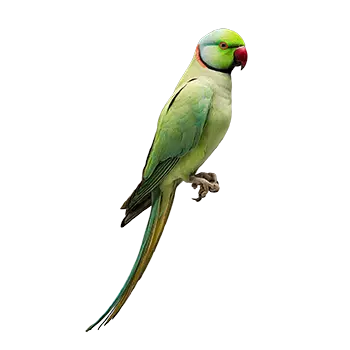

The First 24 Hours

Indian Ringneck Parakeet chicks hatch after an incubation period of approximately 22 to 24 days. When they emerge from the egg, they are completely helpless — blind, featherless, and entirely dependent on their parents or a hand-feeder for warmth and nourishment. The hatching process itself can take several hours, and it is critical not to intervene unless there are clear signs of distress, as premature assistance can cause injury to the fragile chick.

During the first day of life, the chick's primary needs are warmth and its first feeding. Parent-raised chicks will typically receive their first meal of crop milk within a few hours of hatching. If the chick is being hand-raised, the first feeding should be delayed slightly to allow the yolk sac to absorb, usually six to eight hours after hatching. A small amount of a thin, warm hand-feeding formula can then be offered using a syringe or spoon.

Temperature regulation is the single most important environmental factor during this stage. Newly hatched ringnecks cannot thermoregulate on their own and require an ambient temperature of approximately 95 to 98 degrees Fahrenheit. A reliable brooder with a thermometer should be set up well before the expected hatch date. Humidity levels should also be monitored and kept around 55 to 65 percent to prevent dehydration of the delicate skin.

Observe the chick carefully for any signs of distress in the first 24 hours. A healthy hatchling will have a pinkish skin tone, respond to gentle touch by opening its mouth for feeding, and show subtle but regular breathing. If the chick appears lethargic, has a bluish or grayish skin tone, or fails to respond to feeding cues, contact an avian veterinarian immediately.

Feeding & Nutrition

Nutrition during the first weeks of life lays the foundation for the long-term health of an Indian Ringneck Parakeet. Parent-raised chicks are fed by the hen and sometimes the cock bird, receiving a regurgitated mixture that changes in composition as the chick grows. Breeders who supplement parent feeding should ensure that the adult birds have access to a high-quality, protein-rich diet that includes softened pellets, fresh vegetables, sprouted seeds, and egg food to support the demands of feeding their young.

Hand-feeding is a common practice for Indian Ringnecks, especially when breeders aim to produce tame, well-socialized companion birds. A commercially formulated hand-feeding formula designed specifically for parrots should be used. The formula must be mixed fresh for each feeding and heated to the correct temperature — typically between 104 and 108 degrees Fahrenheit. Formula that is too hot can cause crop burns, a serious and sometimes fatal injury. Formula that is too cool may be rejected by the chick or fail to digest properly.

Feeding frequency decreases as the chick grows. During the first week, chicks need to be fed every two to three hours around the clock. By the second week, feedings can be spaced to every three to four hours, and overnight feedings may be reduced or eliminated depending on the chick's crop emptying rate. Always ensure the crop has emptied or nearly emptied before offering the next feeding, as stagnant food in the crop can lead to bacterial or fungal infections.

Keep detailed feeding records from the very first day. Note the time of each feeding, the volume consumed, and the crop's condition before and after. Tracking weight gain daily with a gram scale is equally important. A healthy Indian Ringneck chick should show steady weight gain throughout the first several weeks. Any plateau or decline in weight warrants a veterinary consultation.

Developmental Milestones

Indian Ringneck Parakeet chicks develop rapidly during the first few weeks of life, and recognizing normal milestones helps caregivers identify potential problems early. In the first week, the chick will primarily eat and sleep, with very little voluntary movement. Pin feathers may begin to emerge along the wings and back by the end of the first week, appearing as small, dark quills beneath the translucent skin.

By the second week, the chick's eyes will begin to open, usually starting as narrow slits before fully opening around days 10 to 14. This is a major developmental event, and the environment should be kept calm and gently lit to avoid startling the chick during this transition. Feather growth accelerates noticeably during weeks two and three, and the chick will begin to show early signs of its eventual coloration.

Around three to four weeks of age, the chick becomes much more active and alert. It will begin to hold its head up steadily, grip the sides of the brooder or nest box, and may start to stand and shuffle around. Wing feathers become more developed, and the chick may begin to flap its wings in short bursts, building the muscles it will eventually need for flight. This is also when the chick starts to become more visually aware of its surroundings and may begin to react to sounds and movement.

By five to six weeks, the chick is substantially feathered and begins to explore its environment more confidently. It may start to nibble on soft foods placed nearby, signaling the early stages of weaning readiness. However, hand-feeding should continue as the primary source of nutrition until the chick is consistently eating enough on its own to maintain or gain weight.

Temperature & Environment

Creating and maintaining the correct environment for a newborn Indian Ringneck is essential for survival. The brooder is the chick's entire world during the first weeks, and it must provide consistent warmth, appropriate humidity, cleanliness, and protection from drafts. A commercial brooder with a thermostat is the most reliable option, though homemade setups using heating pads or heat lamps can work if carefully monitored with multiple thermometers.

The temperature should start at approximately 95 to 98 degrees Fahrenheit for newly hatched chicks and be gradually reduced by about two to three degrees per week as the chick feathers out and develops its own thermoregulation. By the time the chick is fully feathered at roughly six to seven weeks old, the ambient temperature can be reduced to room temperature, around 72 to 78 degrees Fahrenheit. Sudden temperature drops are dangerous and can cause chilling, which leads to slowed digestion, crop stasis, and vulnerability to infection.

The brooder substrate should be clean, non-toxic, and changed frequently. Paper towels are the most commonly recommended bedding for very young chicks, as they are easy to replace and allow caregivers to monitor droppings for changes in color, consistency, or frequency. Avoid using wood shavings, corn cob bedding, or any loose substrate that a chick could accidentally ingest, as this can cause crop impaction.

Humidity is another factor that should not be overlooked. In dry climates or heated indoor environments, the air around the brooder can become quite dry, which may cause skin irritation and difficulty with feather development. A small container of water placed inside the brooder or a nearby humidifier can help maintain appropriate humidity levels between 55 and 65 percent.

Early Socialization

Indian Ringneck Parakeets are known for their intelligence and their capacity to bond deeply with their human caregivers, but this bond is significantly influenced by the quality and timing of early socialization. For hand-raised chicks, the socialization process begins during hand-feeding sessions. The gentle handling, soft speaking, and physical closeness involved in hand-feeding create the foundation for the bird's future comfort with human interaction.

During the first two weeks, socialization is passive. The chick is too young and underdeveloped for active interaction, but it is absorbing environmental cues — the sound of your voice, the warmth of your hands, and the rhythm of the feeding routine. Consistency during this stage builds a sense of security. Avoid loud noises, sudden movements, or passing the chick between many different handlers, as this can create stress rather than trust.

As the chick's eyes open and it becomes more aware of its surroundings in weeks two through four, socialization can become more deliberate. Hold the chick gently for short periods outside of feeding times. Allow it to hear household sounds at a moderate volume. Introduce it to different visual stimuli gradually. The goal is to build a chick that is curious and confident rather than fearful and reactive. Indian Ringnecks are particularly prone to developing phobias or nervousness if not properly socialized during this critical window.

Parent-raised chicks destined to be companion birds should still receive regular, gentle human handling starting at around two to three weeks of age, even if they are not being hand-fed. Brief daily sessions of holding and speaking softly to the chick will help it acclimate to human contact. Without this early exposure, parent-raised ringnecks can become significantly more difficult to tame as they mature.

Health Screening & Vet Visits

A relationship with a qualified avian veterinarian should be established before any chicks hatch. Avian medicine is a specialized field, and not all veterinarians are equipped to handle the unique needs of parrots, particularly neonates. Locate an avian vet in your area ahead of time, confirm that they have experience with parakeet species, and ensure you can reach them in an emergency.

The first veterinary visit should ideally occur within the first few days of life or as soon as the chick is stable enough to be safely transported. The vet will perform a general physical examination, check for congenital abnormalities, and may take a small sample from the crop or cloaca to screen for bacterial or fungal infections. Common pathogens that affect young ringnecks include Candida, a yeast that thrives in the warm, formula-rich environment of the crop, and various gram-negative bacteria.

Ongoing health monitoring at home is equally important. Weigh the chick at the same time each day using a gram scale and record the results. Healthy chicks should show a steady upward trend in weight. Monitor the droppings for changes — normal droppings in a hand-fed chick will be soft and may vary in color depending on the formula, but any sign of blood, excessive wateriness, undigested food, or foul odor should prompt a vet call.

Be aware of the signs of common neonatal health issues. Crop stasis, where the crop fails to empty within the expected timeframe, is one of the most frequent problems and can indicate infection, incorrect formula temperature, or environmental stress. Splay leg, where one or both legs splay outward, can occur if the brooder surface is too slick. Aspiration, caused by formula entering the airway during feeding, is a serious emergency that requires immediate veterinary attention.

When to Worry

Caring for newborn Indian Ringneck Parakeets requires vigilance, and knowing the difference between normal variation and genuine cause for alarm can be life-saving. Not every irregularity is an emergency, but baby parrots are fragile, and their condition can deteriorate quickly. Erring on the side of caution by contacting your avian vet is always the better choice.

Weight loss or failure to gain weight is one of the most reliable early warning signs of a problem. A chick that loses more than a small percentage of its body weight overnight, or that fails to gain weight over two consecutive days, should be evaluated. Similarly, a chick that suddenly refuses to eat, begs less vigorously than usual, or stops responding to feeding cues may be ill. Healthy chicks are enthusiastic eaters, and a noticeable decline in feeding response is significant.

Crop issues are among the most common problems in hand-fed chicks. If the crop is not emptying within the expected timeframe — generally four to six hours in the early weeks — the formula may be too thick, the temperature may be off, or an infection may be developing. A crop that feels doughy, produces a sour smell, or appears discolored through the skin needs immediate veterinary attention. Never attempt to manually empty the crop at home without veterinary guidance, as this can cause aspiration or injury.

Respiratory distress is another red flag that demands urgent action. Signs include tail bobbing, open-mouth breathing, clicking or wheezing sounds, and nasal discharge. These symptoms can indicate aspiration pneumonia, a respiratory infection, or an environmental issue such as exposure to fumes, aerosols, or excessive dust. Indian Ringnecks, like all parrots, have extremely sensitive respiratory systems, and any airborne irritant that might seem minor to a human can be dangerous or fatal to a chick.

Always consult a qualified professional before making any health-related decisions. This content is provided for informational reference only and should not replace professional guidance specific to your animal.