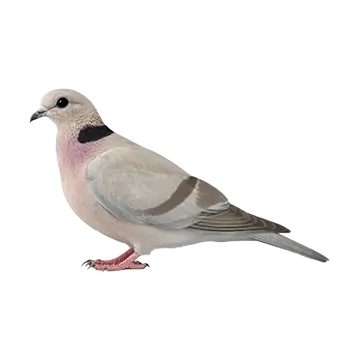

Ring-necked dove squabs hatch after approximately 14 days of incubation, emerging wet, nearly featherless, and with their eyes closed. The hatchlings are altricial, meaning they are entirely dependent on their parents for warmth, protection, and nourishment from the very first moment. Within the first few hours, the squabs should begin receiving crop milk from both parents, a nutrient-dense secretion produced in the lining of the adult crop. This first feeding is critical to the chick's survival and sets the foundation for healthy early growth.
During this initial period, it is essential that the nest environment remains undisturbed. The parents will instinctively brood the squabs, keeping them warm beneath their bodies. Ambient temperature around the nest should stay between 95 and 100 degrees Fahrenheit if the parents are not reliably sitting. If you are hand-rearing an orphaned squab, a brooder with a reliable heat source and a soft, clean substrate is necessary to replicate the warmth the parents would provide.
Avoid handling the squabs unless absolutely necessary during the first day. Excessive interference can stress the parents and may lead to nest abandonment in some cases. Observe from a distance to confirm that the parents are attentive and that the squabs appear to have rounded, slightly full crops after feeding. A flat or sunken crop in the first 12 hours may indicate that the parents are not feeding, which requires immediate intervention.
If you suspect the parents are not producing crop milk or are neglecting the chicks, consult an avian veterinarian promptly. Early intervention with an appropriate hand-feeding formula designed for doves can save a squab's life, but the technique requires care to avoid aspiration. Never attempt to feed water or formula with a syringe aimed directly into the throat without proper training.