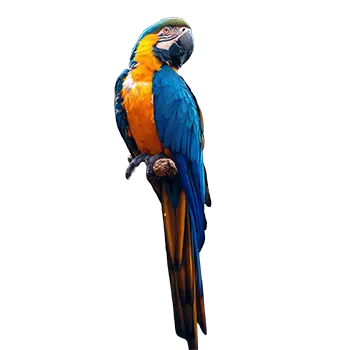

Blue and Gold Macaw chicks hatch after an incubation period of approximately 26 to 28 days, emerging as small, nearly helpless creatures that bear little resemblance to the spectacular adults they will become. A newly hatched Ara ararauna chick weighs between 14 and 18 grams and is covered in sparse white down that provides almost no insulation. The eyes are sealed shut, the feet are disproportionately large relative to the body, and the oversized beak is soft and pale. Despite this fragile appearance, a healthy chick will exhibit a strong feeding response within hours of hatching, bobbing its head vigorously when the area around its beak is gently touched.
In a parent-raised clutch, the hen typically begins feeding the chick within the first few hours after it emerges from the shell. The initial feedings consist of crop secretions rich in proteins, fats, and beneficial microorganisms that help establish the chick's digestive flora. If the chick is to be hand-raised, the first feeding should be delayed until the residual yolk sac has been fully absorbed, which generally takes six to twelve hours. Offering formula before yolk absorption is complete can overwhelm the immature digestive tract and lead to crop stasis or bacterial infection.
The brooder environment must be established and stabilized well before the anticipated hatch date. For Blue and Gold Macaw chicks, the brooder temperature during the first 24 hours should be maintained between 96 and 99 degrees Fahrenheit, with relative humidity held at 60 to 65 percent. These large macaw chicks lose body heat rapidly due to their minimal down coverage, and even a short period at suboptimal temperatures can trigger hypothermia and metabolic shutdown. Use a reliable digital thermometer and hygrometer placed at chick level, not at the top of the brooder, to ensure accurate readings.
During these first critical hours, handle the chick as little as possible beyond what is necessary for feeding and basic health assessment. Examine the navel area to confirm it is clean and fully closed, as an open or infected navel is a significant infection risk. Check that both nostrils are clear and that breathing is quiet and regular. Note the chick's hatch weight and record it as the baseline against which all future growth will be measured. A healthy Blue and Gold Macaw chick should appear pink-skinned with good turgor and respond actively when stimulated for feeding.