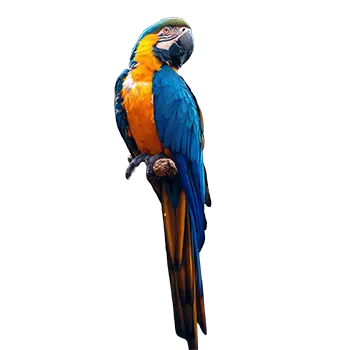

The Weaning Transition

Weaning is one of the most consequential transitions in a Blue and Gold Macaw's early life, and it is also one of the most frequently mishandled. The process through which a young macaw shifts from a formula-based diet to independent consumption of solid foods is not merely a nutritional milestone but a complex developmental event with lasting psychological and behavioral implications. A Blue and Gold Macaw that is weaned at the appropriate pace, with patience and attentiveness, develops confidence, independence, and a healthy relationship with food. One that is force-weaned or rushed through the process may develop food anxiety, regressive begging behaviors, or chronic stress.

Blue and Gold Macaws typically begin showing readiness for weaning between ten and fourteen weeks of age, though considerable individual variation exists. Signs of readiness include declining interest in formula feedings, increasing curiosity about solid foods, active chewing and mouthing of objects, and the ability to pick up and manipulate small food items with the beak and tongue. The process should be guided entirely by the chick's behavioral cues rather than by an arbitrary calendar schedule. Abundance weaning, where solid foods are made continuously available while formula feedings are gradually reduced in response to the chick's decreasing demand, is the preferred approach for this species.

Introduce a variety of foods early in the weaning process. Offer warm, softened vegetables such as sweet potato, carrot, and squash alongside fresh fruits like banana, grape, and papaya. Cooked whole grains including brown rice, quinoa, and oats provide carbohydrates and texture variety. Sprouted seeds and legumes offer excellent transitional nutrition. Scatter these foods in shallow dishes and on flat surfaces where the chick can explore them through play, which is how young macaws naturally learn to identify and process food items.

Formula feedings should be reduced gradually, typically by eliminating one feeding at a time over a period of several weeks. Most chicks drop the midday feeding first, then the morning feeding, with the evening feeding being the last to go. Weight monitoring remains essential throughout weaning. Some weight fluctuation is normal during this transition, but a loss exceeding ten percent of peak body weight signals that the chick is not consuming enough solid food to compensate for reduced formula and that the weaning pace needs to slow down. Never withhold formula from a begging chick in an attempt to accelerate weaning, as this practice causes severe stress and can trigger long-term behavioral problems.

Fledging and Flight Development

The fledging period represents a transformative chapter in a juvenile Blue and Gold Macaw's development. Flight is not merely a mode of transportation for a macaw; it is a fundamental component of physical fitness, spatial cognition, confidence building, and emotional regulation. The decision to allow fledging or to clip a young macaw's flight feathers is one of the most significant choices a caregiver will make, and it carries implications that extend well into adulthood.

Blue and Gold Macaw chicks begin vigorous wing flapping exercises around eight to ten weeks of age, long before they are capable of sustained flight. These exercises are essential for developing the pectoral muscles, cardiovascular system, and respiratory capacity that powered flight demands. By twelve to sixteen weeks, most juvenile Blue and Golds are capable of their first short flights, which typically consist of clumsy, poorly controlled launches that end in crash landings. This awkward phase is entirely normal and necessary. Each flight attempt, successful or not, teaches the bird about lift, drag, maneuvering, and landing, building a neurological flight map that informs motor control for the rest of its life.

If you choose to allow your juvenile macaw to fledge fully, the environment must be made safe for a large bird with limited flight control. Secure all windows and mirrors with curtains or decals, as young macaws frequently collide with transparent and reflective surfaces. Remove ceiling fans, cover open water sources, and ensure no toxic plants or exposed electrical cords are accessible. Designate a primary flight area with clear landing surfaces and cushioned obstacles where the bird can practice without injury. Supervised flight sessions in a safe room allow the bird to build skill progressively.

Caregivers who opt for wing clipping should understand that this decision delays the development of coordination, confidence, and spatial awareness that fledging provides. If clipping is chosen for safety reasons, perform only a moderate clip that allows controlled descent rather than a severe clip that causes the bird to drop like a stone. A bird that experiences repeated hard falls develops fear and insecurity that can manifest as behavioral problems. Regardless of the clipping decision, all juvenile macaws benefit from supervised time in open spaces where they can exercise their wings, climb, and develop the physical coordination their large bodies require.

Behavioral Development and Boundaries

The juvenile period is when a Blue and Gold Macaw's personality begins to crystallize, and it is also when behavioral patterns, both desirable and problematic, take root. Blue and Golds are naturally exuberant, playful, and intensely social birds. During adolescence, which can extend from roughly four months to two years of age, they test boundaries with the same determined curiosity that characterizes adolescence in many intelligent species. Understanding what drives juvenile macaw behavior is essential for shaping it constructively rather than reactively.

Biting and beaking are among the most common behavioral concerns during this stage. Juvenile macaws explore the world primarily through their beaks, and they are still learning to calibrate pressure. A young Blue and Gold does not yet understand that the beak pressure appropriate for cracking a nut is not appropriate for interacting with human skin. When the bird applies excessive pressure, respond with a calm, consistent cue such as a neutral facial expression and a brief pause in interaction. Dramatic reactions, including yelling, pulling away sharply, or punishing the bird, tend to reinforce the behavior by providing exciting feedback. Patience and consistency are the only reliable tools for teaching bite pressure modulation.

Screenaming is another hallmark of juvenile Blue and Gold Macaw behavior. These are inherently vocal birds with powerful voices designed to carry across rainforest canopy. Some vocalization is normal, healthy, and should be accepted as part of living with a large macaw. However, excessive screaming that is reinforced by attention, even negative attention, can become an entrenched habit. Establish a household routine that provides regular, predictable interaction so the bird does not resort to screaming as a means of demanding engagement. Reward quiet vocalizations and speech attempts with attention and treats, and respond to excessive screaming by calmly leaving the room for a brief period.

This is also the stage to establish foundational household rules. Decide early which surfaces the bird is allowed to access, whether shoulder sitting will be permitted, and how mealtimes and out-of-cage time will be structured. Consistency across all family members is critical. A juvenile macaw that receives conflicting signals from different people in the household will become confused and may develop anxiety-based behaviors. Clear, kind, consistent boundaries give the young bird a sense of predictability and security that supports healthy emotional development.

Diet and Nutritional Needs

A juvenile Blue and Gold Macaw's nutritional requirements differ meaningfully from both the formula-dependent newborn stage and the maintenance diet of a mature adult. This is a period of rapid skeletal growth, feather development, muscle building, and neurological maturation, all of which place elevated demands on the bird's caloric intake and nutrient balance. Getting the diet right during this formative stage contributes directly to the bird's structural soundness, plumage quality, immune function, and cognitive development for decades to come.

The foundation of a juvenile Blue and Gold Macaw's diet should be a high-quality, organically formulated pellet designed for large macaws. Pellets should constitute approximately 50 to 60 percent of the total diet by volume. Unlike seed-based diets, which allow the bird to selectively consume only preferred items and ignore others, pellets provide balanced nutrition in every bite. Transitioning a recently weaned macaw onto pellets is generally easier than converting an adult bird with established seed preferences, so take advantage of this receptive period to establish pellets as a dietary staple.

Fresh produce should make up 30 to 40 percent of the daily diet. Offer a rotating variety of vegetables and fruits to provide a broad spectrum of vitamins, minerals, and phytonutrients. Dark leafy greens such as kale, Swiss chard, and dandelion greens supply calcium and vitamin A precursors. Orange and red vegetables including sweet potato, bell pepper, and butternut squash are rich in beta-carotene. Fresh fruits provide natural sugars and vitamin C but should be offered in moderation due to their sugar content. Introduce new foods repeatedly and without pressure, as young macaws may reject unfamiliar items several times before accepting them.

Healthy fats are particularly important for juvenile macaws. In the wild, Blue and Gold Macaws consume palm nuts and other high-fat seeds and fruits. In captivity, provide moderate amounts of raw, unsalted nuts such as almonds, walnuts, Brazil nuts, and macadamia nuts. These supply essential fatty acids that support brain development, feather quality, and skin health. However, nuts are calorie-dense and should be offered as a controlled portion of the diet rather than as unlimited free-choice items. Avoid avocado, chocolate, caffeine, alcohol, and any foods containing excessive salt or sugar, all of which are toxic or harmful to parrots.

Calcium and vitamin D3 metabolism deserve special attention during the juvenile growth phase. Blue and Gold Macaws in captivity frequently receive insufficient calcium, particularly if their diet leans heavily toward seeds and fruits at the expense of vegetables and pellets. A cuttlebone or mineral block should be available at all times, and exposure to unfiltered natural sunlight or a full-spectrum avian UV lamp for several hours daily enables the synthesis of vitamin D3, which is essential for calcium absorption. Discuss supplementation with your avian veterinarian, as both deficiency and excess can cause serious health problems.

Socialization and Environmental Enrichment

The juvenile period is the most critical window for socializing a Blue and Gold Macaw to the full range of experiences it will encounter throughout its long life. Birds that are broadly socialized during this stage tend to be more adaptable, less fearful, and better equipped to handle changes in routine, environment, and social structure. Given that a Blue and Gold Macaw may live fifty years or more in captivity, investing heavily in socialization now pays dividends across decades.

Expose the juvenile macaw to as many different people as practically possible. Visitors of varying ages, appearances, and voices should be encouraged to interact gently with the bird under supervision. This prevents the development of fear-based aggression toward unfamiliar people, a common problem in macaws that have been socialized exclusively to their immediate family. Outings in a secure travel carrier or harness allow the bird to experience new environments, sounds, and visual stimuli in a controlled way. Car rides, visits to bird-friendly outdoor spaces, and trips to the avian veterinarian all contribute to building a well-rounded temperament.

Environmental enrichment is not a luxury for juvenile macaws; it is a biological necessity. In the wild, young Blue and Gold Macaws spend their days foraging, exploring, manipulating objects, and engaging in complex social interactions with their flock. Captive juveniles need analogues of all these activities to prevent boredom, feather-destructive behavior, and psychological distress. Provide a rotation of foraging toys that require the bird to work for food, destructible items made from untreated wood, palm leaf, and vegetable-tanned leather, and puzzle toys that challenge the bird's problem-solving abilities.

The cage or enclosure setup should evolve as the juvenile macaw grows. A young Blue and Gold Macaw needs a cage large enough to spread its wings fully and move freely between perches. Perches of varying diameters and textures promote foot health and exercise. Stainless steel cages with bar spacing of approximately one inch for large macaws prevent injury and escape. Position the cage in a socially active area of the home where the bird can observe and participate in family life, but ensure the bird also has a quiet retreat area where it can rest undisturbed. Establishing a consistent daily routine of wake time, out-of-cage time, training sessions, meal times, and bedtime provides the structure that supports emotional stability during this formative stage.

Training Foundations

The juvenile stage is the optimal time to establish training fundamentals with a Blue and Gold Macaw. These are highly intelligent birds with an innate desire to interact and communicate, and they respond remarkably well to positive reinforcement training when it is introduced during this receptive developmental window. Training is not about teaching tricks for entertainment; it is about building a communication system between bird and caregiver that enables cooperative living for the decades ahead.

Begin with the most essential behaviors: stepping up onto the hand on cue, stepping down when asked, and stationing on a designated perch or stand. These three behaviors form the practical foundation of daily macaw management. Use a clear, consistent verbal cue paired with a hand gesture for each behavior, and reward successful responses immediately with a small, high-value food treat and verbal praise. Keep training sessions short, no more than five to ten minutes, and end each session on a positive note. Multiple brief sessions throughout the day are far more effective than a single long session.

Target training, where the bird learns to touch its beak to the tip of a stick or designated target, is an invaluable tool for shaping more complex behaviors later. Once the bird reliably touches the target on cue, you can use it to guide the bird to specific locations, into a carrier, onto a scale, or through a series of movements. This technique is widely used by professional avian trainers and zookeepers because it gives the bird clear information about what is being asked without physical manipulation or force.

As the juvenile matures, introduce cooperative care behaviors that make veterinary visits and daily maintenance less stressful. Teach the bird to accept gentle wing extension for feather inspection, to hold still for nail trimming, to allow examination of the beak and feet, and to enter a carrier calmly. These behaviors, trained gradually through desensitization and positive reinforcement, transform routine care from a stressful wrestling match into a cooperative process. A macaw that has been trained to participate in its own care experiences dramatically lower stress during veterinary procedures and daily husbandry.

Avoid punishment-based approaches entirely. Physical punishment, spraying with water, covering the cage as a disciplinary measure, and yelling at the bird are not only ineffective but actively harmful. Macaws subjected to aversive training methods frequently develop fear, aggression, learned helplessness, or self-destructive behaviors such as feather plucking. Positive reinforcement, where desired behaviors are rewarded and undesired behaviors are managed through redirection and environmental modification, is the only training methodology that produces reliable, lasting results without compromising the bird's trust and emotional wellbeing.

Health Monitoring During Adolescence

The juvenile and adolescent period introduces a new set of health considerations for the Blue and Gold Macaw. While the acute fragility of the newborn stage has passed, the rapid growth and developmental changes occurring during this phase create their own vulnerabilities. Regular veterinary oversight, combined with attentive daily observation at home, provides the safety net that keeps a growing macaw on a healthy trajectory.

Schedule a comprehensive veterinary examination at least twice during the juvenile period, ideally around the time of weaning completion and again as the bird approaches its first birthday. These visits should include a complete physical examination, blood work to assess organ function and nutritional status, and fecal analysis. If initial disease screening was not completed during the newborn period, or if the bird has been exposed to other parrots since then, repeat testing for Polyomavirus, Psittacine Beak and Feather Disease, and Chlamydiosis. Proventricular Dilatation Disease, caused by avian bornavirus, is another condition that affects macaws and may warrant testing depending on the bird's history and exposure risk.

Feather development deserves close attention throughout the juvenile period. The first full molt typically occurs between eight and twelve months of age and represents a significant physiological demand. During the molt, the bird's nutritional requirements increase as the body directs substantial protein, fat, and mineral resources toward growing new feathers. Ensure the diet is nutritionally robust during this time and consider increasing the frequency of bathing or misting to support feather sheath softening and removal. Abnormal feather growth, including stress bars, malformed feathers, or feathers that fail to unfurl properly, can indicate nutritional deficiency, systemic illness, or viral infection and should be evaluated by a veterinarian.

Behavioral changes during adolescence are normal but should be distinguished from signs of illness. A juvenile macaw that becomes temporarily nippy, vocal, or moody is likely experiencing normal hormonal and social development. However, a bird that becomes lethargic, loses appetite, fluffs its feathers persistently, or shows changes in droppings may be unwell. Weight monitoring should continue throughout this stage, with weekly weigh-ins being sufficient for a healthy juvenile. Any unexplained weight change of more than five percent warrants veterinary evaluation. Establish a baseline for your individual bird's normal behavior, activity level, appetite, and droppings so that deviations are immediately apparent.

Always consult a qualified professional before making any health-related decisions. This content is provided for informational reference only and should not replace professional guidance specific to your animal.